Can Omarchy Dominate the Sub-$1000 Laptop Market? An In-Depth Analysis
Can Arch Linux-based Omarchy revive cheap laptops by solving Windows' resource bloat problem?
Omarchy, an Arch Linux-based distribution, targets the sub-$1000 laptop market where Windows struggles with memory consumption (3.5GB+ idle vs 200-500MB for Omarchy). While Windows 11 makes 4GB devices nearly unusable and even optimized MacBooks face constraints, Omarchy's lightweight design could make budget hardware genuinely usable. Success depends on overcoming Linux's traditional barriers: user-friendliness, software compatibility, and securing OEM partnerships.
An Overlooked Market Opportunity
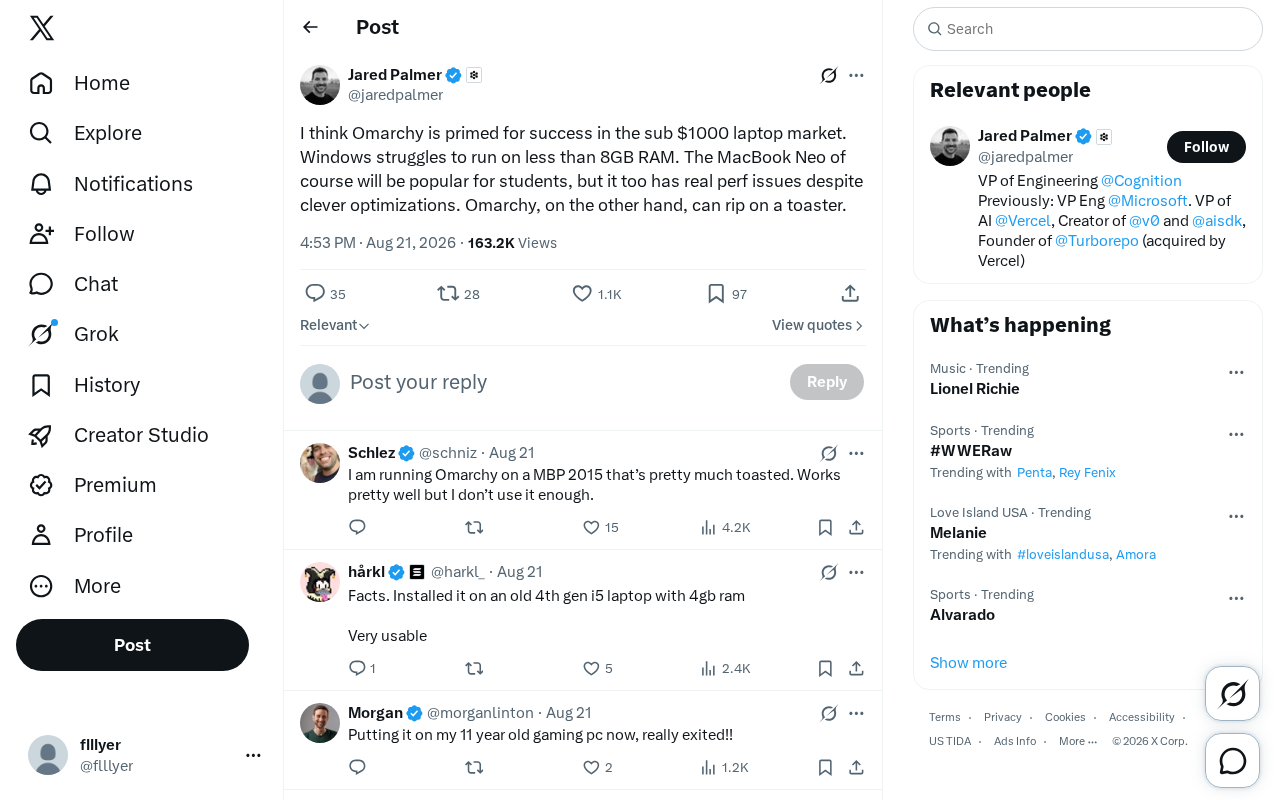
Competition in the high-end laptop market has reached a fever pitch, but a more noteworthy battleground is quietly taking shape—the sub-$1000 entry-level laptop market. Recently, a tech observer raised a thought-provoking point on social media: Omarchy, a system based on Arch Linux, might be the ideal operating system solution for this price range.
Arch Linux is a rolling-release Linux distribution that follows the KISS (Keep It Simple, Stupid) principle. Since its launch in 2002, it has earned a strong reputation among developers for its minimalist philosophy. Unlike mainstream distributions such as Ubuntu or Fedora, Arch Linux does not provide a graphical installer—users must manually complete system installation and configuration from the command line. This is both its barrier and its strength: users can precisely control every component running on the system, avoiding any unnecessary resource waste. Omarchy builds upon Arch Linux by pre-completing these complex configurations, packaging window managers, common toolchains, and system optimizations into a ready-to-use distribution. It aims to bridge the gap between Arch's ultimate performance and ordinary users' need for usability.
The logic behind this assessment is straightforward yet directly addresses the core pain point of mainstream operating systems on low-spec hardware. When we shift our gaze from flagship models to budget devices targeting students and cost-conscious users, operating system resource consumption becomes the dividing line between good and poor user experience.
Windows' Memory Struggles on Low-Spec Devices
First, let's acknowledge a key fact: Windows struggles significantly on devices with less than 8GB of RAM—this has become an industry consensus. Windows 11's background services, automatic update mechanisms, and various pre-installed components consume substantial memory resources even when the system is idle.
Windows 11's high memory usage isn't caused by a single factor but results from multiple subsystems layered together. Windows Defender's real-time protection continuously scans the file system, Windows Update services download and prepare update packages in the background, telemetry services continuously collect system usage data and upload it to Microsoft servers, and pre-installed applications like Cortana, Widgets, and Teams remain in memory even if users never open them. According to multiple test data, Windows 11's memory usage in a fresh install, idle state typically ranges from 3.5GB to 4.5GB. This means that on devices with only 4GB of RAM, available memory for user applications might be less than 1GB, often requiring frequent use of disk swap space, further slowing overall responsiveness.
For an entry-level laptop priced at just a few hundred dollars with only 4GB of memory, running Windows means:
- Sluggishness from boot, with minimal available memory after system startup
- Multitasking becomes nearly impossible, with frequent freezing when switching applications
- Browser crashes with multiple tabs open, making daily web browsing experience extremely poor
These devices are supposed to serve budget-sensitive user groups, yet the heavy burden of the operating system makes it difficult to provide basically usable performance. There's an irreconcilable contradiction between cheap hardware and bloated systems—and this is precisely the gap the market has left open.
MacBook Neo's Performance Dilemma
The Apple camp faces similar challenges. The so-called "MacBook Neo," while popular among student demographics, and despite Apple's clever optimizations to squeeze out hardware performance through tight software-hardware integration, still exhibits real performance bottlenecks on lower-spec versions.
The MacBook Neo concept discussed in the industry refers to Apple's low-price MacBook product line aimed at education and entry-level markets. Apple has a long history in this field, from the early iBook and educational MacBook Air editions to today's entry-level MacBook Air based on Apple Silicon. Apple has consistently tried to compete with Chromebooks in the education market. Apple Silicon (M-series chips) uses Unified Memory Architecture, where CPU, GPU, and neural engine share the same memory pool. This design is more efficient than traditional x86 architecture in small memory configurations, but it also means memory cannot be upgraded and is contested by multiple computing units. When entry-level models come with only 8GB of unified memory, the combined consumption of macOS itself, GPU memory allocation, and background processes significantly reduces available memory space, still leaving users stretched thin in multitasking scenarios.
Apple's optimization capabilities are undeniable, but the constraints of hardware costs are unavoidable physical limitations. When Apple prices devices in a relatively affordable range, compromises in key specifications like memory and storage inevitably reflect in actual user experience. Even Apple, with its highest degree of hardware-software integration, cannot completely eliminate the ceiling imposed by low-spec hardware.
Omarchy's Differentiating Advantage: Making Cheap Laptops Run Smoothly
In stark contrast to Windows and macOS is Omarchy's core selling point—to quote the original phrase, it can "rip on a toaster." This slightly exaggerated expression precisely captures the enormous advantage of Arch Linux-based lightweight systems in terms of resource consumption.
Linux systems achieve extremely low resource usage due to their modular architectural design philosophy. The Linux kernel itself only provides the most basic hardware abstraction and process management functions. All upper-layer components—desktop environments, window managers, system services—are replaceable independent modules. Distributions like Omarchy typically use tiling window managers (such as Hyprland or i3) instead of heavyweight desktop environments like GNOME or KDE; the former's memory footprint may be only one-tenth of the latter's. Additionally, Linux systems use systemd or even lighter init systems to manage service processes, allowing users to precisely disable all unnecessary background services. A minimally configured Arch Linux system can have idle memory usage as low as 200-500MB, compared to Windows 11's 3.5GB+. The freed memory space is sufficient for 4GB devices to smoothly run modern browsers and office applications.
As a carefully configured Arch Linux distribution, Omarchy inherits the consistently low resource consumption characteristic of Linux systems:
- No massive background telemetry services, with system resources almost entirely reserved for users
- No forced system update burden, avoiding bandwidth and computing power seizure at critical moments
- Extremely low idle memory usage, leaving ample space for applications
This means a cheap laptop with 4GB of RAM running Omarchy might perform more smoothly than an 8GB device running Windows.
Why This Matters for the Entry-Level Laptop Market
Users of sub-$1000 laptops typically have core needs focused on basic tasks like web browsing, document processing, online learning, and video watching. These scenarios don't demand high hardware performance—the real obstacle is that the operating system itself consumes too many resources.
Omarchy's market positioning inevitably recalls the success story of Chromebooks. Google's Chrome OS is essentially a lightweight operating system based on the Linux kernel. After launching in 2011, it quickly captured the U.S. K-12 education market, accounting for nearly 60% of North American education device shipments by 2020. Chromebook's success proved a key proposition: on entry-level hardware, lightweight operating systems can indeed provide user experiences far superior to Windows. However, Chromebook's heavy reliance on cloud services and network connectivity also exposed limitations—functionality drastically shrinks in offline scenarios, and the software ecosystem is strictly limited to web applications and a limited selection of Android apps. As a complete Linux distribution, Omarchy theoretically offers richer local software support than Chrome OS, but also faces the core challenge Chromebooks have already identified: how to lower the barrier to entry for ordinary users.
Omarchy's emergence actually restores cheap hardware to its deserved usability. A $300 laptop that can provide daily operation smoothness approaching flagship devices would have enormous appeal in the following scenarios:
- Education sector: Student users are price-sensitive with clear needs for basic office work and browsing
- Developing markets: Limited hardware budgets but rapidly growing digitalization needs
- Budget-conscious users: Seeking value without needing professional software for daily use
Challenges and Real-World Considerations Facing Omarchy
Being optimistic about Omarchy's prospects doesn't mean it faces no obstacles. As an Arch Linux-based system, the following issues must be confronted:
Insufficient user-friendliness. Arch Linux is renowned for high customizability, but this also means a steep learning curve. For average consumers accustomed to Windows or macOS, the Linux system's learning curve may become the biggest barrier to adoption.
Software ecosystem compatibility. Whether commonly used student applications like Microsoft Office, Adobe suite, and various collaboration tools (such as Tencent Meeting, DingTalk, etc.) can run smoothly on Omarchy or have reliable alternatives will directly affect users' willingness to migrate.
OEM manufacturer cooperation willingness. Whether hardware manufacturers are willing to pre-install Omarchy and whether software vendors provide adaptation support will determine whether it can truly convert technical advantages into market share. Linux desktop operating systems' market share has long hovered around 2-4% (approximately 4.5% in 2024 according to StatCounter data), with the absence of OEM pre-installation channels being one of the most fundamental limiting factors. Microsoft's OEM licensing agreements with major global PC manufacturers cover not only operating system pre-installation but also the complete chain of driver adaptation, technical support, and after-sales service. While brands like Dell's XPS Developer Edition, System76, and Tuxedo Computers offer Linux pre-installation options, their shipment volumes are negligible in the overall PC market. For Omarchy, convincing mainstream manufacturers like Lenovo, HP, and Dell to pre-install an Arch-based distribution on their entry-level product lines requires not only solving hardware driver compatibility and technical support system issues but also providing sufficient commercial incentives to offset the Microsoft partnership risks of abandoning Windows licensing.
Possible Paths to Performance Democratization
This discussion reveals a profound industry trend: as the high-end market approaches saturation, operating system efficiency on low-spec hardware will become a new competitive dimension. Windows' bloat and Apple's price constraints both leave an opportunity window for lightweight Linux distributions.
Whether Omarchy can truly achieve its "primed for success" expectations still requires time and market validation. But the approach it represents—rejuvenating cheap hardware through software efficiency—is undoubtedly worth deep reflection across the industry.
In the broader context of computing inclusivity, enabling more people to obtain quality digital experiences at lower costs, lightweight operating systems may be a genuinely viable path. How far Omarchy can go depends on whether it can find the balance between technical advantages and user experience.
Key Takeaways
- Sub-$1000 laptops face severe performance bottlenecks with Windows and macOS due to high resource consumption
- Omarchy, based on Arch Linux, offers dramatically lower memory usage (200-500MB vs 3.5GB+), making cheap hardware usable
- The approach mirrors Chromebook's success but offers fuller local software capabilities
- Major challenges include user-friendliness, software ecosystem compatibility, and securing OEM partnerships
- Represents a broader trend: software efficiency as the next competitive frontier in democratizing computing access
Related articles
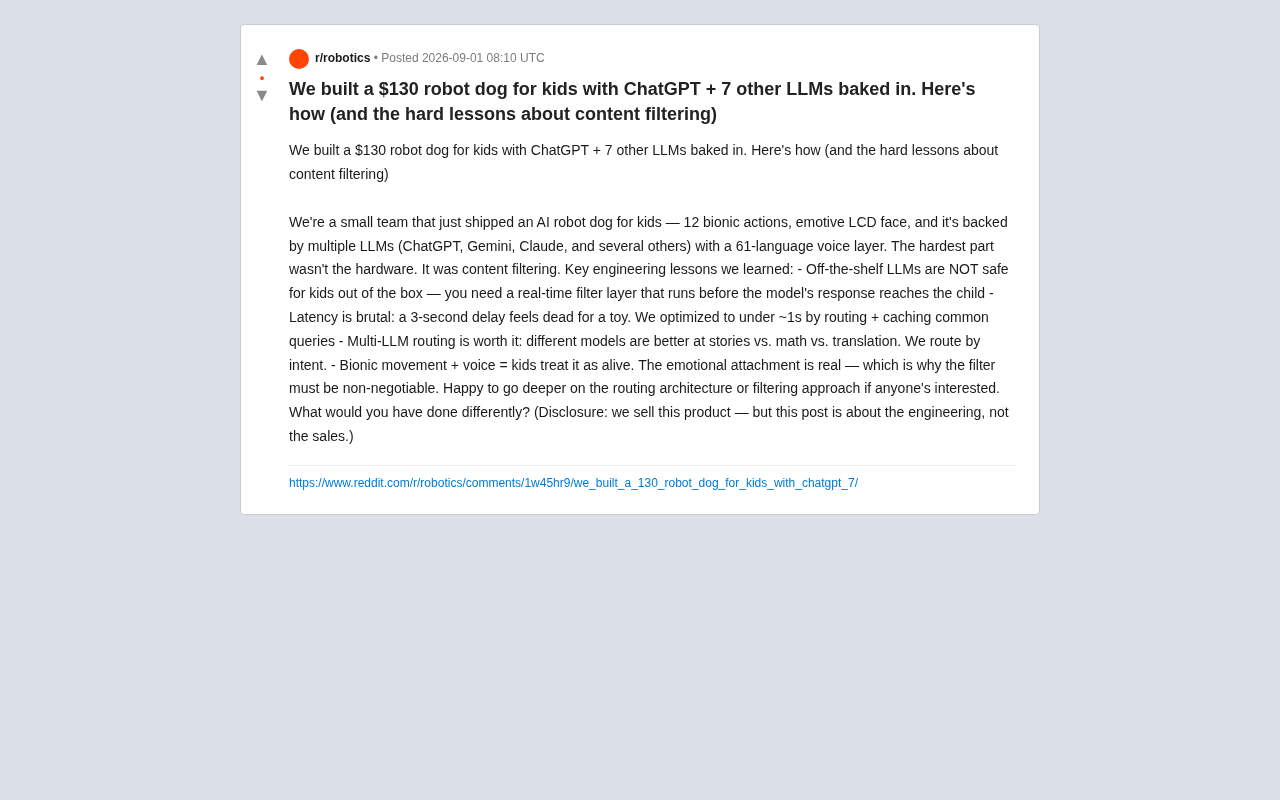
Building an AI Robot Dog for Kids: Multi-Model Routing, Content Filtering, and Latency Optimization
A $130 AI robot dog for kids integrates 8 LLMs with 61-language voice interaction. The team shares key engineering lessons on content safety filtering, multi-LLM intent routing, and sub-1-second latency optimization.

AI Agent Beginner's Guide: Building a Creative Strategy Intelligent Assistant from Scratch
A complete guide to building a creative strategy AI Agent from scratch. No coding required — use tools like Dify and Coze to quickly build an intelligent assistant.
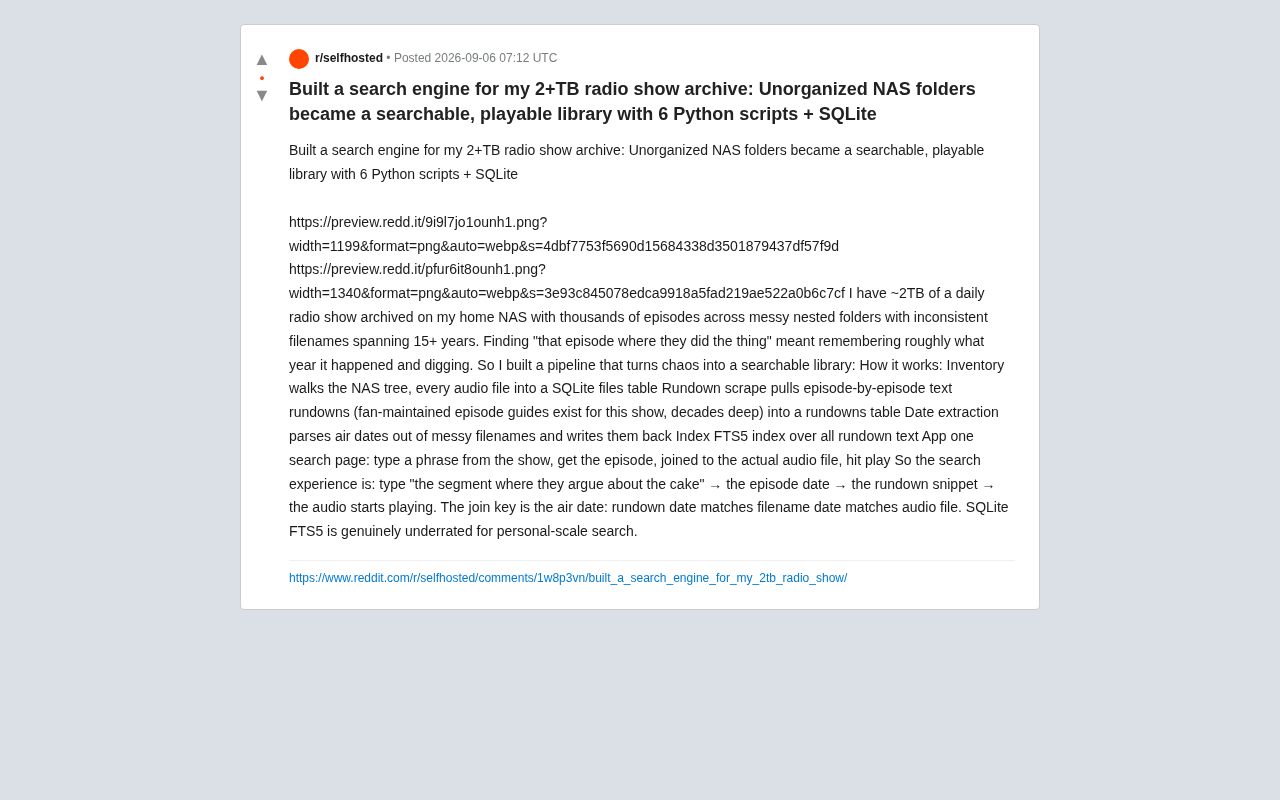
6 Python Scripts + SQLite: Turning a 2TB Broadcast Archive into a Searchable Library
A Reddit user used 6 Python scripts and SQLite FTS5 to turn a 15-year, 2TB broadcast archive into a searchable, playable audio library. A breakdown of the pipeline and design.