Can't Code? Build an Interactive Website in 3 Minutes with Qwen

Qwen's mobile app generates a fully interactive website in 3 minutes with zero code.
Using only the Qwen mobile app, a user generated a fully functional "cloud pet mouse" virtual pet website in three minutes through natural language alone — no coding required. The standout feature is Qwen's automatic multi-model orchestration, which seamlessly handles both code generation and image creation to deliver a complete product end-to-end. The case showcases the real-world arrival of programming democratization, though code quality boundaries still matter for commercial applications.
When AI Becomes a True Productivity Tool
In today's crowded AI landscape, most products are still stuck at the "chatbot" stage — genuinely few can help users complete complex creative tasks. Recently, a user shared a remarkable case: using only the Qwen (Tongyi Qianwen) mobile app, they built a fully functional interactive website in under three minutes, without writing a single line of code.
This wasn't a simple static page. It was a fully realized "cloud pet mouse" virtual pet website, complete with autonomous behaviors — the character eats, drinks, sleeps, runs around, and even engages in social interactions. This kind of example forces us to reconsider: the productivity ceiling of AI may be much higher than we imagined.
Just How Impressive Is a 3-Minute Interactive Website?
The feature set of this "cloud pet mouse" site is surprisingly rich — far beyond a typical AI-generated demo:
- Autonomous behavior system: The virtual mouse automatically performs actions based on its internal state — it goes to eat when hungry, drinks when thirsty, sleeps when tired, and roams around when full of energy.

- User interaction mechanics: Tapping the mouse with your finger sends it "flying" into another room, and a companion follows to comfort it — a charming detail that makes the whole experience delightful.

- Real-time status tracking: The mouse's mental state updates in real time, forming a complete virtual life simulation system.
At a technical level, this autonomous behavior system corresponds to the classic Finite State Machine (FSM) design pattern — one of the most fundamental behavior modeling approaches in game AI and interactive applications. A character exists in one "state" at any given moment (e.g., hungry, sleepy, active), and transitions between states based on internal parameter changes or external events (e.g., hunger value exceeds threshold → enter foraging state). Nintendo's Tamagotchi commercialized this mechanic back in 1996, launching the virtual pet genre. In modern implementations, this logic typically runs in the browser via JavaScript, with setInterval driving state updates and DOM manipulation or Canvas rendering handling the visual feedback.
The fact that AI can generate fully functional FSM logic in three minutes demonstrates that today's code generation models can understand and reproduce moderately complex interactive design patterns — not just spit out simple static pages.
Most notably, all of this was accomplished on a mobile phone, with no other apps or tools involved. Qwen handled everything end-to-end.
The Core Capability: Automatic Multi-Model Orchestration
The most technically significant aspect of this case isn't simply "AI can write code" — it's the multi-model automatic orchestration that Qwen demonstrated.

Multi-Model Orchestration is one of the central directions in the evolution of AI application architecture. Traditional single large language models have clear limitations when handling cross-modal tasks — text generation, code writing, and image creation each belong to different specialized model domains with distinct training data and optimization objectives. To address this, the industry has gradually developed the "AI Agent" architecture: a primary Orchestrator Agent understands user intent, breaks down the task, and dynamically calls the most suitable specialized sub-models for each subtask, then integrates the results for delivery. The challenge lies in accurate intent understanding, sensible task decomposition, and consistent coordination across model outputs.
Traditional AI coding tools typically handle only one task at a time — ask for code, get code; ask for an image, get an image. But in this case, the user simply described their needs in natural language, and Qwen automatically determined which model to invoke at each step. The user never had to think about model switching — the AI autonomously handled the entire decision chain:
- Code generation: The website's HTML/CSS/JavaScript logic was automatically generated by a code model.
- Image creation: When the site needed visual assets, the system automatically switched to an image generation model (reportedly including models like Qwen Magic 2.5).

The user casually mentioned a prompt, and the AI transformed a vague creative concept into four complete, high-quality draft assets. This "one sentence in, multi-model collaboration out" workflow dramatically lowers the barrier to creation.
What Does This Mean for Everyday Users?
The Real Democratization of Programming
The democratization of programming isn't a concept born in the AI era — it's been a persistent theme throughout decades of software engineering evolution. From machine code to assembly language to high-level languages like Python, each rise in abstraction level has lowered the barrier to entry. Visual programming tools (like Scratch) and low-code/no-code platforms (like Bubble and Webflow) are recent examples of this trend, allowing non-technical users to build applications through drag-and-drop components and preset logic — yet these tools still require users to understand abstract concepts like "components" and "logic flows."
AI code generation takes abstraction one level higher: the input shifts from "operating an interface" to "describing in natural language" — the most natural form of human expression. Tools like GitHub Copilot and Cursor have already validated the value of AI-assisted programming for professional developers. Qwen's end-to-end generation capability extends the target audience from "people who can code" to "people who can't code at all." No need to learn HTML, no need to understand JavaScript, no need to know what a frontend framework is — you just need to clearly describe what you want.
From "Conversation" to "Creation"
The problem with many AI products is that they're good at chatting but not at actually doing things. This Qwen case demonstrates a different path: AI doesn't just answer questions — it directly handles the entire pipeline from idea to finished product. Code, design assets, and logical architecture, all delivered in one go.
The Possibility of Mobile-First Creation
It's worth noting that this entire project was completed on a mobile app. That means creation is no longer tied to a computer and a development environment — you can turn inspiration into a runnable product prototype anytime, anywhere.
A Sober Look: Where Are the Limits of AI Programming?
Of course, we should also approach these cases with clear eyes. Understanding the capability boundaries of AI coding tools requires distinguishing between several different dimensions of code quality.
Functional correctness is the most basic dimension — can the code run as expected? Current mainstream code generation models already achieve high pass rates on moderately complex tasks, which is precisely what makes "a working website in three minutes" possible.
However, commercial-grade software also demands maintainability (clear code structure, easy for others to modify), performance optimization (avoiding unnecessary re-renders, memory leaks, etc.), security (guarding against XSS, SQL injection, and other common vulnerabilities), and scalability (architectural design that can support future feature iterations). AI-generated code tends to lean toward "good enough to run
Related articles
 Product Reviews
The Programmer's Desk Setup Guide: Building a Workspace That Feels Like Home
Discover how programmers build productive, comfortable workspaces. From multi-monitor setups to ergonomic design, explore the desk philosophy that drives focus and flow.
 Product Reviews
Qoder vs Cursor Real-World Comparison: Which $20/Month AI IDE Is Better?
Hands-on comparison of Qoder vs Cursor AI IDEs: Agent autonomy, human interaction count, and architecture decisions. Qoder needed only 2 interactions vs Cursor's 8.
 Product Reviews
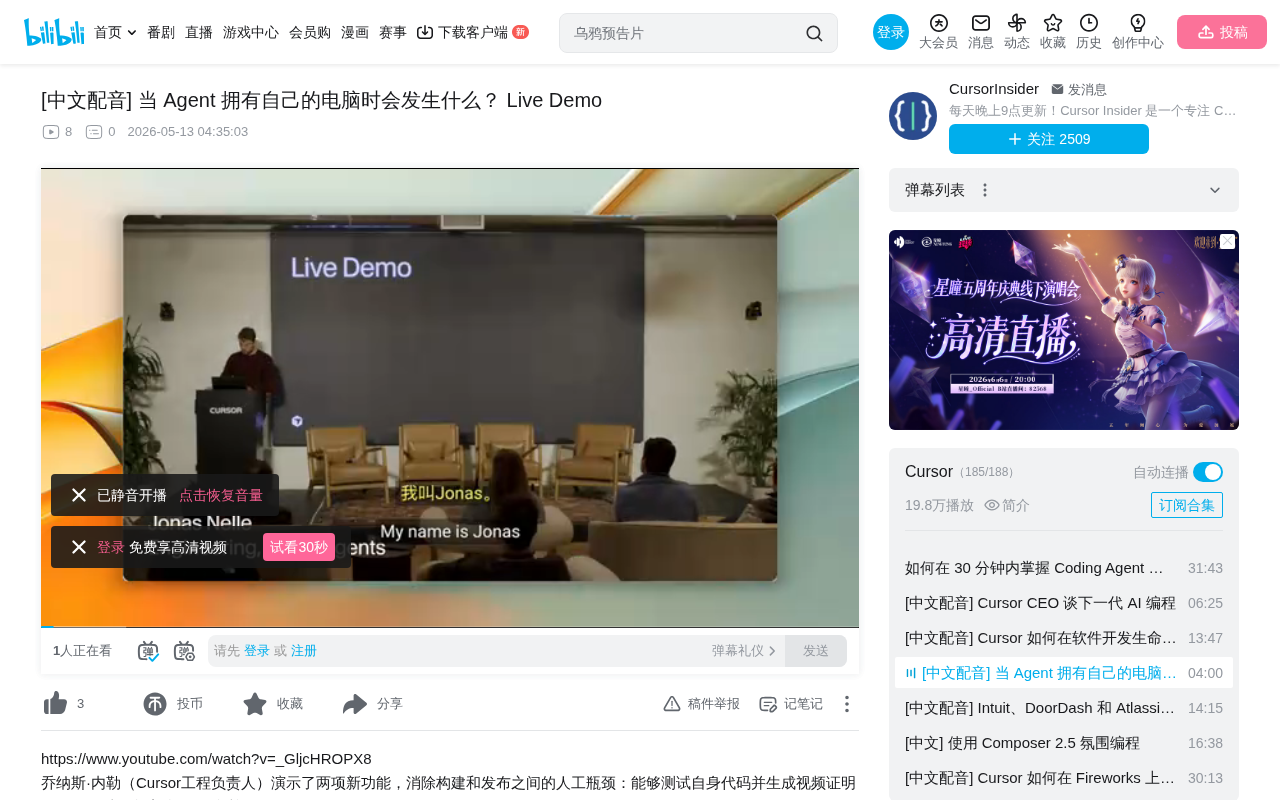
Cursor Cloud Agent Demo: Eliminating Bottlenecks Across the Entire Software Development Lifecycle
Deep analysis of Cursor's Cloud Agent demo showing how cloud VMs, automated test artifacts, and a full-chain control plane systematically eliminate human bottlenecks across the software development lifecycle.