Can Tesla's New Roadster Actually Ship? Rocket Tech Hype Meets a 2028 Delay

Tesla's new Roadster uses SpaceX thrusters for an aerial flip and claims 0.81s 0-60, but production slips to 2028 with regulatory hurdles.
Tesla unveiled its next-gen Roadster in Texas, featuring SpaceX-derived cold gas thrusters for aerial flips, 600L pressure vessels, 10 nozzles, and a fan suction system with double downforce. It claims 0.81s 0-60. But no pricing or specs were given, production is delayed to 2028 after nine years, and FAA/NHTSA rules pose major obstacles.
From Vaporware to Flight: The New Roadster's Stunning Demo
At an event in Texas, Tesla finally pulled back the curtain on its next-generation Roadster. According to footage from the scene, the all-electric supercar drove up a vertical ramp, used cold gas thrusters to flip itself, briefly went airborne, and completed a full "kick-flip" maneuver above a Cybertruck and a Model 3. Officials even claimed a 0-60 mph time of just 0.81 seconds.
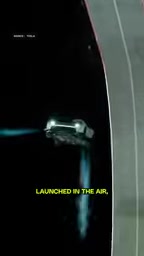
This demo didn't just showcase the extreme performance of an EV — it steered the conversation toward the core technology behind it. As the event organizers put it: "Simply put, it's SpaceX technology. We borrowed rocket technology from SpaceX." This marks a new phase in the technological synergy between Tesla and SpaceX, and it has left the public intensely curious about what the production version will actually look like.
Core Technology Breakdown: SpaceX Rockets and Fan-Based Downforce
The key to the new Roadster's outrageous maneuvers is a propulsion system borrowed straight from aerospace. According to the presentation, the vehicle carries two carbon-fiber-wrapped pressure vessels with a combined capacity of 600 liters, plus 10 nozzles mounted underneath. This system shares its DNA with SpaceX's cold gas thruster technology, giving the car rocket-like attitude control capabilities.
Beyond rocket propulsion, Tesla also introduced a fan-based suction system capable of generating downforce equal to twice the car's weight. Musk claims the car can "maneuver like a rocket" and pull off all kinds of crazy stunts. Dropping aerospace technology into a consumer car is an industry first — and it's sparked widespread debate about regulations and real-world practicality.
Cold Gas Thrusters are one of the most basic forms of space propulsion: high-pressure inert gas (such as nitrogen or helium) is stored in a pressure vessel and expelled at high speed through a nozzle, generating thrust via Newton's third law. Their specific impulse is far lower than that of liquid rocket engines, but they're extremely simple, respond almost instantly, and can be fired repeatedly — which is why they're widely used for satellite attitude control and fine maneuvering on the International Space Station. Tesla's adaptation for the Roadster isn't really about making the car "fly" — it's about using nozzles to change the car's pitch and yaw attitude within milliseconds, working with the suspension to manage weight transfer during extremely fast launches. The 600-liter carbon-fiber-wrapped pressure vessel can store hundreds of kilograms of high-pressure gas, but every burst consumes propellant, meaning "flight mode" can't last long — it's more of a short-burst attitude tool.
Interior and Controls: An Aviation-Inspired Cockpit
Step inside, and the new Roadster's design is just as unconventional. The two seats are molded directly into the chassis, and the controls use steer-by-wire and a yoke steering wheel — with the overall inspiration taken directly from the SR-71 Blackbird reconnaissance aircraft. This aviation-grade cockpit layout is designed to make the driver feel like a fighter pilot.
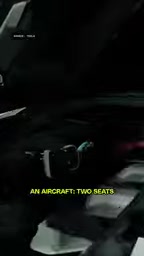
However, this aggressive design also brings real-world challenges. Steer-by-wire and yoke steering wheels haven't fully matured in terms of regulatory certification for production cars — especially under the road safety rules of various U.S. states. How to make a "flying rocket car" street-legal remains a massive regulatory hurdle.
Steer-by-Wire eliminates the mechanical connection between the steering wheel and the wheels, instead using sensors to capture steering intent and electrical signals to drive motors that execute the steering. It was first used in fighter jets (such as the F-16) to reduce weight, improve response speed, and allow flight control computers to intervene and correct. In the automotive world, the Infiniti Q50 was the first to offer it in production, but reliability controversies later led to the reintroduction of a mechanical backup. The core obstacle to mass-producing steer-by-wire is functional safety certification: if the electronic system fails, multiple redundancies must ensure steering isn't lost. As for Yoke Steering, it comes from aviation control sticks. Tesla already tried it on the Model S Plaid, but it drew NHTSA investigations and user criticism because it's hard to grip during low-speed U-turns and emergency evasive maneuvers. Stacking both technologies onto a car with flight capability means regulators need to re-examine whether current FMVSS standards even apply.
Delivery Timeline and Regulatory Hurdles: Can 2028 Happen?
Despite the impressive demo, the event didn't announce pricing, trim levels, or final production specs. When asked when customers would receive their cars, the official answer was: "We plan to enter production in 2028." That means nearly nine years of delays since the model was first unveiled.
More troubling are the regulatory issues. The FAA's airspace rules and NHTSA's road safety regulations both pose certification obstacles for a vehicle with flight capabilities. Getting a street-legal rocket car through approval is a regulatory nightmare. So even if production starts on schedule in 2028, actual customer deliveries could take much longer.
U.S. regulation of "flying cars" exists in a legal vacuum. The FAA (Federal Aviation Administration) manages airspace, and any aircraft entering the national airspace system needs airworthiness certification — typically requiring compliance with Part 23 (small aircraft) or Part 103 (ultralight vehicles) standards. Meanwhile, NHTSA (National Highway Traffic Safety Administration) oversees road vehicle safety, requiring vehicles to meet Federal Motor Vehicle Safety Standards (FMVSS) — many of which assume the vehicle stays in contact with the ground at all times. A vehicle that can both drive on roads and briefly fly triggers two incompatible regulatory frameworks simultaneously: the FAA might classify it as an aircraft, requiring a pilot's license and airworthiness certificate; NHTSA might refuse an exemption because it's a "non-standard ground vehicle." Historically, flying car projects like the Terrafugia Transition have been stuck in exactly this dual-certification gap, spending over a decade without achieving scaled deliveries.
Conclusion: The Gap Between Tech Showmanship and Commercial Reality
The new Roadster demo undoubtedly showcases Tesla's ambition to fuse electric performance with aerospace technology. But the lack of pricing, specs, and concrete delivery details has left observers cautious about its production prospects. Nine years of waiting has already worn down some consumers' patience, and the complex regulatory environment adds even more uncertainty. Whether this car will ever make it into ordinary driveways remains an open question.
One-line Summary
Tesla's new Roadster uses SpaceX cold gas thrusters to complete an aerial flip and claims a 0.81-second 0-60, but production is delayed to 2028 amid regulatory hurdles.
Paragraph Summary
Tesla showcased its next-gen Roadster in Texas, using cold gas thrusters derived from SpaceX technology to perform an aerial flip, with officials claiming a 0-60 mph time of just 0.81 seconds. The car features 600-liter carbon fiber pressure vessels, 10 nozzles, a fan suction system generating twice the downforce, and an SR-71-inspired cockpit with steer-by-wire and yoke steering. However, no pricing or specs were announced, production is delayed to 2028 after nearly nine years of setbacks, and FAA airspace rules plus NHTSA road safety regulations create a daunting dual regulatory barrier. The demo shows technical ambition, but commercial reality remains deeply uncertain.
Related articles

JobRunner MCP Server: AI Agents Can Now Fix Failed Java Jobs
JobRunner launches an open-source MCP server enabling AI agents to view cluster status, diagnose failures, and recover Java jobs—incident response from any cloud coding environment or existing agent.

MLAI Digital Launches 9 Security Agents: MCP Server Safeguards the Full Lifecycle of Agentic AI
MLAI Digital launches Security MCP Server with nine built-in specialized security agents covering vulnerability discovery, attack simulation, prompt injection detection, API and infrastructure assessment, and accelerated remediation—embedding security validation across the full Agentic AI lifecycle from development to production.

Running Isaac Lab on H100 GPUs: Exploring Better Approaches
Exploring optimization methods for running Isaac Lab on NVIDIA H100 GPUs, including MIG configuration, mixed precision, TensorRT acceleration, and community experience to improve robotics simulation and reinforcement learning efficiency.