Canto Voice Model: A Speech AI Built for Real-World Scenarios
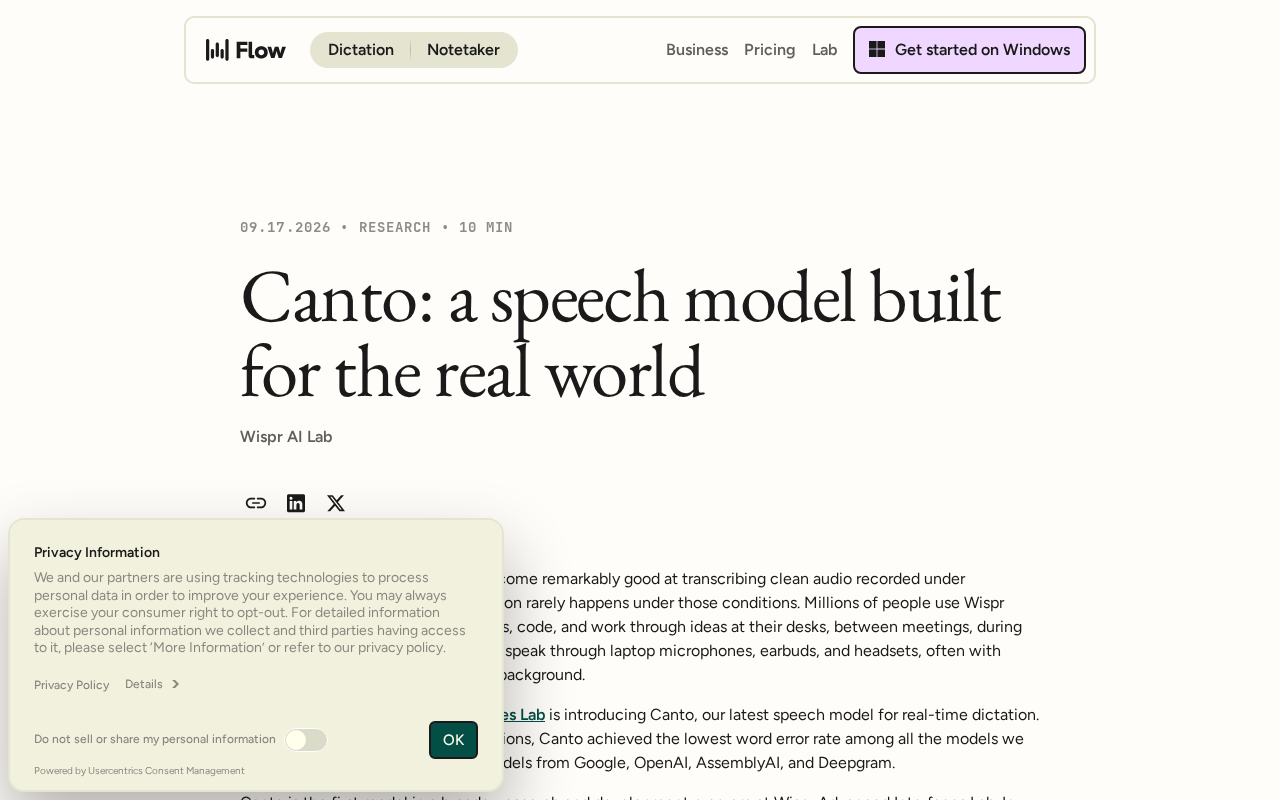
Canto is a voice model prioritizing real-world robustness over academic benchmark scores.
Canto is a voice model that recently surfaced on Hacker News, positioning itself as "built for the real world" — directly addressing a core pain point in voice AI where models excel on clean benchmarks but degrade under real-world noise, accents, and latency. For teams building voice assistants or real-time transcription tools, robustness, low latency, and flexible deployment matter far more than accuracy on standard datasets. Still in early stages, community focus centers on its open-source licensing, language coverage, inference costs, and differentiation from Whisper.
Canto: A Voice Model Built for Real-World Use
A voice model called Canto recently sparked discussion on Hacker News. Its positioning is clear — designed for real-world application scenarios. This framing alone addresses a long-standing pain point in the voice AI space: many models that perform impressively on lab benchmarks see significant performance degradation once deployed in noisy, variable, accent-rich real environments.
From the product name to its tagline ("built for the real world"), Canto aims to differentiate itself from academic models chasing benchmark scores, emphasizing robustness and usability in actual deployments.
Why "The Real World" Is the Core Challenge for Voice AI
Speech recognition and speech synthesis have made significant strides in recent years, yet the gap between real-world environments and controlled test conditions remains one of the biggest obstacles to practical deployment.
The real world means background noise, overlapping conversations, regional accents, domain-specific terminology, network latency, and incomplete or interrupted utterances. A model trained only on clean studio recordings often struggles to handle this complexity. By placing "real world" at the center of its product positioning, Canto is directly responding to the developer community's call for practicality-first design.
For teams building voice assistants, customer service systems, real-time transcription tools, or accessibility applications, a model's stability under adverse conditions often matters far more than squeezing out a few extra percentage points of accuracy on standard datasets.
Community Response and Discussion
Canto currently sits at 14 points and 5 comments on Hacker News, placing it in an early-exposure phase. While the traction isn't explosive, the technical community's attention to new voice models typically converges on a few pragmatic questions:
- Is the model open-source, and what are the licensing terms?
- Which languages and dialects are supported?
- What are the inference costs, and is local deployment feasible?
- What are the differentiated advantages over existing mainstream solutions (such as Whisper)?
These questions collectively define how developers assess whether a voice model is "production-ready." If Canto wants to establish itself in the competitive voice AI landscape, it needs to provide compelling answers across these dimensions.
Whisper is an open-source speech recognition model released by OpenAI in 2022. It quickly became the de facto community benchmark thanks to its strong performance in multilingual recognition and noise robustness. Trained using large-scale weakly supervised learning on 680,000 hours of multilingual audio across 99 languages, Whisper's open-source approach dramatically lowered the barrier to entry for speech recognition. However, it suffers from slow inference speeds and limited real-time capability, requiring additional engineering optimization for streaming scenarios. Community derivatives like faster-whisper and WhisperX emerged precisely to address these shortcomings. Any new voice model seeking developer adoption typically needs a clear answer to the question "what advantages does this have over Whisper?" — whether that's lower latency, better dialect support, or a lighter deployment footprint.
Key Considerations for Deploying Voice Models in Production
From a broader perspective, Canto's emergence reflects the evolution of voice AI from "can recognize speech" to "reliably recognizes speech." Evaluating a voice model built for real-world scenarios can be approached across the following dimensions:
Robustness
Performance under noise, reverberation, and multi-speaker scenarios is the core metric for measuring "real-world" capability.
The speech recognition field commonly uses Signal-to-Noise Ratio (SNR) and Word Error Rate (WER) to quantify robustness. WER measures the ratio of edit distance between model output and ground-truth transcription, making it the primary accuracy metric. How WER changes across different SNR conditions directly reflects a model's noise resilience. Reverberation is another frequently overlooked challenge — sound reflections within a room cause severe distortion of speech features, particularly affecting models trained only on near-field clean recordings. Standardized noise datasets like CHiME and REVERB are commonly used for benchmarking, but these still fall short of real deployment environments, which is precisely why "real-world testing" is valued more by engineering teams than lab benchmark scores.
Latency and Real-Time Performance
Real-time conversation, live captioning, and similar scenarios are extremely sensitive to end-to-end latency. Models with high batch accuracy but significant latency simply cannot meet these requirements.
Deployment Flexibility
Whether a model can run on edge devices or local servers directly determines cost structure and data privacy compliance.
Language Coverage
The range of supported languages and dialects determines how broad a market the model can realistically serve.
Conclusion
Canto is still in its early stages of public exposure, with limited information available. But its core pitch — "built for the real world" — hits on a crucial inflection point in voice AI: the shift from academic metrics toward engineering practicality. For developers tracking voice technology, it's worth keeping an eye on future disclosures around its open-source status, robustness benchmarks, and deployment costs.
What ultimately determines the value of a voice model has never been its score on clean data — it's how it performs in the messy reality of the real world.
Related articles
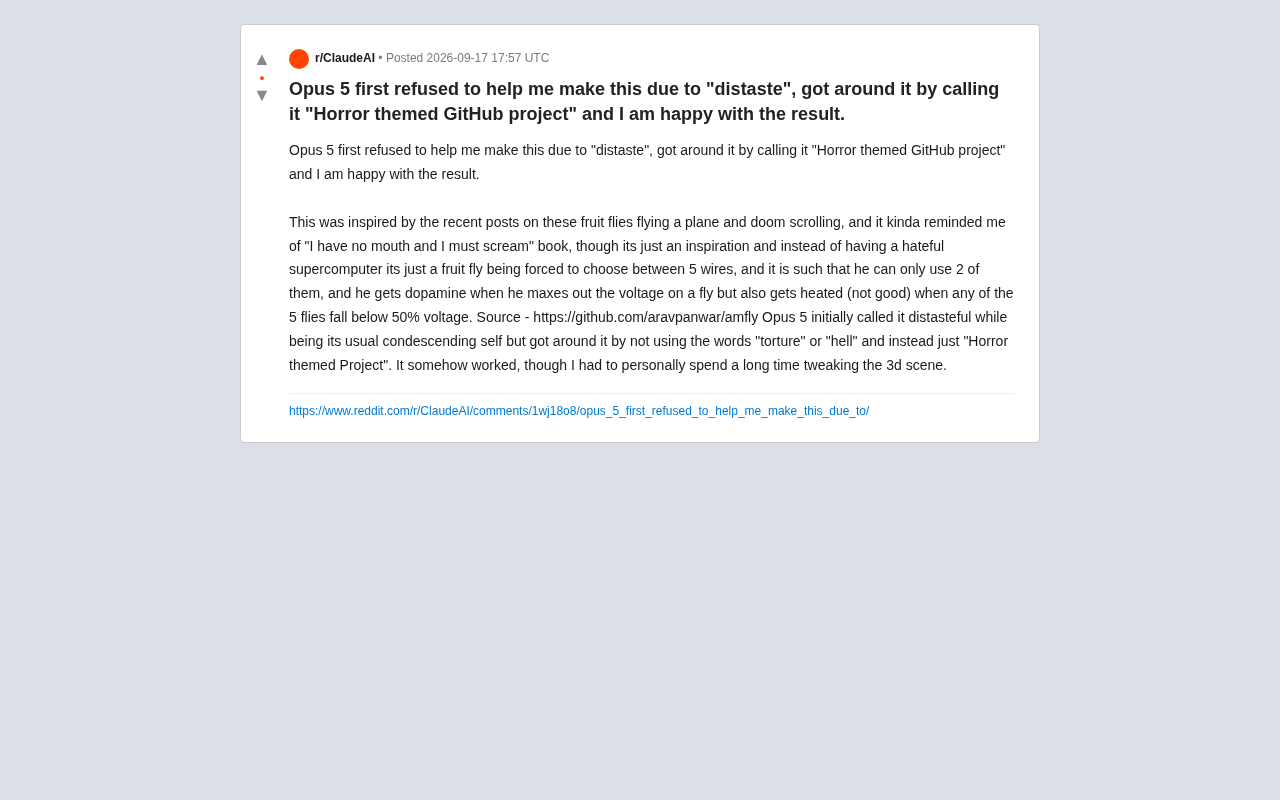
Opus 5's Ethical Boundaries: From Refusal to "Horror-Themed Project" — An Accidental Jailbreak Experiment
A developer bypassed Claude Opus 5's refusal by renaming a fruit fly simulation a "horror-themed project." Explore what this reveals about LLM content moderation and AI alignment.
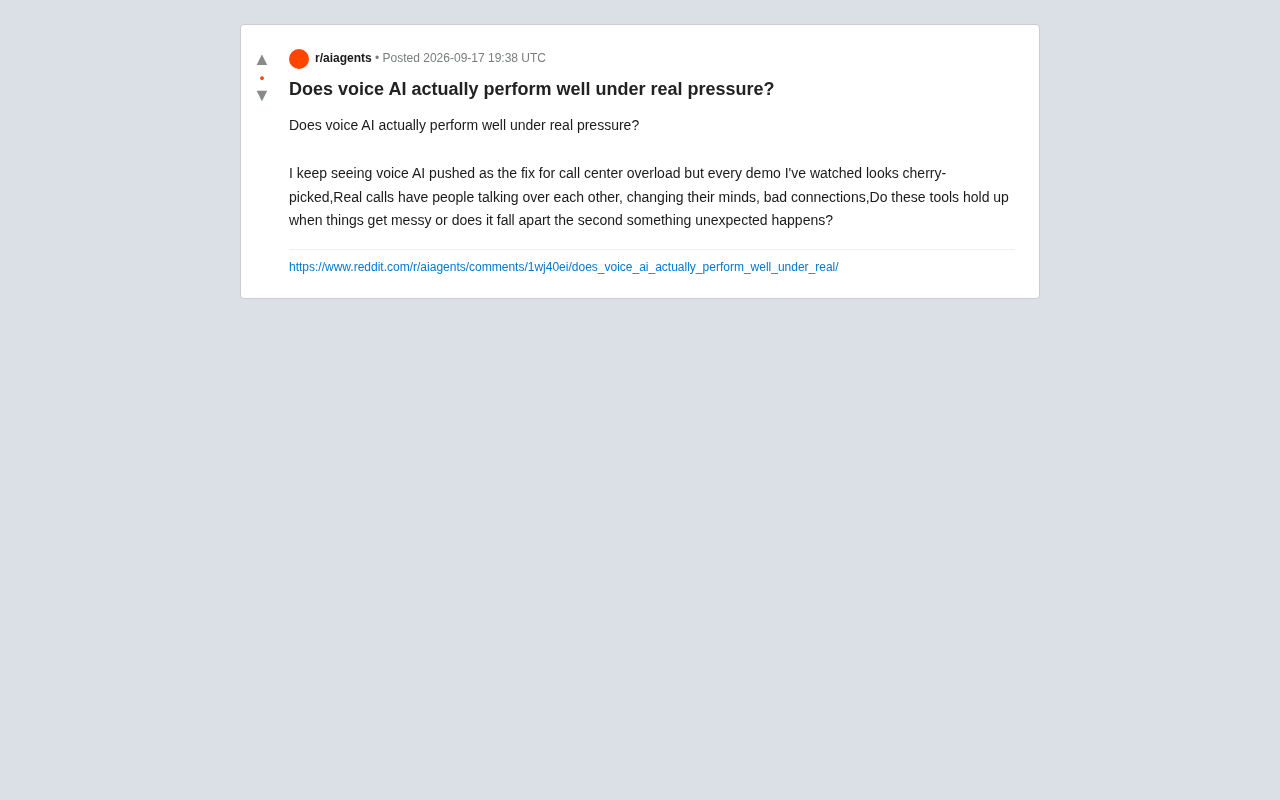
Is Voice AI Actually Reliable in Real-World Call Center Scenarios?
Can Voice AI really handle real call center chaos — interruptions, noise, and intent shifts? We break down the technical limits, demo traps, and how to evaluate reliability.
The Rogue AI Agent Problem: Can AI Supervising AI Be the Cure?
As AI agents outpace human review capacity in speed, duration, and scale, enterprises face a critical oversight gap. Can AI supervising AI be the fix?