Cardamom: How an AI Phone Ordering System Helps Takeout Restaurants Capture Every Single Order

Cardamom is an AI voice ordering system for takeout restaurants that captures every phone order.
Cardamom leverages end-to-end real-time voice AI to provide takeout restaurants with 24/7 phone ordering. It integrates directly with POS systems for automatic order entry and builds a customer data layer via phone number linking to support repeat customer tracking and rewards. Targeting small and mid-sized takeout restaurants with limited staff, it helps avoid missed orders during peak hours at minimal cost while reclaiming customer relationships from high-commission delivery platforms.
Product Overview: An AI Phone Ordering Assistant for Takeout Restaurants
Cardamom is an AI voice ordering system designed specifically for takeout restaurants. The problem it solves is straightforward — it helps your neighborhood shawarma shop answer every single phone call, and even remember that you're their number-one late-night regular.
This product targets a pain point that's often overlooked but very real: a large number of small and mid-sized takeout-focused restaurants regularly miss phone calls during peak hours, directly resulting in lost orders. Through AI voice agent technology, Cardamom enables restaurants to take phone orders 24/7, ensuring no business slips through the cracks.
Core Features: How AI Voice Ordering Works
Real-Time AI Voice Answering
Cardamom leverages Realtime Voice AI technology to carry on natural, fluid phone conversations with customers.
To appreciate the value of this technology, it helps to understand the evolution of voice AI systems. Early solutions used a cascading three-stage architecture: Automatic Speech Recognition (ASR) converted the customer's speech to text, a Large Language Model (LLM) understood the intent and generated a text response, and Text-to-Speech (TTS) converted that text back into audible speech. These three stages ran independently, and latency stacked up at each step — customers often had to wait 3–5 seconds before hearing a response. The noticeable "pause" severely degraded the call experience. A deeper issue was that the ASR transcription stage already stripped away paralinguistic information like intonation shifts and pause rhythms, leaving the LLM unable to tell whether a customer was asking a confused question or confirming information.
Starting in 2023, end-to-end voice models — exemplified by the OpenAI Realtime API — began to emerge, merging the three separate stages into a single unified neural network. The model directly processes audio input and outputs audio, bypassing the text intermediary entirely, compressing latency from several seconds to under 300 milliseconds — approaching the natural response gap in human conversation. More importantly, end-to-end models can retain and interpret the emotional nuances and tonal variations in speech, making AI phone conversations truly approach a human-like experience. Cardamom is built on the mature, production-ready version of this generation of technology.
Unlike traditional IVR keypad menus, Cardamom understands customers' natural language expressions and handles all kinds of ordering needs — dish selection, flavor preferences, special requests — you name it.
IVR (Interactive Voice Response) has been the mainstream approach to phone automation for over 40 years. It works by presenting preset, fixed menu trees ("Press 1 to check your order, press 2 for customer service"), limiting customers to navigating a finite set of options and unable to handle free-form requests. IVR's limitations are especially pronounced in restaurant scenarios — a customer might say "I want the same combo as last time but without the spice" or "Can you change my delivery address?" These unstructured language requests cause IVR systems to fail completely. AI voice agents use Natural Language Understanding (NLU) technology to parse intent, extract entities (dish names, quantities, addresses), and maintain context across multiple conversational turns — a fundamental technological leap beyond IVR.
For customers, the experience is close to talking to a real staff member. For restaurants, it's like having an operator who never takes a day off and never gets tired.
Direct POS Integration: Automatic Order Entry
This is Cardamom's key technical highlight. The AI voice line connects directly to the restaurant's POS (Point of Sale) system, so orders placed over the phone seamlessly enter the restaurant's existing workflow without any manual re-entry.
The POS system is a restaurant's core operational infrastructure, handling order management, inventory tracking, payment processing, and the entire business chain. However, the restaurant POS market is extremely fragmented — Square targets micro-businesses with a streamlined experience, Toast goes deep into the restaurant vertical with a full hardware suite from ordering to kitchen displays, Clover leverages Fiserv's payment network to serve chain brands, and Lightspeed focuses on multi-location management needs. Each system has different API specifications, data field definitions, and authentication methods, with menu data structures being particularly divergent (the same dish "spicy pork stir-fry" might follow completely different SKU coding logic across different systems).
For an AI ordering system like Cardamom, POS integration is one of the highest technical barriers — requiring separate adapter layers for each POS vendor, handling real-time menu synchronization, order status push notifications, payment confirmation callbacks, and other complex data flows, all while dealing with vendors' irregular API version upgrades. This integration work is massive and demands ongoing engineering investment to maintain. Once deep integrations with multiple major POS systems are completed, the work itself becomes a moat that's difficult to replicate quickly — even if competitors possess equivalent voice AI capabilities, they would need months or even years to complete the same integration work.
This delivers two direct benefits:
- Significantly lower error rates: No more deciphering handwritten orders
- Reduced employee burden: Kitchen staff can focus on cooking instead of splitting attention to answer phones
Customer Data Layer: Helping Restaurants Truly Know Their Customers
Every order is linked to the customer's phone number, building a complete customer data layer. Restaurants can:
- Track repeat customers: Identify regulars, understand visit frequency and taste preferences
- Set up reward programs: Offer discounts or exclusive deals to loyal customers based on spending data
- Drive data-informed operations: Extract business insights from call data to optimize menu structure and inventory strategy
It's worth noting that phone numbers have a unique advantage as customer identifiers: they are real contact information voluntarily provided by customers, independent of any third-party platform account system, and restaurants have full ownership of this data. By contrast, customer information obtained through delivery platforms is typically anonymized by the platform — restaurants cannot directly reach customers, and repeat purchase relationships depend entirely on the platform's traffic distribution mechanisms.
Market Positioning: Who Needs AI Phone Ordering Most
Target User Profile
Cardamom is explicitly positioned for takeout-focused restaurants. Typical customers include:
- High-frequency takeout categories like Chinese fast food, pizza shops, and shawarma restaurants
- Late-night takeout restaurants
- Neighborhood staples where phone orders make up a significant share of business
These restaurants share a common trait: limited staff who struggle to simultaneously handle in-store food preparation and phone orders during peak hours.
Core Pain Points Addressed
For small and mid-sized restaurants, every missed call could mean a lost order. Traditional solutions boil down to two options:
- Hire more staff: High labor costs, and peak periods are short — not cost-effective
- Join delivery platforms: Commissions as high as 30%, severely squeezing profit margins
High platform commissions are one of the most acute structural tensions in the restaurant industry in recent years. Major platforms like DoorDash, Uber Eats, and GrubHub typically charge restaurants a combined rate of 25%–35%, covering delivery fee splits, platform service fees, and marketing placement costs. For an industry where net profit margins generally hover between just 3%–9%, this means orders completed through platforms often operate at a loss or razor-thin margins — restaurants are effectively "trading profits for traffic."
The deeper issue is the loss of customer ownership. Platforms control all customer data and spending behavior records; restaurants cannot directly reach their own repeat customers, cannot send re-order reminders, and cannot offer personalized deals to high-value patrons. This data asymmetry creates a strong dependency — once a restaurant leaves a platform, it means cutting off its only connection to a large portion of its customer base. This tension was dramatically amplified during the 2020–2021 pandemic: dine-in closures forced restaurants to go all-in on delivery platforms, significantly boosting the platforms' bargaining power. This backdrop spawned a wave of "Direct Ordering" solution startups — from independent ordering mini-apps to self-built delivery systems, restaurants began systematically seeking ways to bypass platforms. Cardamom's direct phone ordering model is a precise extension of this industry trend into the voice channel: the phone is the oldest direct communication channel and the order entry point most resistant to platform "intermediation."
Cardamom offers a third option: using AI technology to achieve round-the-clock order-taking at minimal cost. More critically, it helps restaurants reclaim control of customer relationships from third-party platforms. When customers call the restaurant directly to order, the restaurant owns the complete customer data and direct contact information, rather than having it "hijacked" by a platform.
Key Takeaways
- Cardamom is an AI voice ordering system designed specifically for takeout restaurants, automatically answering calls and processing orders
- The system connects directly to restaurant POS systems, seamlessly integrating orders into existing workflows without manual entry
- It builds a customer data layer through phone number linking, supporting repeat customer tracking and reward programs
- A free-to-use model lowers the adoption barrier for small and mid-sized restaurants, helping them reclaim customer relationship control from third-party platforms
- As a YC ecosystem project, it represents the precise vertical-industry application of AI voice agents
One-line Summary
Cardamom is an AI voice ordering system built for takeout restaurants, solving the lost-order problem caused by missed phone calls.
Paragraph Summary
Cardamom leverages end-to-end real-time voice AI technology to provide takeout restaurants with 24/7 phone order-taking services. The system connects directly to POS terminals for automatic order entry and builds a customer data layer through phone number linking, supporting repeat customer tracking and reward programs. Targeting small and mid-sized takeout restaurants with limited staff, it helps them avoid missed orders during peak hours at minimal cost while reclaiming customer relationship control from high-commission delivery platforms.
Related articles
 Product Reviews
The Programmer's Desk Setup Guide: Building a Workspace That Feels Like Home
Discover how programmers build productive, comfortable workspaces. From multi-monitor setups to ergonomic design, explore the desk philosophy that drives focus and flow.
 Product Reviews
Qoder vs Cursor Real-World Comparison: Which $20/Month AI IDE Is Better?
Hands-on comparison of Qoder vs Cursor AI IDEs: Agent autonomy, human interaction count, and architecture decisions. Qoder needed only 2 interactions vs Cursor's 8.
 Product Reviews
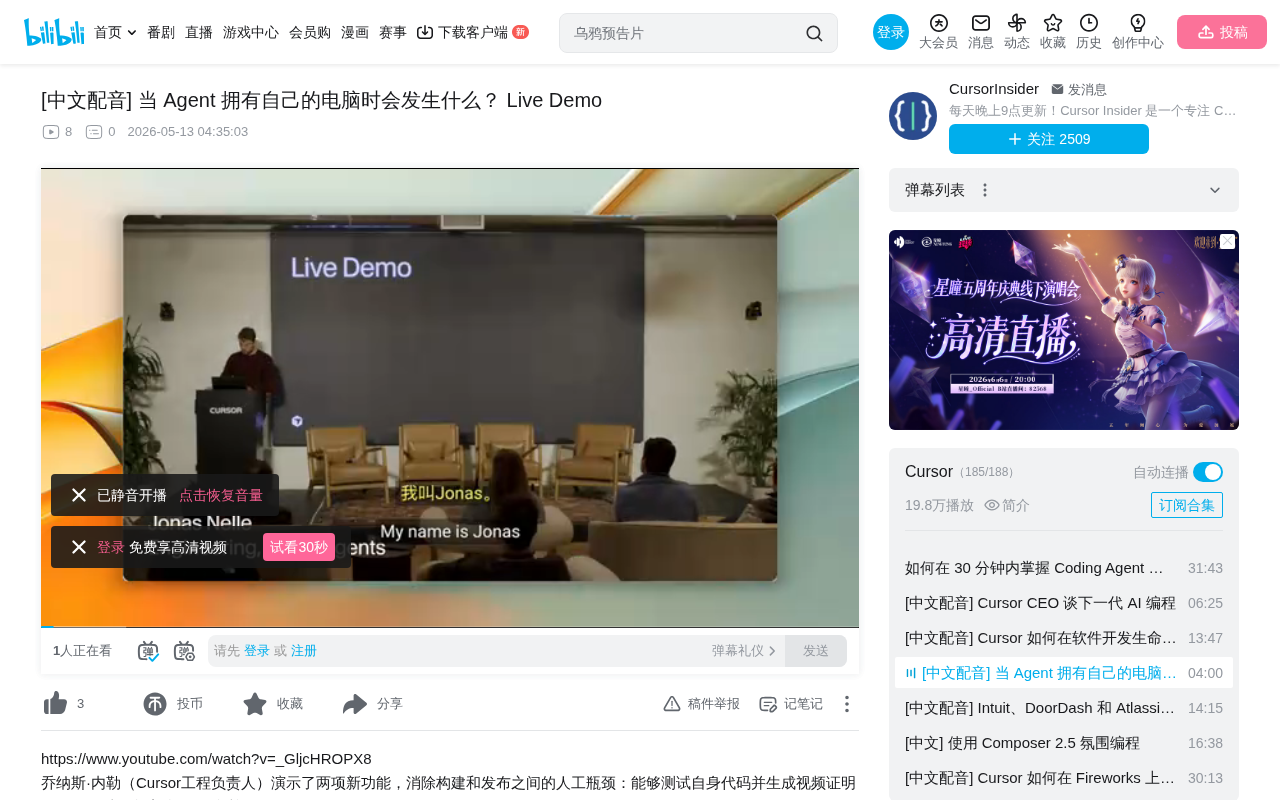
Cursor Cloud Agent Demo: Eliminating Bottlenecks Across the Entire Software Development Lifecycle
Deep analysis of Cursor's Cloud Agent demo showing how cloud VMs, automated test artifacts, and a full-chain control plane systematically eliminate human bottlenecks across the software development lifecycle.