Cardboard AI: Using AI to Turn Raw Footage into Stories — A New Approach to Video Editing
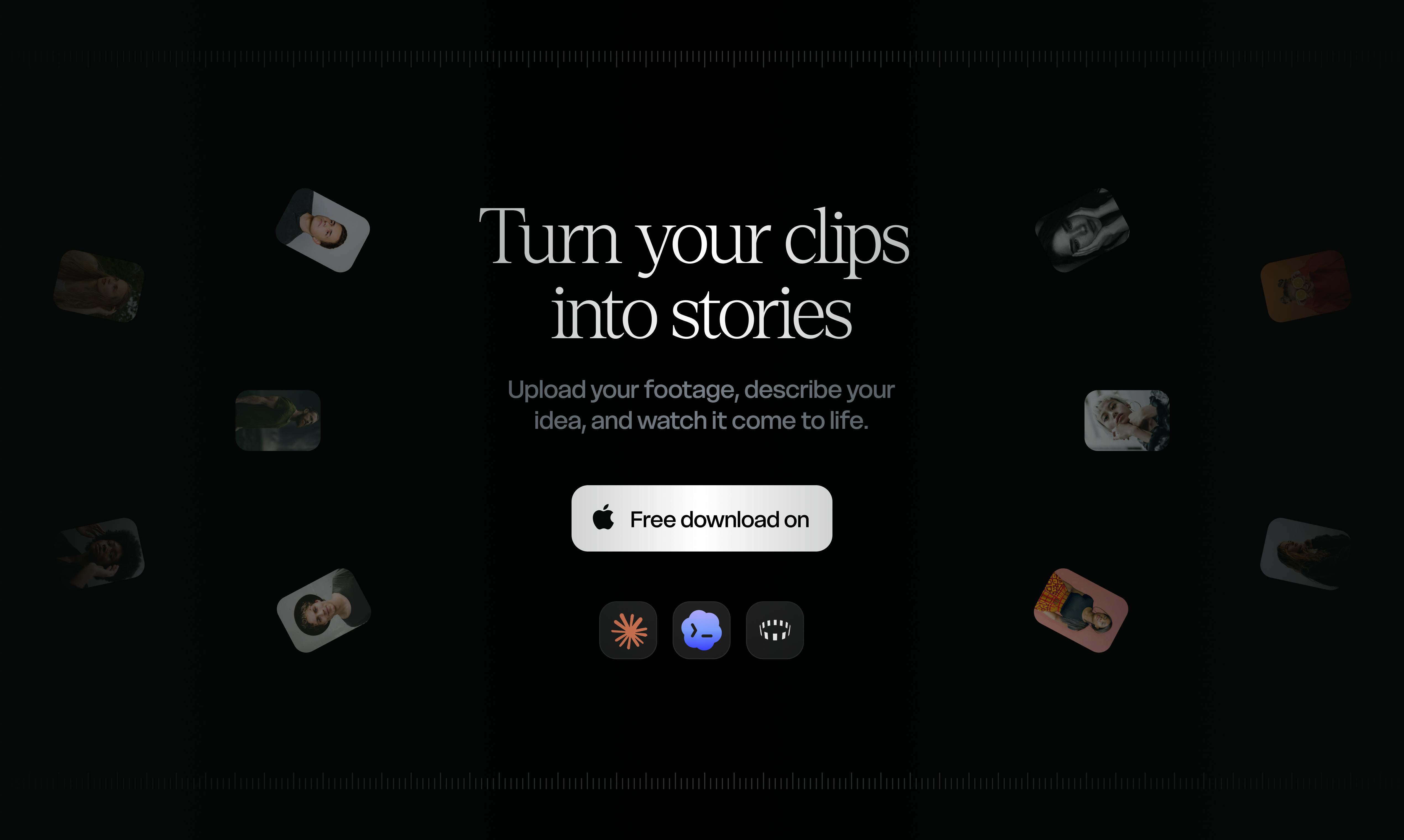
Cardboard AI sells "taste" as its hook, aiming to automatically turn raw footage into narratively coherent cuts—currently in an early exposure phase.
Cardboard AI is an AI video editor that debuted on Product Hunt, emphasizing "aesthetic judgment" and a "creative collaborator" positioning. It aims to understand footage content and automatically generate videos with narrative structure. Targeting non-professional editing users like content creators and marketers, it tries to solve the high-frequency pain point between raw footage and a finished cut. The product received 66 upvotes, 11 comments, and ranked #20 for the day—showing some attention but no breakout yet. The company emphasizes its taste—"knowing what makes a great edit"—to differentiate from ordinary auto-beat-syncing tools, but hard specs like technical details, supported formats, and export resolutions remain undisclosed, and actual performance awaits verification. Team background information is limited, and the product is overall at an early stage.
Video editing's pain point: Cardboard wants to solve it with "taste"
Editing video has never been easy. Faced with a pile of raw footage, most people either don't know where to start or spend ages dragging clips around on a timeline—only to end up with something that still falls short. Cardboard AI's pitch on Product Hunt is blunt: "Best way to edit videos with AI." It positions itself as an AI video editor that understands your footage and has aesthetic judgment, turning scattered clips into a finished cut with narrative logic.
The product garnered 66 upvotes and 11 comments on Product Hunt, ranking #20 for the day, listed under Marketing, Artificial Intelligence, and Video. Based on its positioning, it's not aimed at professional editors but at users who need to produce video content quickly without getting bogged down in timeline work.
What it actually does: automating the journey from footage to story
A key phrase in Cardboard's official description is that it acts like a "creative collaborator." This means the product logic isn't simply applying templates or adding transition effects—it attempts to understand the content of the footage itself: which clips are worth keeping, what order tells a coherent story, and how to control pacing.
The capabilities involved include at least three areas: semantic understanding of footage, narrative structure generation, and editing decisions. Most traditional AI editing tools stay at the level of "auto beat-syncing" and "smart music selection," while Cardboard aims higher—at "storytelling." The company emphasizes that it "has taste to know what makes a great edit," making aesthetic judgment a selling point—relatively rare among similar tools.
However, it's worth noting that publicly available information doesn't disclose the specific technical implementation, supported video formats, export resolutions, or processing times. The official website link is also a Product Hunt redirect. Users with requirements around these hard specs will need to dig further.
Semantic understanding of footage refers to AI parsing the visual content of video (objects, people, scenes in the frame), audio content (speech, music, ambient sound), and textual information (subtitles, OCR) to determine the theme, emotion, and usability of each clip. This is fundamentally different from traditional coarse-grained processing based on metadata (filename, duration, resolution).
Narrative structure generation builds on understanding the footage by ordering and selecting clips according to a story logic (e.g., chronological order, causal chains, emotional arcs). This typically involves modeling video pacing—for example, choosing different shot lengths at different stages such as setup, conflict, and climax.
Editing decisions are the process of outputting the final edit plan, including in/out points for each clip, transition styles, and music matching. Traditional auto-editing tools often rely on preset rules or templates, while tools with "taste" attempt to learn human editors' preferences through models and make more intuitive judgments. Together, these three capabilities form the automation foundation behind Cardboard's claimed "footage-to-story" workflow.
Who should use it, and who might want to wait
Judging from its positioning, Cardboard's target user profile is fairly clear: social media managers, content creators, and marketers at small-to-medium teams—people who need to produce video but lack professional editing skills or time. For scenarios that require quickly turning event footage, product clips, or talking-head content into publishable videos, the value of such a tool is fairly direct.
Conversely, if you need precise frame-by-frame control, complex multi-track compositing, or color grading, AI auto-editing still can't easily replace human work. Cardboard's "collaborator" positioning also suggests it leans toward assisting with first drafts rather than fully taking over.
It's also worth noting that the Makers info lists members such as Ishan Sharma, but specific team backgrounds and past product experience aren't detailed in the source material, making it impossible to further assess their technical track record.
Social media managers and content creators typically need to produce short videos at high frequency but often haven't received formal editing training. They care more about speed and platform fit (e.g., vertical format, duration limits, subtitle style) than frame-by-frame refinement. AI auto-editing tools can significantly reduce their time cost.
Marketers at small-to-medium teams face budget and staffing constraints, making it hard to hire dedicated editors. They need to quickly turn product demos, event recordings, and customer testimonials into deployable marketing videos. They have some requirements around narrative logic and brand tone but don't need cinematic-level production.
In contrast, professional editors and post-production teams need precise control over color, audio, multi-track compositing, and effects—and the current level of automation in AI tools may actually interfere with their workflows. Therefore, Cardboard's "collaborator" positioning is better suited as a first-draft generator or inspiration aid rather than a replacement for professional software.
Product stage and market position assessment
With 66 upvotes, 11 comments, and a #20 ranking on Product Hunt, the product has attracted some attention but hasn't yet sparked explosive discussion. This typically corresponds to an early-stage product—the feature framework is in place, but the user base and reputation are still building.
The AI video editing space has become fiercely competitive in recent years, with tools proliferating across auto-subtitling, smart cropping, and AI video generation. Cardboard's differentiation lies in emphasizing "narrative" and "taste" rather than pure efficiency. This direction has room for imagination, but it also means product outcomes depend heavily on the quality of the model's content understanding. Whether the actual experience lives up to the "best way" claim will require more user feedback to verify.
Summary
Cardboard AI targets a real and high-frequency pain point in video editing: the step between raw footage and a finished cut. With its "creative collaborator" positioning and aesthetic-judgment selling point, it tries to stand out from ordinary automated editing tools. The product is currently in an early exposure phase with limited public technical details. It's worth keeping an eye on for content creators interested in AI-assisted editing, but core specs and actual performance still warrant careful evaluation.
One-line Summary
Cardboard AI sells "taste" as its hook, aiming to automatically turn raw footage into narratively coherent cuts—currently in an early exposure phase.
Paragraph Summary
Cardboard AI is an AI video editor that debuted on Product Hunt, emphasizing "aesthetic judgment" and a "creative collaborator" positioning. It aims to understand footage content and automatically generate videos with narrative structure. Targeting non-professional editing users like content creators and marketers, it tries to solve the high-frequency pain point between raw footage and a finished cut. The product received 66 upvotes, 11 comments, and ranked #20 for the day—showing some attention but no breakout yet. The company emphasizes its taste—"knowing what makes a great edit"—to differentiate from ordinary auto-beat-syncing tools, but hard specs like technical details, supported formats, and export resolutions remain undisclosed, and actual performance awaits verification. Team background information is limited, and the product is overall at an early stage.
Related articles

Claude Code Reportedly Leaks Secrets to GitHub, Sounding the Alarm for AI Coding Security
Claude Code reportedly exposed passwords and API keys to GitHub, per Ars Technica. We recap the incident alongside Claude Fable 5.2's 20% price cut and Meta Muse Ember, urging developers to check commit settings before granting permissions.

Getting Started with LangChain: Core Concepts of the Agent Development Framework
Starting from the three major limitations of LLMs, this article explains LangChain's positioning and value as an Agent development framework: limited knowledge, external system interaction, and state retention, along with its official documentation system and learning path.

Ring Launches $999 Autonomous Patrol Robot RoverCam
Ring launches RoverCam, an autonomous mobile security camera with a 4K periscope camera, two-way talk, and built-in siren. Priced at $999.99, it targets commercial use and is seen as a de-personified rebirth of the Astro robot.