Carnegie Mellon University Puts Its Computer Science Courses on YouTube for Free

CMU releases its computer science courses for free on YouTube, trading low-cost openness for teaching completeness.
Carnegie Mellon University announced it is releasing computer science courses for free on YouTube via cs.cmu.edu/learn, sparking discussion in the tech community. The article analyzes that choosing YouTube over a self-built LMS is driven by cost and distribution efficiency, using mature CDNs and players to lower the barrier to openness, but the price is that complete teaching elements like assignments, quizzes, and discussions cannot be reproduced, making it closer to making classroom recordings public. For self-learners, it offers an authoritative frame of reference and real value for educational equity, but lacking TA support and pacing constraints, it demands high self-discipline. The move also fits the trend of top universities treating open courses as a combination of brand building and public service, with AI tools further improving long-video accessibility. However, key details like course coverage and licensing remain unclear, and the actual impact is still to be seen.
Carnegie Mellon University (CMU) has announced that it is releasing its computer science courses on YouTube for free, a move that has sparked lively discussion in the tech community (326 points and 62 comments on Hacker News). For countless people around the world eager to study CS but limited by geography, finances, or school resources, this is undoubtedly an educational resource opening worth paying attention to.
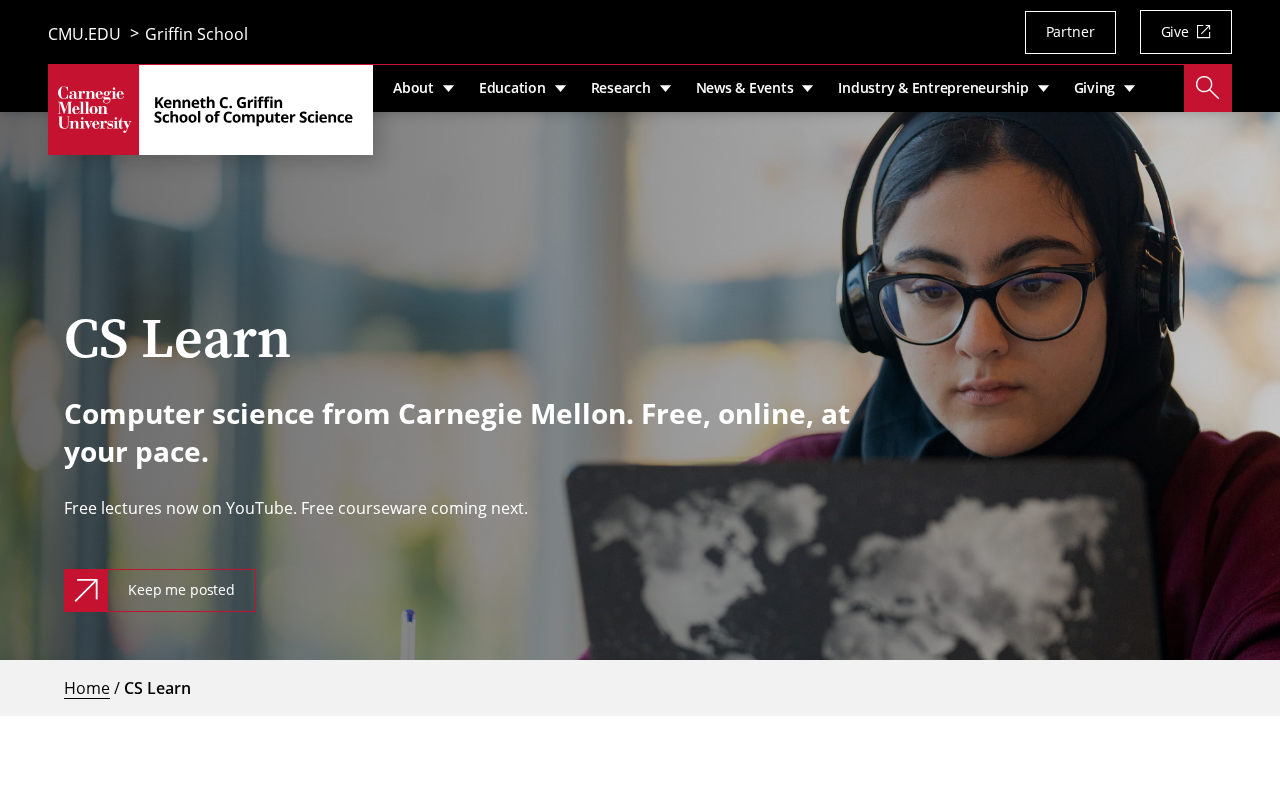
Top-tier CS education resources, now open with "zero barriers"
CMU's computer science program has long been regarded as among the best in the world, and its curriculum is known for rigor and depth. Moving courses to YouTube means that teaching content once available only to enrolled students is now—at least at the viewing level—open to anyone with an internet connection.
From the public page at cs.cmu.edu/learn, you can see that this is a centralized learning hub rather than a scattering of uploaded videos. This "bundled" opening goes a step further than putting a single course on a MOOC platform: the signal it sends is that a top university is willing to treat its own teaching assets as a public good.
Why YouTube instead of a self-built platform?
Choosing YouTube over a self-built LMS (learning management system) is itself a thought-provoking product decision.
Building your own platform means bearing a whole series of engineering burdens—server costs, a maintenance team, player experience, rights management, and so on—whereas YouTube offers a mature global CDN, captions, playlists, and a mobile experience. For open courses whose primary goal is "letting more people see them," borrowing existing distribution infrastructure is clearly more cost-effective.
The price is the completeness of the learning experience—assignments, quizzes, discussion forums, and grading, the core elements that make a "course," cannot be reproduced on YouTube. So this is more like "making classroom recordings public" than a full online degree program.
An LMS (learning management system) is the core infrastructure for online teaching at universities, with common products including Canvas, Moodle, and Blackboard. It typically integrates syllabi, video hosting, assignment submission, automated grading, discussion forums, gradebooks, and learning analytics, and is connected to the school's student information system. Building or deploying an LMS requires not only ongoing server and operations investment but also involves complex issues such as accessibility compliance, data privacy (e.g., FERPA), and rights management. By contrast, YouTube solves only the "video distribution" piece while stripping out the teaching management layer entirely. So opening courses via YouTube essentially means using a public video platform to replace the playback and dissemination functions of an LMS, not the entire teaching system.
What it means for learners
Self-learners gain a credible path. There is an abundance of computer science self-study resources online, but quality varies widely. CMU's courses provide a "frame of reference" from an authoritative institution, letting self-learners check their own knowledge structure and fill in gaps.
But free videos are not the same as a free education. With no teaching assistants to answer questions, no peers to discuss with, and no deadlines to create pacing pressure, self-learners need tremendous self-discipline. Some in the tech community also point out that the greatest value of open courses often lies in building a systematic learning framework rather than replacing full in-school training.
It has real significance for educational equity. For students in areas with scarce educational resources, being able to watch lectures from a top university directly is itself a lowering of barriers.
The industry trend behind open courses
CMU's move is not an isolated case but part of a larger trend: top universities are treating open courses as a combination of brand building and public service. Course videos are low-cost, high-exposure content assets that both showcase teaching strength and attract future applicants and partners.
That said, the spread of AI-assisted learning tools is changing how people consume this kind of video—automatic captions, chapter summaries, and Q&A-style retrieval have greatly improved the accessibility of long-form video courses. Once open course videos enter an open platform, they are easier for these tools to process and reorganize.
Open Courseware is not a new thing. MIT launched its OpenCourseWare initiative as early as 2001, systematically publishing course materials and videos; afterward, MOOC platforms such as edX and Coursera brought elite university courses online, but mostly conditioned on registration, paid certificates, or time-limited access. CMU this time uses YouTube directly as the carrier, bypassing the registration and commercial processes of MOOC platforms, making it closer to "open content" than an "online course product." This lineage shows that top universities' open educational resources have evolved from self-built portals to MOOC platforms and now to leveraging general-purpose video platforms, with each stage making different trade-offs between distribution cost and teaching completeness.
Practical limitations and unresolved questions
What needs to be viewed calmly is that currently the public information is limited: how broad the course coverage is, whether it includes lecture notes and assignments, how often it is updated, and what license it uses—none of these have clear answers yet. If it is merely putting videos of a few introductory courses online, there will be a gap between its impact and the claim of "opening computer science courses for free."
In addition, making videos public also involves the willingness of instructors and copyright arrangements, and these details determine how far the initiative can go.
For learners, the most pragmatic approach is to treat it as an entry point to high-quality learning resources, not as a substitute for an admission letter. Real learning still happens in the process of writing code, solving problems, and sustained effort.
The license determines how open course videos can be used. Common Creative Commons licenses allow others to repost, adapt, and even use commercially with attribution, whereas the standard YouTube license reserves all rights by default and permits only embedded playback on the platform. If CMU adopts strict copyright, the videos will be hard for other educational institutions to reintegrate, translate, or use for AI training; if it adopts an open license, it will be more conducive to forming a public learning resource ecosystem. So the licensing terms are not a trivial detail but a key yardstick for judging whether this opening is a "public good" or "brand display," and they also directly affect the room for third-party tools to reuse the course content.
One-line Summary
CMU releases its computer science courses for free on YouTube, trading low-cost openness for teaching completeness.
Paragraph Summary
Carnegie Mellon University has announced that it is releasing its computer science courses on YouTube for free via cs.cmu.edu/learn, sparking lively discussion in the tech community. The article analyzes that choosing YouTube over a self-built LMS is a consideration of cost and distribution efficiency—using mature CDNs and players to lower the barrier to openness—but the price is that complete teaching elements such as assignments, quizzes, and discussions cannot be reproduced, making it closer to making classroom recordings public. For self-learners, this provides an authoritative frame of reference and real value for educational equity, but without TA support and pacing constraints, it requires high self-discipline. The move also fits the trend of top universities treating open courses as a combination of brand building and public service, with AI-assisted tools further improving the accessibility of long videos. However, key details such as course coverage and licensing terms remain unclear, and the actual impact remains to be seen.
Related articles

Bin's Live Stream Highlights: Hilarious Interactions from "You Came at the Right Time" to "I'll Support You From Now On"
Bin's hilarious live stream highlights: from "You came at the right time" to "I'll support you from now on," featuring Championship skins, wigs, and other game memes that showcase Bilibili's unique streaming culture.

Hunter Rescues Educated Youth: The Mountain-Chasing System Launches a New Warm-Hearted Viral Drama Formula
Bilibili's early-access period short drama *Everyone Thinks I'm a Poor Hunter* opens with a snowy-night rescue of an educated youth. Hunter Chen Shan activates the mountain-chasing system, using realistic hypothermia first-aid details and mutual-probing character dynamics to deliver a warm-hearted period drama without the sleaze.

Riemann Hypothesis Proven by AI? The Truth Has Nothing to Do With Your Reality
34-year-old mathematician Levent Alpöge claims to have proven the Riemann Hypothesis and Generalized Riemann Hypothesis with Claude, releasing 17 million lines of formal verification code. This article sorts out the facts, debunks myths about RSA collapse and new material revolutions, and analyzes the true significance of mathematics-AI collaboration.