Caro Reveals: How LBJ Used Disguise to Fool Segregationists

Caro's Johnson accumulated power in the Senate through disguise and released his hidden civil rights ideals only after gaining power.
The article centers on Robert Caro's Lyndon Johnson biography, focusing on the historical episode in which Johnson deliberately catered to Southern conservatives when he first entered the Senate. Through an interview with former Georgia Senator Talmadge, Caro reveals why Johnson's disguise succeeded: Talmadge's impression of Johnson's racial stance was "teacher and servant," and he believed there was "none indicated" of sympathy for blacks, even saying "I believed him." The article points out that Johnson's disguise worked because it left no flaws in daily interactions, letting colleagues draw wrong conclusions on their own. After Johnson became president, he pushed the Civil Rights Act of 1964 and the Voting Rights Act of 1965, showing that his long-term ideals were released only after he held real power. The article concludes by discussing the moral complexity of this narrative and its lessons for today.
Robert Caro's LBJ biography series records a fascinating case of political survival: upon entering the Senate, Johnson discovered that the most powerful figures were the conservative Southern Democrats (Dixiecrats), so he actively "shaped himself into their form." This history offers a classic sample for understanding the workings of power, political disguise, and the timing of reform.
Entering the Senate: First, Learn to "Become One of Them"
While writing The Master of the Senate, Caro interviewed former Georgia Senator Herman Talmadge. He asked Talmadge: what impression did he get from this Senate newcomer Johnson about the "proper relationship" between whites and blacks? Caro summarized Talmadge's answer in four words: "Teacher and servant."
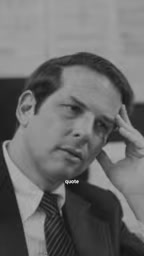
This answer itself was a political signal. Talmadge, as a representative of Southern conservatives, did not become wary of Johnson; instead, he felt that this new senator was aligned with the Southern position on racial issues. Caro pressed further: did Johnson have no sympathy for blacks? No desire to improve their situation? What his notes recorded was a long pause, followed by Talmadge's two-word reply: "none indicated."
The value of this interview lies in the fact that it came from Johnson's Southern colleague, not from later commentators. Talmadge believed Johnson "was with us in his heart," and said, "I believed him." Caro, when quoting this, also admitted that he himself believed this judgment at the time.
Dixiecrats were a specific historical group in 20th-century American politics, mainly referring to conservative Democratic lawmakers from former slave states. Their core demands were defending racial segregation and opposing federal intervention in civil rights affairs, and in the Senate they long wielded enormous power through seniority and committee chairmanships. Because Southern states had a decisive influence in Democratic primaries, these lawmakers could often be reelected for decades, thereby controlling key Senate committees. In the 1950s, when Johnson first entered the Senate, Southern Democrats repeatedly killed civil rights legislation through means such as the filibuster, making them the de facto power center of the Senate. Johnson's choice to cater to this group was based on a clear understanding of its power structure.
The Deeper Meaning of "None Indicated": How Political Disguise Works
Through this dialogue, Caro reveals a key point: Johnson's disguise was effective precisely because it left no flaws in daily interactions. Talmadge was not fooled by any specific promise, but drew a wrong judgment from Johnson's overall behavior and demeanor.

This state of "no indication" was more deceptive than any public statement. It meant that Johnson left his Southern colleagues no opening for suspicion, thus accumulating power capital in the Senate, a circle dominated by Southern conservatives. Caro's narrative does not portray Johnson as a deeply hidden idealist, but as a political actor who used different strategies at different stages.

Political scholars often regard Johnson as a typical "transactional" politician, but this interview by Caro adds another layer: behind the transactions there may have been long-term goals unnoticed by colleagues. Talmadge's "I believed him" became the most ironic testimony in this history—the deeper the belief, the more thorough Johnson's disguise.
Transactional politician is a political science term summarizing political figures whose core behavioral pattern is interest exchange and reciprocal compromise. Such politicians are less driven by ideological programs and are better at identifying the interest demands of all parties, accumulating influence and votes through give-and-take. Johnson's performance in the Senate is often classified into this type, but Caro's narrative suggests a more complex layer: the transactional behavior itself may have served a long-term goal unnoticed by colleagues. In other words, the transactional style can be either an end or a cover. This distinction is crucial for understanding the strategic depth of political figures, because purely transactional politicians often lack a coherent ultimate concern, whereas Johnson's case shows that transactional means and long-term ideals can coexist in the same actor.
After Gaining Power: Ideals Are Released
Caro's narrative turns at the end to this outcome that needs no explanation from me: after Johnson became president, he pushed through the Civil Rights Act of 1964 and the Voting Rights Act of 1965—which Caro called the most important civil rights laws since Reconstruction. His explanation is concise and crucial: only after Johnson held real power did he put these ideals into practice, and these ideals were "that few people knew he had."
The significance of this turning point lies in the relationship between timing and power. Johnson's choices during his Senate years can be understood as a strategy of power accumulation: first gain the position, then use the position. Caro's biography does not avoid the moral complexity of this strategy, but leaves the question to the reader: if Johnson had publicly expressed a civil rights stance early in his Senate career, could he still have climbed high enough? And if he had not climbed to that position, could those laws still have passed?
The Civil Rights Act of 1964 and the Voting Rights Act of 1965 are two legislative cornerstones of the American civil rights movement. The 1964 act prohibited discrimination based on race, color, religion, sex, or national origin, covering areas such as public accommodations, employment, and education; the 1965 act targeted the systematic disenfranchisement of black voters in Southern states and established federal review and judicial intervention mechanisms. These two laws ended the legal basis of Jim Crow. Caro called them "the most important civil rights laws since Reconstruction" because since the end of Reconstruction in 1877, no federal law had been passed that so comprehensively guaranteed equal rights for blacks. As a former Senate leader from the South, Johnson's political difficulty in pushing these two laws through was far higher than that of a Northern liberal president, which is precisely why Caro emphasizes his "hidden ideals."
A Multi-Angle Examination of This Narrative
This material from Caro has special value in historical writing because its core evidence comes from a party figure on the opposing side. Talmadge's recollection is both proof of the effectiveness of Johnson's disguise and a reminder that the true intentions of political figures are often difficult to read directly from contemporaneous records and can only be inferred from subsequent actions.
Some commentators have offered different perspectives. One view holds that Johnson's adaptation to Southern positions during his Senate years was not only strategy but may also have partly reflected the political environmental pressure of the time; another view holds that Caro's narrative relies too heavily on the framework of "hidden ideals" and ignores the complexity of the evolution of Johnson's stance on civil rights. These disagreements do not diminish the importance of Caro's material; rather, they show that the same piece of history can carry multiple interpretations.
Lessons for Today
From Caro's narrative, one can extract a lesson at the level of political communication: the most effective form of disguise is not active statement, but letting observers draw the conclusions they want on their own. What Talmadge heard was not what Johnson said, but what he did not say. This "misjudgment in an information vacuum" is equally common in organizational politics and public communication today.
Johnson's case also suggests: to evaluate a political figure, one cannot look only at whom he stood with at a certain stage, but also at where he ultimately used power. Caro closes this recollection with Talmadge's "I believed him," leaving not an answer but a persistently valid question.
Related articles
 Tech Frontiers
MuJoCo: An Analysis of DeepMind's Open-Source General-Purpose Physics Simulator
An in-depth analysis of Google DeepMind's open-source physics simulator MuJoCo: high-performance C++ kernel, MJCF modeling format, contact solving principles, MJX GPU acceleration, and robot reinforcement learning use cases.
 Tech Frontiers
Claude API Quick Start: The Official Quickstarts Project Collection
Anthropic's official claude-quickstarts project collection helps developers quickly build deployable apps with the Claude API. Nearly 20k stars, Python-based, great for beginners and prototyping.
 Tech Frontiers
AI Agents Connecting Directly to APIs: Which Calls Can Be Safely Allowed?
AI agents can call any API, but the real challenge is deciding which calls can be safely allowed. This article analyzes allowance decisions from three dimensions—intent matching, least privilege, and controllable impact—and argues that the control layer should sit outside the agent, combined with audit traceability to build a trustworthy API call governance mechanism.