ccpocket: An Open-Source Client for Remotely Controlling Claude/Codex Programming Agents from Your Phone

ccpocket is an open-source mobile client for remotely controlling AI programming agents from your phone
ccpocket is an open-source mobile client built with Dart/Flutter that enables real-time remote control of AI programming agents like Codex and Claude Code from your phone via WebSocket bridging. With 694 GitHub stars, it reflects real developer demand for mobile control of AI coding agents and represents the broader industry trend of AI programming toolchains extending from desktop to mobile.
Project Overview
ccpocket is an open-source mobile client that enables developers to remotely control AI programming agents like Codex and Claude from their phones. Built on WebSocket bridging technology, the project establishes a real-time communication link between mobile devices and AI programming assistants, allowing developers to manage and monitor AI coding tasks anytime without being tied to their desks.
As of now, ccpocket has earned 694 stars and 54 forks on GitHub. Developed in Dart, the project continues to gain momentum in the community.
Why Control AI Programming Agents from Your Phone?
AI Programming Agents Are Creating New Work Patterns
As AI programming agents like OpenAI Codex and Anthropic Claude Code mature, more developers are adopting "asynchronous programming" — launching an AI coding task without needing to watch the screen the entire time. AI agents can autonomously write code, debug, and even run tests, with developers only stepping in at critical decision points.
To understand the technical context behind this trend, it's worth examining the capabilities of current mainstream AI programming agents. OpenAI Codex is a cloud-based software engineering agent launched by OpenAI in 2025, capable of handling multiple coding tasks in parallel within sandboxed environments — including writing feature modules, fixing bugs, running tests, and submitting PRs. Claude Code is Anthropic's terminal-native programming assistant that runs directly in a developer's command-line environment, understanding the entire codebase context and executing complex multi-step programming tasks. The common trait of both tools is their high degree of autonomy — after receiving high-level instructions, the AI agent can independently plan execution paths, write code, and self-debug, only requiring human intervention at critical decision points. It's precisely this autonomy that creates both the premise and value for mobile control tools.
This paradigm naturally raises a question: How do you continue monitoring and controlling these AI agents after leaving your workstation? ccpocket was born to solve this pain point.
The Evolution of Asynchronous Programming
The "asynchronous programming" model that ccpocket serves is actually a continuation of a broader trend in software engineering. In traditional development workflows, CI/CD (Continuous Integration/Continuous Deployment) pipelines already achieved asynchronous builds and deployments — developers don't need to wait for builds to complete after committing code, and can learn results through notification systems. AI programming agents push this asynchronization into the coding phase itself. This pattern is known in academia as "Human-in-the-Loop" — where humans are no longer the executors but supervisors who intervene at critical decision points. ccpocket essentially provides a mobile interaction interface for this human-in-the-loop model, freeing the "loop" from the constraints of a physical workstation.
Typical Use Cases
- During commutes: Check AI agent coding progress on the subway or bus, approve key decisions
- Between meetings: Quickly confirm whether AI programming tasks are complete or need human intervention
- Away from your desk: Maintain control over programming tasks from a coffee shop or while on the go
- Multi-task management: Monitor multiple AI agents' work status simultaneously and coordinate them
ccpocket Technical Architecture Deep Dive
WebSocket Bridging for Real-Time Communication
ccpocket's core solution is WebSocket bridging. The WebSocket protocol provides full-duplex communication, enabling the mobile client to maintain a real-time, low-latency bidirectional connection with AI programming agents running on desktops or servers.
From a technical perspective, WebSocket is a network protocol that provides full-duplex communication over a single TCP connection, standardized by the IETF as RFC 6455 in 2011. Unlike the traditional HTTP request-response model, after completing the initial handshake (HTTP Upgrade), a persistent connection is established between client and server, allowing both parties to send data frames at any time without repeatedly establishing and tearing down connections. In ccpocket's architecture, the WebSocket bridge acts as a relay layer between the mobile client and desktop AI agents — the bridge server simultaneously maintains WebSocket connections with both the phone and the AI agent, forwarding messages between them in real time. Compared to HTTP Long Polling or Server-Sent Events (SSE), WebSocket's advantages lie in true bidirectional communication and lower protocol overhead, with each data frame requiring only 2-14 bytes of header information — particularly important for mobile battery and data consumption.
This architectural design delivers three key advantages:
- Strong real-time performance: Compared to HTTP polling, WebSocket instantly pushes AI agent status updates and output results
- Bidirectional control: Not only can you view AI agent output, but you can also send commands and confirm operation requests from your phone
- Low resource consumption: WebSocket connection overhead is far less than repeated polling, friendlier to phone battery and data usage
Cross-Platform Solution Based on Dart/Flutter
The project uses Dart as its development language and is most likely built on the Flutter framework, natively supporting both iOS and Android platforms.
Dart is a programming language developed by Google, initially released in 2011, but gaining widespread attention after the Flutter framework matured in 2018. One of Dart's core advantages is its asynchronous programming model — based on Future and Stream async primitives, combined with async/await syntactic sugar, handling persistent I/O operations like WebSocket becomes very intuitive. Dart's single-threaded event loop model (similar to JavaScript) avoids lock contention issues in multi-threaded programming, while supporting true parallel computation through the Isolate mechanism. The Flutter framework provides a self-rendering engine (Skia/Impeller) that doesn't rely on platform-native widgets, enabling pixel-perfect UI consistency across iOS and Android. For an application like ccpocket that needs to display AI agent output streams in real time, Flutter's high-performance rendering pipeline and Dart's stream data processing capabilities form excellent technical synergy, ensuring client responsiveness and stability.
Industry Trend: AI Programming Toolchains Going Mobile
The Paradigm Shift from Desktop to Pocket
ccpocket's emergence reflects an important trend: AI programming toolchains are extending from desktop to mobile. Traditional software development relied almost entirely on desktop environments, but the autonomous capabilities of AI agents are changing this landscape. When AI can independently complete most coding work, the developer's role shifts more toward "supervisor" and "decision-maker" — roles that don't require you to be sitting at a computer.
The Competitive Landscape of AI Programming Tool Ecosystems
The AI programming tool ecosystem that ccpocket operates in is expanding rapidly. Beyond Codex and Claude Code, the market includes GitHub Copilot (a code completion tool integrated into VS Code and JetBrains IDEs), Cursor (an AI-native code editor), Windsurf (formerly the Codeium AI programming platform), and several other competitors. Most of these tools focus on the desktop experience, and the auxiliary tool ecosystem around them — including mobile control, task orchestration, and automated code review — remains in its early stages. ccpocket has chosen a clever entry point: it doesn't compete with these AI programming agents but exists as a complementary layer, providing a mobile control panel for existing agent tools. This "tool for tools" positioning allows it to grow naturally as the underlying AI agents become more widespread.
Open-Source Community Validates Real Demand
As a community-driven open-source project, ccpocket's rapid accumulation of nearly 700 stars demonstrates that developers have a real and urgent need for mobile control of AI programming agents. As tools like Codex and Claude Code become more prevalent, the auxiliary tool ecosystem around them will continue to expand.
Deep Changes in Developer Work Patterns
From a broader perspective, ccpocket represents not just a tool, but a microcosm of the transformation in how developers work. Future software development may look more like "managing a team of AI agents" — with developers assigning tasks, reviewing code, and making decisions from any time and place via phone or tablet.
Summary
ccpocket fills the gap in mobile control within the AI programming agent ecosystem. Its WebSocket bridging solution is clean and efficient, and the Dart/Flutter tech stack ensures cross-platform compatibility. If you're a heavy user of Codex or Claude Code, this open-source tool is worth watching and trying. As AI programming agent capabilities continue to strengthen, the value of mobile control tools will only grow.
Key Takeaways
- ccpocket is an open-source mobile client built with Dart that enables remote control of AI programming agents like Codex and Claude from your phone via WebSocket bridging
- The project has earned 694 stars and 54 forks on GitHub, reflecting real developer community demand for mobile control of AI programming agents
- The WebSocket full-duplex communication solution provides real-time, low-latency bidirectional control capabilities suited for mobile use cases
- The project reflects the industry trend of AI programming toolchains extending from desktop to mobile, as the developer role shifts from coder to supervisor and decision-maker of AI agents
- Built with Dart and likely using the Flutter framework, it natively supports both iOS and Android platforms
Related articles
 Product Reviews
The Programmer's Desk Setup Guide: Building a Workspace That Feels Like Home
Discover how programmers build productive, comfortable workspaces. From multi-monitor setups to ergonomic design, explore the desk philosophy that drives focus and flow.
 Product Reviews
Qoder vs Cursor Real-World Comparison: Which $20/Month AI IDE Is Better?
Hands-on comparison of Qoder vs Cursor AI IDEs: Agent autonomy, human interaction count, and architecture decisions. Qoder needed only 2 interactions vs Cursor's 8.
 Product Reviews
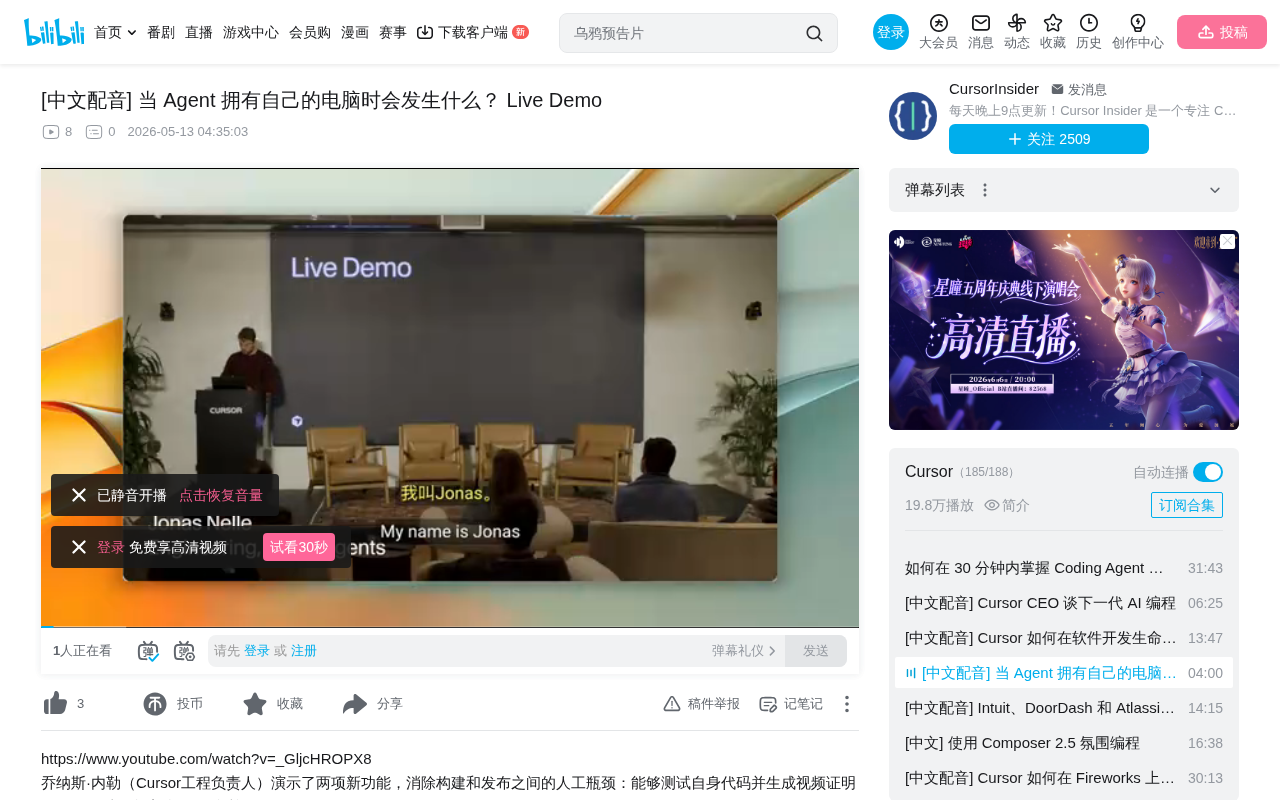
Cursor Cloud Agent Demo: Eliminating Bottlenecks Across the Entire Software Development Lifecycle
Deep analysis of Cursor's Cloud Agent demo showing how cloud VMs, automated test artifacts, and a full-chain control plane systematically eliminate human bottlenecks across the software development lifecycle.