Chatbox: A Comprehensive Analysis of the Open-Source Cross-Platform AI Client

Chatbox is a popular open-source AI client offering unified, privacy-focused access to multiple LLMs.
Chatbox is a highly popular open-source AI desktop client with nearly 40,000 GitHub stars. Built with TypeScript, it provides a unified cross-platform interface to access multiple LLM services including OpenAI, Claude, and local models via Ollama. Its key strengths include local data storage for privacy, multi-model support, offline capability, and flexible customization, making it ideal for both casual users and developers.
Project Overview
Chatbox is a powerful open-source AI client application that has earned nearly 40,000 stars (39,770 stars) on GitHub with over 4,000 forks, making it one of the most popular AI desktop clients available today. Built with TypeScript, it offers cross-platform capabilities and provides users with a unified interface to access various large language model services.
Core Positioning & Value
Why Do We Need an AI Client?
With the emergence of large language models like ChatGPT, Claude, and Gemini, users face a practical problem: each model has its own web interface, switching between them is costly, and functionality is limited by the official frontend's design. Chatbox addresses this pain point — as a local client, it allows users to connect to multiple models via API and manage all AI conversations within a unified interface.
Differentiation from Similar Products
Compared to purely web-based AI chat tools, Chatbox offers the following advantages:
- Local Data Storage: Conversation data is stored locally, ensuring privacy and security
- Multi-Model Support: One client connects to multiple backends including OpenAI, Azure, Claude, and more
- Offline Capability: Fully offline usage when paired with local models (e.g., Ollama)
- Flexible Customization: Advanced features like Prompt templates and parameter tuning are all available
Technical Architecture Analysis
Technology Stack Choices
Chatbox uses TypeScript as its primary development language — a choice that balances type safety with development efficiency. Based on the project structure, it's likely built on a cross-platform framework such as Electron or Tauri, achieving coverage across Windows, macOS, and Linux.
The Power of the Open-Source Ecosystem
With 4,031 forks, a large number of developers are building upon and contributing to the project. An active community drives continuous feature iteration and bug fixes, which is one of the core competitive advantages open-source AI tools have over closed-source products.
Use Cases
Individual Users
- Daily AI conversations and Q&A
- Writing assistance and content creation
- Code generation and debugging
- Learning and knowledge exploration
Developers & Professional Users
- API debugging and Prompt engineering experiments
- Multi-model performance comparison testing
- Frontend interface for locally deployed models
- Client for enterprise internal knowledge base Q&A systems
Market Trends & Outlook
Open-source AI clients are becoming a rapidly growing segment. Judging by Chatbox's nearly 40,000 stars, there is strong user demand for a "model-agnostic" unified AI interaction interface. As local large models (such as Llama, Mistral, etc.) continue to improve in performance, clients like Chatbox that support local model integration will find even greater room for growth.
Looking ahead, we can expect these tools to evolve in the following directions:
- Agent-Based: Expanding from simple conversations to task automation
- Multimodal Integration: Supporting images, voice, video, and other input/output modalities
- Plugin Ecosystem: Extending functionality boundaries through plugin systems
- Team Collaboration: Evolving from personal tools to team collaboration platforms
Conclusion
Chatbox represents an important direction in the democratization of AI tools — enabling everyone to use various AI models with the lowest barrier to entry and maximum flexibility. Its success lies not only in excellent technical implementation but also in precisely capturing users' core needs in the multi-model era: unification, flexibility, and privacy security. For users looking to efficiently leverage AI capabilities, this is a high-quality open-source project worth following and trying out.
Related articles
 Product Reviews
The Programmer's Desk Setup Guide: Building a Workspace That Feels Like Home
Discover how programmers build productive, comfortable workspaces. From multi-monitor setups to ergonomic design, explore the desk philosophy that drives focus and flow.
 Product Reviews
Qoder vs Cursor Real-World Comparison: Which $20/Month AI IDE Is Better?
Hands-on comparison of Qoder vs Cursor AI IDEs: Agent autonomy, human interaction count, and architecture decisions. Qoder needed only 2 interactions vs Cursor's 8.
 Product Reviews
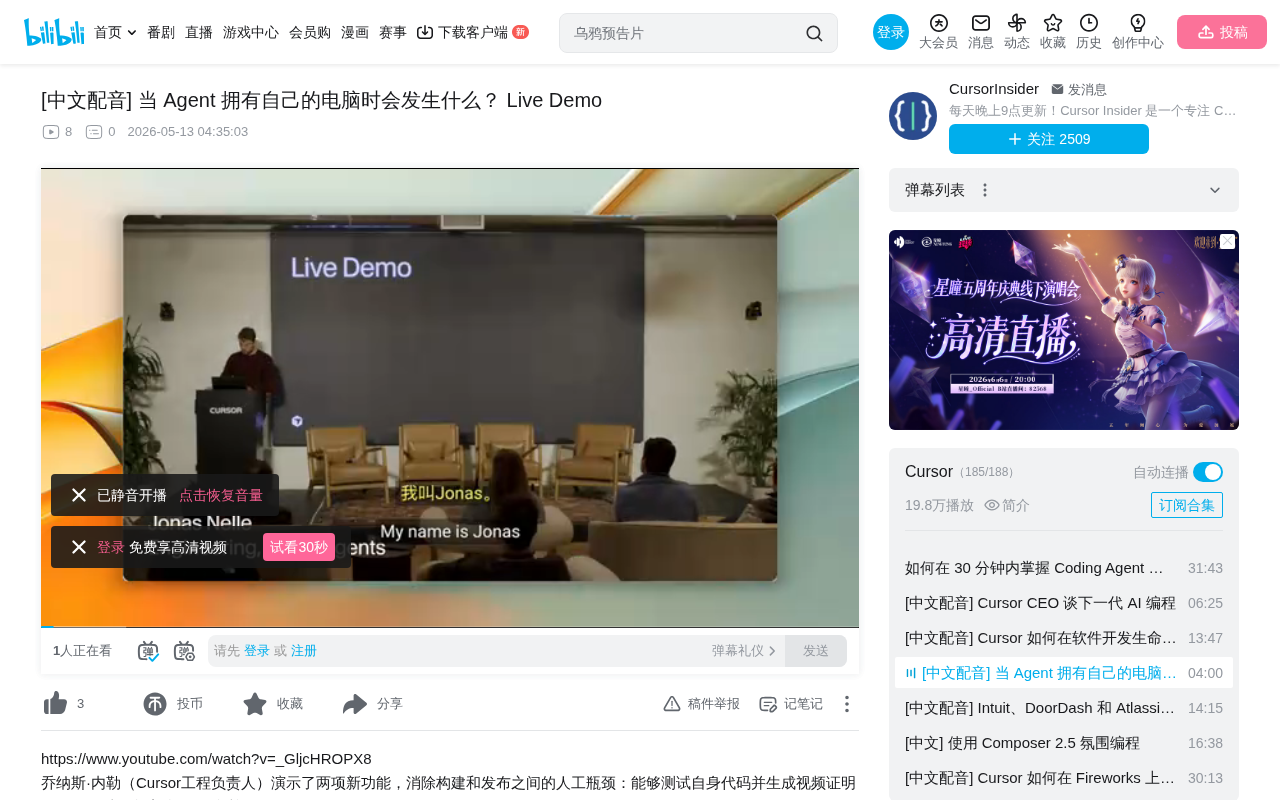
Cursor Cloud Agent Demo: Eliminating Bottlenecks Across the Entire Software Development Lifecycle
Deep analysis of Cursor's Cloud Agent demo showing how cloud VMs, automated test artifacts, and a full-chain control plane systematically eliminate human bottlenecks across the software development lifecycle.