Chatbox: A Detailed Look at the Open-Source Multi-Model AI Desktop Client

Chatbox is an open-source cross-platform AI desktop client that unifies access to multiple large language models.
Chatbox is an open-source AI client application with nearly 40,000 GitHub Stars, built with TypeScript + Electron, supporting Windows, macOS, Linux, and mobile platforms. It provides a unified interface to connect with multiple AI models including OpenAI, Claude, and Gemini, featuring direct API connections, local data storage, and Prompt management. It can also be paired with Ollama for a completely offline AI experience, balancing privacy protection and cost control.
Project Overview
Chatbox is a powerful open-source AI client application that has earned nearly 40,000 Stars on GitHub, with over 4,000 Forks, making it one of the most popular desktop AI conversation tools available today. Built with TypeScript, it offers cross-platform capabilities, providing users with a unified, efficient interface to access various large language models.
What is Chatbox?
A Unified AI Conversation Hub
In today's era of flourishing AI models, users often find themselves switching between different web interfaces—ChatGPT, Claude, Gemini, local models, each with their own UI. Chatbox's core value lies in providing a unified desktop client that allows users to connect to multiple AI services within a single application, including OpenAI, Azure OpenAI, Claude, Google Gemini, and various OpenAI API-compatible local models (such as open-source models running through Ollama).
It's worth noting that OpenAI's API specification (including RESTful endpoints like /v1/chat/completions) has been widely adopted across the industry due to its simplicity, becoming the de facto standard. Local model inference frameworks like Ollama, LM Studio, and vLLM all implement API-compatible interface layers, meaning any client that supports the OpenAI API format can seamlessly connect to locally deployed open-source models (such as Llama 3, Mistral, Qwen, etc.). This ecosystem-level compatibility is the technical foundation that enables Chatbox to serve as "one client to connect all AI."
This design philosophy is similar to how an email client relates to email services—you don't need to open a separate browser tab for each AI service; one client manages all your conversations.
Why Choose the Chatbox Desktop Client Over Web Versions?
Compared to using the web versions of various AI services directly, Chatbox as a desktop client offers several significant advantages:
- Data Privacy: All conversation data is stored locally and never passes through third-party servers
- Direct API Connection: Use your own API Key to call models directly, avoiding middleman markups for better cost control
- Offline Availability: Combined with local models (like Ollama), you can use AI in a completely offline environment
- Unified Experience: Different models share the same interaction interface, reducing the learning curve
Regarding the cost advantage of direct API connections, this deserves further explanation. Taking OpenAI as an example, its API uses a per-token billing model (GPT-4o is approximately $2.5/million tokens for input, $10/million tokens for output), while ChatGPT Plus subscription is a fixed $20/month with usage limits. For light to moderate users, the actual cost of pay-per-use API billing is often far less than the subscription fee. Additionally, direct API connections avoid the markups and potential data security risks of certain third-party relay services, and users can precisely control parameters for each request (such as temperature, max_tokens), enabling more granular cost management.
Chatbox Core Features
Multi-Model Support: One Client for All AI
Chatbox supports mainstream AI models and service providers, including OpenAI GPT-4, Claude 3, Google Gemini, and more. Users only need to configure the corresponding API Key or local service address to freely switch between different models within the application. This is particularly useful for developers and researchers who need to compare answer quality across different models.
Prompt Management and Template Reuse
For heavy AI users, managing and reusing prompts is an essential need. Chatbox has a built-in Prompt library feature that allows users to save commonly used system prompts and quickly switch between different conversation scenarios—whether it's code review, copywriting, or data analysis, you can switch to a preset role with one click.
Conversation Management and Local Storage
The application provides comprehensive conversation management features, supporting parallel multi-session workflows, history search, conversation export, and more. Compared to the frequent conversation loss issues on web versions, the local storage approach is superior in terms of reliability.
Full Platform Coverage: Windows, macOS, Linux, and Mobile
Built on a TypeScript and Electron tech stack, Chatbox supports Windows, macOS, and Linux desktop platforms, while also offering iOS and Android mobile versions as well as a Web version, achieving full platform coverage.
Electron is an open-source framework developed by GitHub. Its core principle is bundling the Chromium browser engine and Node.js runtime together, allowing developers to build native desktop applications using HTML, CSS, and JavaScript/TypeScript. Well-known applications like VS Code, Slack, and Discord all use this technology. While Electron is often criticized for high memory usage (each application embeds a complete browser instance), its advantages in development efficiency and cross-platform consistency make it still the mainstream choice for utility applications of this type. In recent years, lightweight alternatives like Tauri, which leverage system-native WebViews, have been gaining traction, but Electron's ecosystem maturity and community support still hold a clear advantage.
Achieving a Fully Offline Experience with Ollama
Ollama, mentioned multiple times in this article, is an open-source tool designed specifically for running large language models locally and is worth exploring in depth. It encapsulates complex workflows like model downloading, quantization, and inference serving into a Docker-like streamlined command-line experience (e.g., ollama run llama3), dramatically lowering the barrier to local LLM deployment. Ollama supports GGUF-format quantized models and can run 7B-13B parameter models smoothly on consumer hardware (such as a laptop with 16GB of RAM). It starts a local HTTP service (default port 11434) that provides an OpenAI-compatible API interface—this is precisely the technical foundation that enables Chatbox to seamlessly connect to local models. For enterprise intranet environments or scenarios with strict data security requirements, the Chatbox + Ollama combination provides an AI solution that is completely independent of external networks.
Technical Architecture Analysis
The project uses TypeScript as its primary development language, which is a mature and robust choice in modern frontend/desktop application development. TypeScript is a superset of JavaScript, developed and maintained by Microsoft, with its core value being its static type system. For a project like Chatbox that needs to handle multiple API response formats, complex state management, and cross-platform adaptation, the type system can catch a large number of potential errors at compile time, significantly reducing the probability of runtime bugs. According to GitHub's 2024 annual report, TypeScript has become one of the fastest-growing languages in open-source projects, and is particularly popular in projects involving API interactions, because it can define precise type Interfaces for API requests and responses, greatly improving code self-documentation.
From a community activity perspective, the nearly 40,000 Stars and 4,000+ Forks indicate that the project has a large user base and an active contributor community. This means bug fixes and new feature iterations are delivered at a reliable pace.
Chatbox Use Cases
- Developers: Daily coding assistance, code review, technical documentation writing
- Content Creators: Copywriting, translation, brainstorming
- Enterprise Users: Internal AI usage scenarios requiring data privacy guarantees
- AI Researchers: Quickly comparing output quality across different models
- Privacy-Conscious Users: Achieving a completely offline AI experience with local models like Ollama
Summary
Chatbox represents an important direction in AI tool development: bringing AI capabilities from the cloud back to the user's desktop. In today's increasingly fragmented AI service landscape, a unified, open-source, privacy-focused client tool has irreplaceable value. The community endorsement of nearly 40,000 Stars also proves the strong market demand for such tools.
For anyone who frequently uses AI conversation services, Chatbox is worth trying. It not only improves usage efficiency but, more importantly, gives users back control over their data and AI usage costs.
Key Takeaways
- Chatbox is an open-source AI desktop client with nearly 40,000 GitHub Stars, supporting integration with multiple mainstream AI models including OpenAI, Claude, and Gemini
- All conversation data is stored locally with direct API connections, balancing data privacy and cost control
- Supports full platform coverage across Windows, macOS, Linux, and mobile, built with TypeScript + Electron
- Built-in Prompt management and multi-session management features, suitable for developers, content creators, and enterprise users
- Can be paired with local models like Ollama for a completely offline AI experience, ideal for scenarios with strict data security requirements
Related articles
 Product Reviews
The Programmer's Desk Setup Guide: Building a Workspace That Feels Like Home
Discover how programmers build productive, comfortable workspaces. From multi-monitor setups to ergonomic design, explore the desk philosophy that drives focus and flow.
 Product Reviews
Qoder vs Cursor Real-World Comparison: Which $20/Month AI IDE Is Better?
Hands-on comparison of Qoder vs Cursor AI IDEs: Agent autonomy, human interaction count, and architecture decisions. Qoder needed only 2 interactions vs Cursor's 8.
 Product Reviews
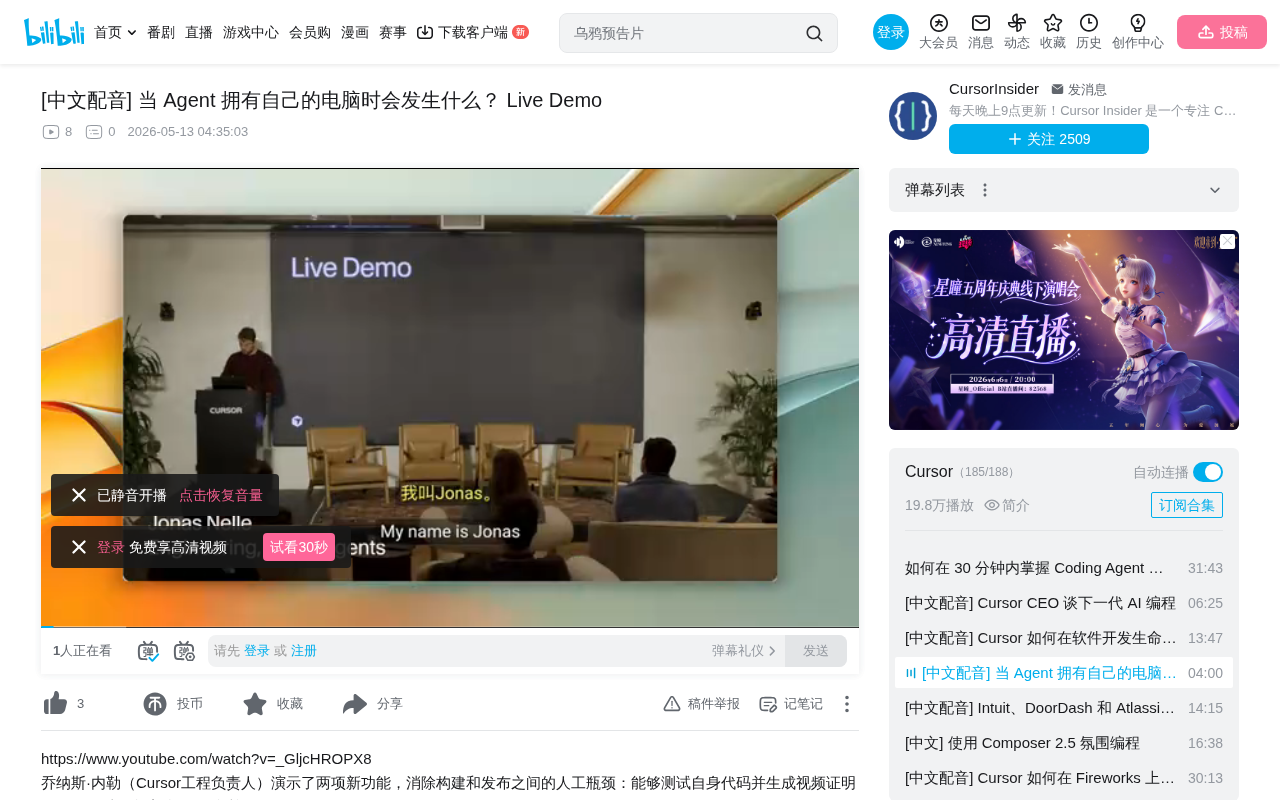
Cursor Cloud Agent Demo: Eliminating Bottlenecks Across the Entire Software Development Lifecycle
Deep analysis of Cursor's Cloud Agent demo showing how cloud VMs, automated test artifacts, and a full-chain control plane systematically eliminate human bottlenecks across the software development lifecycle.