ChatGPT Codex Can Clone Any Software? Testing the Risks and the Truth

Short videos claim AI can one-click clone commercial software for lifelong free use—exaggerated and legally risky.
The article analyzes YouTube shorts claiming ChatGPT Codex or Claude Code can clone commercial software, showing the narrative is technically exaggerated. AI can read open-source repos and set up environments, but can only generate limited interface imitations—not decode full engineering implementations like Excel's formula engine or Figma's real-time collaboration from closed binaries. "Lifelong free" is just a frozen code snapshot. Cloning and distributing commercial software carries copyright, trademark, and reverse-engineering risks, and the videos end in a DM funnel. The article recommends using AI coding tools for code understanding, small tool development, and open-source secondary development.
Title
ChatGPT Codex Can Clone Any Software? Testing the Risks and the Truth
Meta Description
YouTube shorts claim you can use ChatGPT Codex or Claude Code to clone Adobe, Excel, Figma, and more for lifelong free use. This article breaks down the technical feasibility, legal risks, and DM-funnel tactics behind these claims, and explains what AI coding tools are actually good for.
Article Content
Recently, a type of YouTube short has been circulating, claiming that all you need to do is drop a GitHub repository link into ChatGPT Codex or Claude Code, point it at the software you want to replicate, and the AI will automatically analyze, decode, and generate a complete clone you can use for free forever—from Adobe and Microsoft Excel to Figma, no problem. The video also promises that DMing them will get you the "full tutorial." This kind of content spreads extremely fast, but as a developer or ordinary user, it's worth getting clear on the technical reality, legal boundaries, and practical risks before you start.

What These "AI Clone Software" Videos Are Actually Saying
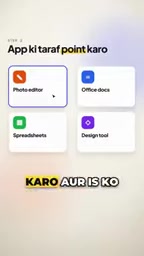
The core process in the video can be summarized in three steps: first, provide a repository link to ChatGPT Codex or Claude Code and ask it to complete environment setup on your local machine; second, point the AI at the target software and have it analyze "what this software is, what it does, and how it runs"; third, wait for the AI to generate the so-called "complete clone," achieving lifelong free use and even sharing it with friends.
According to the YouTube short, the whole process "doesn't take long," and the AI automatically completes the analysis, decoding, and understanding. At the end, the video directs viewers to follow the account and DM for "all the details."
The problem with this narrative isn't whether "AI can write code"—of course it can—but that it conflates "generating a demo with a similar interface" with "cloning a mature commercial software product," while deliberately avoiding three hard barriers: copyright, reverse engineering, and actual usability.
What AI Can and Cannot Do Technically
From repository to runnable environment: this step is real
Having Codex or Claude Code read a public repository, understand the project structure, install dependencies locally, and get it running is indeed something current AI coding tools are good at. They can read the README, infer the package manager, execute commands, iterate and fix based on errors, and compress tedious work like environment setup into a few minutes. This step in the video is basically accurate, and it's also why this kind of content looks "credible."
From "understanding software" to "complete clone": this step is heavily exaggerated
Real commercial software is not a piece of text that can be "decoded" as a whole. Take Excel, for example: it contains decades of formula engines, file-format compatibility layers, macro systems, and collaboration and permission models; Figma contains CRDT data structures for real-time collaboration, a rendering pipeline, and a plugin ecosystem. AI can generate an imitation of a subset of features based on public information—for example, a web app with tables and basic formulas—but it cannot "decode" a closed-source binary from scratch and reproduce an equivalent engineering implementation.
What the video calls "analysis, decoding, and understanding" usually means reverse engineering for closed-source software, and for open-source software it just means reading the source code. The former involves legal risk, while the latter can already be used legally and doesn't need "cloning" at all.
CRDT (Conflict-free Replicated Data Type) is the core data structure that distributed collaboration software uses to achieve real-time collaboration. It allows different users to modify the same document in parallel on their own devices without a central server arbitrating, and ultimately reaches a consistent state automatically through mathematically provable merge rules. Figma's multiplayer simultaneous editing and Google Docs' real-time collaboration both rely on this kind of technology. CRDT engineering implementations are extremely complex, involving large amounts of detail such as operation transformation, causal consistency, and conflict resolution for offline editing—far beyond what AI can derive just by "looking at the interface." This is also why AI-generated collaborative document imitations usually only achieve a standalone version or simple polling synchronization.
The actual meaning of "lifelong free use"
AI-generated clones have no official updates, no security patches, no technical support, and no guarantee of interoperability with real file formats. Calling it "lifelong free" is more like marketing rhetoric—what you get is a code snapshot frozen on the day it was generated, while the maintenance cost of real software is precisely where subscription fees mainly go.

Legal and Compliance Risks Cannot Be Ignored
Software interfaces, code implementations, trademarks, and brand identity are all protected by law. Even "replicating the interface" may touch on trademark and design protection; if it involves bypassing authorization verification or cracking licensing mechanisms, the nature is even more serious. Specific rules differ across jurisdictions, but "cloning commercial software and distributing it to friends for free" is not a gray area that can be easily glossed over in most regions.
It's worth comparing with the open-source ecosystem: if the target itself is an open-source project under licenses such as MIT or Apache, you can absolutely legally fork it, modify it, use it yourself, and even redistribute it—that is the legitimate path to "free use." The video mixes open-source software and commercial software into the same narrative, which easily leads viewers to misjudge the risk.
Reverse engineering refers to restoring design logic and implementation details from a closed-source software's executable files or runtime behavior through means such as decompilation, dynamic debugging, and traffic analysis. Article 1201 of the U.S. Digital Millennium Copyright Act (DMCA) in principle prohibits circumventing technological protection measures, but provides exceptions such as interoperability; the EU Software Directive allows decompilation for interoperability purposes, but under strict conditions. China's Copyright Law and Regulations on Computer Software Protection also protect software expression, and whether reverse engineering constitutes infringement must be judged based on purpose, means, and results. In practice, even if it is "just research," once it involves bypassing license verification or extracting protected code, it may escalate from civil infringement to criminal liability.
The Content Tactics Behind the DM Funnel
The video ends by asking viewers to follow and DM "just write anything" to get the details. This is a common funnel model on short-video platforms: first use exaggerated conclusions to create impact, then put the real information (often just an ordinary prompt or a few public repository links) behind the DM step, in exchange for follows and subsequent conversion.
This kind of content is not entirely false, but it packages the real capabilities of "AI-assisted programming" into the illusion of "replacing all paid software at zero cost." For ordinary users, the cost of being drawn in to try it may be wasted time, installing scripts of unknown origin, or even crossing legal red lines.

More Reliable Ways to Use AI for Coding
Using tools like Codex and Claude Code in the right places actually yields greater benefits: having AI sort out the architecture of a legacy codebase you don't understand, writing small tools for yourself to replace repetitive work, doing secondary development based on open-source projects, and adding tests and documentation for existing systems. These uses do not involve infringement, and the output truly belongs to you.
If you really want to escape a software subscription fee, the feasible direction is to look for open-source alternatives with matching functionality, or use AI to help you customize on top of open source. This path isn't as exciting as "one-click cloning," but it's a path you can keep walking in the long run.
Secondary development refers to customized modification and feature expansion on top of an existing open-source project, rather than rewriting from scratch. This is one of the most valuable practical scenarios for AI coding tools: AI can quickly understand a project's module division, dependencies, and data flow, help you locate the files that need changes, generate patches that fit the existing code style, and add tests. Compared with "cloning commercial software," secondary development starts from a legal and compliant foundation, and the output can be included in your own version management and is more likely to receive community support. When choosing open-source alternatives, it is recommended to prioritize license type (MIT/Apache 2.0 are permissive, GPL is copyleft), community activity, and maintenance frequency.
FAQ
Can AI really clone a complete piece of software? It can generate imitations with similar interfaces and limited functionality, but it cannot restore an equivalent complete engineering implementation from closed-source software, especially large commercial software.
Is it illegal to use AI to analyze someone else's software? It depends on the specific behavior. Reading open-source code and following its license is legal; reverse engineering closed-source software, bypassing license verification, or copying trademarked interfaces may be illegal.
Is the method in the video worth trying? Understanding the capability boundaries of AI coding tools is valuable, but following the video's narrative to "clone commercial software and share it" is not worth it—the risks far outweigh the benefits.
One-line Summary
Short videos claim AI can one-click clone commercial software for lifelong free use, but it's exaggerated and carries hidden legal risks.
Paragraph Summary
The article analyzes the YouTube short claiming you can use ChatGPT Codex or Claude Code to clone commercial software, pointing out that its core narrative is technically heavily exaggerated. Having AI read open-source repositories and configure environments locally is indeed feasible, but AI can only generate interface imitations with limited functionality and cannot "decode" complete engineering implementations such as Excel's formula engine or Figma's real-time collaboration from closed-source binaries. The so-called "lifelong free" is merely a code snapshot that stops updating. Cloning and distributing commercial software also involves legal risks related to copyright, trademarks, and reverse engineering, while the video ends with a DM funnel—essentially a traffic tactic. The article recommends using AI coding tools for legitimate and high-return scenarios such as code understanding, small tool development, and secondary development of open-source projects.
Related articles

Is the Agent Harness Dead? Cursor's Early Engineer Breaks Down the Real Architecture of AI Coding Agents
Cursor early engineer Jediah breaks down the real architecture of the agent harness: why "the harness is dead" is only half right, how the data flywheel lets the harness obsolete itself, and how Grokbot, software factories, and primitive design open new frontiers for agents.
Python Visitor Pattern and Better Alternatives Explained
A deep dive into Python's visitor pattern and four alternatives: method pattern, pattern matching, dictionary mapping, and functools.singledispatch. Choose the best decoupling design by change frequency.

357 Days of Deep Experience: Why Omarchy Made Me Stop Distro-Hopping
A 357-day deep dive into Omarchy: 59-second install, out-of-the-box audio and GPU support, the Quattro QuickShell rewrite migration pains, and why Arch users should try it.