ChatGPT Gets a Major Overhaul: Chat Demoted to a Pop-up, Codex Integration Sparks Backlash

OpenAI's ChatGPT redesign integrates Codex but demotes chat to a pop-up, sparking user controversy.
OpenAI has overhauled ChatGPT with a new "ChatGPT Work" experience, deeply integrating coding tool Codex while relegating the core chat feature to a draggable floating pop-up. The redesign signals a strategic push toward developer workflows and enterprise productivity, but has drawn sharp criticism from everyday users who feel the product's core identity has been turned upside down.
OpenAI Announces Major ChatGPT Redesign
OpenAI recently announced a sweeping redesign of its flagship application ChatGPT, introducing an all-new "ChatGPT Work" experience. The centerpiece of this overhaul is the deep integration of Codex — previously a standalone AI coding tool — directly into ChatGPT, consolidating both under a single unified interface.
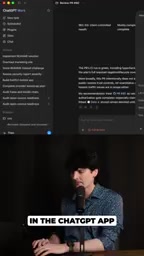
The decision quickly sparked controversy among developers and everyday users alike. One YouTube tech commentator who tested the new version described being "very disappointed," arguing that OpenAI's redesign direction carries a clear logical problem.

Codex: Technical Background and Evolution
Codex was launched by OpenAI in 2021 as an AI model purpose-built for code generation. Built on the GPT-3 architecture and fine-tuned for programming tasks, it once powered GitHub Copilot under the hood. Its core capability lies in translating natural language descriptions into executable code, supporting dozens of languages including Python, JavaScript, and Go. After OpenAI shut down the standalone Codex API in 2023, its capabilities were gradually folded into the GPT-4 model family. The current "Codex app" is not a revival of the original Codex model — it's a standalone client product OpenAI built specifically for coding workflows, positioned similarly to an AI-native IDE like Cursor, with a focus on multi-file editing, code review, and automated task execution.
Where Did the "Chat" Go?
The most confusing aspect of this redesign for users is straightforward: an app named "Chat" has had its core conversational feature pushed to the margins.
When you open the new app, the first thing you see is a "Work" section and a "Codex" section. The chat functionality — the very foundation of the ChatGPT brand — has been moved to the bottom of the interface. More critically, clicking "Chat" doesn't open it as a primary screen. Instead, it appears as a draggable floating pop-up window.

This effectively demotes chat from ChatGPT's core experience to a secondary widget. For the vast majority of users who rely on ChatGPT for everyday Q&A, writing, and conversation, this product logic is deeply counterintuitive.
From an interaction design perspective, this redesign strikes at one of the core principles of product design: the alignment between information architecture and users' mental models. Jakob Nielsen's "10 Usability Heuristics" explicitly state that system design should match users' real-world expectations. When users open an app called "Chat," their mental model naturally assumes conversation is the top-level feature. Relegating chat to a floating pop-up breaks the operational expectations users have built over time — a classic case of "navigation hierarchy misalignment." Historically, moves like Facebook splitting Messenger into a separate app or Instagram pushing Reels to center stage sparked similar backlash, but those platforms ultimately validated their new architectures through data. Whether OpenAI can follow the same path remains to be seen.

A Structural Mismatch in Product Positioning
From a product design standpoint, this restructuring reflects a clear strategic shift at OpenAI: transforming ChatGPT from a general-purpose conversational assistant into a productivity platform centered on workflows and coding.
Integrating Codex into ChatGPT isn't inherently a bad idea — a unified entry point and reduced app fragmentation could theoretically deliver a more cohesive experience. But the problem lies in the execution: rather than giving chat and coding features equal footing, OpenAI let Codex/Work take center stage while chat got squeezed into a pop-up.
The commentator's take was blunt: "The people who use ChatGPT to chat are definitely going to be angrier than the people who use Codex to write code."
Who Are ChatGPT's Real Mainstream Users?
This points to a core product philosophy question: everyday conversational users vastly outnumber professional developers in ChatGPT's user base. When an app with a massive general audience suddenly demotes its core chat feature to a pop-up and pushes a niche coding tool to the forefront, the gap in user experience is obvious.
This "inverted priorities" design risks making a large segment of everyday users feel overlooked. After all, when someone opens "ChatGPT," they expect a smooth conversational experience — not a developer workbench.
The Business Logic Behind the Redesign
Despite the controversy, OpenAI's decision carries clear commercial rationale.
The AI coding space is fiercely competitive and increasingly fragmented. Cursor has built a loyal following among professional developers thanks to its VS Code-based architecture and deep contextual awareness, surpassing one million monthly active users; GitHub Copilot holds an enterprise advantage backed by Microsoft's ecosystem and vast code training data; Anthropic's Claude Code is known for its powerful long-context handling and deep code comprehension, particularly for large-scale refactoring tasks. Facing these rivals, bringing Codex capabilities to the forefront of ChatGPT's main interface is essentially a defensive market move — by binding its coding tools to the most recognizable AI brand, OpenAI is attempting to stem further attrition among developer users.
Meanwhile, the launch of the "Work" section signals OpenAI's push into the enterprise productivity market. Enterprise AI and consumer AI differ fundamentally in business model: enterprise customers typically pay by seat count or API usage, with far higher average contract values, stronger retention, and lower churn than individual subscribers. Microsoft via Microsoft 365 Copilot, Salesforce via Einstein AI, and Google via Workspace AI have all established footholds in the enterprise productivity space. For OpenAI to make the leap from "chat tool" to "workflow platform," it must demonstrate at the product level a deep fit with enterprise work scenarios — that is the core commercial logic behind the "Work" section. That said, enterprise product competitiveness depends not just on feature richness, but on access management, data security, and system integration capabilities, all of which take time to build.
Ultimately, a balance must be struck between strategic ambition and user experience. Forcing two user groups with vastly different needs into a single interface — and pushing one group's core feature to the back seat — is a bet whose market reception remains unproven.
Closing Thoughts: Can Ambition and Experience Coexist?
OpenAI's ChatGPT redesign is a purposeful but deeply contested transformation attempt. It embodies OpenAI's strategic ambition to evolve from a conversational assistant into a comprehensive productivity platform — but compressing "chat" into a pop-up window undeniably crosses a line for a large portion of its core users.
It's worth noting that the negative reactions so far largely stem from a single commentator's initial impressions, and remain one person's perspective. As more users get hands-on time with the new version, a broader and more representative picture will emerge. But regardless of the outcome, how to balance the core needs of different user groups during a product overhaul is a long-term challenge OpenAI cannot afford to ignore.
Key Takeaways
Related articles

How Big Can Stars Really Get? The Physical Limits of the Largest Stars
Red supergiants are the largest stars by volume, with radii up to 2,000 times the Sun, engulfing the inner solar system. But there is no precise upper limit on stellar size—models predict up to 15,000 solar radii. The most massive blue stars are far smaller than red supergiants—biggest and heaviest are two different things.

Apple HomeView Smart Display Full Feature Breakdown: Wall-Mount or Desktop, $299
Apple launches HomeView, a $299 smart display with wall-mount and desktop options, 12MP camera for facial recognition, smart home control, music playback, and recipe step-by-step cooking. Full breakdown of watch faces, apps, privacy, and cooking integration.

Where Did the Promised New Studio Go? Craft Computing Answers After Five Years
Craft Computing's host responds to viewer questions: the new studio promised five years ago was shelved as construction costs soared from $30,000 to $75,000, and was replaced by a 168-square-foot garage conversion.