ChatGPT Plus/Pro Subscription in China: A Comparison of Payment Methods

A comparison of three ways Chinese users can pay for ChatGPT Plus, with cost and risk breakdowns.
The biggest barrier to subscribing to ChatGPT Plus or Pro in China is payment: OpenAI doesn't accept Alipay or WeChat Pay. This article compares three common workarounds — third-party recharge platforms, overseas credit cards, and mobile in-app purchases via gift cards — highlighting that recharge platforms are easiest but require surrendering account credentials, credit cards are most legitimate but costly and prone to regional blocks, and mobile methods have a low margin for error. Users should weigh account security carefully before choosing.
Why Payment Is Always the Roadblock for Subscribing to ChatGPT in China
For users in China, the biggest obstacle to activating ChatGPT Plus or Pro isn't the cost itself — it's the payment options. OpenAI only accepts international credit cards and other overseas payment methods, with no support for Alipay, WeChat Pay, or other domestic channels. This leaves a large number of everyday users blocked at the final checkout step.
This article is based on a hands-on walkthrough by a Bilibili content creator. It summarizes the most common payment routes currently available in China, comparing their requirements, costs, and risks. A word of caution: the third-party recharge platforms mentioned here are not official OpenAI channels. This article is purely informational and serves as a risk disclosure — readers should exercise their own judgment before proceeding.
Comparing the Three Main Payment Methods
Method 1: Third-Party Recharge Platforms
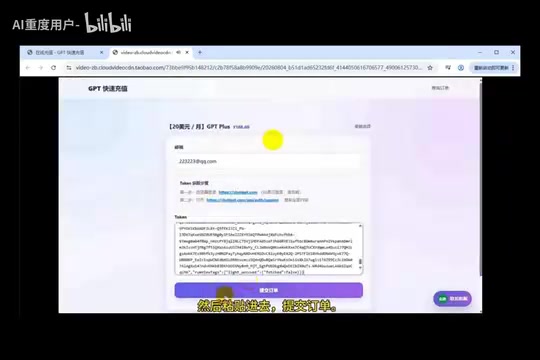
According to the creator, this is one of the most popular approaches among Chinese users. The idea is simple: a third-party platform handles the subscription on your behalf, so you don't need an overseas credit card — just your account credentials.
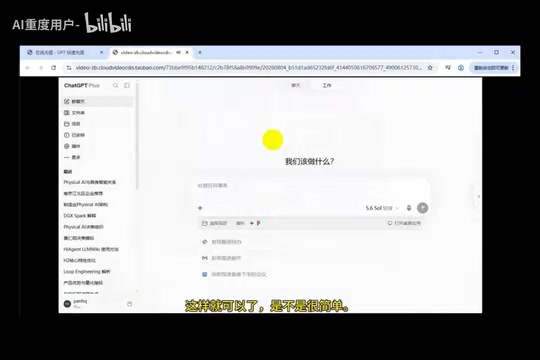
The typical process goes like this: log into your ChatGPT account in a browser, select a subscription plan on the recharge platform, enter your email address as an order reference, copy and submit the required account authorization information as prompted, then complete payment via Alipay. Once payment is confirmed, refresh the ChatGPT page and your membership status should update.
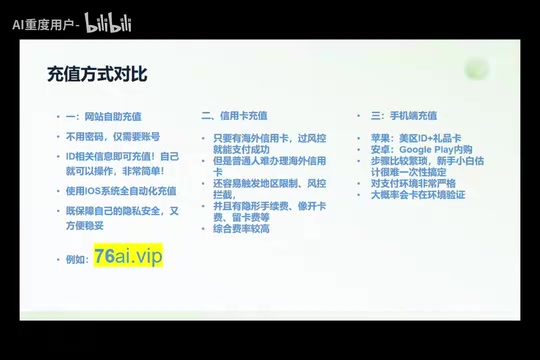
The appeal of this method is obvious: low barrier to entry and Alipay support. However, it's important to be clear about the risks — these platforms require access to your account authorization credentials, which creates a real potential for account compromise and privacy leaks. Handing your credentials to a third party essentially means partially surrendering control of your account. If the platform is untrustworthy, your account could be banned or your information misused.
Method 2: Direct Payment with an Overseas Credit Card
The second method is paying directly through OpenAI's official checkout using an overseas credit card. This is the closest thing to an "officially legitimate" path — as long as the card clears the fraud filters, payment goes through.
That said, obtaining an overseas credit card is itself a challenge for most users. The creator points out that these cards often come with hidden costs such as issuance fees and maintenance fees, which work out to roughly ¥180 all in — making the overall cost fairly high. On top of that, cross-region payments frequently trigger OpenAI's regional risk controls, leading to failed transactions or even account restrictions.
For users without an overseas credit card, there are also virtual credit card services on the market (such as Depay, OneKey Card, etc.). These work by allowing you to load USDT or other stablecoins onto a Visa/Mastercard prepaid card that can be used for international purchases. While this approach can technically bypass domestic payment restrictions, it comes with several layers of risk: you need access to cryptocurrency exchanges and a basic understanding of how they work; virtual card providers vary widely in their compliance standards, with no guarantee of fund safety; and OpenAI has already blocked certain high-risk BIN ranges (bank identification numbers), meaning some virtual cards will still be declined. Anyone considering this route should factor in the exchange rate losses and card issuance fees as part of the true total cost.
Method 3: In-App Purchase via Mobile Stores
The third option is subscribing through a mobile app store. Apple users need a foreign-region Apple ID paired with gift cards; Android users rely on Google Play. The core problem remains the same: neither Apple nor Google's in-app payment systems support domestic Chinese payment methods, so Alipay and WeChat Pay are still off the table — you're back to needing an international credit card or gift cards.
Gift card redemption also carries its own risks. If flagged, the funds can be lost entirely. For users who aren't familiar with managing foreign-region accounts, this path has a low margin for error.
The typical Apple Gift Card approach involves purchasing a card from the US or another foreign-region App Store, loading it into the corresponding foreign Apple ID balance, then using that account to subscribe within the ChatGPT iOS app. Gift cards can be sourced from platforms like eBay or Amazon, but watch out for two risks: buying cards that have already been used or have insufficient balance (so-called "empty cards"), and having your Apple account flagged or locked for bulk gift card redemptions. Google Play follows a similar logic — foreign-region account plus gift card — but Android users can also attempt to switch their Play Store region in combination with an overseas payment method, which adds more steps and more opportunities for something to go wrong.
Risk Assessment and Making the Right Choice
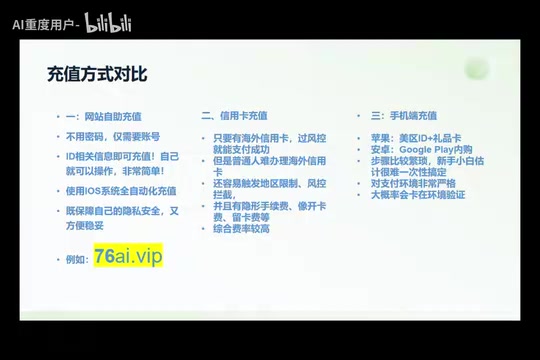
Taken together, each method involves trade-offs: overseas credit cards are the most legitimate option but come with high cost and high barriers; mobile in-app purchases are constrained by app store payment policies; third-party recharge services are the easiest to use but require surrendering account credentials, with security entirely dependent on the platform's trustworthiness.
A few things need to be stated clearly:
- Third-party recharge platforms are not official channels. Any service that asks for your account authorization credentials carries a real risk of account theft or suspension. OpenAI's Terms of Service do not endorse credential sharing of this kind.
- Be skeptical of "everything you need to know" marketing. The original video referenced model names like GPT-6 and Astra without citing official sources. Rely on OpenAI's official announcements and don't be misled by exaggerated claims.
- Prioritize account security. If you have any doubts about a third-party platform's legitimacy, it's better to choose a slightly more expensive but more controllable option than to put your account at risk for the sake of convenience.
Final Thoughts
The payment friction that Chinese users face when subscribing to ChatGPT is real, and the market has responded with a variety of workarounds. But convenience and risk tend to scale together — the "done in two minutes" shortcuts often carry the highest hidden costs in terms of account safety.
Before choosing any payment method, take a moment to assess how much you depend on your ChatGPT account and how much risk you're willing to accept. For users who rely on ChatGPT for important work, account security should outweigh any savings on transaction fees.
Related articles

Chain of Thought Isn't Just for AI: How Humans Can Use CoT to Improve Thinking Quality
Chain of Thought isn't just a prompt trick for large models. Starting from a Hacker News discussion, this article analyzes why CoT works for human thinking too, breaks down actionable ways to transfer it, and highlights the key differences between human CoT and machine CoT.
Cloudflare Teams Up with OpenAI: Closi…
Cloudflare Teams Up with OpenAI: Closing the Loop from Vulnerability Discovery to Defense with AI
Cloudflare uses OpenAI Daybreak to investigate security vulnerabilities and generate reviewable remediation plans, while developers use Codex to boost coding efficiency and quality.

Orca Multi-Agent Orchestration in Practice: A Guide to Parallel Collaboration with Claude and Codex
Orca is Stable AI's free open-source agent workbench supporting 34 agents like Claude Code and Codex in parallel. Learn its Git worktree isolation, multi-model orchestration, and mobile management.