ChatGPT Plus Subscription Guide: Comparing Three Payment Methods

A practical comparison of three ChatGPT Plus subscription methods for users facing payment restrictions.
This article addresses the payment barriers users face when subscribing to ChatGPT Plus, covering three main approaches: direct payment with a foreign credit card, in-app purchases via App Store or Google Play gift cards, and self-service top-up through third-party websites. Each method is evaluated for cost, difficulty, and risk — helping readers choose the path that best fits their situation while staying aware of the security trade-offs involved.
Upgrading to ChatGPT Plus is the first hurdle many users face when trying to access GPT's advanced features. Due to payment restrictions, users often get stuck at the checkout step. Based on a hands-on tutorial, this article breaks down the three most common ways to subscribe to ChatGPT Plus, objectively weighing the pros and cons of each to help you choose the best path for your situation.
A quick disclaimer: this article is purely for informational purposes and risk awareness. Any third-party top-up service or unofficial channel carries inherent risks — please evaluate carefully before proceeding.
Method 1: Direct Payment with a Foreign Credit Card
The most straightforward approach is paying directly on the OpenAI website using a foreign credit card. This is the official route and theoretically the safest — once you enter your card details, the subscription is confirmed within seconds.
That said, the barrier to entry is significant. The original tutorial notes that obtaining a legitimate overseas credit card is difficult for most users; and even if you have one, OpenAI's regional restrictions and fraud detection can easily block the payment — leaving you in the frustrating position of either being unable to pay or having your transaction declined. Some overseas cards also come with hidden transaction fees and pre-authorization holds that tie up your available credit.

In short, direct credit card payment works well for users who already have a foreign credit card and a stable overseas network environment — but it's far from beginner-friendly for most users.
OpenAI's regional fraud detection evaluates multiple signals simultaneously: your browser's IP address, whether the billing address matches the card's issuing country, and whether the ASN (Autonomous System Number) of your payment network belongs to a known data center or proxy provider. Even if you hold a legitimate US or Hong Kong credit card, if your login IP points to mainland China or a datacenter exit node, the system may still trigger a decline or require 3D Secure verification. Some users report higher success rates with Visa/Mastercard debit cards issued by Hong Kong banks compared to foreign-currency cards issued on the mainland — but OpenAI has been tightening scrutiny of Hong Kong IPs in recent years, so results vary widely.
Method 2: Gift Cards / In-App Purchase via Google Play or App Store
The second category involves in-app purchases through the App Store or Google Play ecosystem.
For Apple device users, you can subscribe via App Store gift cards (the tutorial refers to this as the "HMD + gift card" route), though the process is fairly involved — it requires repeatedly switching between accounts and is difficult for newcomers to pull off cleanly. The all-in cost runs around $25, making it an option mainly for users willing to pay a premium for convenience.
Android users face an even steeper challenge. The tutorial emphasizes that Google Play in-app purchases have extremely strict environmental requirements: you need an Android device with a complete framework, a stable dedicated IP, and a fresh Google account linked to a foreign payment method. If your IP is identified as a datacenter proxy rather than a genuine residential connection, your account gets locked almost immediately — and you'll likely hit a wall at the environment verification step.

This method has a high technical barrier and a notable failure rate. It's better suited for users who are comfortable with technical troubleshooting.
The App Store gift card route works as follows: purchase an iTunes/App Store gift card for the US region (or another region), load it onto the corresponding Apple ID, then complete the in-app purchase (IAP) through the ChatGPT iOS client. Because Apple takes roughly a 30% platform fee, plus the gift card's own premium, the effective cost of a Plus subscription typically runs 20+ RMB above the official list price. Google Play's in-app purchase logic is similar, but Google's device binding and IP verification are even stricter — its Play Integrity API checks whether the device has been rooted and whether the device framework is intact, and datacenter IPs get flagged immediately due to the absence of genuine residential user characteristics, leading to significantly higher payment failure rates than the Apple channel.
Method 3: Self-Service Top-Up via a Third-Party Website
The third method is the one prominently recommended in the tutorial: using a dedicated top-up website to subscribe on your own. Unlike traditional "proxy top-up" services that require handing over your account credentials to a stranger, the key selling point here is that you never share your account password — which theoretically reduces the risk of privacy leaks or account theft.
The process is relatively straightforward: copy your GPT account identifier (including the trailing digits shown in brackets), paste it into the top-up website, verify the account details, select a payment method, and submit your order. After a brief processing period, you'll see a confirmation, and refreshing the ChatGPT website should reveal your Plus badge.
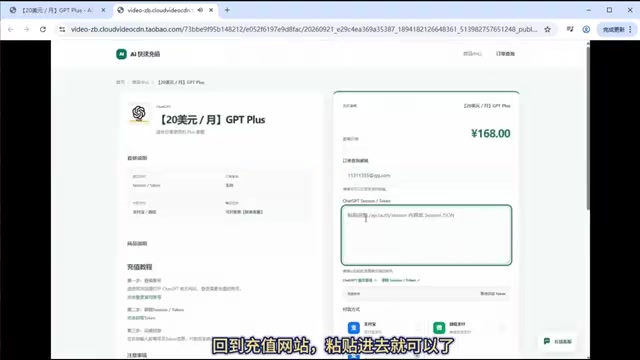
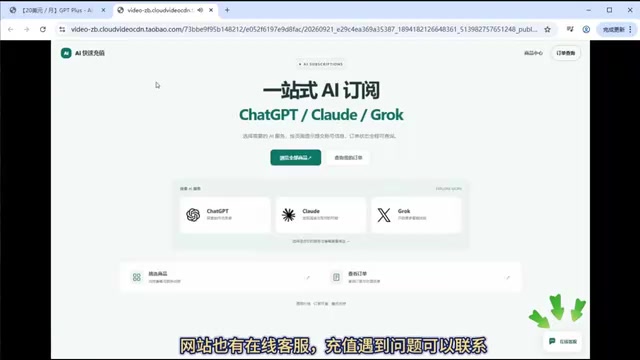
The tutorial author states that the website uses an iOS-based automated system to process subscriptions, supports Apple, Android, and web platforms, and offers live customer support and invoicing. If you run into issues, there's a support button in the bottom-right corner of the page.
To be objective: these third-party top-up websites are still unofficial channels by nature. They involve a third party handling your account information, which carries compliance and account security risks. Whether or not to use one is a decision you should make after carefully weighing the trade-offs.
Which Method Should You Choose?
Each of the three methods involves different trade-offs:
- Direct credit card payment: The most legitimate option, but high barrier to entry and prone to fraud detection blocks. Best for users who already have a foreign payment card.
- Gift cards / in-app purchases: Feasible on iOS but cumbersome and more expensive; the Android path has strict environmental requirements and a high failure rate.
- Third-party top-up website: The simplest to operate and requires no password sharing, but relies entirely on the trustworthiness of the third-party platform.
The original video's author recommends the third-party website route on the basis of simplicity and speed. From a security and compliance standpoint, however, the safest path remains subscribing through official channels using legitimate overseas payment methods.
Regardless of which method you choose, prioritize protecting your account: never hand your credentials to a stranger, be wary of suspiciously low prices, and maintain a healthy skepticism toward any third-party platform.
Related articles

Felix Rieseberg Personal Homepage
Felix Rieseberg's personal homepage sparks attention on Hacker News. This article covers the Slack engineer's technical background, the rise and fall of nativefier, and the value of a developer homepage as a tech calling card.

@ai-sdk/vue 3.0.306 Patch Release Syncs with [email protected] Update
@ai-sdk/vue 3.0.306 released, synced with [email protected]. A routine patch release for the Vercel AI SDK ecosystem with no public API changes; the Vue adapter layer stays version-aligned with the core package.

Gemini 4 Argon API Launches: The Era of Million-Token Output Begins
Google launches Gemini 4 Argon with sparse MoE architecture, up to 1M output tokens, and a 68.90% Vals Index score, available across API, AI Studio, and the Gemini app.