ChatGPT Powers Micro-Entrepreneurship: A Real-World Case from Mushroom Grow Kit to Automated Factory

How one entrepreneur used ChatGPT to turn a mushroom hobby into an automated business.
Hunter launched Mountain Mushrooms from a simple grow kit, leveraging ChatGPT as his all-in-one consultant for business planning, domain expertise in fungiculture, and even designing custom automation machinery. His story illustrates how general-purpose AI tools are lowering entrepreneurial barriers, enabling solo founders to bridge knowledge gaps and build physical-world solutions without specialized engineering backgrounds.
A Grow Kit That Sparked an Entrepreneurial Journey
Many successful startup stories begin with a moment of casual curiosity. Hunter's story is exactly that—an ordinary mushroom grow kit sparked his deep interest in fungiculture, and that interest eventually grew into his own brand, "Mountain Mushrooms."
This type of transition from home hobby to formal business used to require crossing enormous knowledge and technical gaps: how to optimize growing environments, how to scale production, and how to manage increasingly complex operations. What makes Hunter's story remarkable today is that he turned ChatGPT into his "invisible partner," using AI tools to bridge the capability gap between hobbyist and business operator.


How AI Becomes a "Jack of All Trades" for Micro-Businesses
For a small business run by a single person, the founder often wears every hat: producer, accountant, marketer, technician, and customer support. This is precisely the scenario where a general-purpose AI assistant can deliver tremendous value.
ChatGPT's Intelligent Support in Daily Operations
ChatGPT helps Hunter run Mountain Mushrooms on two core levels:
- Business operations: From drafting business plans and writing marketing copy to mapping out supply chains and answering specialized cultivation questions, AI serves as an on-demand consultant, compensating for the lack of team collaboration that solo entrepreneurs face.
- Domain expertise: Mushroom cultivation involves extensive technical details—temperature, humidity, sterilization, strain selection—and AI can quickly provide reference recommendations, shortening the learning curve from "hobbyist" to "expert."
The significance of this model is that it democratizes "professional consulting" that was previously affordable only to larger companies. One person plus a set of AI tools can theoretically cover most functions of a small startup team.
Using ChatGPT to Build Automated Production Machines
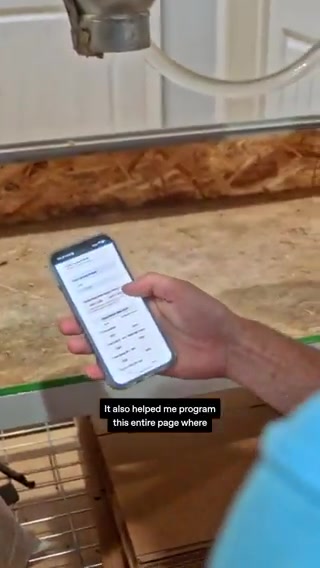
The most groundbreaking part of this case is that Hunter used ChatGPT to design and build custom machines to automate the labor-intensive work behind mushroom production.
From Software Advice to Hardware Implementation
Mushroom cultivation is labor-intensive work involving a great deal of repetitive physical tasks—mixing substrates, bagging, controlling environmental parameters, monitoring growth conditions, and more. Traditionally, automating these processes required specialized mechanical engineering and electronic control expertise.
ChatGPT's value lies in helping entrepreneurs without engineering backgrounds to:
- Understand the basic principles and feasible approaches to automation
- Get references for circuit design, sensor selection, and control logic
- Write control program code (for platforms like Arduino, Raspberry Pi, etc.)
- Troubleshoot technical issues encountered during debugging
This marks AI applications extending from purely "information and content tools" into "production tools for the physical world." When an AI assistant can help an individual transform ideas into real, functioning machines, its productivity multiplier effect becomes extremely tangible.
The Bigger Trends Behind This Case
Hunter and Mountain Mushrooms' story, while an individual case, reflects several noteworthy industry trends.
The Continuing Decline of Entrepreneurial Barriers
General-purpose AI assistants are becoming the "operating system for solo entrepreneurs." They simultaneously compress the costs of knowledge acquisition, professional consulting, and technical implementation, enabling more and more people with ideas but lacking comprehensive skills to independently launch and run a business.
AI Evolving from "Answering Questions" to "Solving Problems"
Early on, people used ChatGPT primarily for Q&A and writing. This case demonstrates a more advanced application—using AI to complete complex end-to-end tasks: from business planning to hardware manufacturing. This ability to "solve real problems" is where AI tools build their true moat.
Limitations That Deserve a Clear-Eyed View
Interestingly, as a promotional case from the platform, we should maintain appropriate caution. Technical advice provided by AI still requires human verification, especially in areas involving electrical safety and food production hygiene. Final decision-making and execution still depend on the entrepreneur's own judgment and practice. ChatGPT is more like a capable assistant than a fully autonomous self-driving system.
Conclusion: Curiosity Plus AI Tools—One Person Can Power an Entire Business
Hunter's mushroom startup story is essentially a vivid example of "how AI empowers individuals." Starting from a chance encounter with a grow kit, to using ChatGPT to run a business and build automated machines, it showcases the enormous potential of modern AI tools in micro-entrepreneurship scenarios.
For individuals with entrepreneurial aspirations, the core message of this case might be: technical barriers are being lowered to an unprecedented degree. What's truly scarce is no longer "technical know-how" but rather "curiosity and the courage to act." When curiosity meets powerful AI tools, one person can build a remarkably imaginative enterprise.
Related articles

Will Outdated LLMs Become Nostalgia Symbols? The Cultural Value and Era Memory of AI Technology
Will ChatGPT and GPT-4 from 2023 become nostalgia symbols like retro game consoles? Exploring old LLMs' historical value, emotional significance, and how open-source models preserve AI history.

GPL vs MIT License: The Copyleft Philosophy Debate in the Open Source Community
An in-depth analysis of the core divide between GPL and MIT/BSD permissive licenses, exploring the pros and cons of Copyleft's viral clauses, the Rust rewrite movement's impact on license ecosystems, and how developers can choose the right open source license.

Seed7 Language Memory Safety Mechanisms: A Unique Path Through Value Semantics and Deterministic Reclamation
Deep dive into Seed7's memory safety mechanisms including bounds checking, value semantics, null pointer elimination, and deterministic reclamation, compared with Rust's ownership model.