ChatGPT Saves The Den 10–15 Hours a Week: An Efficiency Revolution for Small Business

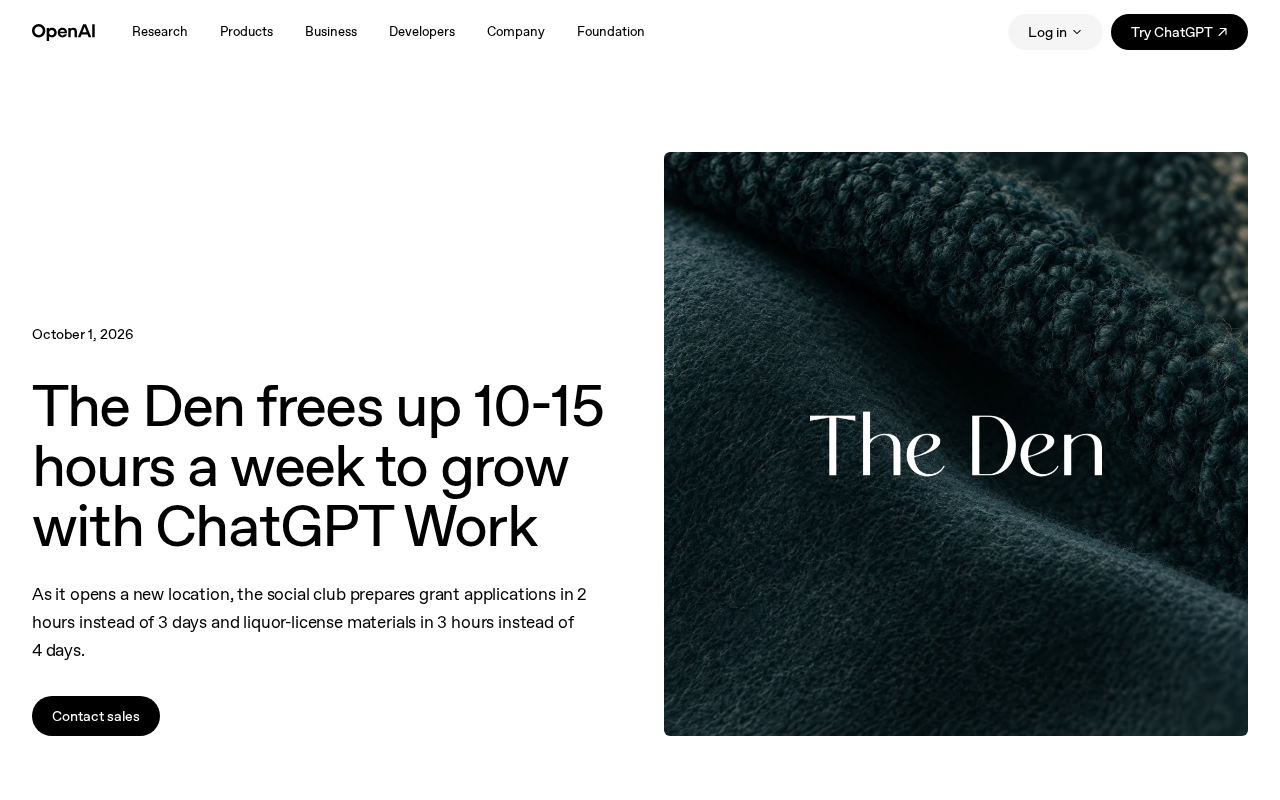
The Den uses ChatGPT to slash grant prep from 3 days to 2 hours, freeing 10–15 hours weekly for growth.
Social club The Den demonstrates the practical value of generative AI in small business administration: with ChatGPT Work, grant application prep dropped from 3 days to 2 hours, and liquor license materials from 4 days to 3 hours — freeing 10 to 15 hours per week for business growth activities. The case shows that AI's core value for SMBs lies not in flashy innovation, but in systematically accelerating high-frequency, rule-bound administrative tasks. Human oversight of AI-generated compliance materials remains essential.
How ChatGPT Is Reshaping Day-to-Day Operations for Small Businesses
For many growing small businesses, time is the scarcest resource. The Den, a social club, offers a compelling example: by adopting ChatGPT Work, the organization frees up 10 to 15 hours of work time every week — time that goes directly toward fueling business growth.
These numbers reflect something deeper than simply "using AI to write copy." They represent a business embedding generative AI into the core of its administrative processes — from tedious document preparation to compliance materials. For a club in the midst of opening a new location, that reclaimed time translates directly into expansion momentum.
A Step-Change in Document Efficiency
The most tangible improvements show up in two types of high-frequency, time-consuming paperwork.
Grant Applications: From 3 Days to 2 Hours
Preparing grant application materials used to take The Den roughly three days. With ChatGPT, the same work now takes about two hours. Grant applications typically involve substantial structured writing, background narratives, and data organization — tasks that fall squarely within a large language model's strengths. The model can quickly generate a first draft and establish a logical framework, shifting the human role from writing from scratch to reviewing and refining.
Grant applications are a key channel for small and medium-sized businesses in Western countries to access non-dilutive funding. Application documents typically include an organizational background, project statement, budget justification, impact assessment, and alignment with the funder's mission — ranging from several thousand to tens of thousands of words, with formatting requirements that vary by funder. The advantage of large language models in these tasks lies in their ability to rapidly reorganize foundational information provided by the business (operational descriptions, data metrics, goals) into structured narratives that meet specific format requirements, while maintaining a consistent tone. This allows human effort to shift from "writing from zero" to "reviewing and revising," significantly reducing cognitive load.
Liquor License Materials: From 4 Days to 3 Hours
Another major improvement: preparing liquor license documentation dropped from four days to just three hours. For food and beverage venues and social spaces, licensing compliance documents tend to be strictly formatted and highly detailed — a single oversight can delay an opening. Handing off this repetitive, template-driven work to AI assistance accelerates the process while also reducing the risk of errors caused by human fatigue.
A liquor license is a critical prerequisite for operating restaurants and social venues. In many jurisdictions, the application process involves multiple form types, venue descriptions, safety measure statements, owner background declarations, and — in some areas — community impact assessments or public comment records. These documents are highly templated in structure and regulated in language, yet dense in content with very little room for error: missing information or ambiguous wording can delay approval. AI performs particularly well on materials that are "rule-defined and structurally fixed" — it can rapidly populate templates and check for logical consistency. Final compliance review, however, must still be handled by personnel familiar with local regulations.
The True Value of Saved Time
What do 10 to 15 hours per week actually mean? Against a full-time employee's roughly 40-hour week, that's nearly one-third of a person's productive capacity freed up. For a business in expansion mode, those hours don't disappear — they get reallocated to higher-value activities: coordinating a new location, nurturing member relationships, developing new business.
The real essence of this efficiency gain is liberating people from mechanical paperwork. AI handles draft generation and information synthesis; humans focus on judgment, decision-making, and relationship-building. This model of human-AI division of labor is the most practical value proposition for generative AI in enterprise settings.
What This Means for Small Businesses
The Den's experience points to a clear trend: for small businesses, AI's value rarely lies in flashy innovative applications. It lies in accelerating the high-frequency, time-consuming, rule-bound administrative tasks that quietly consume the workday.
- Document drafting, compliance materials, and application forms are highly repeatable — and represent the easiest and most impactful entry points for AI.
- Efficiency gains are measurable — comparing "days" to "hours" makes the ROI immediately tangible.
- What matters most is what you do with the time you get back. AI is an amplifier, not a replacement.
One important caveat: grant applications and licensing materials carry compliance and accuracy requirements. AI-generated content still needs human review to verify that all information is accurate and complete. Striking the right balance between speed and rigor is what makes the tool genuinely valuable over the long term.
ChatGPT Work is OpenAI's team collaboration offering for enterprise users. Compared to the individual version of ChatGPT, it adds data privacy protections (conversations are not used for model training by default), team account management, and higher usage quotas. For small and medium-sized businesses, the primary reason to choose an enterprise plan is data security. Grant applications and licensing compliance materials often contain sensitive information — organizational financials, business addresses, owner identities — and the data isolation built into enterprise plans helps reduce the risk of information exposure. This is a dimension that cannot be overlooked when deciding whether to bring AI into administrative compliance workflows.
Conclusion
By using ChatGPT Work, The Den has compressed document preparation to a fraction of its former time, reclaiming 10 to 15 hours every week for business growth. This case doesn't make sweeping claims — it simply and precisely illustrates the practical logic of generative AI in real commercial settings: solve specific, repetitive, time-consuming problems, and let people get back to work that truly matters. For small businesses still on the fence, this may be exactly the kind of starting point worth considering.
Related articles
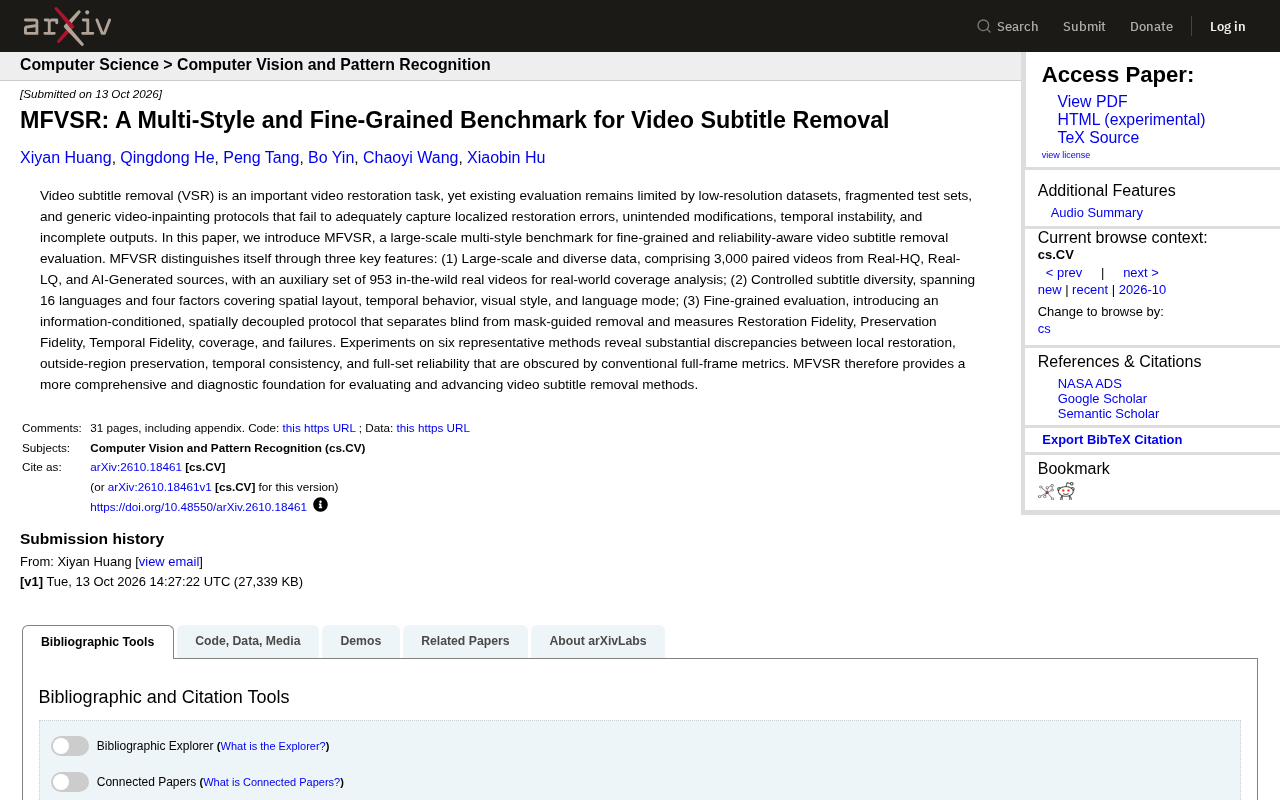
MFVSR: A New Benchmark Brings Fine-Grained Evaluation to Video Subtitle Removal
MFVSR is a large-scale, multi-style fine-grained benchmark for video subtitle removal (VSR), with 3,000 paired videos and 953 real videos across 16 languages, and a spatially decoupled evaluation protocol that measures restoration, preservation, temporal fidelity, and reliability.

SMD: Simplified Online Distillation Achieves 4-Step Generation That Surpasses Multi-Step Diffusion Models
SMD proposes a simplified online distillation framework that achieves 4-NFE few-step generation using only velocity regression, without auxiliary score models or adversarial training, surpassing multi-step teachers on image, video, 3D, and audio-video generation.
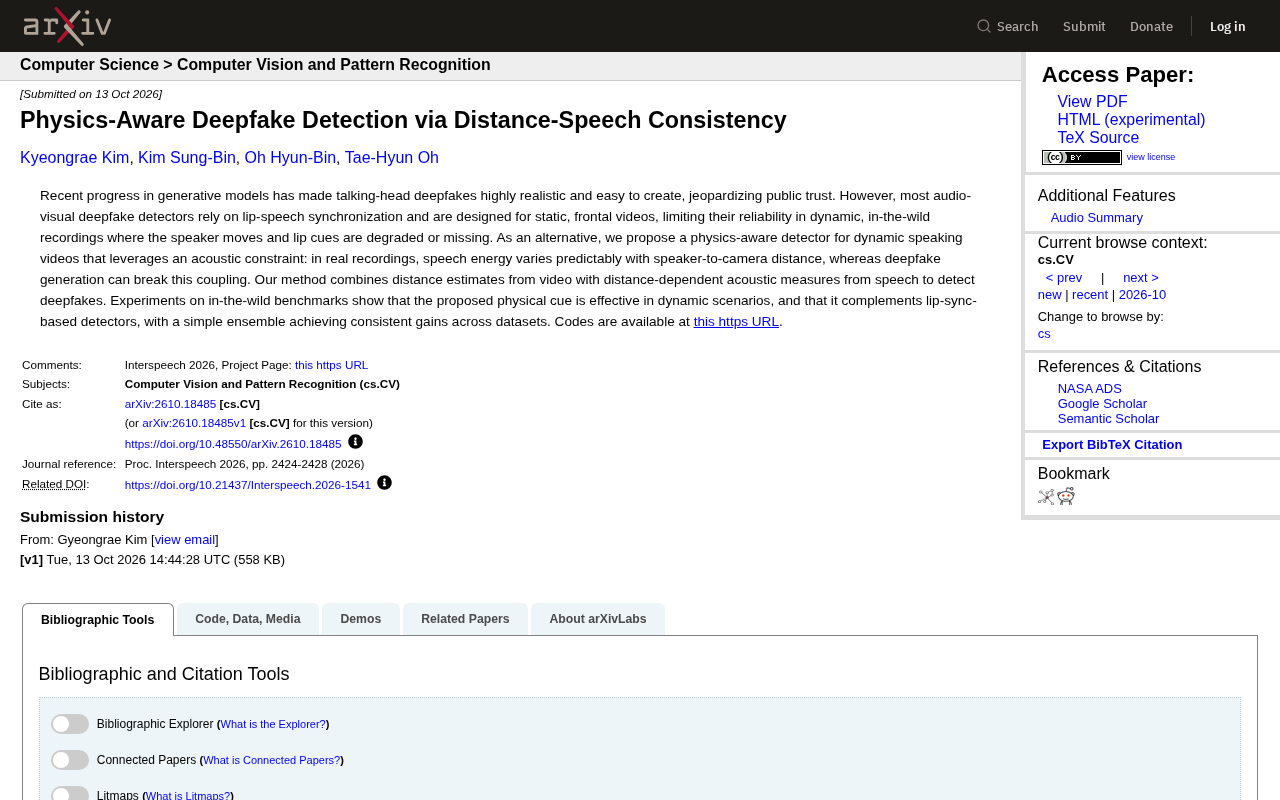
Physics-Aware Deepfake Detection: A New Approach via Distance-Speech Consistency
New deepfake detection method: leverages the physical law of speech energy varying with distance, combining video distance estimation and acoustic measurements to effectively identify speaker fake videos in dynamic scenes, addressing the limitations of traditional lip-sync detection.