ChatGPT Voice Powered by GPT Live One: Full-Duplex Voice AI Has Arrived

OpenAI's GPT Live One brings full-duplex voice, real-time reasoning, and live translation to ChatGPT Voice.
OpenAI has launched ChatGPT Voice, driven by a new model called GPT Live One. Key advances include full-duplex conversation (listening and speaking simultaneously), multi-task real-time reasoning with web search, and live bidirectional translation — marking a significant leap from traditional cascaded voice AI architectures toward true end-to-end speech intelligence.
Full-Duplex Voice: A Revolution in AI Conversation
OpenAI has officially launched a new version of ChatGPT Voice, powered by a voice model codenamed GPT Live One. The company describes it as "the most powerful voice model to date," with its headline feature being full-duplex conversation capability.
The concept is best captured by a line from the official demo: "Imagine you're on the phone with a friend — you can listen and talk at the same time. That's full-duplex." This single sentence cuts to the heart of what separates a new generation of voice AI from its predecessors.
Full-duplex and half-duplex are foundational concepts in communications engineering. In a half-duplex system, the channel only allows one-way transmission at any given moment — the classic example being a walkie-talkie, where one party must finish transmitting before the other can respond. Traditional voice assistants (early Siri, Alexa, etc.) operate on the same principle, using VAD (Voice Activity Detection): the system waits until it detects that the user has stopped speaking before triggering a response. Both parties take turns occupying the channel — essentially a half-duplex model. Full-duplex, by contrast, allows simultaneous two-way signal transmission, just like a standard phone call. For an AI voice model, achieving true full-duplex means the model must continuously receive audio input while simultaneously performing speech understanding, reasoning, and output generation — placing extremely high demands on real-time audio stream processing architecture, end-to-end voice model design, and echo cancellation technology.

Critically, OpenAI emphasizes that the new model can "follow interruptions, pauses, corrections, and the natural flow of thinking out loud." This means when you change course mid-sentence, suddenly ask a new question, or think aloud as you speak, the AI no longer gets stuck or awkwardly jumps in due to rigid voice detection thresholds. This marks an important step in voice interaction — moving from feeling like a tool to feeling like a companion.
More Than Words: It Can Actually Think
OpenAI notably downplayed the "conversational companion" angle in this launch, instead emphasizing GPT Live One's reasoning and real-time information retrieval capabilities. As one engineer put it during the demo: "Natural conversation is nice, but what I really care about is whether it can think."
The technical approach behind GPT Live One represents a fundamental departure from previous voice AI systems. Until now, most voice AI has used a cascaded architecture: speech recognition (ASR) converts speech to text → a large language model processes the text → text-to-speech (TTS) synthesizes the output. While each module in this three-stage pipeline can be independently optimized, the approach has clear drawbacks: every step introduces latency, and the intermediate text conversion discards paralinguistic cues — tone, emotion, pacing — meaning the AI can't perceive a user's hesitation, emphasis, or emotional state. End-to-end speech LLMs process raw audio features directly, integrating understanding and generation within a unified model, fundamentally solving both information loss and accumulated latency.

The official demo presented a high-pressure scenario: a presenter with 30 minutes before a lecture on the "history of sound" needed the AI to simultaneously handle three tasks — fact-checking historical dates in the talk, checking whether the BART 16th Street Station had any delays, and confirming whether it would rain in San Francisco that afternoon.
ChatGPT Voice worked through all three in parallel: no current service alerts on the subway, no rain expected in the afternoon — and during the fact-check, it proactively flagged an error: "Edison's tinfoil phonograph was 1877, not 1865."
The intent of this demo was clear: OpenAI wants to signal an intelligence shift — voice AI is no longer just a voice converter, but a reasoning engine capable of searching the web, cross-referencing information, and proactively catching mistakes.
Real-Time Translation: From Feature to Presence
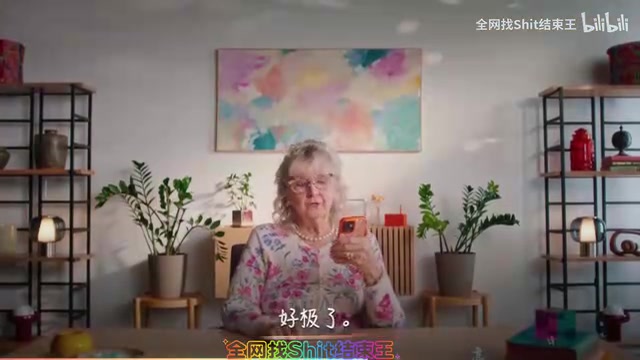
Another major highlight of the launch was real-time AI translation. The demo simulated a cross-language business negotiation: a team member played a French rare book dealer based in Paris, with ChatGPT Voice providing live English-French bidirectional interpretation throughout.

AI simultaneous interpretation is widely recognized as one of the hardest tasks in computational linguistics — far more complex than sentence-by-sentence translation. Human professional simultaneous interpreters require years of specialized training and work under such intense cognitive load that they typically rotate every 15–20 minutes. Achieving this with AI involves three core challenges: first, the "predictive translation" problem — different languages have significantly different sentence structures (e.g., verb-final ordering in German and Japanese), so the system must begin outputting a translation before the sentence is complete; second, the trade-off between low latency and accuracy, as end-to-end streaming translation models must complete phoneme recognition, semantic understanding, and target-language generation within milliseconds; third, contextual coherence, requiring the model to maintain state across sentences to handle pronouns, ellipsis, and cultural context.
From "I like this book" to "I can't pay much because there are too many annotations" to the final negotiation — "Tell her 30, done" — the model switched fluidly between the two languages. This scenario-driven demo showcased not just translation accuracy, but a sense of real-time presence under low latency — translation no longer pauses between sentences, but functions as an instantaneous bridge woven into the natural rhythm of conversation. It signals that AI simultaneous interpretation is approaching the threshold of practical deployment.
OpenAI's summary of the new model was concise: "The new ChatGPT Voice listens while it speaks, is smarter than ever, and knows when to jump in and when to get out of the way." That phrase — "knows when to get out of the way" — captures precisely the most subtle and elusive design challenge in voice interaction.
Big Launch, Quiet Reception?
Despite OpenAI's polished and well-resourced official launch, the market response to ChatGPT Voice has been noticeably quieter compared to the fanfare surrounding the flagship text-based models released around the same time.
This may reflect a broader trend in the AI industry: users are far more focused on text-based reasoning capabilities than on voice interaction itself. Despite steady progress at the experience level, voice has yet to displace text conversation as the primary modality in most users' real-world workflows. For many, voice remains a "nice-to-have" mode of interaction rather than a core need.
From a longer-term perspective, however, the significance of full-duplex voice models should not be understated. Looking back at the history of human-computer interaction (HCI), each shift in the dominant input paradigm has been accompanied by a leap in computing device adoption: command-line interfaces (CLI) in the 1960s–70s kept computers in the hands of specialists; the Macintosh in 1984 brought the graphical user interface (GUI) to mainstream audiences, with mouse and icon metaphors making personal computers a household fixture; the multi-touch screen of the iPhone in 2007 redefined mobile interaction and pushed smartphones into the hands of billions worldwide. Voice interaction is seen as the next potential paradigm shift — it is humanity's most natural form of communication, with a learning curve that approaches zero. When AI can genuinely understand interruptions, hesitations, and mid-thought pivots, voice may finally become the dominant human-machine interface — just as the keyboard was to the PC and the touchscreen was to the smartphone, reshaping the core layer of how humans and machines relate.
What's Next for Voice AI
The combination of ChatGPT Voice and GPT Live One reveals OpenAI's ambitions on the voice front: not content with simply "hearing and speaking," but pursuing a human-like interaction experience that involves listening and thinking simultaneously, with the ability to collaborate in real time. Full-duplex conversation, multi-task reasoning, real-time translation — stacked together, these capabilities sketch out a vision of a more seamless, intelligent voice future.
Whether ChatGPT Voice will genuinely work its way into everyday life for mainstream users remains to be seen. But one thing is certain: the technical ceiling for voice interaction is being raised continuously, and this race has only just begun.
Key Takeaways
Related articles
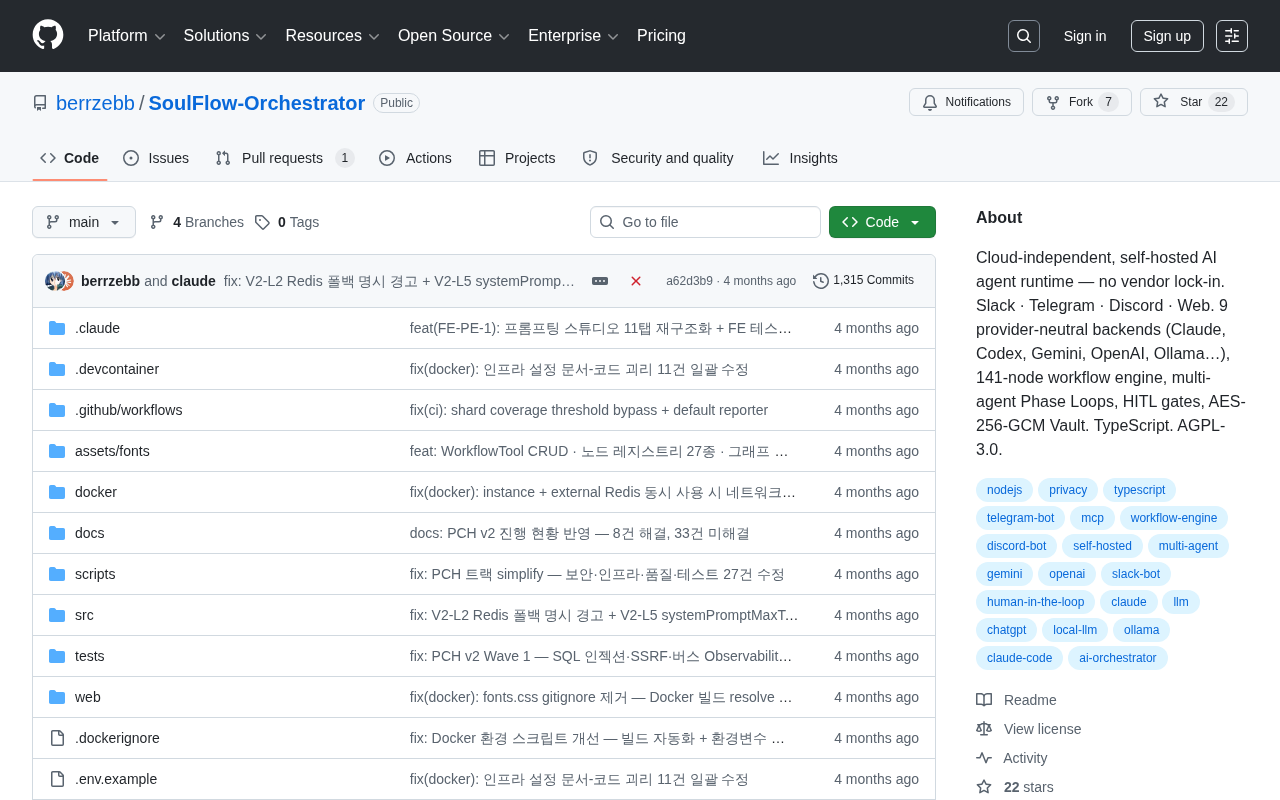
SoulFlow-Orchestrator: A Self-Hosted, Vendor-Lock-In-Free AI Agent Runtime
SoulFlow-Orchestrator is an open-source, self-hosted AI agent runtime with no vendor lock-in. Supports 9 neutral backends (Claude, OpenAI, Ollama), 141-node workflow engine, multi-agent loops, and HITL gates.
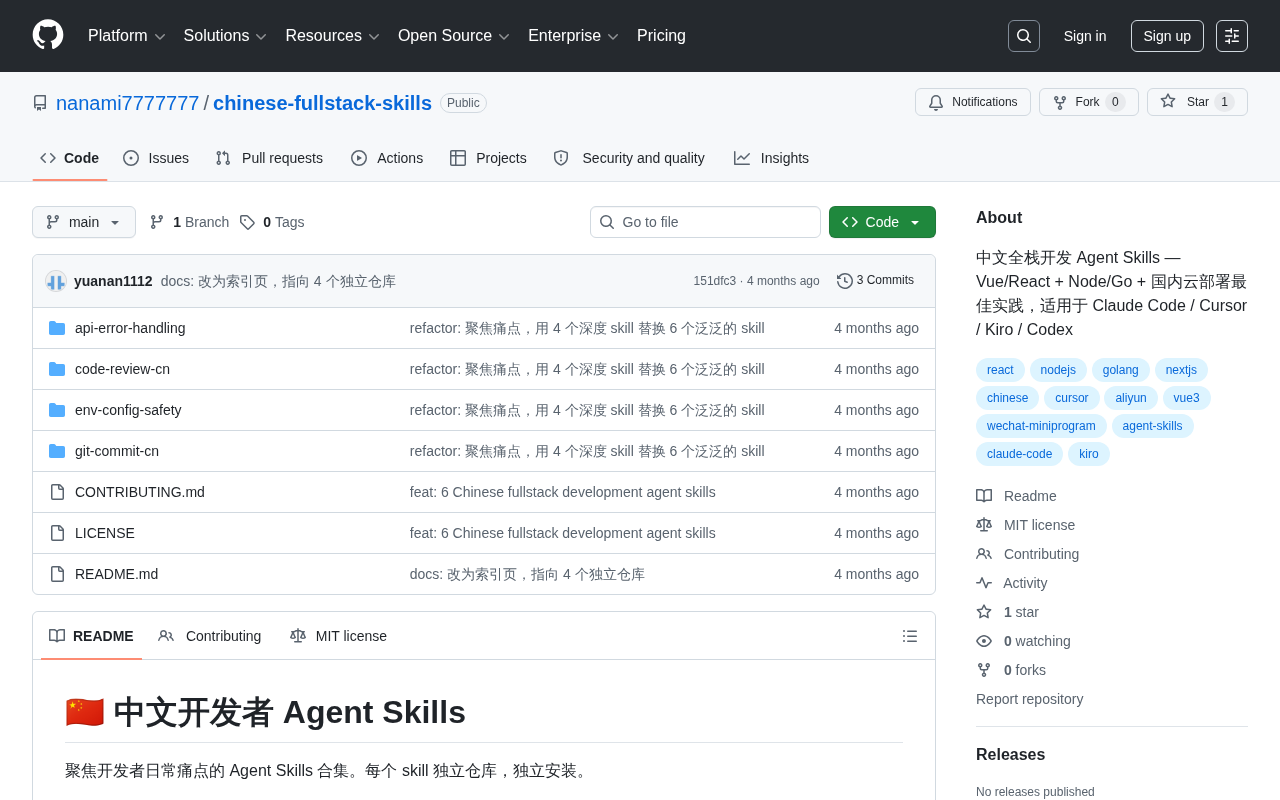
Chinese Full-Stack Agent Skills: A Skill Library Tailored for Domestic AI-Assisted Development
chinese-fullstack-skills is an Agent Skills library for Chinese full-stack development, covering Vue/React, Node/Go, and domestic cloud deployment best practices. Compatible with Claude Code, Cursor, Kiro, and Codex.
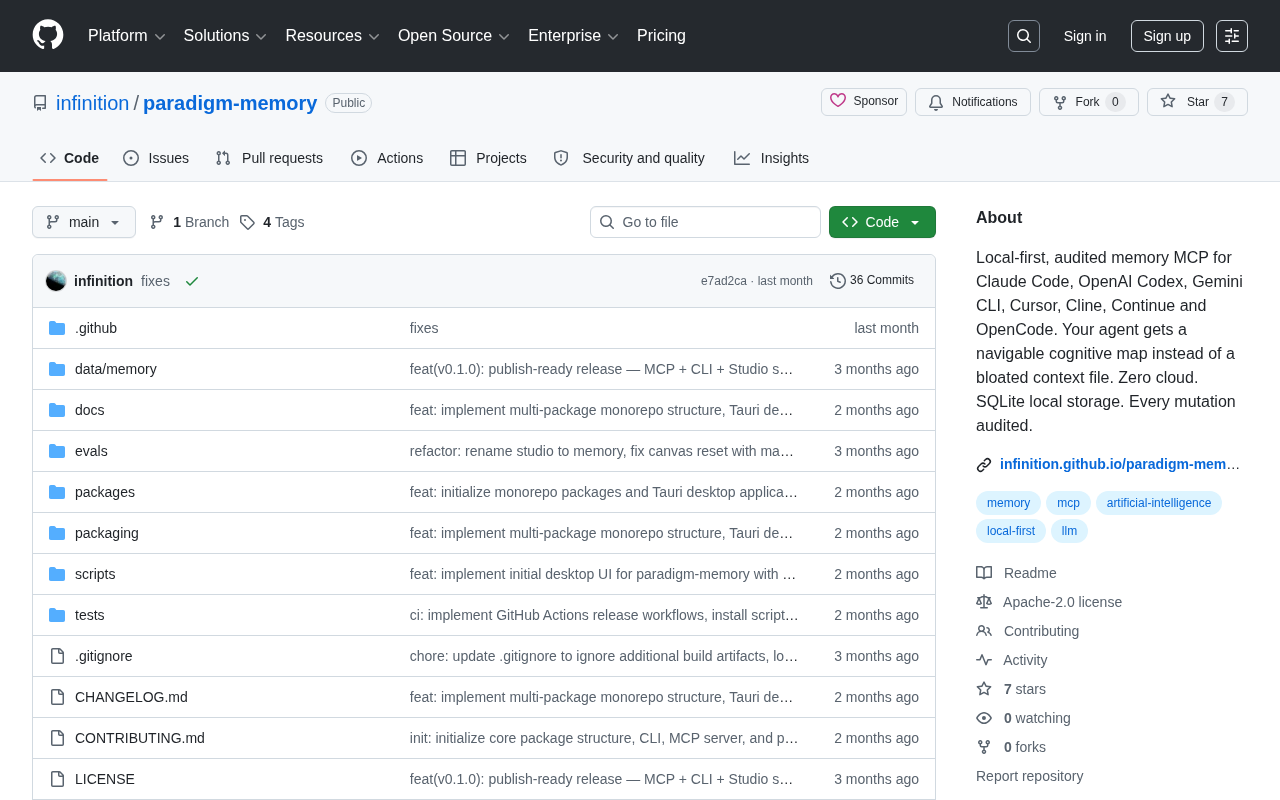
Paradigm Memory: A Local-First Memory System for AI Coding Assistants
paradigm-memory is a local MCP memory tool for Claude Code, Cursor, and Cline. It uses SQLite local storage, zero cloud, full audit trails, and a navigable cognitive map instead of bloated context files.