Check Point Servers Compromised: A Security Wake-Up Call Affecting 22 Organizations
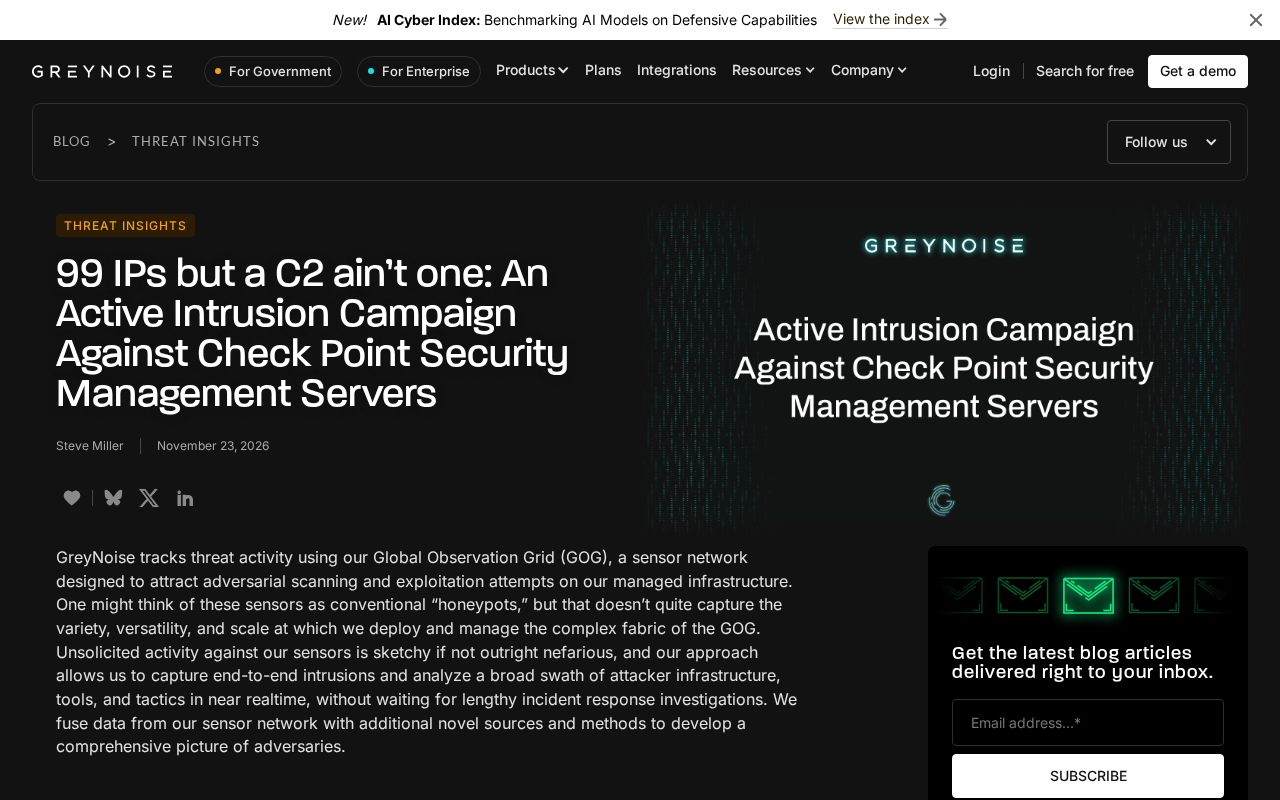
An attack on Check Point servers has affected 22 organizations, underscoring the need to protect security infrastructure itself.
According to Hacker News discussions, a coordinated attack on Check Point servers has affected 22 organizations, suggesting attackers may have exploited a common weakness at scale. Check Point servers handle security management, log aggregation, and policy distribution, so a compromise could give attackers visibility or control over downstream defenses — enabling policy tampering, alert suppression, or lateral movement. The article notes security products aren't immune to attack, and their high privileges make vulnerabilities more dangerous. Until more details emerge, users should minimize management interface exposure, review accounts and logs, follow patches, and verify policy integrity. Attack vectors and attacker identity remain unknown.
According to discussions in the Hacker News community, a cyberattack campaign targeting Check Point servers has affected 22 organizations. Check Point is a globally recognized cybersecurity vendor whose products are widely used for enterprise perimeter protection and threat management. The fact that attackers were able to compromise a security vendor's own server infrastructure is itself a warning signal the security industry should heed.
Incident Overview: A Security Vendor Becomes the Target
Based on currently public information, this is a coordinated attack campaign rather than an isolated, sporadic event. The figure of 22 organizations suggests the attackers possess a degree of规模化 capability — likely breaking through targets at scale by exploiting some common weakness.
Check Point servers typically handle critical functions such as security management, log aggregation, and policy distribution. Once compromised, attackers may gain visibility into — or even control over — downstream protection systems. This explains why the incident has sparked discussion on Hacker News: the impact of compromised security infrastructure often extends far beyond any single organization.
Due to limited disclosure, it remains unclear what specific vulnerabilities the attackers exploited, how long the attack persisted, and whether any data exfiltration was involved.
Check Point's Product Lineup: Check Point started with stateful inspection firewalls, and its core products include Quantum security gateways, Security Management Server, and cloud-based unified management platforms. The "servers" mentioned in this context usually refer to the Security Management Server or SmartConsole management console, which centrally stores network-wide security policies, logs, and device certificates — the control plane of the entire protection system. Because of this, the management server occupies a high-value position in the architecture: it does not directly carry traffic, yet it determines the behavior of all gateways. If attackers seize the management side, they effectively gain "write access" to policies. This is precisely why the security industry has long emphasized that the management plane should be isolated from the data plane and never directly exposed to the internet.
Why This Deserves Attention
Supply-Chain-Style Cascading Risk
Organizations deploying Check Point servers often regard them as part of their security defense line. If attackers control the management server, they could tamper with security policies, suppress alerts, or use it as a springboard for lateral movement into the internal network. For large organizations relying on unified security management, a single point of compromise can mean multi-point exposure.
Supply Chain Attacks and Security Infrastructure: Supply-chain-style risk has two dimensions here. The first is the traditional software supply chain — if a vendor's update channels or management components are backdoored, the impact spreads along the distribution chain to all customers. The second is the "chain of trust" dimension: downstream organizations delegate part of their security decision-making authority to vendor equipment, and once the trustee is compromised, the trust assumptions of the delegating party collapse. Similar to historical incidents like SolarWinds and Kaseya, attackers favor such targets because a single investment yields lateral entry points to multiple victims — and victims are often less vigilant about traffic coming from "trusted security devices."
Security Products Themselves as Attack Surface
Security devices are not inherently immune to attacks. Historically, firewalls, VPN gateways, email gateways, and other security products have all been prime research targets for attackers. This incident is another reminder: the high-privilege nature of security products means that when vulnerabilities occur, the consequences can be more severe than those of ordinary business systems.
Why Security Devices Are High-Value Attack Surface: Security devices typically run with high privileges, are deployed on critical network paths, and hold large amounts of credentials, certificates, and policy configurations. As a result, if a vulnerability exists, the initial access attackers gain far exceeds what they would get from compromising an ordinary business host. Cases exploited at scale in recent years include vulnerabilities in perimeter devices such as Fortinet FortiOS SSL-VPN, Pulse Secure VPN, and Citrix ADC, which attackers often use to achieve unauthorized access and plant backdoors. Another characteristic of these devices is long patch cycles and sensitive change windows — many organizations delay upgrades out of concern for business impact, further widening the exposure window.
Response Approaches Organizations Can Take
For organizations using Check Point products, before the vendor discloses further details, the following directions can be prioritized:
- Verify the external exposure of management servers and minimize access sources to management interfaces where possible
- Review account permissions and login logs on security devices to check for traces of anomalous access
- Monitor vendor security advisories and patch updates, and follow up on remediation information promptly
- Review whether security policies have been modified unexpectedly, especially alert-suppression rules
These measures are general defensive hardening approaches; specific handling should still be based on official announcements and assessment of your own environment.
General Practices for Hardening the Management Plane: Beyond reducing exposure, consider enabling multi-factor authentication to protect management accounts, restricting management interfaces to dedicated management network segments or behind jump hosts, enabling dual-person review and change auditing for policy changes, and exporting management logs to a logging platform independent of the managed devices — so that logs cannot be tampered with or deleted if the device is compromised. Setting additional approval requirements for high-risk operations such as alert suppression or rule disabling helps ensure timely detection when policies are modified unexpectedly.
Information Gaps and Follow-Up Focus Areas
Currently public information is quite limited. Key details — attacker identity, specific attack vectors, and the industry distribution of affected organizations — remain unclear. Discussion on Hacker News has stayed at the level of the incident itself, with no consensus technical attribution yet formed.
As the vendor's investigation progresses and more organizations disclose their situations, the full picture may gradually become clearer. For security practitioners, the value of such incidents lies in the reminder: protecting security infrastructure itself deserves the same attention as protecting business systems.
One-line Summary
The attack on Check Point servers has affected 22 organizations, highlighting the importance of protecting security infrastructure itself.
Paragraph Summary
According to Hacker News discussions, a coordinated attack campaign targeting Check Point servers has affected 22 organizations, with the scale suggesting attackers may have exploited a common weakness to break through at scale. Check Point servers handle security management, log aggregation, and policy distribution — once compromised, attackers may gain visibility into or even control over downstream protection systems, enabling them to tamper with policies, suppress alerts, or move laterally. The article notes that security products are not inherently immune to attacks, and their high-privilege nature makes the consequences of vulnerabilities more severe. Before official disclosure of further details, users are advised to minimize management interface exposure, review accounts and login logs, follow patch advisories, and verify whether policies have been modified unexpectedly. Key information such as attack vectors and attacker identity remains unclear.
Related articles
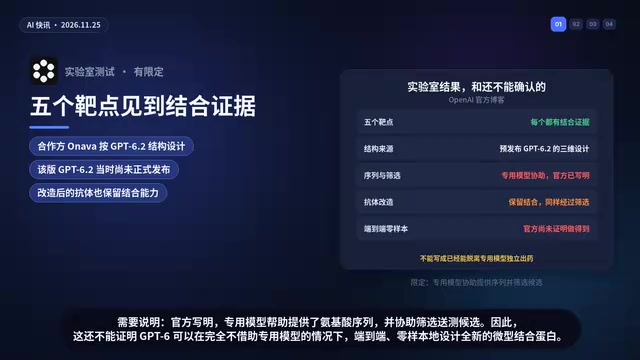
GPT-6 Designs Proteins, Claude Creations Become Apps with One Click, DeepMind Releases New Benchmark
OpenAI says GPT-6 can design protein 3D structures, Anthropic lets Claude creations install as desktop apps, DeepMind's HIP benchmark tests stability on simple questions, Google Workspace opens agent MCP interfaces.
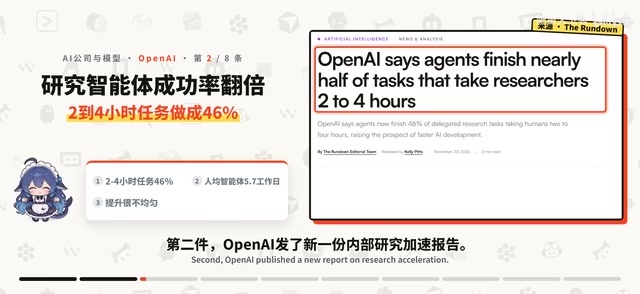
OpenAI Weekly Roundup: GPT-6.2 Rolls Out to ChatGPT, GPT-6 Designs Proteins
OpenAI's week: GPT-6.2 rolls out to ChatGPT, GPT-6 claims independent protein design, agent research share surges, perplexity proposed as a shared metric, and internal safety concerns surface.

Is the Crypto Industry About to "Turn Blue"? The Truth Behind Tech and Politics' Shifting Allegiances
Vergecast discusses whether the crypto industry will shift from the right to the Democrats, revealing the pragmatic nature of tech's politics and the costs of a crypto pivot.