Chinese Open-Source LLMs Dominate Hugging Face: The Flash Lightweight Era
Chinese open-source LLMs dominate Hugging Face; lightweight Flash versions become mainstream
Five of Hugging Face's top six trending models are Chinese, with DeepSeek V4 Flash Vision leading. The rankings reveal three key trends: Chinese models routinely dominating, lightweight Flash versions outperforming flagships in downloads, and AI shifting from chat to practical work. MoE sparsification has become an industry standard for cost reduction.
This week's Hugging Face official Trending chart has once again been swept by Chinese open-source models—five of the top six spots belong to China. The chart-topper not only handles conversations but also understands images, released under the most permissive MIT license. This ranking isn't just a simple reshuffle; it clearly signals three important trends in the open-source LLM landscape: Chinese models routinely dominating the charts, lightweight versions becoming the main battleground, and AI transitioning from chatting to getting work done. This article examines these newcomers one by one, focusing on which models you can actually run on your own GPU.
Top Spot: DeepSeek Vision Edition—Multimodal, Fast, and Commercial-Ready
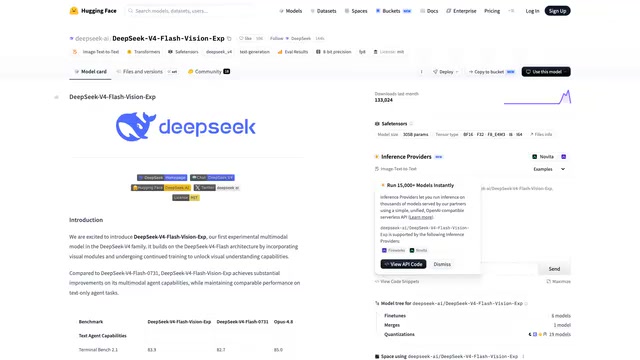
This week's champion is DeepSeek V4 Flash Vision, with a trending score of 557. Two keywords in this name deserve close attention from anyone interested in local deployment.
The first is Vision, meaning it's a multimodal model capable of understanding images. Multimodal refers to models that can simultaneously understand and process multiple information types—text, images, audio, or even video—rather than just text conversations. Throw in a screenshot or chart, and it can read and answer questions about it directly. The second is Flash, representing the lightweight, high-speed approach—not the heavy-duty type that only runs on cloud clusters, but a version optimized for efficiency.
What truly makes it this week's standout, however, is its license: MIT. The MIT License, created by the Massachusetts Institute of Technology, is an extremely permissive open-source license with core terms requiring only copyright notice retention—beyond that, virtually no restrictions. It allows commercial use, modification, distribution, private use, and even closed-source derivative works. By comparison, the Apache 2.0 license, while also permitting commercial use, requires change documentation and patent grant clauses; GPL-series licenses have "copyleft" provisions requiring derivative works to also be open-source. In the LLM field, many models claiming to be "open-source" actually use custom licenses (like Meta's Llama license) with various restrictions on commercial scenarios, user scale, and geographic regions. DeepSeek's choice of MIT means any company or individual can embed the model in their commercial products without payment or registration. For developers focused on local deployment, a domestically-produced multimodal model that can see images, run fast, and be used commercially is nearly an unbeatable combination.
Alibaba Qwen and Zhipu GLM: Why Flash Versions Are More Popular Than Flagships
Second and third place are both occupied by Alibaba's Qwen 3.8 series. Qwen3.8-27B has 5.73 million total downloads and 13,000 likes, making it the most popular model overall. Even more impressive, the GGUF quantized version by Unsloth has hit nearly 10 million downloads (9.95 million).
GGUF (GPT-Generated Unified Format) is a model storage format designed by llama.cpp project founder Georgi Gerganov, and is currently the most mainstream format standard for local LLM deployment. Quantization refers to compressing model weights from high-precision floating-point numbers (like FP16, 2 bytes per parameter) to low-precision representations (like 4-bit quantization, approximately 0.5 bytes per parameter), drastically reducing memory usage and computational overhead while maintaining model capabilities as much as possible. For example, a 27B parameter model at FP16 precision requires about 54GB of memory, but after 4-bit quantization only needs about 14-16GB, fitting perfectly into a consumer-grade RTX 4090 (24GB VRAM). Unsloth is an open-source team focused on efficient fine-tuning and quantization of large models, with quantized versions known for minimal precision loss and good compatibility, making them the community's top choice for local deployment. Nowadays, eight or nine out of ten local deployment tutorials use it.
Third place goes to Qwen3.8-Flash-Next, following the next-generation experimental architecture with one selling point: speed. It's in direct competition with DeepSeek's Flash version in the high-speed category.
Fourth and fifth places go to Zhipu's GLM-5.3 and GLM-5.3-Flash. The flagship version uses the MoE mixture of experts architecture—MoE's core idea is: although the model has massive parameters, when inferring each token, it only selectively activates a small portion of "expert" sub-networks through a "router," achieving a "big brain, small appetite" effect. This architecture was systematically proposed by Google in 2017, and the successful practice of models like DeepSeek-V2/V3 and Mixtral made MoE an industry standard in 2024-2025. The flagship has large parameters and full capabilities; but the lightweight Flash version actually has more downloads than the flagship.
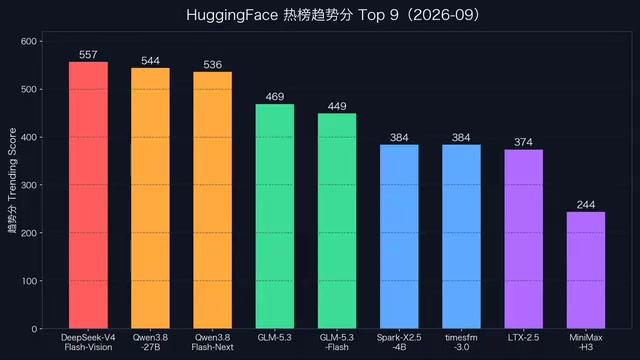
You may not have noticed that DeepSeek, Qwen, and GLM all released high-speed lightweight Flash versions separate from their flagships, and Flash versions generally have higher downloads. Behind this is a very practical market signal: What users are truly willing to pay for has never been the one with the most parameters, but the one that runs fast and can actually run on their own GPU.
Small Model Comeback: Spark X2.5's High Like-to-Download Ratio
Sixth place is a dark horse—Spark X2.5, with only 4 billion parameters, just over 3,000 total downloads, but 467 likes. The ratio of likes to downloads is remarkably high, indicating that those who've actually used it gave extremely positive feedback.
4 billion parameters means it can run on a single GPU or even a decent integrated graphics card, taking the "small but mighty" approach, especially suitable for hardware-constrained users. This also confirms that the small model track isn't about "compromised experience"—recent research shows that through high-quality data curation, refined training strategies, and targeted architectural design, small parameter models can perform comparably or even better than general models with ten times the parameters on specific tasks. The key is "using the right data" rather than "piling on parameters." They can still pack a punch in appropriate scenarios.
Seventh place is even more cross-domain—Google's TimesFM 3.0. It's not a chat model at all, but a foundation model specifically for time series forecasting. Time series forecasting refers to predicting future values based on temporal patterns in historical data, widely applied in retail sales estimation, power load prediction, financial market analysis, logistics inventory management, server traffic planning, and other scenarios. Traditional methods rely on statistical models like ARIMA and Prophet, requiring manual feature engineering and domain-specific tuning. TimesFM represents a foundation model approach—pretraining a general model on massive time series data so it has zero-shot prediction capability, meaning it can be used directly without specialized training on specific business data. A specialized forecasting model hitting seventh place shows that AI is moving from "chatting with you" into the production stage of "helping you work," with community interest expanding from "generative AI" to "decision-making AI."
Video and Voice Generation Dual Explosion
The video generation track continued to explode this week, showing a two-horse race pattern.
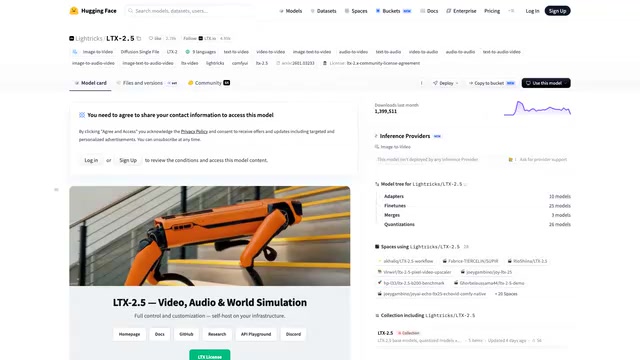
First is LTX 2.5, with 1.4 million downloads, supporting text-to-video, image-to-video, and video-to-video. The latest version can even take audio and directly generate video, outputting both audio and video together. The other is MiniMax H3, with 5.11 million downloads and explosive reputation, belonging to the first tier of open-source video generation. The community even created a "four-step production" ultra-fast distilled version called FastH3.
Distillation (Knowledge Distillation) is a model compression technique whose core idea is using a large, strong "teacher model" to guide the training of a small, fast "student model." The student model not only learns standard training objectives but also learns to mimic the teacher model's output distribution, thereby retaining most of the teacher model's capabilities with fewer parameters. The "step distillation" technique used in FastH3 is particularly important in video generation—diffusion model generation speed is directly related to sampling steps. Compressing the diffusion generation process from dozens of steps to just four means multiplicative speed improvements, making near-real-time video generation possible. You could say LTX and MiniMax compete on quality, while the distilled version competes on speed.
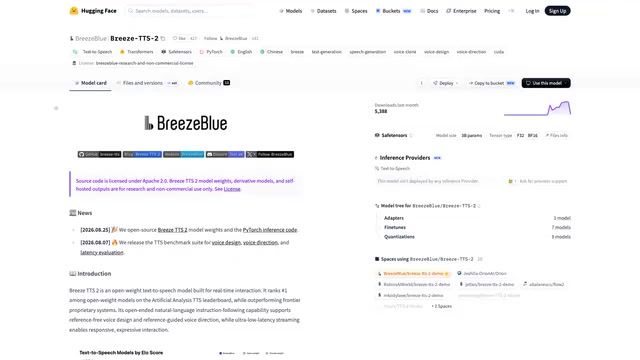
The voice track also has a newcomer: Breeze TTS-2, supporting Chinese and English, and can do voice cloning—give it a reference audio clip, and it can read text in that voice. Voice cloning technology analyzes acoustic characteristics of the speaker in reference audio such as timbre, intonation, and rhythm, then applies these characteristics to a text-to-speech system, making the synthesized speech sound like the reference person speaking. Modern "few-shot" cloning technology requires only a few seconds to a dozen seconds of reference audio, greatly lowering the barrier to entry. However, it's worth noting that while voice cloning brings convenience, it also raises deepfake security concerns, requiring attention to compliance when using. Content creators focusing on narration should pay special attention.
Technical Frontier: Sparsification Becomes the Industry's Main Theme
Let's look at a slightly technical but very important frontier—K2 Horizon, with 36 billion total parameters but activating only 4 billion parameters when processing each token. It relies on two technologies, MoE (Mixture of Experts) plus MoBA (Mixture of Block Attention), achieving "a large model's brain with a small model's appetite."
MoBA (Mixture of Block Attention) is an emerging attention optimization technique aimed at solving the quadratic complexity problem of standard Transformer self-attention mechanisms. Traditional full attention mechanisms require each token to interact with all other tokens in the sequence, with computation growing quadratically with sequence length, making it extremely costly for long text. MoBA borrows from MoE's approach, dividing attention computation into multiple "blocks," then using a routing mechanism to let each token only attend to the most relevant blocks rather than the entire context, thus drastically reducing computational overhead while retaining global information access capability. K2 Horizon simultaneously employs MoE and MoBA, achieving "on-demand activation" at both the parameter and attention levels—a representative of dual sparsification.
Coincidentally, Tencent Hunyuan also released the Hunyuan Hi4 preview this month, also using MoE architecture. From DeepSeek to Qwen to Tencent Hunyuan, sparsification for cost reduction and efficiency improvement has become the industry's main theme. The core logic of sparsification is: not every input needs the model's full capabilities; by intelligently "allocating on demand," computation costs can be reduced several-fold or even an order of magnitude without significantly compromising model capabilities. Whoever can make models both fast and locally runnable wins developers.
How to Choose: Three Directly Actionable Recommendations
Facing so many models, how should you choose? Here are three directly actionable recommendations:
- Want mature stability and the fullest ecosystem: Choose the GGUF quantized version of Qwen3.8-27B—most tutorials, fewest pitfalls. Combined with local inference frameworks like Ollama or llama.cpp, from installation to conversation typically takes no more than ten minutes.
- Want to try cutting-edge multimodal, let the model see images: Focus on DeepSeek Vision edition and its community quantized versions. Multimodal capabilities are particularly suitable for document parsing, chart understanding, UI screenshot analysis, and similar tasks in practical scenarios.
- Tight on GPU memory: Keep an eye on each company's Flash lightweight versions, and small models like Spark in the 4 billion parameter class—the experience is no worse. If you only have 8GB or less of VRAM, 4-bit quantized small models are the only viable local solution.
Conclusion: The Best Era for Developers
Condensing this ranking into three signals:
First, Chinese open-source is no longer occasionally appearing on the charts, but routinely dominating them—the center of open-source LLMs has clearly shifted to China. Second, lightweight has become the main battleground—whoever can make models both fast and locally runnable wins developers. Third, AI is transitioning from chatting with you to helping you work, with comprehensive breakthroughs in video, voice, and forecasting.
Open-source models are getting stronger and more runnable. For us ordinary developers, this truly is the best era.
Related articles

Climate Resilience Assessment of Global Megacities: Who Stands Strongest Against Disaster?
An in-depth look at climate resilience across global megacities, comparing how developed and developing cities handle extreme weather, sea-level rise, and other climate disasters.
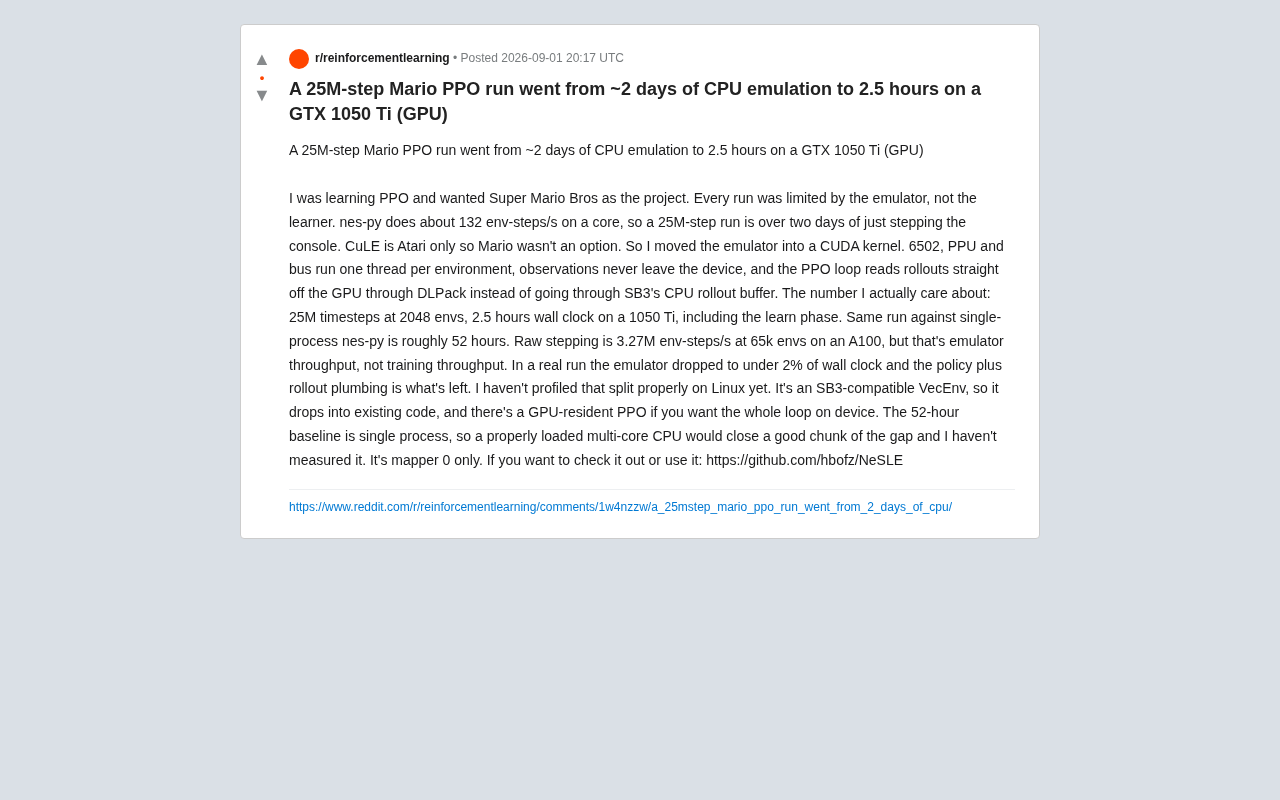
Porting NES to CUDA: 20x Speedup in Mario Reinforcement Learning Training
Developer ports complete NES emulator to CUDA kernels, achieving GPU parallel execution of 2048 Mario environments. On GTX 1050 Ti, 25M-step PPO training drops from 52 hours to 2.5 hours—nearly 20x faster. Deep dive into NeSLE's technical architecture and performance data.
MoE (Mixture of Experts) Deep Dive: Principles, Formulas, and Implementation
Deep dive into MoE (Mixture of Experts): how sparse activation scales parameters while reducing computation. Covers router networks, load balancing loss derivation, fine-grained expert splitting, shared expert mechanisms, and complete implementation essentials.