Chinese Original Animation 'My Landlord Is Not Right' Goes Viral: Why the Human-Ghost Cohabitation Comedy Resonates with Audiences

Chinese original short 'My Landlord Is Not Right' wins audiences with absurd human-ghost cohabitation, strong characters, and slice-of-life dialogue.
'My Landlord Is Not Right' is a viral Chinese original short animation on Bilibili about Zhenzhu, a wandering ghost who freeloads off a landlord who can't see her—free food, free utilities, free rent. The work de-horrorifies traditional ghost imagery, writing ghosts as couch-surfing slackers and drawing humor from dense verbal gags and real shared-living details. The ghost market scene is the most information-dense segment, accomplishing world-building, character development, and comedic pacing all at once, while concepts like 'name registration' and 'ghost market milk tea price hikes' transplant real-world identity anxiety and inflation into the ghost world. The article argues the work's success reflects young viewers' preference for 'light premise, strong character' animation—the invisibility fantasy echoes a longing for low-burden living, while the comedic undertone remains loneliness.
A Chinese original short animation titled My Landlord Is Not Right on Bilibili has sparked discussion among animation enthusiasts in a short time with its absurd daily life of "human-ghost cohabitation." An invisible wandering ghost, a completely oblivious landlord, and a grand villa with free utilities, room and board included—this premise seems simple, yet it blends comedy, companionship, and a touch of bittersweet sadness together.
Premise Breakdown: A Ghost Who "Got Lucky"
The protagonist is a wandering ghost who claims she "got lucky." Every day she sneaks into the landlord's home to eat his food, use his bathroom, and sleep in his bed—after all, the landlord can't see her. This "freeloading parasite" opening is inherently comedic, and what the work does even better is that it writes the ghost's situation very concretely: she's been dead for three years, working hard day in and day out to "run her stall," relying not on magic but on "sheer audacity."
The opening line—"If you dare call me, I can't see or hear you"—immediately establishes this ghost's cunning and shamelessness. She's not the eerie, terrifying kind of ghost; she's more like a couch-surfing young adult who refuses to leave a friend's place. This "de-horrorification" sets the entire work's tone toward light comedy from the very start.
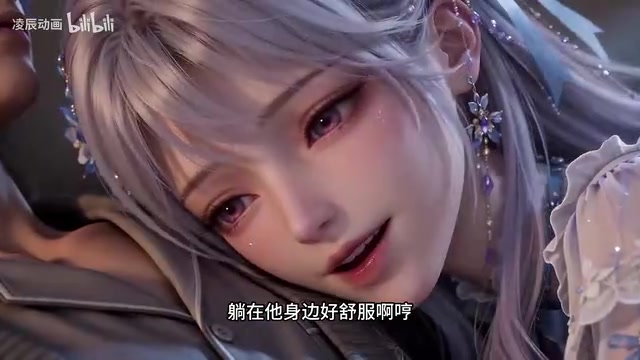
The animation also includes a jab at "ghost paintings"—"This ghost painting is way too ugly, totally unprofessional—no ghost looks like that." This fourth-wall-breaking self-mockery is both a punchline and a playful jab at traditional ghost imagery by the creators.
"Wandering ghost" (孤魂野鬼) is a common concept in Chinese folk belief and Daoist culture, referring to souls of the dead who receive no ancestral offerings and have no resting place. Unlike the vengeful, deeply resentful ghosts that harm the living in traditional horror narratives, wandering ghosts in folklore are more often depicted as pitiable, drifting beings with no one to turn to. This cultural background is key to understanding the character design: Zhenzhu is not a malicious supernatural threat but a marginalized figure with no "household registration" and nowhere to belong. The work domesticates her into a "couch-surfing youth," borrowing the wandering ghost's archetype of "homelessness" while stripping away the horror and instead giving it a slice-of-life comedic flavor.
Zhenzhu and Su Taotao: The "Ghost Market" Economics of Two Ghosts
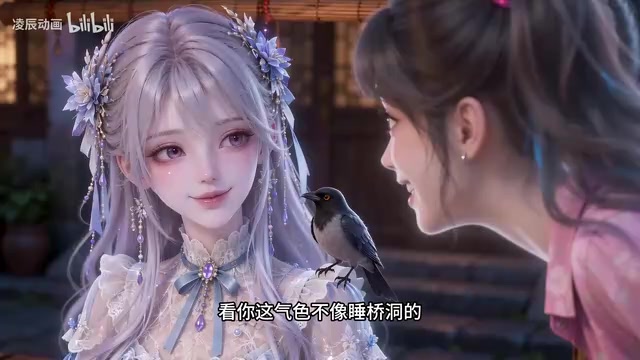
Another thread in the work is the interaction between the protagonist "Zhenzhu" (who specifically emphasizes it's "Zhenzhu as in pearl milk tea") and another ghost, "Su Taotao." When Su Taotao comes to visit, Zhenzhu's line "You don't look like someone who sleeps under a bridge" naturally leads to a boastful speech about "living in a grand villa, landlord can't see me, free utilities, room and board included." The humor here comes from a mismatch: a ghost bragging to another ghost about her "rental conditions," with the criteria for what counts as good being exactly the same as in the living world.
Even better is the ghost market setting. Zhenzhu wanders through the ghost market, sets up a stall selling watches—one watch priced at three hundred million Ming coins, the buyer thinks it's too expensive, and she negotiates all the way from one billion to four hundred million to eight hundred million, finally closing the deal with "Look how cute I am." The buyer's line "Who told you to smile like my granddaughter" adds a gentle touch of humanity amid the comedy. And the line "Ghost market milk tea went up three hundred million a cup last week" transplants real-world price anxiety straight into the ghost world—even ghosts can't escape inflation.
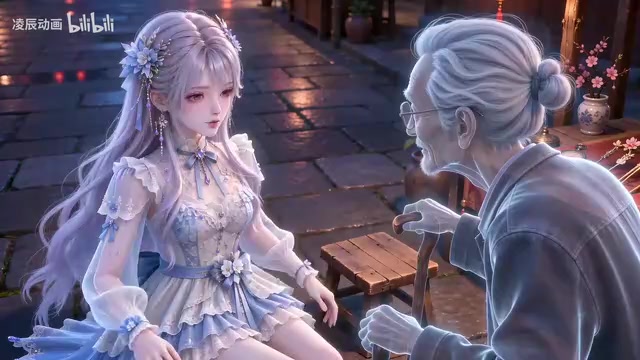
This transaction scene is the most information-dense part of the entire work: it simultaneously accomplishes world-building (ghost market, Ming coins, name registration), character development (Zhenzhu's shrewdness and charm), and comedic pacing. The line "I'm saving up to buy a name registration" also gives this seemingly carefree ghost a layer of motivation—she's saving money for her "identity."
The term "name registration" (名户口) is derived from the real-world household registration system. In China, hukou is an identity credential tied to social benefits such as education, healthcare, and home purchasing. Those without hukou are marginalized in the urbanization process and struggle to obtain stable living security. Zhenzhu's motivation to "save up to buy a name registration" essentially transplants real-world identity anxiety into the ghost world: even ghosts need a system-recognized "legal identity" to settle down. This setting makes the ghost market transactions more than just a comedic segment—it carries a mild satire of real-world household registration barriers.
Why This Kind of Short Animation Resonates
The popularity of My Landlord Is Not Right reflects, to some extent, young audiences' current preference for "light premise, strong character" animation. It has no grand world-building or complex battle scenes—it relies on one memorable character and a few tightly paced everyday conversations.
The recurring "you can't see me" gag is essentially an "invisibility" fantasy: no socializing, no paying, no being seen, yet still enjoying life. This fantasy subtly echoes contemporary young people's longing for a "low-burden life." And Zhenzhu's line "You're really good-looking—too bad we're a human and a ghost, otherwise I'd definitely take responsibility for you" pulls this lightness back toward a hint of regret—the undertone of comedy is often loneliness.
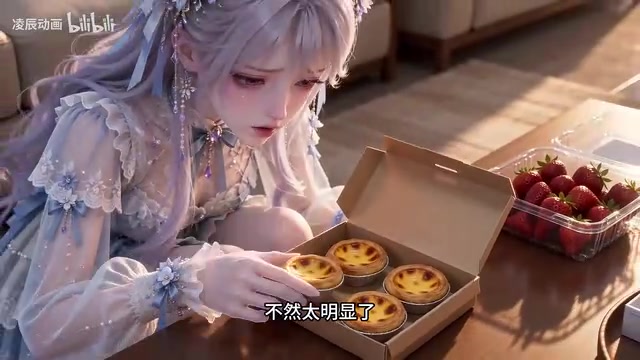
From a production standpoint, these Chinese original shorts are usually small in scale, winning through dense verbal gags and slice-of-life details. Lines like "You buy it and then don't eat it—what a waste just sitting there, let me eat it" are almost a true-to-life depiction of shared living, except the protagonist happens to be a ghost. It's precisely this "writing ghosts as people" approach that greatly closes the distance between the work and its audience.
"Guochuang" (国创) refers to domestic original animation, which has grown rapidly in recent years with support from platforms like Bilibili. Unlike commercial series that rely on long-form, big-budget production, Chinese original shorts often win through a runtime of just a few minutes, dense verbal gags, and slice-of-life details. Production costs are relatively manageable, making them more suitable for individuals or small teams to test the waters. The success of such works often depends on whether the characters are memorable and whether the dialogue is shareable, rather than on visual specifications. Understanding this creative ecosystem helps explain why My Landlord Is Not Right could gain traction in a short time through its "light premise, strong character" approach.
Conclusion
My Landlord Is Not Right uses the daily life of human-ghost cohabitation to prove that short animation doesn't need big-budget production to establish compelling characters. Its humor comes from the mismatch between premise and reality, and its lingering resonance comes from the fact that the invisible ghost actually longs to be seen. For viewers who enjoy light comedy and slice-of-life storytelling, this is a work worth clicking on.
Related articles

Braised Meat Shop Forced Out by Rent Hike: A Life-and-Death Contest Between Craft and Location
Braised meat shop owner forced out by a 100,000 yuan rent hike moves overnight; landlord's daughter takes over with seasoning packets and overnight meat sickens customers. A tale of location versus craft.

AI One-Click Emotional Short Drama: Bilibili Creator Tests the "Beautiful Landlady" Script
Bilibili creator uses AI to produce the emotional short drama "The Beautiful Landlady Comes to Fix the Guy's Drain," testing everything from script generation to character consistency.
Braised Meat Stall Goes Viral, Landlord Raises Rent—She Leaves Gracefully by Contract While Rival Cuts Corners and Loses Everything
A braised meat stall's rent was hiked from ¥68K to ¥168K after going viral; the owner moved out by contract while her rival cut corners and lost it all.