CIO SmartKobe EX05 Review: A MagSafe Power Bank with Built-in Cable and Stand
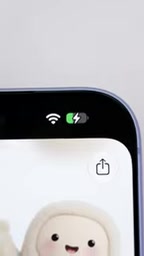
SmartKobe EX05 packs a detachable built-in cable, folding stand, and magnetic wireless charging into a palm-sized power bank.
SmartKobe EX05 is an integrated power bank built for "carry just one thing": 10000mAh from two 5000mAh semi-solid-state cells, pass-through charging that prioritizes external devices, and support for three devices at once. The built-in Type-C cable pulls out entirely and can be swapped for any Type-C cable; a rotatable folding stand sits on the front and a strong magnetic ring on the back, compatible with iPhone 12 and later plus magnetic Android devices. Wireless supports Qi 2.2 up to 25W, plus a 7.5W low-temperature safe mode. Its trade-offs are clear: capacity and power ceiling are exchanged for integration and portability—great for cable-averse users who charge while watching, not for those wanting big capacity or laptop power.
A Product That Packs the "Swiss Army Knife" Philosophy Into a Power Bank
The power bank category hasn't seen a refreshing design in a long time. Most products are just capacity stacking and port shuffling, with a form factor that hasn't changed in a decade. When the YouTube channel tried out CIO's new SmartKobe EX05, they described it as a "Swiss Army knife"—and that metaphor isn't an exaggeration, because this product squeezes three things that usually live in separate accessories—a built-in cable, a folding stand, and magnetic wireless charging—into a small cube that fits in your palm.
Positioning-wise, the EX05 targets the "bring only one thing" user: someone who needs to top up their phone, doesn't want to dig through their bag for cables, and wants somewhere to prop up the phone while watching videos during charging. Let's break it down feature by feature.
Pass-Through Charging: Prioritizing the Device You're Using
The EX05 supports pass-through charging, meaning it can power connected devices while it's charging itself, and the priority is to supply external devices first. That order is correct: what users are really anxious about is their phone's battery, not the power bank's own. Plug it into a wall charger overnight, and by morning both the phone and the power bank are full—this "effortless" experience is more valuable than an extra port.
Once devices are fully charged, it can continue to power three devices without the wall charger. The "three devices" claim comes from the combination of the built-in cable plus additional ports and wireless charging; check official specs for the exact allocation, but directionally it does cover the common combo of phone, earbuds, and watch.
Pass-through charging means the power bank passes power through to external devices while it charges itself. It relies on internal power management chips to coordinate input and output, and there are typically two implementation paths: one where part of the input current goes directly to the device and the excess charges the cells; and another where the cells charge first and then discharge to the device. The former is more efficient and generates less heat but requires more complex circuitry. What the EX05 calls "prioritizing external devices" usually falls into the former category, i.e., wall power prioritizes the phone. Note that pass-through charging power is often lower than standalone charging, and prolonged high-temperature environments may trigger power-reduction protection; actual behavior depends on wall charger wattage, cable specs, and ambient temperature.
Built-in Cable: Fixed or Detachable, Two Ways to Use It
Built-in cables are easy to get wrong—solder on a fixed Type-C head, and users are stuck when they encounter Lightning or need more length. The EX05's approach lets the entire cable pull out of the body, and once removed, you can connect any Type-C cable.

This design solves both "the inconvenience of a built-in cable" and "the anxiety of forgetting your cable" at once: for everyday short trips use the included one, and for long trips or special scenarios swap in your own. The trade-off is that the body needs structural space for cable storage, which is why the battery is only 10000 mAh rather than larger—engineering always involves trade-offs.
Stand and Magnets: Completing the Charge-and-Watch Scenario
There's a pop-out stand on the front that rotates to adjust direction; the ring on the back also fine-tunes the support angle when you change orientation. For users who habitually prop their phone on a desk for videos or video calls, this structure is more practical than a pure magnetic ring.

The magnetic part is officially described as having "relatively strong grip," and in the demo the phone barely wobbled after attaching. It's also compatible with form factors like the Duo, and in the demo the fit was clean and neat with no offset or lifted edges.
Battery and Wireless Specs: Semi-Solid-State Cells and Qi 2.2
Inside, the EX05 has a 10000 mAh capacity made up of two 5000 mAh semi-solid-state cells. Semi-solid-state cells are a relatively new choice in the power bank category and are generally considered to have advantages in safety and form flexibility, but actual cycle life and low-temperature performance need long-term use to verify—it's too early to over-interpret.
The wireless section supports the Qi 2.2 standard with up to 25W wireless output, covering models from iPhone 12 onward as well as magnetic-compatible Android devices.
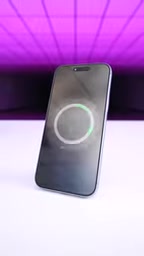
There's also a "safe mode" that drops wireless power to 7.5W. The point of this mode: wireless charging heat has always been a pain point, and slower and cooler is friendlier to battery health and hand feel. For a casual overnight drop, this mode is actually more sensible than chasing 25W.
Semi-solid-state cells are a transitional solution between traditional liquid lithium-ion batteries and all-solid-state batteries: the electrolyte still contains a small amount of liquid, but the proportion of free electrolyte is reduced through gelation or solid electrolyte coating. Potential advantages include relatively lower thermal runaway risk, the ability to make thinner or irregular shapes, and better safety under nail penetration or crushing; the costs are currently higher cost, no prominent energy density advantage yet, and ionic conductivity at low temperatures may be inferior to mature liquid systems. In a power bank, semi-solid-state is more of a safety and form-factor selling point than a capacity leap. The cycle life, swelling probability, and winter drain rate that users actually experience still require hundreds of charge cycles and different climate conditions to conclude.
Qi 2.2 is a specification iterated by the Wireless Power Consortium (WPC) on top of Qi 2. Qi 2 introduced magnetic alignment (Magnetic Power Profile), using magnet arrays to auto-align coils, reducing efficiency loss and heat from position offset; Qi 2.2 further refines power tiers and compatibility requirements, making interoperability between different brand accessories under the same standard more stable. 25W wireless output is a higher tier in Qi 2.2, but actual power depends on the phone-side supported protocol and thermal strategy: most iPhones maintain around 15W in daily magnetic wireless use, and the nominal 25W is closer to peak capability. This is also why the "safe mode" dropping to 7.5W still makes sense—at lower power, the temperature rise of the coil and phone back panel is noticeably smaller.
Who It's For, Who It's Not For
The trade-offs of this product are clear. It's for users who often use one device for multiple purposes, hate carrying cables, and have a habit of charging while watching; if you're after extreme capacity or need to power a laptop, 10000 mAh and the current power tier aren't designed for those needs.
It's more of an "integrated accessory" than a "large-capacity power station"—combining three small things into one reduces decision-making cost when heading out, and that's its real selling point.
One-line Summary
SmartKobe EX05 integrates a built-in detachable cable, folding stand, and magnetic wireless charging into a palm-sized power bank.
Paragraph Summary
SmartKobe EX05 is an integrated power bank built around "bring only one thing": 10000mAh capacity from two 5000mAh semi-solid-state cells, pass-through charging that prioritizes external devices, and the ability to charge three devices at once after unplugging from the wall. The built-in Type-C cable pulls out entirely and can be replaced with any Type-C cable, balancing daily convenience with special-scenario compatibility; there's a rotatable folding stand on the front and a strong magnetic ring on the back, compatible with iPhone 12 and later plus magnetic Android devices. Wireless supports Qi 2.2 up to 25W, with an additional 7.5W low-temperature safe mode. Its trade-offs are clear: exchanging capacity and power ceiling for integration and portability, suited to users who hate cables and like to charge while watching, not those chasing large capacity or laptop power.
Related articles

Nobel Laureates' Daring Self-Experiments: Betting Their Bodies to Rewrite Medical History
The official Nobel Prize video chronicles five laureates' self-experiments: de Hevesy's radioactive leftovers, Forssmann's self-catheterization, Tu Youyou's first dose, and Marshall's H. pylori gamble—how betting their bodies rewrote medical history.

Anthropic CEO Rings Nasdaq Bell: Reaffirms AI Won't Be Accelerated by Commercial Pressure
Anthropic CEO Dario Amodei reaffirmed at the Nasdaq bell-ringing that regardless of commercial or political pressure, the company will hold firm to setting the pace of AI development. This article examines the background, industry pressures, and potential impact.

Anthropic Debuts on Nasdaq: Opens at $111, 33% Above IPO Price
Anthropic lists on Nasdaq at $111, 33% above its $83 IPO price, raising over $80 billion in new capital. This article examines the first-day premium, capital scale, and impact on AI industry financing.