Nobel Laureates' Daring Self-Experiments: Betting Their Bodies to Rewrite Medical History

Five Nobel laureates tested drugs on themselves, rewriting medical knowledge through self-experimentation.
The article chronicles five Nobel laureates' self-experiments: de Hevesy used radioactive tracers to expose a kitchen recycling leftovers, a technique that became foundational to tracer analysis; Forssmann inserted a catheter into his own heart eight times and was exiled by peers, but his method was later validated by Cournand and Richards; Theiler inoculated himself with his yellow fever vaccine, and Tu Youyou took the first dose of artemisinin to verify its safety; Marshall drank H. pylori, proving ulcers' bacterial cause and making antibiotics the standard treatment. The article stresses that these bold acts rested on years of professional accumulation, are not replicable, and should not be encouraged; their true value lies in answering key questions at the lowest cost when clinical trials are hard to launch, pushing medicine forward.
Scientists experimenting on themselves sounds like something out of science fiction, but in the history of medicine it has been a recurring hidden thread. Some were infected, accidentally hallucinated, or even paid with their lives; others used it to overturn an entire field's understanding. A video from the official Nobel Prize channel chronicles the self-experimentation stories of five Nobel laureates, and what they share is this: these seemingly reckless acts ultimately changed how humanity understands disease.
Radioactive Leftovers: From a Kitchen Mystery to a Chemistry Prize
The story begins with an unpleasant dinner. Chemist George de Hevesy suspected that the kitchen of his boarding house was recycling guests' leftover meat and serving it again, and the landlady flatly denied it. Rather than argue, he sprinkled a trace amount of radioactive material into his own leftovers, then days later measured the radiation level of that night's mashed potatoes—his suspicions were confirmed.
Thirty years later, de Hevesy won the 1943 Nobel Prize in Chemistry for developing radioactive tracer techniques. The same approach he used to track leftovers was later used to trace blood flow after a heart attack, the fate of drugs in the body, and even entire watersheds through which groundwater flows. A mundane everyday suspicion grew into a far-reaching analytical method.
The principle of radioactive tracing is not complicated: a radioactive isotope of an element is mixed into the substance to be traced. Because the isotope's chemical properties are nearly identical to those of the element, it participates in reactions or migration along with the substance, and the radiation it emits acts like a portable "signal light" that can be located with a detector. As early as the 1920s, de Hevesy realized that this could make previously invisible processes in living organisms measurable. Compared with isotopes later produced in accelerators or reactors, the radionuclides available in the early days were limited, but they were enough to answer tracing questions. The technique's revolutionary quality lies in the fact that it does not alter the chemical behavior of the object being traced, yet it provides extremely high sensitivity; to this day it remains one of the foundational tools of pharmacokinetic and physiological research.
A Catheter Into the Heart: A Pioneer Exiled by His Peers
In 1929, medical school graduate Werner Forssmann proposed a radical idea: insert a catheter from a vein in the elbow, guide it all the way into the heart's atrium, and deliver life-saving drugs directly to the target site. His colleagues refused to support clinical trials, so he decided to do it on himself.
Using only local anesthesia, Forssmann threaded the catheter through his own body, then walked downstairs to take an X-ray and confirm its position. He repeated this eight times in total; after the veins in his arm closed from repeated punctures, he switched to a vein in his thigh. His colleagues still regarded it as reckless, and the controversy forced him to leave the field of cardiology entirely. Only when he returned from the battlefields of World War II in 1945 did he learn to his astonishment that his cardiac catheterization was not only accepted but had become a key means of diagnosing and treating heart disease—thanks to André Cournand and Dickinson Richards, who validated and popularized it in the meantime.
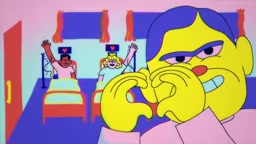
In Forssmann's era, the medical establishment generally regarded the heart as a "surgical no-go zone," and any instrument entering the heart chambers directly was considered a fatal procedure. This belief partly stemmed from ignorance of cardiac electrophysiology—direct stimulation of the endocardium could trigger lethal arrhythmias. Forssmann's self-experiment was shocking not only because of the technical risk but also because it challenged the dogma in the physiology textbooks of the time. Cournand and Richards later demonstrated that right heart catheterization could safely and repeatedly measure cardiac output and pressure, transforming a bold self-attempt into a standardized clinical diagnostic procedure.
Vaccines and Antimalarial Drugs: Drinking the First Dose
In the 1930s, virologist Max Theiler fought a lifelong battle against yellow fever—a high-risk viral disease transmitted by mosquitoes. After developing an experimental vaccine, he was among the first to be inoculated. Many vaccine researchers of the time did the same, knowingly taking the risk and testing it on themselves.
Decades later, Chinese pharmacologist Tu Youyou faced another killer: malaria. This parasite infects red blood cells, causing cyclical fever and severe anemia. She rediscovered and isolated artemisinin from traditional Chinese medical texts, and animal tests showed it could kill the malaria parasite. To prove its safety and speed up the process of testing it in patients, Tu Youyou took the first dose herself.
Artemisinin was not used directly as a traditional decoction; its active ingredient is heat-labile and has low solubility in water. The key breakthrough for Tu Youyou's team came from a passage in Ge Hong's Handbook of Prescriptions for Emergencies from the Eastern Jin dynasty—"take a handful of qinghao, steep it in two sheng of water, wring out the juice"—which inspired them to switch to low-boiling-point ether for cold extraction, thereby obtaining a neutral extract with a high inhibition rate against the malaria parasite. Artemisinin was later modified into derivatives such as artemether and artesunate, which remain effective against drug-resistant malaria parasites compared with older drugs like chloroquine, and became the core drug in the combination therapies (ACTs) recommended by the World Health Organization.
Drinking the Bacteria: Marshall and Helicobacter pylori
Among these laureates, Barry Marshall may be the boldest—his self-experiment was not meant to prove that something was safe, but to prove that it was dangerous.
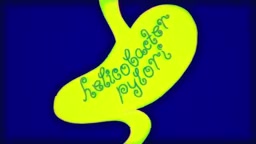
As early as the 1940s, peptic ulcers were thought to be caused mainly by stress—painful sores in the lining of the stomach and small intestine. But in 1979, Robin Warren and Marshall noticed unusual spiral-shaped bacteria in ulcer biopsy samples and proposed that they were the real culprit. After animal tests failed to provide convincing evidence, Marshall decided to take matters into his own hands. After confirming his own gastrointestinal health, he drank a tube of the spiral bacterium later named Helicobacter pylori.
Within five days, he developed nausea, bloating, and stomach pain; after ten days, the bacteria had begun damaging his gastric mucosa. He cured himself with antibiotics—and antibiotics later became the standard treatment for ulcers. Today we know that these ulcers, if left untreated, can develop into cancer. Marshall's decision to "trust his gut" ultimately saved countless lives.
Where Are the Boundaries of Self-Experimentation?
These stories are easy to romanticize, but the video offers a necessary caveat: the bold experiments of Marshall and others were built on years of research and experience, and are by no means something anyone should try at home. De Hevesy's tracing idea, Forssmann's catheter path, and Tu Youyou's dose judgment were all backed by solid professional accumulation.
The true value of self-experimentation lies not in "whether one dares," but in its ability to answer a key question at the lowest cost in the gap between ethics and efficiency. When clinical trials are difficult to launch and animal models fail to convince peers, researchers use their own bodies as the final piece of evidence. This approach is not replicable and should not be encouraged, yet it has genuinely pushed medicine forward. What the Nobel Prize honors is precisely these people who took their work to the extreme and benefited all of humanity.
One-line Summary
Five Nobel laureates tested drugs on themselves and rewrote medical understanding through self-experimentation.
Paragraph Summary
The article chronicles the self-experimentation stories of five Nobel laureates: de Hevesy used radioactive tracers to expose a kitchen recycling leftovers, and the technique later became the foundation of tracer analysis; Forssmann inserted a catheter into his own heart eight times and was exiled by his peers, but his method was later validated and popularized by Cournand and Richards; Theiler inoculated himself with his own yellow fever vaccine, and Tu Youyou took the first dose of artemisinin to verify its safety; Marshall drank Helicobacter pylori, proving the bacterial cause of ulcers and making antibiotics the standard treatment. The article emphasizes that these bold acts were built on years of professional accumulation, are not replicable, and should not be encouraged; their true value lies in answering key questions at the lowest cost when clinical trials are difficult to launch, thereby pushing medicine forward.
Related articles
CIO SmartKobe EX05 Review: A MagSafe Power Bank with Built-in Cable and Stand
CIO SmartKobe EX05 power bank review: built-in detachable Type-C cable, folding rotating stand, Qi 2.2 magnetic 25W wireless charging with 7.5W safe mode, 10000mAh dual semi-solid-state cells, pass-through charging and three-device simultaneous power—ideal for multi-device users who hate cables.

Anthropic CEO Rings Nasdaq Bell: Reaffirms AI Won't Be Accelerated by Commercial Pressure
Anthropic CEO Dario Amodei reaffirmed at the Nasdaq bell-ringing that regardless of commercial or political pressure, the company will hold firm to setting the pace of AI development. This article examines the background, industry pressures, and potential impact.

Anthropic Debuts on Nasdaq: Opens at $111, 33% Above IPO Price
Anthropic lists on Nasdaq at $111, 33% above its $83 IPO price, raising over $80 billion in new capital. This article examines the first-day premium, capital scale, and impact on AI industry financing.