Cities: Skylines 2 Forestry & Industry Road Network Guide
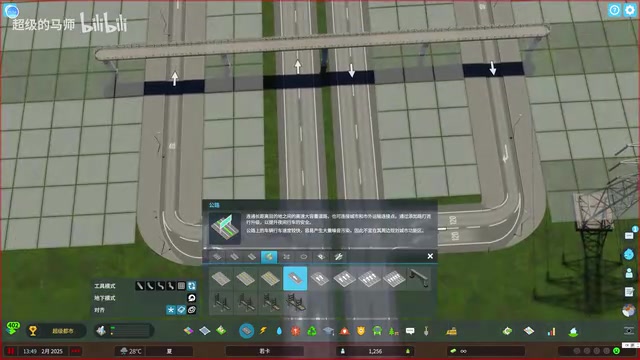
Borrowing symphonic structure, use road hierarchy to solve logistics congestion in forestry industrial zones.
The article uses a Bilibili creator's video comparing road network planning to symphonic arrangement as an entry point to explore the optimal design of forestry and industrial small roads in Cities: Skylines 2. The core argument: roads aren't better the more there are; they should be layered and rhythmic like a musical score. The article proposes a three-level road network structure—external access, district loops, and end-point local roads—and points out two common misconceptions: overly dense road networks increase conflict points, and industrial small roads directly connected to arterials slow down arterial speeds. It recommends using the traffic heatmap to locate bottlenecks before making targeted adjustments.
In the Cities: Skylines 2 player community, the design of forestry and industrial small roads has always been a hot discussion topic. A video released by Bilibili creator "Second Moon with J. Thomas Hornbuckle" starts from the structure of a symphony, comparing road network planning to the arrangement of musical movements—this angle is quite interesting, and it hits the core pain point of industrial zone logistics efficiency: roads aren't better the more you lay down; they need to have layers and rhythm, like a musical score.
Why Forestry and Industrial Small Roads Need Separate Design
Forestry has an essential difference from ordinary industrial zones: the raw material transport chain is short, but the traffic is concentrated. If logging camps, sawmills, and paper mills all use the main road, it will quickly clog into a red line. The "formal structure" emphasized in the video, when put into the game, is essentially a road hierarchy—highways/arterials handle inter-district transport, and industrial small roads handle end-point connections; the two must not be mixed.
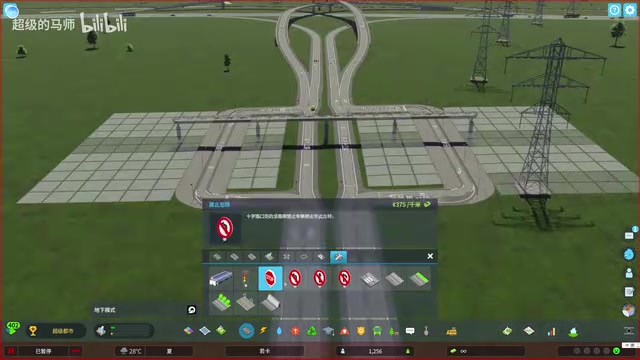
Many novice players are used to stringing all factories along one big road, resulting in trucks queuing and making U-turns at intersections, paralyzing the entire district. The correct approach is to cut the forestry zone into several small units, connect each unit internally with narrow roads, and have units feed into the arterial through a secondary road. This way, even if one unit has problems, it won't affect the whole.
Road hierarchy is a classic concept in traffic planning, first proposed in the field of urban traffic engineering. Its core idea is to classify roads by function into different levels: high-capacity, low-access arterials carry long-distance through traffic; low-capacity, high-access local roads serve end-point origins and destinations. This concept is further reinforced in Cities: Skylines 2—the game's built-in traffic AI makes vehicles choose the "fastest path." If all roads are of the same level, trucks will crowd onto the same shortest route, causing local overload. Road hierarchy artificially guides traffic into layers by limiting the number of direct intersections between local roads and arterials, thereby improving overall throughput efficiency without increasing the total amount of roads.
Practical Approach to Road Hierarchy
The video mentions the structural sense of a "symphonic work," which corresponds in the game to three levels:
Level 1: External Access
A forestry zone needs at least one independent highway entrance/exit to avoid mixing with residential traffic. If map conditions allow, dedicated ramps are far more efficient than shared intersections.
Level 2: District Loop
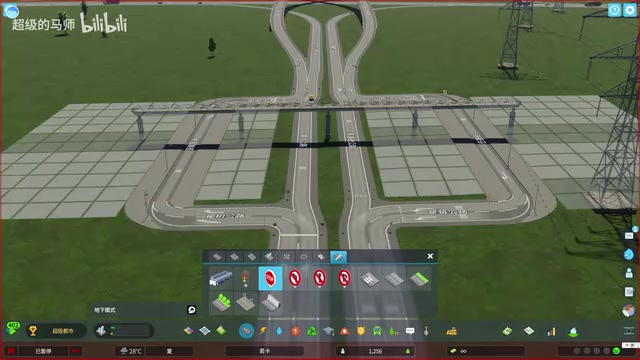
Each forestry district forms a small one-way or two-way loop internally, so trucks don't have to make U-turns in place. The loop radius should not be too large; otherwise, truck travel distance increases, reducing turnover rate.
One-way road networks are an efficient traffic management tool in Cities: Skylines 2. Setting internal district roads as one-way loops can eliminate crossing conflict points from opposing traffic, especially suitable for industrial zones with heavy truck traffic and frequent U-turn needs. One-way roads in the game also support flexible connection with two-way roads, forming a micro-circulation where vehicles "can get in and get out." Note that if a one-way network is set up improperly, it can cause vehicles to detour excessively, so it needs to be used with reasonable intersection spacing and turning restrictions.
Level 3: End-Point Local Roads
The entrances and exits of logging camps and warehouses should be staggered as much as possible, avoiding all building doors opening onto the same road. The video doesn't elaborate on this point, but from actual game mechanics, dispersing entrances and exits can significantly reduce intersection conflicts.
Common Misconceptions and Adjustment Suggestions
The most common mistake is "over-dense road networks." Players add roads when they see congestion, but more intersections mean more conflict points, which actually worsens congestion. Another misconception is connecting industrial small roads directly to arterials; trucks frequently merge onto the main road, causing arterial speeds to drop.
When adjusting, first observe the traffic heatmap to find the real bottleneck intersections, then decide whether to widen, convert to one-way, or tear down and reconnect. The line "for our newer, less able listeners" in the video is actually a reminder: understand the structure first, then start building roads—this is more effective than blindly piling on roads.
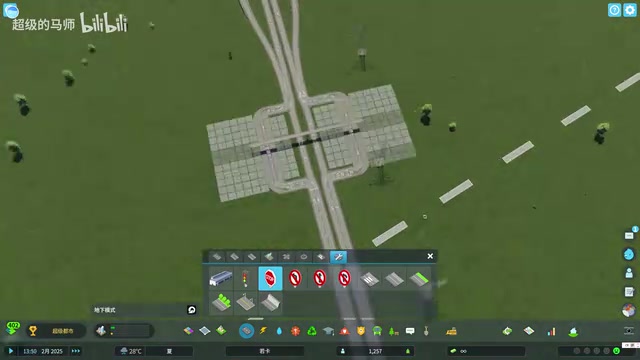
Traffic heatmap is a built-in traffic visualization tool in Cities: Skylines 2, using color depth to represent real-time traffic volume on each road segment: green means smooth, red means congested. Players can use the heatmap to quickly locate bottleneck intersections without zooming in one by one. The heatmap reflects instantaneous traffic rather than long-term trends, so it is recommended to observe at different in-game times (such as morning rush hour and nighttime freight peak) separately, and comprehensively judge which intersections are structural bottlenecks and which are only temporary fluctuations.
Summary
The design of forestry and industrial small roads is essentially a matter of logistics layering. Treat the road network as a structured piece of music—main roads are the melody, local roads are the harmony—this solves congestion better than simply pursuing road density. This approach applies not only to forestry but also to raw material industry zones such as mining and agriculture.
One-line Summary
Borrowing symphonic structure, use road hierarchy to solve logistics congestion in forestry industrial zones.
Paragraph Summary
The article uses a Bilibili creator's video comparing road network planning to symphonic arrangement as an entry point to explore the optimal design of forestry and industrial small roads in Cities: Skylines 2. The core argument: roads aren't better the more there are; they should be layered and rhythmic like a musical score. The article proposes a three-level road network structure—external access layer with independent highway entrances/exits, district loop layer forming small loops to reduce truck U-turns, and end-point local road layer dispersing building entrances/exits to reduce intersection conflicts. It also points out two common misconceptions: overly dense road networks actually increase conflict points, and industrial small roads directly connected to arterials slow down arterial speeds. It recommends using the traffic heatmap to locate bottlenecks before making targeted adjustments, and emphasizes "understand the structure first, then start building roads." This approach can be extended to raw material industry zones such as mining and agriculture.
Related articles

Bilibili Follower Growth in Practice: The Underlying Logic of Daily Posting and Follow-for-Follow
A Bilibili creator shares follower-growth methods: daily login, posting one or two videos a day, and follow-for-follow. This article breaks down the real effects of these basic actions and adds more effective growth ideas like topic selection, thumbnails, and comment-section management.

An African Journey Surrounded by Snakes: A Bilibili Creator's Thrilling Adventure
Bilibili creator shares an African adventure video, claiming to be surrounded by hundreds of snakes, crossing cloud-shrouded mountains, encountering lions, leopards, and hippos on safari, and documenting curious roadside sights, prompting reflection on natural wonders.

LangGraph vs CrewAI vs PydanticAI: A Guide to Choosing Among Four Major Agent Frameworks
A code-level comparison of LangGraph, CrewAI, PydanticAI, and OpenAI Agents SDK: their architectural positioning, four implementations of the same support triage task, and a production selection decision matrix.