CLAP for Mechanical Fault Sound Recognition: Principles, Challenges, and Industrial Applications
CLAP for Mechanical Fault Sound Recogn…
How CLAP technology uses audio-language pretraining to identify mechanical faults via zero-shot classification.
CLAP (Contrastive Language-Audio Pretraining) extends the CLIP paradigm to audio, enabling zero-shot mechanical fault detection through natural language prompts. This article examines its core principles, advantages over traditional supervised learning, and the key challenges — domain shift, industrial noise, and deployment engineering — that must be solved before it reaches production-ready industrial use.
Teaching Machines to "Hear" Faults: From Human Expertise to AI Recognition
Experienced technicians can often identify potential mechanical faults just by listening to abnormal sounds from equipment in operation — worn bearings, loose gears, slipping belts, each fault leaves a unique "acoustic fingerprint." However, this diagnosis method relies heavily on human expertise and cannot scale, nor can it support 24/7 continuous monitoring.
Recently, an open-source project that caught the attention of the tech community on Hacker News attempted to classify mechanical faults using CLAP (Contrastive Language-Audio Pretraining). This approach deeply integrates natural language processing with audio analysis, offering a highly promising new path for industrial predictive maintenance.
Industrial Predictive Maintenance Background: Predictive Maintenance (PdM) is one of the core application scenarios in Industry 4.0. Traditional maintenance models include reactive maintenance (fixing after failure) and planned preventive maintenance. The former is costly, while the latter wastes resources through over-maintenance. Predictive maintenance monitors equipment status in real time and provides early warnings before failures occur, reducing unplanned downtime by up to 50% and maintenance costs by 10–25% (according to McKinsey research). Current mainstream PdM technologies rely on vibration analysis, oil analysis, and infrared thermography. Acoustic analysis is gaining increasing attention for its non-contact, low-cost advantages, but the complexity of signal processing and AI modeling has long been a barrier to widespread adoption.
CLAP Technology: Transferring from Vision to Audio
From Visual Contrastive Learning to Audio Understanding
CLAP's core concept originates from OpenAI's CLIP (Contrastive Language-Image Pretraining) model. Released in 2021, CLIP was trained on 400 million image-text pairs collected from the internet. Its revolutionary contribution was breaking the dependence of traditional vision models on fixed category labels — as long as a visual concept could be described in words, the model could recognize it. CLIP maps images and text into a shared semantic space through contrastive learning, enabling powerful zero-shot image classification.
CLAP transfers this paradigm to the audio domain: by pre-training on large-scale "audio-text" paired data, the model learns to encode audio signals and their corresponding text descriptions into a shared embedding space. In other words, it can understand the semantic relationship between "a harsh metallic grinding sound" and text like "bearing wear due to insufficient lubrication."
CLAP was independently proposed by multiple research teams around 2022, with particularly influential work from Microsoft Research and the University of Illinois. Training data typically comes from public audio datasets such as AudioSet, FreeSound, and Clotho, covering hundreds of thousands to millions of audio-description pairs. Audio encoders typically use CNN- or Transformer-based architectures (e.g., PANN, HTS-AT), while text encoders commonly follow the BERT or RoBERTa family.
The Core Mechanism of Contrastive Learning
The technical roots of contrastive learning trace back to self-supervised learning. Methods like SimCLR and MoCo share a core principle: learning representations by maximizing similarity among same-class samples while minimizing it among different-class samples. The key logic is "pull positives closer, push negatives apart": during training, matched audio-text pairs are continually brought closer together, while mismatched combinations are pushed further apart. CLIP elevated this mechanism across the visual and language modalities; CLAP applies the same cross-modal alignment idea between audio and language. After large-scale training, the model builds a solid bridge between sound and semantics.
This design grants the model a critical zero-shot classification capability — even without ever seeing labeled data for a particular fault type, the model may still recognize it as long as its acoustic characteristics can be described in text.
Core Advantages of CLAP for Mechanical Fault Diagnosis
Breaking Through Three Major Bottlenecks of Traditional Supervised Learning
Traditional mechanical fault sound classification relies on supervised learning: collecting large amounts of labeled fault audio and training dedicated classification models. This approach has clear pain points:
- Data scarcity: Rare fault samples are extremely difficult to obtain, resulting in severely undertrained models;
- Poor generalization: Models often need to be retrained when equipment changes or operating conditions vary;
- High labeling costs: Annotating audio for each fault type requires specialized knowledge and significant human effort.
CLAP-based approaches leverage the semantic understanding of pre-trained models and use flexible text prompts to define fault categories, significantly reducing dependency on labeled data.
Flexible Expansion Driven by Natural Language
In practice, engineers can directly describe the fault types to be recognized in natural language — for example, "gearbox abnormal noise," "motor bearing fault," or "normal equipment operation sound." The model computes similarity scores between the input audio and each text description, then outputs the best-matching category.
This interaction model not only dramatically lowers the barrier to use, but also makes expanding fault categories extremely straightforward — no retraining required, just add or modify text descriptions.
From Technical Demo to Industrial Deployment: Three Core Challenges
Challenge 1: Domain Shift in Industrial Acoustics
CLAP pre-training data typically covers everyday audio such as environmental sounds, music, and speech, while mechanical fault sounds contain high-frequency vibrations (typically in the 1 kHz–20 kHz range), periodic impact pulses, and various mechanical resonance patterns — spectral characteristics that differ dramatically from everyday environmental sounds. This domain gap is the central obstacle affecting real-world performance.
Main technical approaches to address domain shift include: domain adaptation, few-shot fine-tuning, and retrieval-augmented methods. For large pre-trained models like CLAP, parameter-efficient fine-tuning techniques such as LoRA (Low-Rank Adaptation) and adapter layer injection can achieve significant domain adaptation by updating only a small number of parameters, effectively balancing retention of general capabilities with improvement of specialized performance. Achieving ideal results in industrial scenarios will likely require fine-tuning on domain-specific data, or building dedicated mechanical acoustics–text paired datasets.
Challenge 2: Noise Interference in Complex Industrial Environments
Real industrial sites often have multiple machines running simultaneously, creating extremely complex background noise. Accurately extracting acoustic features of target equipment in high-noise environments requires a combination of signal preprocessing, source separation, and other engineering approaches.
Challenge 3: System Requirements for Production Deployment
As a proof-of-concept project, the technical demo is still far from true industrial deployment. Deploying AI models from cloud research environments to factory production lines involves engineering challenges that are often more complex than the algorithms themselves:
- Real-time performance: Mechanical fault acoustic analysis typically requires inference latency in the hundreds of milliseconds range;
- Model compression: Edge devices have limited resources. CLAP's original model size is typically in the hundreds of MB to GB range, requiring significant compression through model quantization (INT8/INT4), knowledge distillation, or structural pruning;
- False positive rate control: Industrial settings have an extremely low tolerance for false alarms — frequent false positives erode worker trust in the system, creating a "cry wolf" effect;
- Standardized integration: Standardized interfaces for Industrial IoT (IIoT) platforms, OPC-UA protocol integration, and compliance with functional safety standards such as IEC 61508 are all factors that must be systematically addressed before mass deployment.
Technical Outlook: Three Evolutionary Directions for Industrial Acoustic AI
The deeper value of this project lies in revealing a viable path for transferring multimodal pre-trained models into vertical industrial domains. As foundation model capabilities continue to evolve, applying them to scenarios like predictive maintenance and equipment health monitoring is becoming a key technology trend worth close attention.
Promising directions for future development include:
- Specialized industrial acoustic pre-trained models: Building dedicated CLAP variants for mechanical equipment sounds, covering a broader spectrum of fault acoustics;
- Multimodal fusion diagnostic systems: Integrating multiple signal dimensions — sound, vibration, temperature, current — to improve diagnostic reliability;
- Human-AI collaborative intelligent operations: Engineers ask questions in natural language, and AI delivers real-time fault assessments and maintenance recommendations.
Conclusion
The idea of using AI to teach machines to "hear" faults is inherently imaginative. CLAP technology organically combines the flexibility of natural language with the precision of audio analysis, opening a new window for mechanical fault diagnosis through zero-shot classification and easily extensible text prompt mechanisms.
While there is still a significant gap between technical demonstration and industrial deployment, open-source explorations like this — fusing cutting-edge AI capabilities with traditional industrial needs — are an important driving force for industry progress. We look forward to more similar innovations that bring the intelligence of large models directly to the front lines of industrial production.
Key Takeaways
Related articles
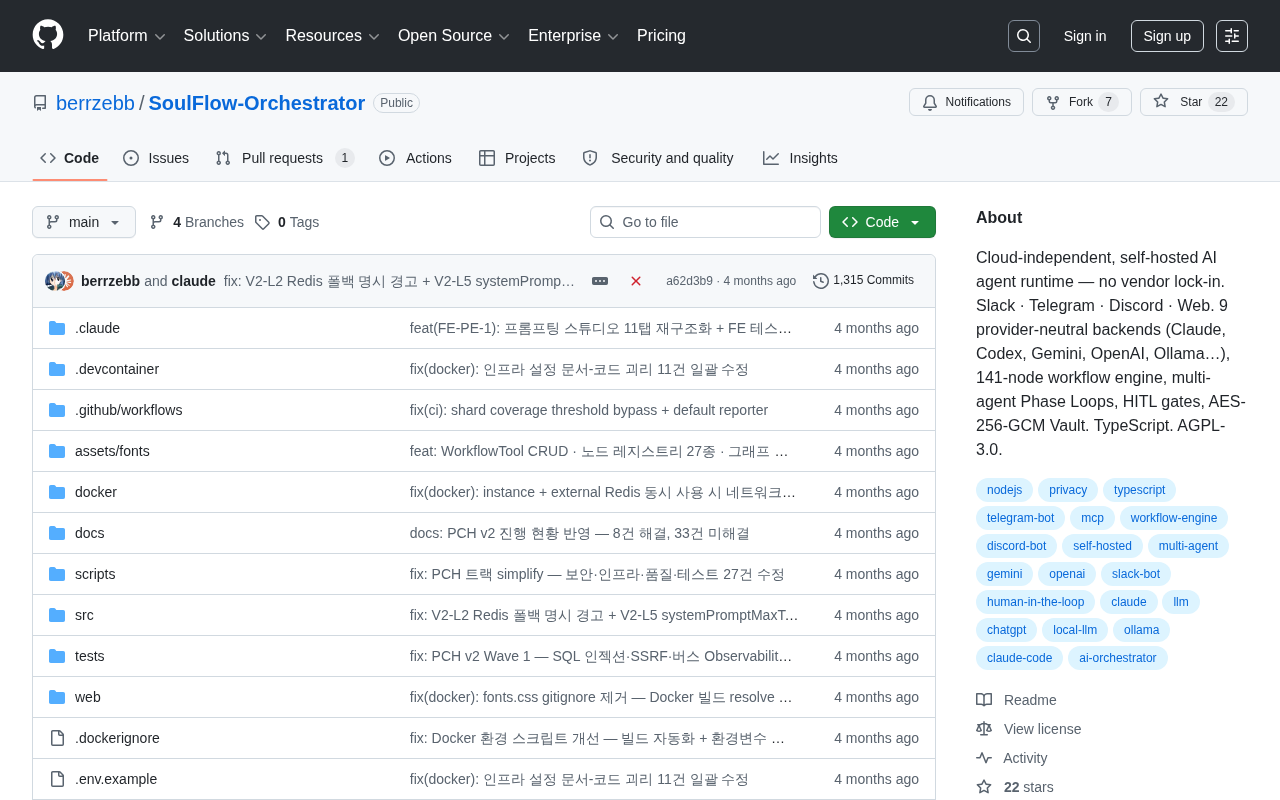
SoulFlow-Orchestrator: A Self-Hosted, Vendor-Lock-In-Free AI Agent Runtime
SoulFlow-Orchestrator is an open-source, self-hosted AI agent runtime with no vendor lock-in. Supports 9 neutral backends (Claude, OpenAI, Ollama), 141-node workflow engine, multi-agent loops, and HITL gates.
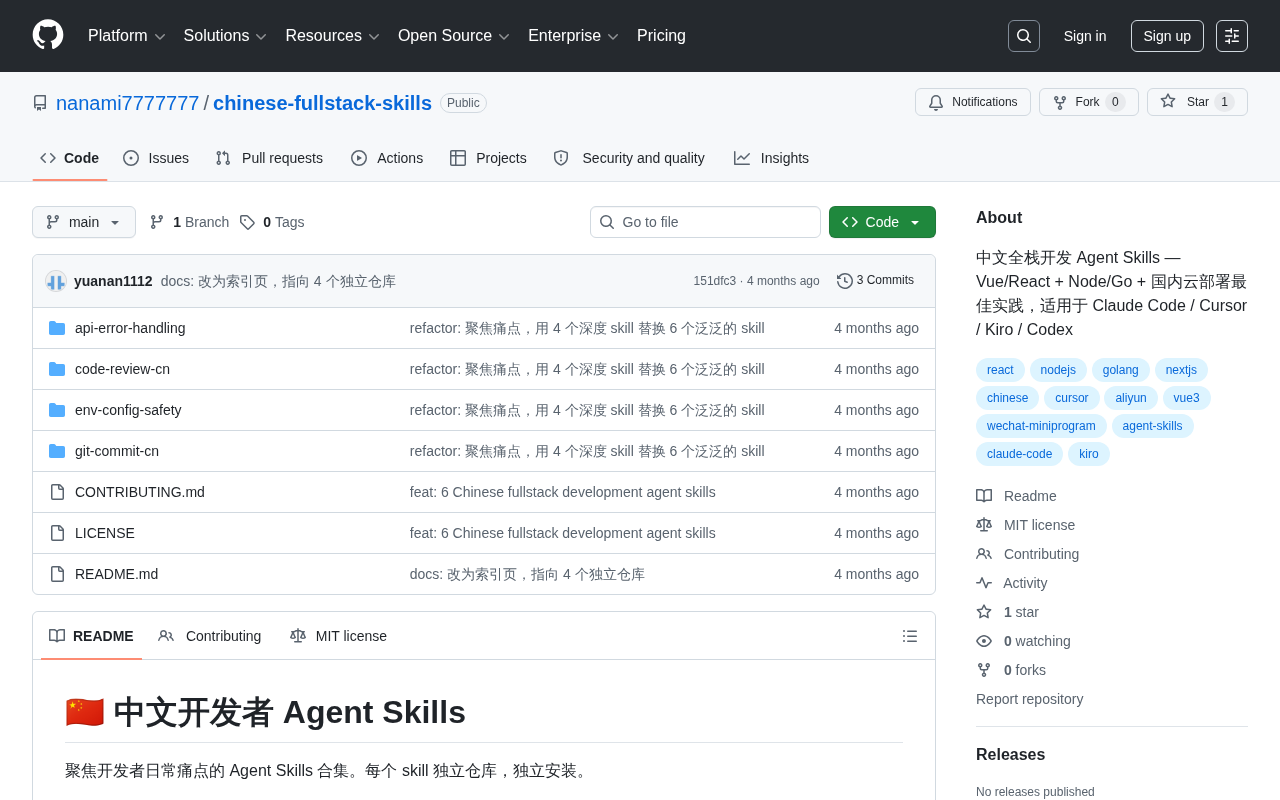
Chinese Full-Stack Agent Skills: A Skill Library Tailored for Domestic AI-Assisted Development
chinese-fullstack-skills is an Agent Skills library for Chinese full-stack development, covering Vue/React, Node/Go, and domestic cloud deployment best practices. Compatible with Claude Code, Cursor, Kiro, and Codex.
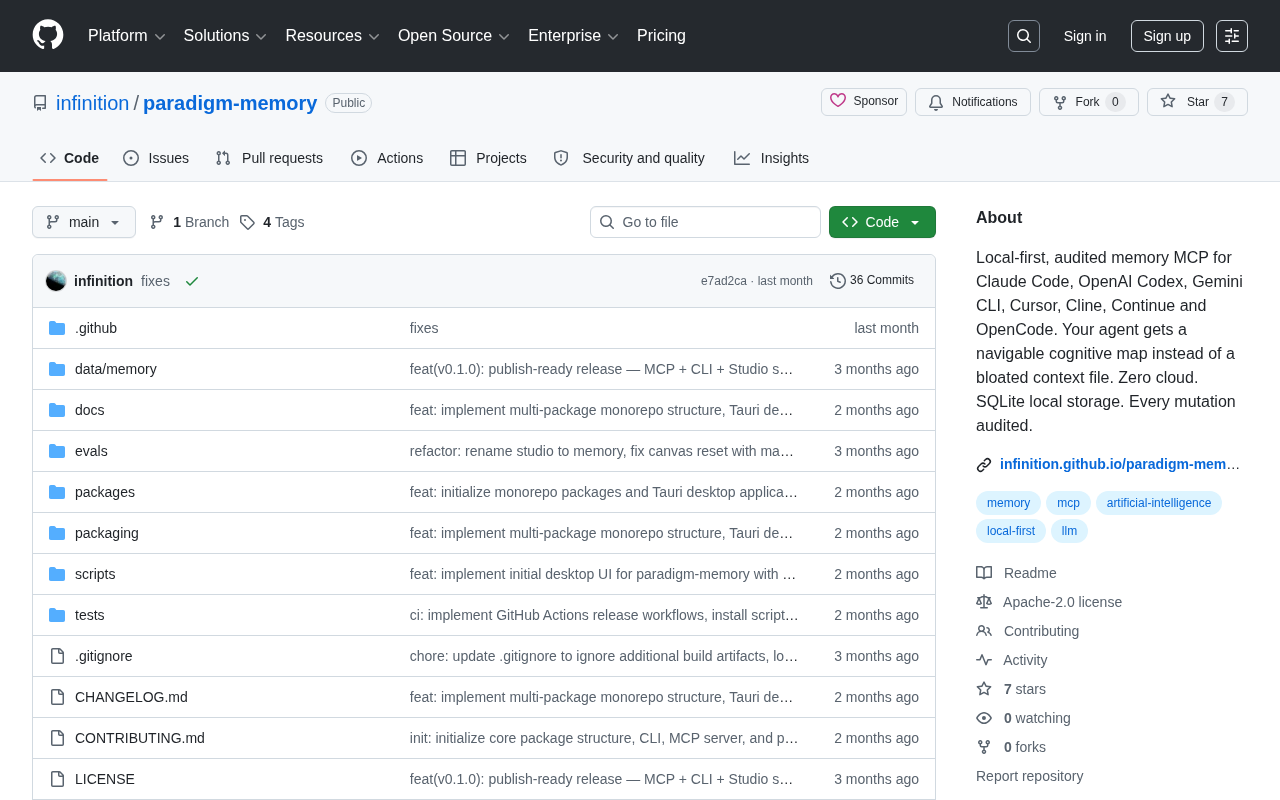
Paradigm Memory: A Local-First Memory System for AI Coding Assistants
paradigm-memory is a local MCP memory tool for Claude Code, Cursor, and Cline. It uses SQLite local storage, zero cloud, full audit trails, and a navigable cognitive map instead of bloated context files.