Claude Code for Beginners: How Non-Programmers Can Build AI Agents

A 6-hour Claude Code course teaching non-programmers to build AI agents using natural language.
Bilibili creator Nates has launched a comprehensive 6-hour, 30-lesson Claude Code course designed for complete beginners with zero technical background. The course teaches AI-native development thinking — using natural language to build automated systems and AI agents — and argues that this skill is becoming the new baseline for knowledge workers in the AI era.
Why Non-Programmers Can Build AI Agents
Building automated systems, AI agents, or complex applications was once almost exclusively the domain of programmers. Today, with the maturity of AI-native development tools like Claude Code, that barrier is being completely dismantled.
Claude Code is an AI programming assistant developed by Anthropic, and a flagship product in the emerging category of "AI-native development tools." Unlike earlier code completion tools such as GitHub Copilot, Claude Code focuses on a complete "intent-to-implementation" pipeline — users don't need to understand any underlying programming language. Simply describe your goal in natural language, and the AI will generate, debug, and iterate on a full code project. The emergence of these tools is fundamentally a product of large language model (LLM) maturity: only when a model's ability to understand and generate code reaches a sufficient level does the vision of "natural language as programming language" become truly practical.
Bilibili creator Nates has released a comprehensive 6-hour, 30-lesson course with one central claim: even without any technical background, you can start from zero and become an AI-native user capable of building real, working automated systems.
The course is very clearly positioned — it assumes learners "know nothing and have no technical background." This isn't a marketing gimmick; it's an honest reflection of where AI tools are heading. As natural language becomes the primary way we interact with computers, "being able to describe what you need" is gradually replacing "being able to write code" as the more critical core skill.

The promised outcome is equally direct: whatever you can describe, you'll be able to build by the end of the course. Behind this statement lies a fundamental shift in the AI-assisted programming paradigm — from "humans write code, machines execute" to "humans express intent, AI implements."
About the Instructor: A Practical Example for Non-Technical Learners
Instructor Nates openly admits he has no formal technical background. But that's precisely what makes his experience more relatable and valuable for non-programmer learners.

Over the past few years, he has used AI to accomplish things that would previously have required an entire team. He now runs multiple businesses spanning content creation, education, certification, events, and consulting.
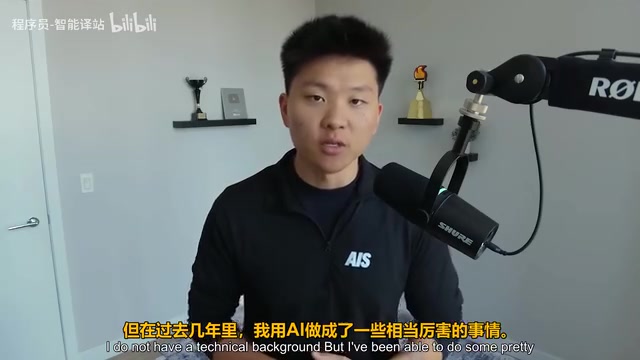
What these businesses share is this: they're all driven by a small team that knows how to use AI effectively. This is the core idea the course aims to convey — "one person can do what used to take a whole team."
The "productivity leverage effect" that AI tools provide can be understood economically as: the output generated per unit of human input increases dramatically, enabling small teams or even individuals to sustain business operations that once required several times the workforce. This phenomenon has fueled the rapid rise of the "Indie Developer" and "Solo Founder" communities. Silicon Valley investor Sam Altman has predicted that "one-person unicorn companies" will become possible in the AI era. For knowledge-intensive businesses like content creation, education, and consulting, AI's comprehensive involvement in content production, customer service, and data processing has already turned "small teams doing big things" from a vision into reality. For solo entrepreneurs, independent developers, and small teams, there's no longer a need for vast technical resources to build and operate complex digital businesses.
The Course's Core Methodology: Real-World Case Studies
This course doesn't pile on theoretical concepts. Instead, it emphasizes demonstrating the complete build process step by step using real examples. This hands-on teaching style is especially beginner-friendly.
Flexible Learning Path
The course contains 30 lessons, and learners can "jump to whichever part interests them" — though the instructor recommends going through them in order. This design serves two types of learners: those with specific goals who want to quickly find what they need, and those who want a structured, systematic learning path.
From "Feeling the Returns" to "Becoming the New Baseline"
One of the course's most thought-provoking observations is about how the returns from AI capabilities evolve over time.
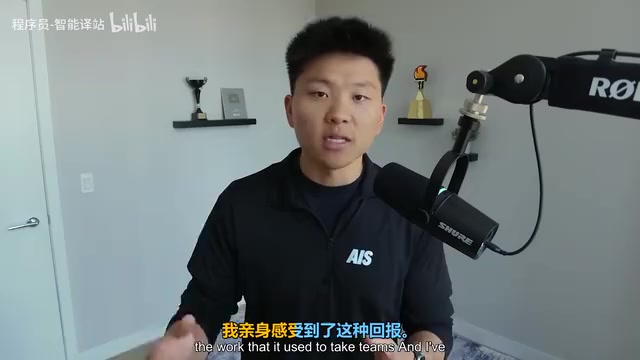
Nates points out that if you haven't yet felt the efficiency gains from AI, by the end of the course you'll have "a clear path to experiencing those returns, along with AI systems that help you do more." He goes even further with a forward-looking prediction: as you accomplish more with AI, this will eventually become the new baseline.
This observation touches on the deeper logic of AI tool adoption. Every major technology adoption cycle in history has been accompanied by a baseline shift — where "scarce skills become basic capabilities": typing was once a professional skill, using the internet once required training, and both are now default expectations. Reports from McKinsey and the World Economic Forum both indicate that "AI collaboration skills" will become a basic requirement for most knowledge work roles within the next five years, rather than a competitive advantage. This means today's "superpower" will become tomorrow's "table stakes." Those who master AI-native ways of working earliest will have the greatest first-mover advantage in this productivity revolution.
Why Claude Code Is Ideal for Non-Programmer Beginners
Given the course's positioning as accessible to complete beginners, Claude Code as an AI programming assistant has several features that make it especially suitable for non-technical users:
- Natural language interaction: Describe what you need in everyday language — no complex code required
- End-to-end build capability: From describing requirements to functional implementation, the AI handles most of the technical details
- Low cost of experimentation: Iterate and adjust through continuous conversation, gradually converging on your desired outcome
It's worth clarifying what "AI agent" building actually means technically: an AI agent is an AI system capable of autonomously perceiving its environment, making decisions, and executing a series of actions to achieve specific goals. Unlike single-turn question-and-answer AI interactions, agents have a "plan–execute–feedback" loop, can call external tools (such as web search, databases, and API interfaces), decompose complex tasks, and continue making progress across multiple steps. The core challenges of building AI agents lie in designing clear task boundaries, handling edge cases, and orchestrating multiple subsystems into a coherent, collaborative whole.
At its core, this course is teaching a new way of thinking — how to transform vague ideas into clear instructions that AI can understand and execute. This skill is known in the industry as prompt engineering: designing and optimizing the text instructions you give to AI models to guide them toward more accurate, more on-target outputs. It doesn't require programming knowledge, but it does require the logical ability to "express intent clearly" — including skills like task decomposition, providing context, and setting constraints. In more complex system-building scenarios, prompt engineering extends into "agent orchestration": connecting multiple AI modules, external tools, and data flows according to business logic to form automated workflows. This ability to "prompt and orchestrate" is becoming an indispensable core competency in the AI era.
Conclusion: Your Ticket into the AI-Native Era
For non-technical people who want to enter the AI-native way of working, this 6-hour, 30-lesson course offers a relatively complete entry-level path. Its value isn't in turning you into a programmer — it's in teaching you how to harness AI to build the things you actually want to build.
As the instructor emphasizes, it's only a matter of time before AI capability shifts from "scarce advantage" to "universal baseline." The efficiency gains that today's early adopters enjoy will narrow as adoption spreads — but the working habits and mental models they've built will constitute a lasting cognitive edge. Before that shift fully arrives, the earlier you establish AI-native thinking and work habits, the more control you'll have in future competition. For every independent creator and entrepreneur who wants to accomplish a team's worth of work on their own, this may be exactly the course worth taking seriously.
Key Takeaways
Related articles

Claude Paid Subscription Down for Over a Week with No Response: The Pain Points of AI Service Support
Claude AI paid subscription down for over a week with no support response, exposing systemic gaps in AI service customer support. Analysis of impact, industry shortcomings, and user strategies.

Older Google Home Gets Gemini Live Upgrade: Conditions and Experience Fully Explained
Google is rolling out Gemini Live conversational AI to older Google Home speakers, but subscription or plan requirements may apply. Here's what you need to know.

Older Google Home Gets Gemini Live Upgrade: Complete Breakdown of Requirements and Experience
Google is rolling out Gemini Live conversational AI to older Google Home speakers, but subscription or plan restrictions may apply. Full breakdown of the upgrade details and impact.