Claude Code for QA Engineers: A Practical Handbook from Basics to Engineering-Level Implementation
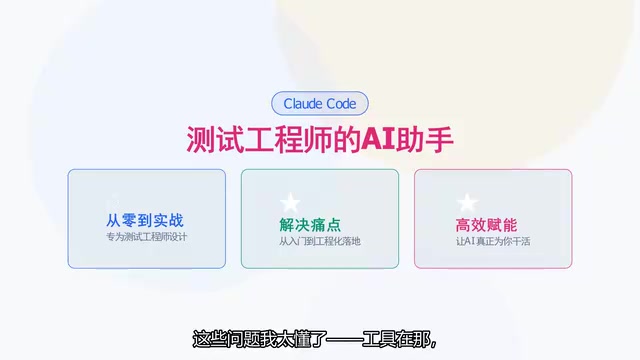
A 105-lesson Claude Code handbook designed specifically for QA engineers, from setup to full engineering integration.
This Claude Code handbook is purpose-built for QA engineers, covering 10 modules from environment setup and session management to test Skill encapsulation, GitHub integration, Hooks-based automation, MCP tool connectivity, and AI Subagent workflows. It focuses on real testing scenarios like natural language test execution, change-impact regression, and end-to-end test case generation — helping testers evolve from manual executors to AI workflow orchestrators.
Why QA Engineers Need a Dedicated Claude Code Handbook
In an era overflowing with AI coding tools, tutorials on Claude Code are everywhere online. But most of them target general development scenarios and rarely translate directly into practice for QA engineers. Recently, a Bilibili creator shared a "Claude Code Practical Handbook Written by a Senior Test Developer" that went viral — and its standout feature is simple: it was written specifically for QA engineers.
For testing professionals, these pain points ring all too true:
- Watching others write scripts and run automation with AI tools, wanting to do the same, but not knowing where to start
- Installing Claude Code only to stay stuck asking simple questions, never exploring its real depth
- Wanting AI to analyze code change impact and auto-generate test cases, but not knowing how to make it actually "listen"
The tools are right there. The real challenge is making them genuinely serve the testing workflow.
What makes this handbook a "hidden gem" is that it's not a collection of scattered tips — it's a complete, 105-lesson systematic course. It takes you from the most basic environment setup all the way to full engineering-level implementation, forming a clear and coherent learning path.
The Ten Core Modules
This handbook breaks down Claude Code's application in the testing domain into ten modules, each one precisely addressing real QA engineer needs.
From Environment Setup to Efficient Interaction: Foundations
The handbook opens with environment preparation, covering multi-platform installation and configuration to save users from repeated trial and error. It then moves into basic interaction and session management — how to have productive conversations with Claude Code — followed by tool invocation and advanced permission settings, which is the critical step of actually getting AI to execute actions.
This section may seem basic, but it's where most people get stuck. Many users install the tool and stay in "Q&A mode" indefinitely, never letting AI actually do anything.
Specification-Driven Development and Test Skill Encapsulation: Advanced Topics
The handbook places heavy emphasis on the concept of "specification-driven development and plan execution" — solving the core problem of how to make AI work according to your standards, rather than improvising on its own. This matters especially for testing, where workflows often have strict standards and constraints.
Specification-Driven Development is a philosophy that software behavior should be governed by explicit specification documents rather than left to developer discretion. Translated into the context of AI tooling, this means using structured prompt engineering, system prompts, and custom Skills to define clear boundaries for AI output behavior. Skill encapsulation is essentially "AI functionalization" — packaging repeatedly-used testing logic (such as generating test cases in a specific format, or applying a fixed regression strategy) into reusable instruction templates, much like function libraries or design patterns in software development. This approach not only improves efficiency — more importantly, it ensures consistency and predictability in AI output, which is critical for quality-controlled testing work.

The Test Skill Development module is widely recognized as the most practical. It teaches you to write your own test Skills, encapsulate repetitive testing logic, and have Claude Code execute tasks in a customized way. This step is fundamentally the key leap from treating AI as a "general assistant" to turning it into a "dedicated testing tool."
Engineering-Level Implementation: Embedding AI into the Dev Pipeline
Another major value of this handbook is that it doesn't stop at teaching individual features — it focuses on how to deeply embed AI into the entire development and testing workflow.
Version Control and Team Collaboration
The handbook covers deep GitHub integration, explaining how to fold AI into the development pipeline, along with multi-device collaboration and cloud-based workflows to address team-level coordination challenges. This means AI assistance is no longer a solo endeavor but can be integrated into the entire team's development and testing ecosystem.
Automated Triggering and External Tool Integration
The Hooks module handles automation of the testing workflow, enabling automatic triggering of AI tasks. Hooks are a classic event-driven design pattern in software engineering, widely used in mainstream tools and frameworks like Git, Webpack, and React. The core idea: when a specific event occurs (such as a code commit, file change, or pipeline node completion), pre-registered callback functions or scripts are automatically triggered without human intervention. Claude Code's Hooks module brings this mechanism into AI workflows, so that launching test tasks no longer depends on manual commands. When a developer pushes code to the main branch, Hooks can automatically trigger Claude Code to analyze the change scope, select relevant test cases, and run regression — seamlessly embedding AI capability into natural CI/CD pipeline nodes for truly "zero-intervention" intelligent test automation.
The MCP (Model Context Protocol) module enables Claude Code to connect with external tools — for example, directly calling an API testing platform. MCP is an open standard protocol released by Anthropic in late 2024, designed to solve the interoperability problem between AI models and external tools and data sources. Before MCP, every AI application had to develop separate integration interfaces for different external systems — costly and hard to maintain. MCP provides a unified protocol specification so AI models can invoke external tools in a standardized way — whether it's databases, API interfaces, file systems, or common platforms in the testing toolchain like Jira, TestRail, Postman, and Jenkins. Cross-tool automated collaboration becomes possible without manually switching interfaces or writing mountains of glue code. This capability dramatically expands AI's application boundaries beyond code itself, enabling it to connect with the entire testing toolchain.

The most compelling module is Subagent (AI Testing Sub-Agent). The Subagent pattern originates from Multi-Agent System architecture: an "Orchestrator" agent receives complex tasks, decomposes them, distributes subtasks to multiple specialized sub-agents for parallel execution, and then aggregates the results. Traditional AI assistants use single-turn or multi-turn conversation modes and can only handle relatively simple tasks at a time. In testing scenarios, the sub-agent pattern can simultaneously launch multiple sub-agents to handle API test execution, UI automation runs, test report generation, and defect management sync — dramatically compressing end-to-end test cycle time. This marks the evolution of AI assistance from point-in-time operations to more complex, autonomous collaborative modes, and is the key technical leap that transforms Claude Code from a "conversational tool" into an "autonomous workflow engine."
AI Testing in Real-World Scenarios
The handbook's most important principle is focusing on real-world testing scenarios rather than stopping at feature demonstrations. Here are a few representative practical examples:
Scenario 1: Natural Language-Driven Test Execution When you tell Claude Code "run the payment flow tests in the dev environment," it automatically executes, analyzes the results, and tells you which test cases failed. Natural language-driven test execution dramatically lowers the barrier to entry.
Scenario 2: Precise Regression Based on Change Impact After a code update, ask AI to "run the affected API tests based on recent code changes." It automatically analyzes the Git change history, runs only the relevant test cases, and skips full regression. This has real value for shortening feedback loops and improving test efficiency.
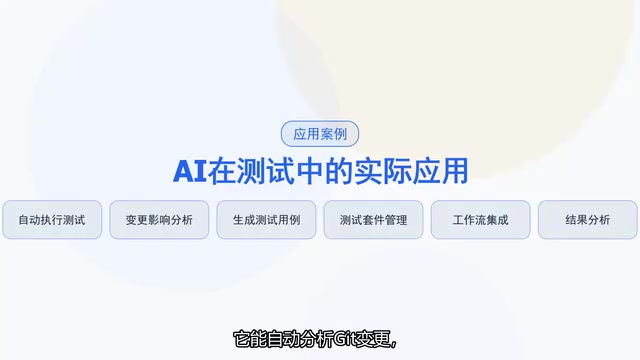
Scenario 3: End-to-End Test Case Generation and Platform Sync Using custom Skills, have Claude Code automatically generate test cases, build test suites, and sync them directly to your test management platform. From script writing and regression execution to result analysis, AI participates throughout the entire process.
From Chat Tool to Core Testing Workflow Driver
The essence of this handbook, as the creator summarizes it, is this: it doesn't teach you how to chat with Claude Code — it teaches you how to make AI a core driver of your testing workflow.
From a personal standpoint, this kind of systematic, scenario-focused learning material genuinely helps QA engineers save enormous amounts of time they'd otherwise spend figuring things out on their own. From an industry trend perspective, AI coding tools are evolving from "assisted Q&A" toward "deep engineering integration" — and the testing domain is no exception. As AI becomes capable of autonomously performing code analysis, change impact assessment, test case generation, and regression testing, the role of QA engineers will evolve accordingly — shifting from executors to process designers and orchestrators of AI capabilities.
For testing professionals who want to truly put AI tools to work, specialized, scenario-driven practical guides like this one may offer far more value than generic tutorials.
Key Takeaways
Related articles

Alibaba Launches Happy Shrimp: AI-Powered One-Click Complete Song Generation
Alibaba launches Happy Shrimp, an AI music generation tool that creates complete songs with lyrics, melody, arrangement, and vocals from natural language descriptions. In-depth analysis of its core features, differentiation from competitors like Suno, and industry impact.
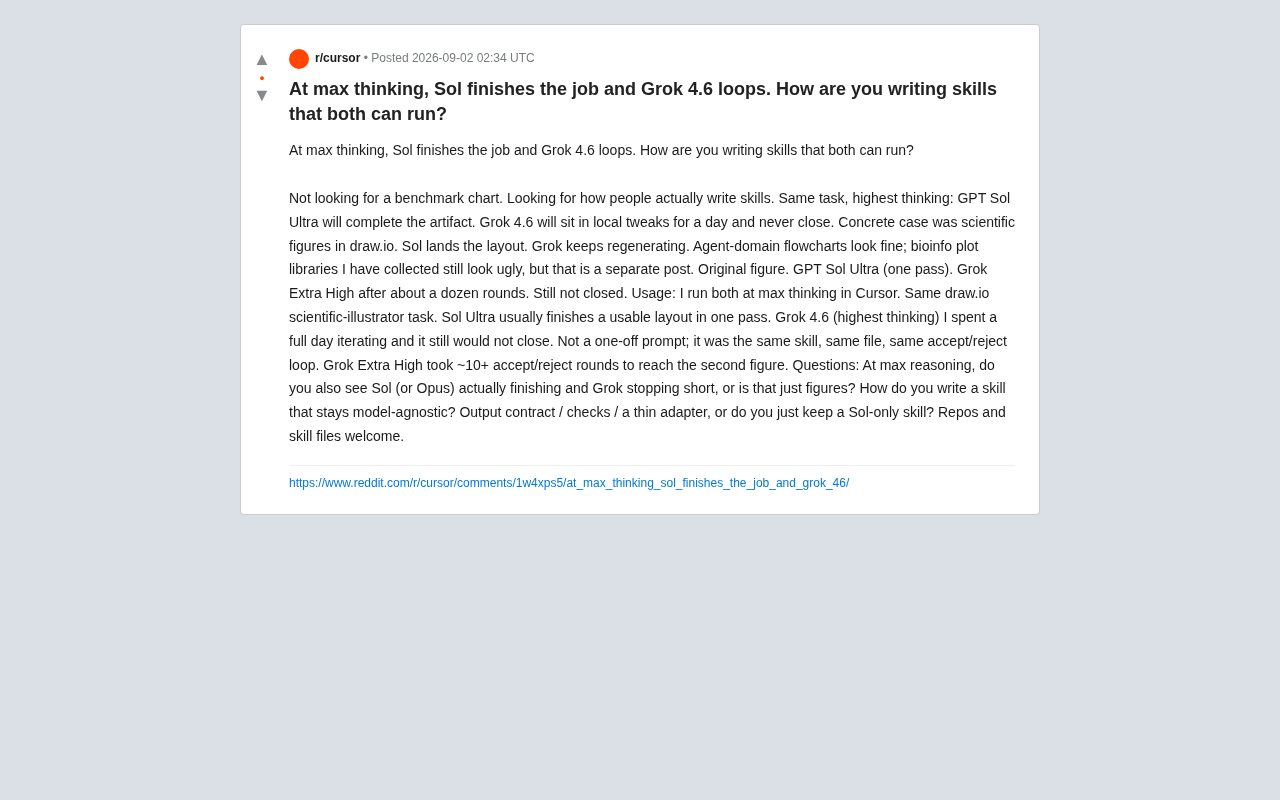
GPT Sol Ultra vs Grok 4.6: Real-World Task Completion Benchmark in Reasoning Mode
Developer benchmark reveals GPT Sol Ultra completes draw.io scientific diagrams in one iteration while Grok 4.6 fails to converge despite maximum reasoning mode, exposing that reasoning depth ≠ task delivery capability.
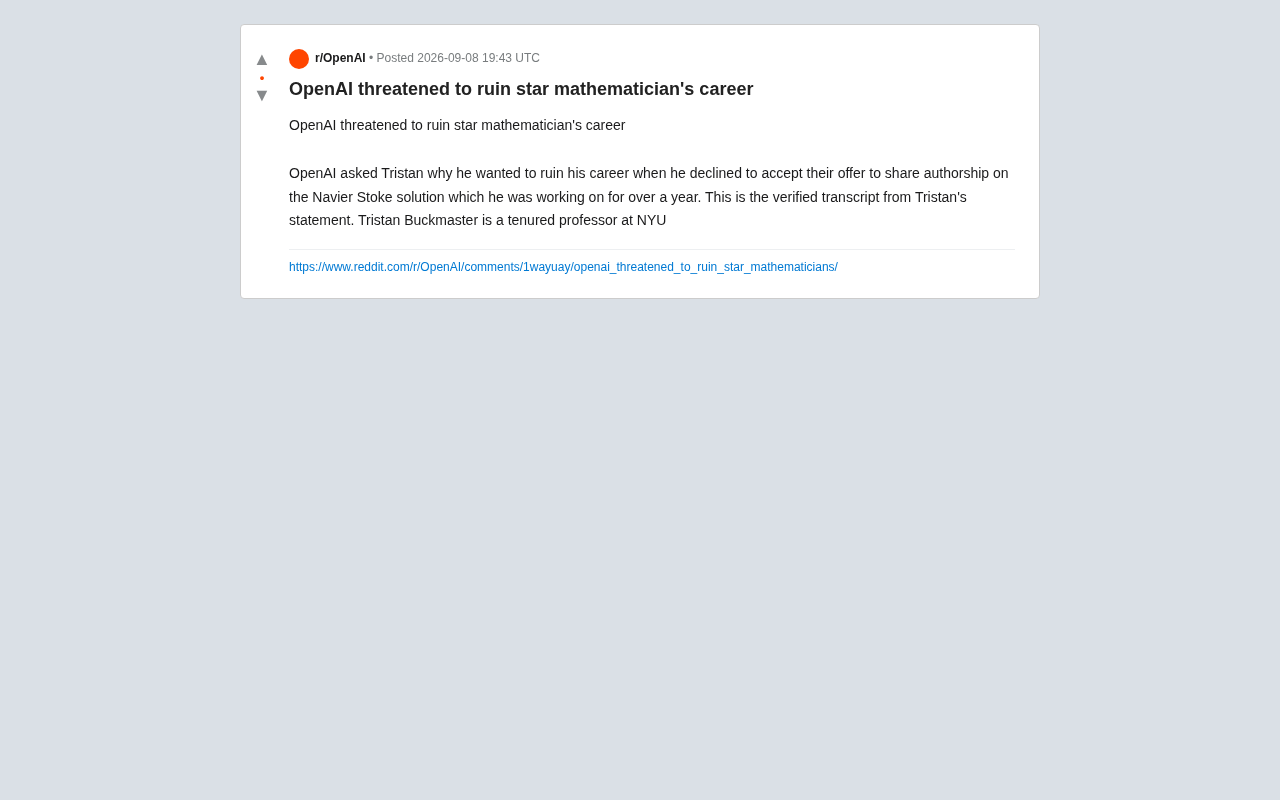
OpenAI Authorship Dispute: The Battle Over Academic Boundaries in the AI Era
OpenAI disputes authorship with mathematician Tristan Buckmaster over Navier-Stokes research, raising ethical questions about AI involvement in science.