Claude Code Introduces Plugin Evals: Turning Agent Extensions from Prompt Tricks into Testable Infrastructure
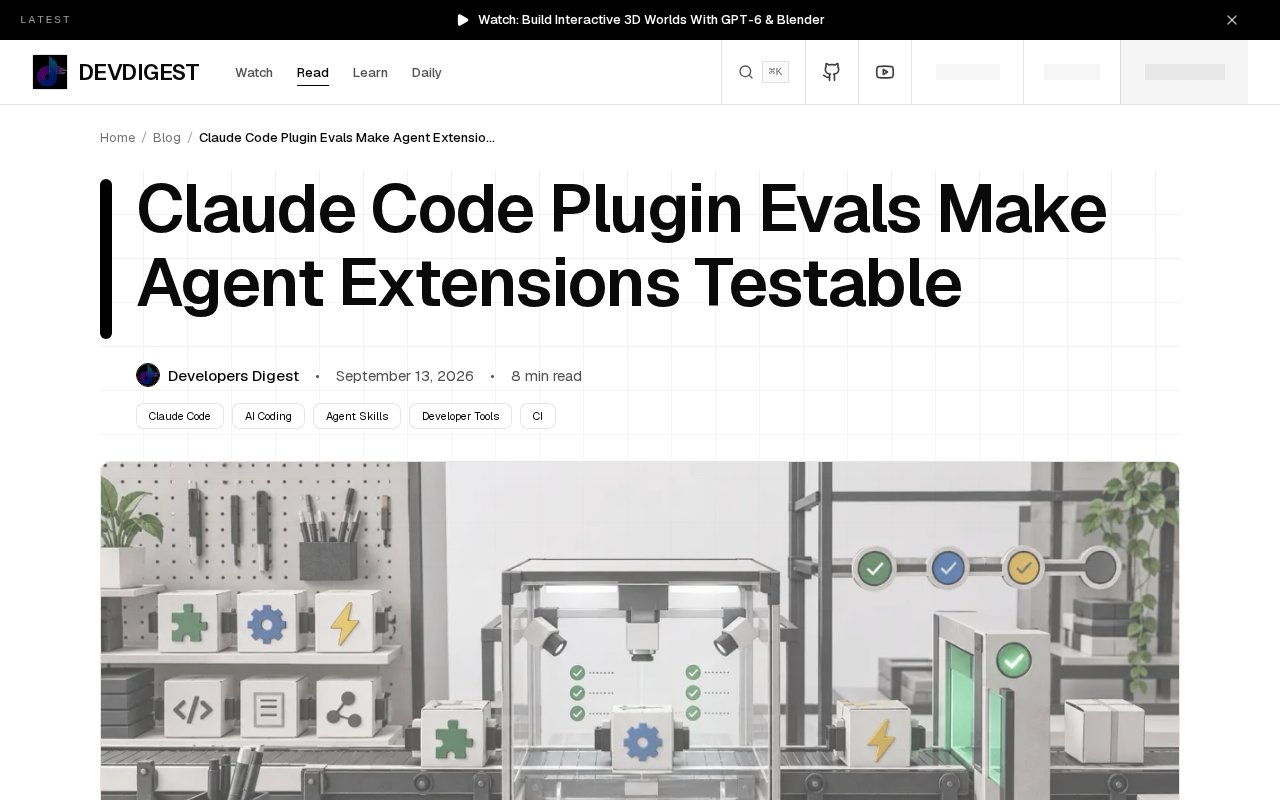
Claude Code's new Plugin Evals lets AI Agent plugins be quantitatively tested and integrated into CI pipelines for the first time.
Claude Code 2.1.269's Plugin Evals feature marks a shift in AI Agent plugin development — from prompt-tuning craft to measurable software engineering practice. It introduces baseline comparisons for quantifying performance changes across plugin versions, JSON and HTML reports serving automated pipelines and human review respectively, and CI gates that enforce evaluation thresholds before merges. Together, these features answer a long-standing question in Agent development: how to objectively verify whether a change is an improvement or a regression.
Claude Code Gets Plugin Evals
Claude Code version 2.1.269 brings a feature that's easy to overlook but could fundamentally change how developers build AI Agents — Plugin Evals. This new capability introduces baseline comparisons, JSON and HTML evaluation reports, and CI gates.
On the surface it looks like just another routine update, but the real significance is this: plugins are no longer just "clever prompts" — they're Agent infrastructure that can be measured, tested, and integrated into engineering workflows.
Why "Testability" Matters So Much
In the past, writing extension plugins for Agents was more art than engineering. Developers carefully tuned prompts and relied on manual experimentation to judge effectiveness, with no objective or reproducible standard for measurement. This approach was acceptable during early prototyping, but problems emerged in production: you had no way of knowing whether a change actually improved things or quietly introduced a regression.
This is precisely where Plugin Evals delivers its core value. By introducing baseline comparisons, developers can quantitatively compare a plugin's current performance against previous versions — giving a clear, objective answer to the question: "Did this change make things better?" This is a step from subjective intuition toward objective measurement.
From Prompts to Engineering Standards
When a capability can be evaluated, it can be incorporated into established software engineering paradigms. Testing, regression checks, continuous integration — these mature engineering practices can finally be applied to Agent extensions. This means team collaboration, version control, and quality assurance all have a concrete foundation, rather than depending on any one person's intuition.
Continuous integration (CI) is essentially a software engineering practice: whenever a developer commits code, an automated system triggers builds and tests to ensure new code doesn't break existing functionality. This mechanism is highly mature in traditional software development — unit tests, integration tests, and code coverage thresholds can all serve as gatekeeping conditions before a merge. Yet AI Agent extensions have long existed outside this system, primarily because Agent outputs are probabilistic and difficult to evaluate with a simple pass/fail judgment. Plugin Evals addresses this by introducing scoring baselines that convert probabilistic outputs into comparable quantitative metrics — which is what makes CI integration technically feasible.
JSON and HTML Reports: Serving Different Audiences
This update provides two evaluation report formats, each serving a distinct purpose. JSON reports are machine-readable, making them easy to integrate into automated pipelines, parse with scripts, or feed into other analysis tools. HTML reports are designed for human consumption, presenting evaluation results visually so developers can quickly identify issues and share results with their team.
This dual-format design reflects real-world workflow considerations: automated systems and human review can each take what they need, rather than having to choose one or the other.
CI Gates: Catching Quality Issues Before Merge
Perhaps the most engineering-significant feature is CI gates. This allows teams to set evaluation thresholds in their continuous integration pipeline — code only passes when a plugin's evaluation score meets the standard. Effectively, this moves the quality checkpoint for Agent extensions to before the merge.
For any team that takes AI product quality seriously, this is a critical capability. It prevents shipping broken code, ensuring every plugin change must pass objective validation. Agent capability extensions finally have a gatekeeper.
Setting the right "evaluation threshold" is a critical detail in making CI gates work in practice. Unlike the binary pass/fail of traditional tests, AI evaluations typically produce continuous scores, requiring teams to decide "what score is good enough." This involves balancing false positives (thresholds too strict, frequently blocking development) against false negatives (standards too loose, allowing regressions to slip into production). In practice, teams often accumulate historical baseline data over time and then calibrate a reasonable threshold based on business tolerance — rather than setting a fixed number from day one. The baseline comparison feature exists precisely to provide the data needed for this calibration process.
What This Change Means
Taken together, these features send a clear signal from Claude Code: AI Agent extensions are moving toward industrialization and standardization. When plugins graduate from "clever prompts" to "measurable infrastructure," the entire development paradigm shifts with them.
Developers are no longer just craftspeople tweaking parameters — they can build Agent extensions with the same reliability guarantees as traditional software, using tests, reports, and gates to ensure quality. For teams serious about putting AI Agents into production, the maturation of testability tooling like this may be more practically valuable than yet another boost to model capability.
Related articles
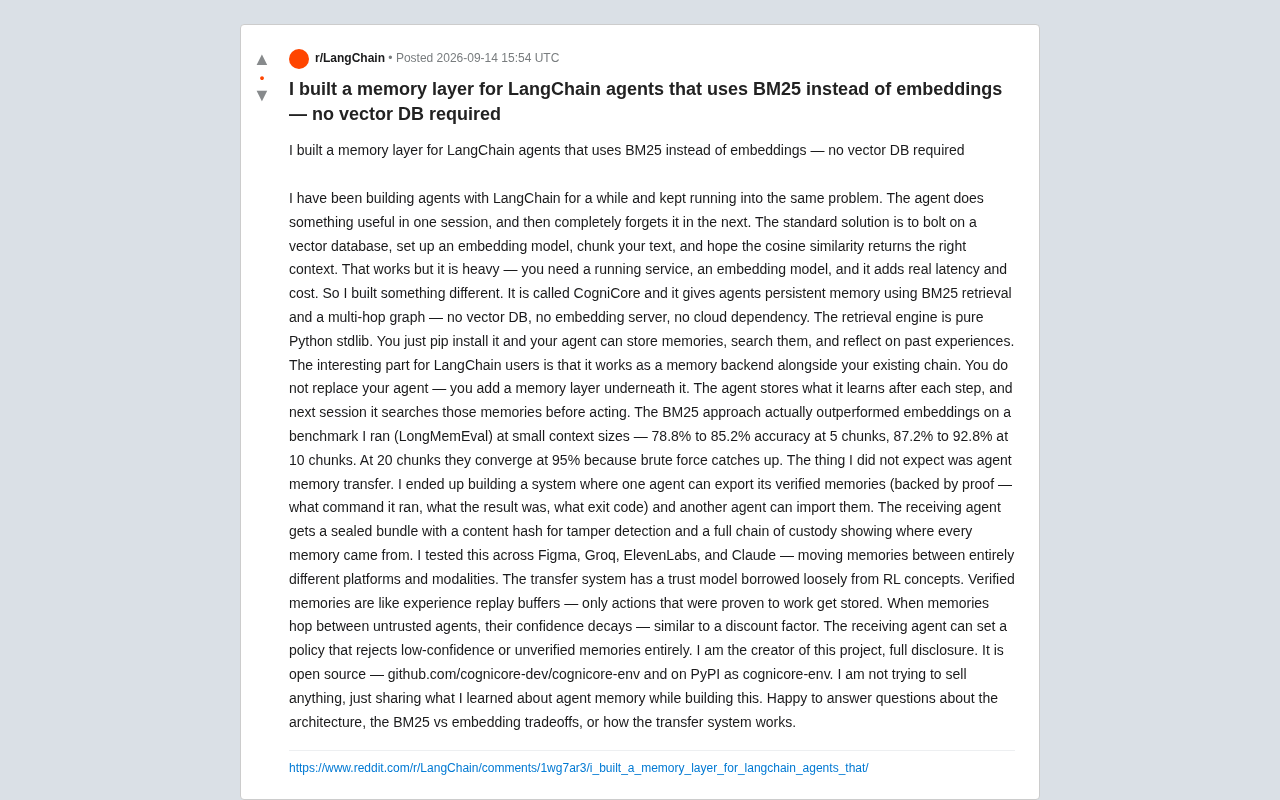
Ditch the Vector Database: Building a Memory Layer for LangChain Agents with BM25
CogniCore replaces vector databases with BM25 retrieval for LangChain agent memory, outperforming embeddings in small-context benchmarks with zero external dependencies.
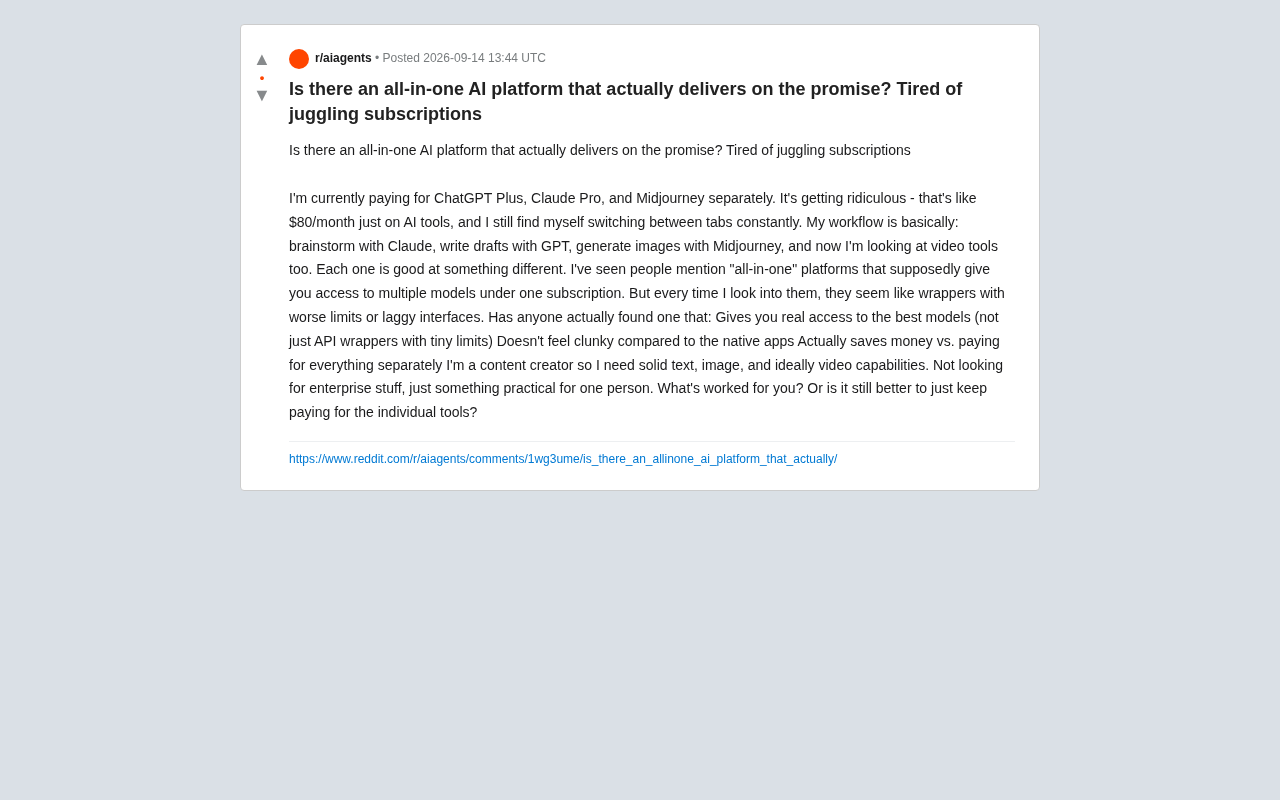
Are All-in-One AI Platforms Actually Worth It? A Practical Guide to Escaping Subscription Overload
Tired of paying for ChatGPT, Claude, and Midjourney separately? We break down whether all-in-one AI platforms are actually worth it — and what a smarter subscription stack looks like.
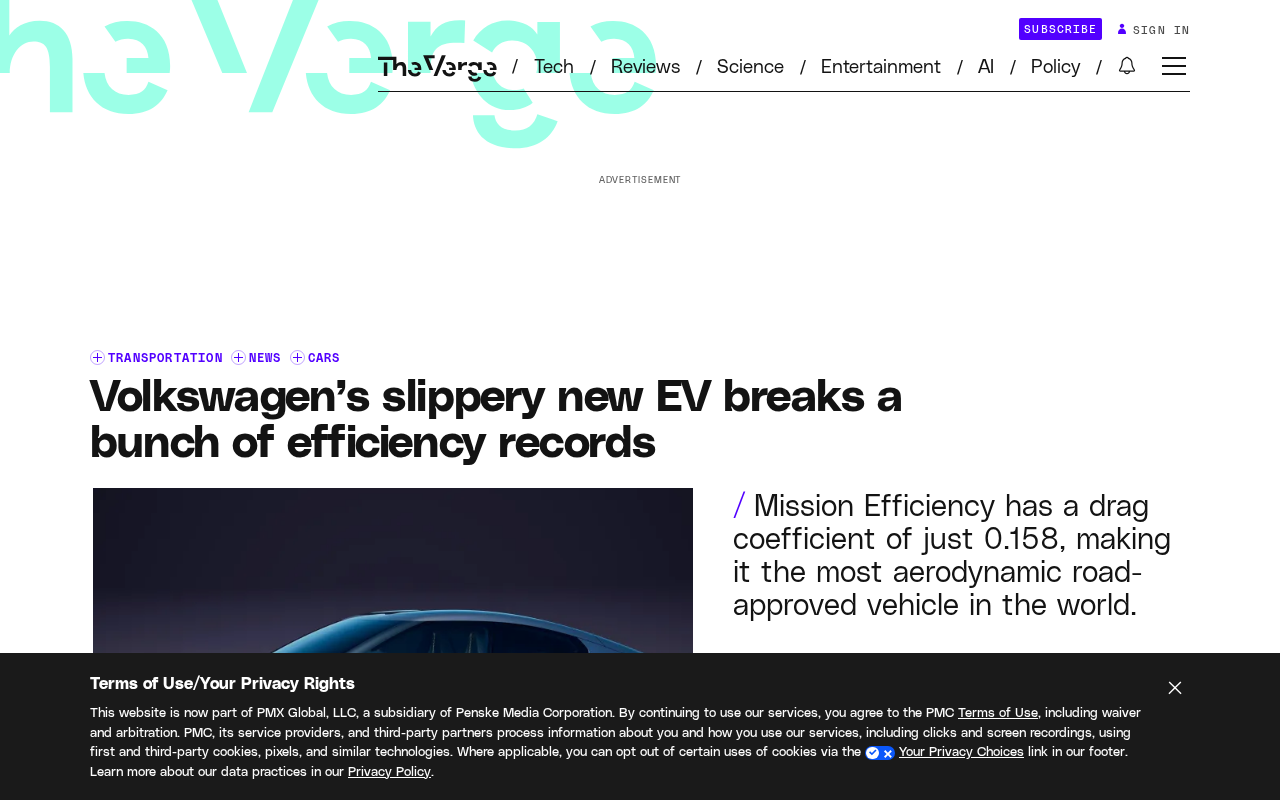
Volkswagen Mission Efficiency: The World's Lowest-Drag EV Breaks Multiple Efficiency Records
Volkswagen's Mission Efficiency prototype claims the world's lowest drag coefficient, built on MEB+ platform with ID. Polo and ID. Cross components. Here's what it means for EV efficiency.