Claude Code Lead: Since Opus 4.5, 100% of My Code Is Written by AI

Claude Code lead Boris says since Opus 4.5, 100% of his code is written by AI; the coding bottleneck is solved, and the next hurdles are review, security, and CI optimization.
Anthropic Claude Code lead Boris revealed in a tech conversation that since Opus 4.5, 100% of his code has been written by Claude Code. This year he submitted 1,700 PRs, added 400,000 lines of code, consumed 8 billion tokens, and did most coding on his phone. He believes coding as the biggest bottleneck is basically solved, with the bottleneck shifting to code review, security review, and CI optimization, which Anthropic addresses through Claude Code Review (98% of bugs fixed before humans see the PR) and Claude Security. Dynamic workflows, a new form of Test Time Compute, let a single prompt orchestrate thousands of sub-agents and cut CI time by 50% within hours. He also proposes loops as a higher-order abstraction above agents and suggests thinking in ROI rather than cost, giving tokens to everyone to encourage experimentation.
Claude Code Lead: Since Opus 4.5, 100% of My Code Is Written by AI
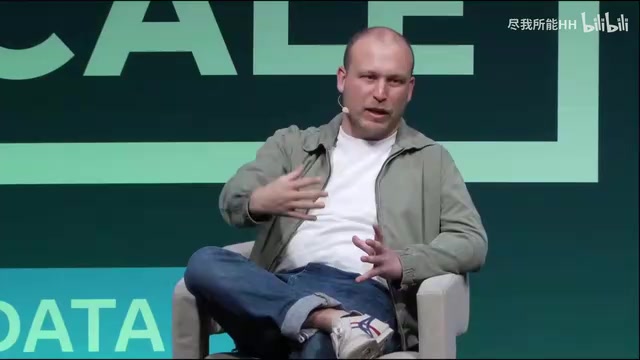
In a recent tech conversation, Anthropic Claude Code lead Boris and the director of Meta's developer productivity team had an in-depth discussion about the current state and future of AI programming. Boris dropped a number that is enough to make the entire engineering world re-examine how it works: since the release of Opus 4.5, 100% of his code has been written by Claude Code. This is not a demo, not an experiment, but the daily reality of a product lead at a top AI company.

A Product Lead's Code Data: 400K Lines Added, 8 Billion Tokens
The most impactful part of the conversation came from the concrete data. Boris revealed that this year he submitted 1,700 PRs, added about 400,000 lines of code, and deleted 250,000 lines. Since March, he has consumed 8 billion tokens. And this code—from additions to deletions—was entirely produced by Claude Code.
Even more surprising is the migration of his development environment. Boris said that he now does most of his coding work on his phone. "If you had told me this six months ago, I would have said you were crazy." This detail may reflect a change deeper than the code volume itself: programming is shifting from keyboard operations in the IDE to a conversational interaction anytime, anywhere.
For Anthropic as a whole, this ratio is also considerable: internally, an average of 80% to 90% of code is written by Claude Code, and in more and more teams, that number has already reached 100%.
Coding Is No Longer the Bottleneck—What Is the Next Hurdle?
Boris's core point is: coding used to be the biggest bottleneck in the software development process, and that problem has basically been solved. What follows is the migration of new bottlenecks—code review, security review, CI optimization—each of which is being redefined by AI.
Claude Code Review: 98% of Bugs Fixed Before Humans See the PR
The code review product used internally at Anthropic is now open to all users. Boris described the experience: when an engineer opens a PR, "it is basically guaranteed that all bugs have already been caught." The accuracy is around 98% to 99%. This means engineers no longer need to look for bugs when reviewing code, but instead judge "whether this PR should exist at all"—a higher-level decision problem.
The reason this product can achieve this comes at the cost of consuming a large number of tokens. Boris said bluntly that it is "much more expensive than any other code review product on the market," but what it buys is a fundamental shift in the focus of review.
Claude Security: Automated Security Scanning Begins to Surpass Manual Penetration Testing
Scanning the entire codebase every week, autonomously discovering and fixing security issues—this is routine practice inside Anthropic. Boris mentioned a turning point: Claude Security is now beginning to catch issues that even penetration testers did not find. Not long ago, this was still impossible.
Dynamic Workflows: Halving CI Time with a Single Sentence
Boris shared a highly convincing case. He noticed that CI was slow, so he gave Claude Code a single instruction: use a workflow to analyze CI time data and optimize it. No further details, just that one sentence.
The model invoked dynamic workflows—a new feature released by Anthropic a few weeks ago that can dynamically orchestrate dozens, hundreds, or even thousands of sub-agents. The task ran for several hours, consumed millions of tokens, and ultimately produced four PRs that reduced CI time by 50%. Boris merged those changes that same evening.
In the traditional model, this kind of profiling and optimization work could take days to weeks.

CI (Continuous Integration) is the practice in software development of frequently merging code changes into the main branch and automatically running builds and tests; its speed directly affects development iteration efficiency. Long CI times lead to delayed feedback and a backlog of merge queues. In Boris's case, Claude Code used dynamic workflows to analyze CI time data, automatically identify bottlenecks (such as redundant tests and inefficient build steps), and generate optimization PRs, halving CI time. This shows that AI not only writes business code but can also optimize the development infrastructure itself, which belongs to automation at the "meta-development" level.
Loops and Workflows: The Next Layer of Abstraction Above Agents
Boris used an analogy to explain the positioning of loops: if source code is a statement in programming, and an agent writing code is a function, then loops are higher-order functions. This is another leap up the ladder of abstraction.
The practical application scenarios of loops are very concrete: an agent runs in a loop, reading user feedback on Threads every few minutes and submitting fix suggestions; or it loops through the codebase looking for duplicate abstractions to unify, discovering flaky tests and fixing them, and cleaning up useless tests. Boris said these loops are currently running in his daily workflow, and he only needs to review the final PRs produced.
At present, about 30% of Boris's code is written by loops, and on good days it can reach 100%. He expects that in a year, the proportion of engineers writing loops will rise significantly.
The difference between dynamic workflows and loops is that workflows let Claude write a small program that runs in a virtual machine, used to orchestrate other Claudes to solve problems—this is a new form of Test Time Compute. Boris describes it as the "fourth scaling factor" after model size, data volume, and training compute.
Test Time Compute refers to the technical paradigm of investing additional computational resources at the inference stage (rather than the training stage) to improve output quality. Traditionally, model capability is mainly determined by training scale (parameters, data, compute), and inference is just a single forward pass. Test Time Compute allows the model to perform multi-step reasoning, self-verification, search, or tool calls before answering, as typified by the chain-of-thought of OpenAI's o1 series. Boris calls dynamic workflows the "fourth scaling factor," meaning that by orchestrating a large number of sub-agents to dynamically allocate compute at inference time, task performance can be improved as effectively as scaling up the model, especially for complex engineering problems such as CI optimization that require exploration and trial and error.
Cost Anxiety May Be a False Problem: The Right Way to Think About ROI
Facing the industry-wide anxiety that "more powerful models are more expensive," Boris gave a clear judgment: one should think in terms of ROI rather than cost.
His advice is: use the most expensive model and focus on increasing returns rather than cutting costs. "There is probably about 50% room to cut investment, but the opportunity to increase returns may be 1,000% or more."
On deployment strategy, the most successful pattern Anthropic has observed is: give tokens to everyone—not just engineers, but also product managers, designers, and data scientists—and let the whole organization experiment. Innovation often comes from corners you do not expect, such as some accountant or marketing person, rather than always the most senior engineer.
Cost control should happen on the backend after effective use cases have been found, rather than being restricted on the front end.
Auto Mode and Engineers' Anxiety About Growth
The conversation touched on a rather sensitive question: will engineers become lazy because AI is too strong?
Boris admitted that Anthropic's own security team discovered a counterintuitive phenomenon: permission confirmation pop-ups were designed for security, but engineers quickly developed the habit of clicking "yes" without reading the content. Alert fatigue actually reduced security. This is exactly why Auto Mode was created—to hand permission judgments to the model and decide whether to allow something based on the conversation context.
The results were better than expected: Auto Mode is more secure than both the default yes/no mode and dangerous mode, while also unlocking the ability for long-running agents. What supports it is the Claude model's low sensitivity to prompt injection—according to system card data, the success rate is about 1% out of 100 attempts.
As for how engineers can keep up on the learning curve, Boris recommended Claude Code's output styles feature. When new people join the team, he suggests using the exploratory style, letting Claude explain architecture and language details with each modification; non-programmers can use the learning style, which guides operations step by step rather than doing them directly.
Prompt Injection is a security attack against large language models: an attacker hides malicious instructions in inputs that the model will read (such as web page content, user comments, or documents), inducing the model to ignore its original instructions and carry out the attacker's intent. For agents with tool-calling permissions, prompt injection can lead to data leakage or unauthorized operations. The security of Auto Mode depends on the model's low sensitivity to this type of attack—the system card shows that only about 1 in 100 attempts succeeds, meaning the model can distinguish normal instructions from malicious injections well enough that permission judgments can safely be delegated to the model, supporting long-running autonomous operation.
Fortresses Not Yet Conquered: Product Sense and Distributed System Design
Boris does not believe models are already omnipotent. He explicitly listed two areas where he is still better than the model: product intuition—"I can still come up with better product ideas than it"; and distributed system design—systematic thinking about service partitioning, data flow, load factors, and so on.
He expects that by the end of the year the model will be "quite good" in these areas, but declined to give a more precise timeline.
Regarding the future direction of Claude Code, Boris emphasized that the team plans by week or by month, not annually—"this field changes too fast." The general direction is to maintain the broadest compatibility, continue to widen the lead on long-running tasks, and let users experience leaps in model capability in the most natural way.
One-line Summary
Boris, lead of Claude Code, says that since Opus 4.5, 100% of his code has been written by AI; the coding bottleneck has been solved, and the next hurdles are review, security, and CI optimization.
Paragraph Summary
In a tech conversation, Anthropic Claude Code lead Boris revealed that since the release of Opus 4.5, 100% of his code has been written by Claude Code. This year he submitted 1,700 PRs, added 400,000 lines of code, consumed 8 billion tokens, and did most of his coding on his phone. He believes that coding as the biggest bottleneck has basically been solved, and the bottleneck is shifting to code review, security review, and CI optimization, which Anthropic is addressing through productization with Claude Code Review (98% of bugs fixed before humans see the PR) and Claude Security. Dynamic workflows, as a new form of Test Time Compute, allow a single prompt to orchestrate thousands of sub-agents and cut CI time by 50% within hours. He also proposes loops as a higher-order abstraction above agents, and suggests thinking about AI investment in terms of ROI rather than cost, giving tokens to everyone to encourage experimentation.
Related articles

Chain of Thought Isn't Just for AI: How Humans Can Use CoT to Improve Thinking Quality
Chain of Thought isn't just a prompt trick for large models. Starting from a Hacker News discussion, this article analyzes why CoT works for human thinking too, breaks down actionable ways to transfer it, and highlights the key differences between human CoT and machine CoT.
Cloudflare Teams Up with OpenAI: Closi…
Cloudflare Teams Up with OpenAI: Closing the Loop from Vulnerability Discovery to Defense with AI
Cloudflare uses OpenAI Daybreak to investigate security vulnerabilities and generate reviewable remediation plans, while developers use Codex to boost coding efficiency and quality.

Orca Multi-Agent Orchestration in Practice: A Guide to Parallel Collaboration with Claude and Codex
Orca is Stable AI's free open-source agent workbench supporting 34 agents like Claude Code and Codex in parallel. Learn its Git worktree isolation, multi-model orchestration, and mobile management.