Claude Code Product Manager Interview: Rapid Iteration, Multi-Instance Parallelism, and the Full SDK Ecosystem Explained

Claude Code achieves rapid iteration through prototype-driven development, evolving from personal tool to enterprise AI platform.
This article provides an in-depth analysis of Claude Code's product development philosophy and user ecosystem. The team adopts a prototype-driven rather than document-driven development model, building Claude Code with Claude Code itself to create a self-reinforcing flywheel effect. Usage patterns span from individual Multi-Clouding (running multiple instances for parallel development) to enterprise-level Plan mode and specialized Agent construction. Product customization rests on three pillars: the Claude MD memory system, MCP protocol integration, and terminal-native extensions.
Introduction
Claude Code is iterating and growing at an astonishing pace, becoming one of the most closely watched AI programming tools in the developer community. Recently, Anthropic's Cloud Relations lead Alex had an in-depth conversation with Claude Code Product Manager Kat, revealing the development philosophy, user patterns, and future direction behind this product. This article provides a deep analysis across three dimensions: product iteration mechanisms, developer ecosystem, and SDK strategy.
The Secret Behind Claude Code's Rapid Iteration: Building Products with the Product
Prototype-Driven, Not Document-Driven
The Claude Code team's development process is fundamentally different from traditional software teams. Kat revealed that the team is filled with product-minded engineers, and many features are built bottom-up—engineers, being developers themselves, discover they need a certain feature and immediately prototype it using Claude Code.
The key insight: The team doesn't write design documents; they prototype directly with Claude Code. Because prototyping a feature with Claude Code is far faster than writing documentation, engineers most often build prototypes directly and then release them internally at Anthropic. If internal reception is positive, that's a strong signal that external users will love it too.
The Deeper Logic of Dogfooding Culture
This "eating your own dog food" (dogfooding) culture wasn't formed by accident—it was deliberately cultivated. Dogfooding is a classic software industry practice originating from a development philosophy promoted internally at Microsoft in the 1980s. Its core logic is: developers, as the product's first users, can discover problems in real work scenarios that documentation and testing cannot expose. Unlike traditional QA processes, dogfooding captures "contextualized defects"—experience gaps that only trigger in real workflows. The Claude Code team has taken this philosophy to the extreme: they don't just test the product with the product, they build the product itself with the product, creating a self-reinforcing flywheel effect.
Kat explained that developer workflows are extremely diverse—even if you theoretically know what you want to build (such as IDE integration), the actual implementation still has a vast possibility space. Only through prototyping can you truly feel how the product actually performs within a workflow.
The inherent characteristics of the terminal environment also facilitate this rapid iteration—building on primitive constructs like slash commands makes adding new features very natural. Developers don't need to learn new technologies to customize Claude Code; they simply write scripts they're already familiar with.
Developer Usage Patterns: The Full Spectrum from Individual to Enterprise
Multi-Clouding: Running Multiple Claude Code Instances Simultaneously
One of the most surprising usage patterns for Claude Code is "Multi-Clouding"—developers running multiple Claude Code sessions simultaneously. Kat described this phenomenon: some developers have six Claude instances open at once, each potentially running in a different Git workspace or repository copy. They manage them like a small team, jumping in when an instance stops to ask for feedback, then letting it continue running.
The technical foundation of the Multi-Clouding pattern is Git's worktree feature. Git worktree allows developers to check out multiple working directories from the same repository, each directory can be in a different branch state, and they share the same .git object store, avoiding the disk overhead of full clones. This enables multiple Claude Code instances to work in parallel on different branches of the same codebase without interfering with each other. This pattern essentially compresses the parallel development model of traditional team collaboration into collaboration between a single developer and multiple AI instances, achieving an order-of-magnitude improvement in individual development efficiency.
More refined usage includes: one Claude instance dedicated to asking questions (no code editing), while another instance performs code edits in the same repository—the two don't interfere with each other. This pattern was initially thought to be a niche need for advanced users, but has actually become a very common usage pattern.
Large Enterprise Scenarios: Plan Mode and Architecture Understanding
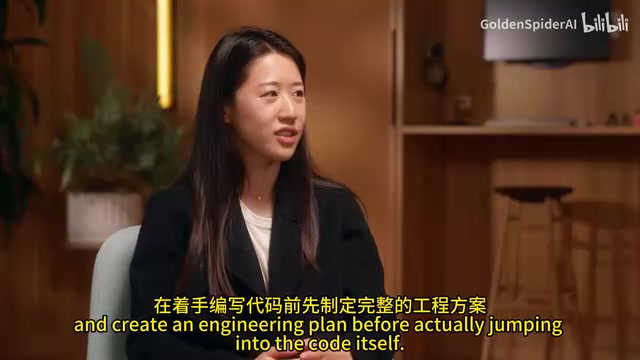
At the other end of the spectrum, engineers at large enterprises tend to favor Plan mode. This mode has Claude Code spend time exploring the codebase, understanding the architecture, and creating an engineering plan before writing code. For complex changes and difficult tasks, this approach is particularly effective.
The Emergence of Specialized Agents
Developers are also building specialized Agents on top of Claude Code: SRE Agents, security Agents, incident response Agents, and more. This made the team realize that integration capabilities are critical to Claude Code's success. Consequently, they encourage users to spend more time telling Claude Code about their commonly used CLI tools, or setting up remote MCP servers to access logs and ticket management software.
MCP (Model Context Protocol) is an open protocol standard proposed by Anthropic, designed to solve the fragmentation problem of integrating AI models with external tools and data sources. Similar to how LSP (Language Server Protocol) unified communication between editors and language services, MCP aims to establish a unified specification for interactions between AI Agents and tools. Remote MCP servers allow Claude Code to access logging systems, ticket management software (like Jira, Linear), monitoring platforms, and other enterprise-grade tools through standardized interfaces, embedding AI capabilities into existing DevOps workflows without needing to develop a separate integration layer for each tool.
The Three Pillars of Claude Code Customization
Claude MD: Building a Memory System for AI
Claude MD files represent Claude Code's memory concept—the best place to tell Claude Code about team goals, code architecture, pitfalls in the codebase, and best practices. Kat emphasized that investing effort in refining Claude MD files can significantly improve output quality.
Claude MD files are essentially an externalized, version-controllable context injection mechanism that addresses the fundamental limitation of large language models lacking persistent memory. Unlike RAG (Retrieval-Augmented Generation) systems that dynamically retrieve context through vector databases, Claude MD uses explicit, manually maintained structured context, making it better suited for coding standards, architectural decisions, and other team knowledge that requires precise communication. This design philosophy aligns with "Constitutional AI
Related articles
 Product Reviews
The Programmer's Desk Setup Guide: Building a Workspace That Feels Like Home
Discover how programmers build productive, comfortable workspaces. From multi-monitor setups to ergonomic design, explore the desk philosophy that drives focus and flow.
 Product Reviews
Qoder vs Cursor Real-World Comparison: Which $20/Month AI IDE Is Better?
Hands-on comparison of Qoder vs Cursor AI IDEs: Agent autonomy, human interaction count, and architecture decisions. Qoder needed only 2 interactions vs Cursor's 8.
 Product Reviews
Cursor Cloud Agent Demo: Eliminating Bottlenecks Across the Entire Software Development Lifecycle
Deep analysis of Cursor's Cloud Agent demo showing how cloud VMs, automated test artifacts, and a full-chain control plane systematically eliminate human bottlenecks across the software development lifecycle.