Claude Code Projects Now Open to All: A New Wave of AI Agent Collaboration Updates

AI agents go collaborative: Claude Code Projects opens to all, multi-agent orchestration hits beta, and subscriptions start merging.
This week's AI updates center on agent collaboration and ecosystem integration. Anthropic opened Claude Code Projects to all Pro/Max users, enabling a coordinator to split goals into parallel threads; its Managed Agents Dynamic Workflows beta handles large-scale tasks like bulk contract review via multi-agent orchestration. OpenAI Codex added Composer Predictions for Pro users, Devin now draws from ChatGPT subscription credits, Qwen Image 2.1 Turbo released open weights with 8-step generation, and Google AI Pro introduced 80GB A100 GPUs in Colab.
This Friday brought a dense round of AI updates, all centered on one theme — moving AI agents from "solo actors" to "team players." Anthropic's Claude Code Projects is now open to everyone, managed agents support task decomposition, OpenAI's Codex starts predicting your next message, and Devin now taps into your existing ChatGPT subscription credits. Here's a breakdown of each change worth paying attention to.
Claude Code Projects: One Conversation, Multiple Parallel Threads
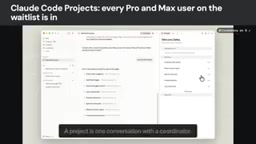
Anthropic has removed Claude Code Projects from its waitlist, opening it to all Pro and Max users. The core logic is worth noting: a Project is essentially a conversation led by a "coordinator." You simply provide a goal, and the system spins up independent threads for each subtask.
For example, ask it "why is this marketing site loading slowly" and it breaks the work into eight threads, each submitting its own pull request, with all results reporting back into the same conversation. This design makes decomposing and tracking complex tasks transparent — you can see the overall progress while drilling into any individual subtask.
From a practical standpoint, if you're already paying for Pro or Max, this is the most worthwhile update to try this weekend. It transforms "let AI help me complete a big project" from a concept into an actionable workflow.
Managed Agents: Dynamic Workflows Enter Public Beta
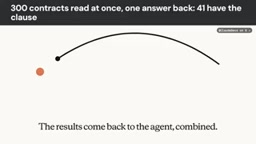
Anthropic's Managed Agents simultaneously launched a public beta for Dynamic Workflows. It addresses the problem of tasks with too many subtasks for a single agent to handle — a lead agent first writes a plan, then the server schedules multiple agents to execute it in stages.
A typical use case is bulk contract review — the system can read 300 contracts at once and deliver a unified conclusion, such as identifying that 41 of them contain a "change of control clause." You simply enable the feature in your agent definition and control total run costs via a budget cap.
Keep in mind: this capability is designed for large-scale batch processing tasks. If a single task can be handled by a single agent, the traditional approach is simpler and more direct. In other words, the value of Dynamic Workflows lies in scale, not in replacing every scenario.
The technical pattern behind Dynamic Workflows is commonly known as "Multi-Agent Orchestration." The core idea is to introduce an "Orchestrator" agent responsible for planning and decomposing tasks, then distributing subtasks to multiple "Worker Agents" for parallel processing, and finally aggregating the results. This architecture's strength lies in overcoming the context window limitations of individual large language models — 300 contracts would often exceed what a model can handle in a single conversation, but processing them in parallel shards and merging the conclusions bypasses this bottleneck. The Budget Cap mechanism is a cost-control tool for these tasks: since each worker agent invocation incurs API fees, the orchestration layer estimates total token consumption before distributing tasks and halts execution if a threshold is exceeded, preventing runaway costs from poorly designed tasks.
OpenAI Codex: Now Predicting Your Next Message
OpenAI's Codex has added a feature called "Composer Predictions," which actively suggests messages you might want to type next based on your conversation history and communication style. The feature is currently available in testing for Pro users.

Objectively, this is a modest efficiency improvement, and for now it's limited to Pro users. It reads more like a polish to the interaction experience than a transformative capability upgrade — but in high-frequency usage scenarios, the typing time saved gradually accumulates into real value.
Dots and Devin: Mobile Access and Credit Integration
OpenAI's persistent agent "Dots," launched last week, can now be created directly from your phone — both the iOS and Android ChatGPT apps support it. This means starting a persistent task no longer requires sitting at a computer; you can kick one off from mobile anytime.
Another change that's particularly friendly to paying users comes from Cognition — Devin can now connect to any personal ChatGPT subscription plan, whether Go, Plus, or Pro. When Devin calls GPT models, it will draw directly from your ChatGPT plan's credits.
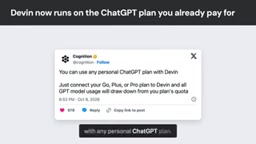
If you're paying for both ChatGPT and Devin, you should flip this switch now — it lets you avoid paying twice for the same model. This trend of "subscription interoperability" also reflects a broader movement toward integrating the AI tool ecosystem to reduce redundant costs for users.
Other Notable Releases
Beyond the main updates, two more releases this Friday are worth noting for developers and creators:
- Qwen Image 2.1 Turbo Open Weights: The Qwen team released open weights for this model, which can complete image generation and editing in 8 steps, dramatically reducing inference steps — an attractive option for efficiency-focused image workflows.
- Google AI Pro Introduces A100 GPUs: Google's AI Pro plan now offers A100 GPUs with 80GB of VRAM in Colab. This memory capacity is sufficient to run 31-billion-parameter Gemma models without any quantization.
The "8-step generation" technique used by Qwen Image 2.1 Turbo comes from accelerated sampling methods in the diffusion model field. The core idea is to compress the denoising inference process — which traditionally requires dozens or even hundreds of steps — down to very few steps using techniques like Distillation or Consistency Models, while preserving generation quality as much as possible. Traditional diffusion models (such as early versions of Stable Diffusion) typically require 20–50 inference steps, each requiring a full forward pass, resulting in longer generation times. By reducing step count, single-image generation latency can drop several-fold, which is significant for production workflows that need to generate images at high frequency. Open weights means researchers and developers can download the model parameters for self-deployment without going through an API — especially important in scenarios with strict data privacy requirements or the need for offline use.
The A100 GPU's 80GB VRAM spec has a direct impact on model run capability. Large language models need to load all parameters into VRAM during inference — at BF16 precision, 31 billion parameters occupy approximately 62GB of VRAM, which fits within an 80GB A100 without quantization. While quantization can halve VRAM usage, it typically introduces some precision loss; running the original-precision model on sufficiently large VRAM is the deployment approach with the least degradation to model capability, which is the key appeal of the 80GB spec for researchers.
Takeaway: Agent Collaboration Becomes the Dominant Theme
Looking across this week's updates, a clear throughline emerges: major AI players are all pushing agents from single-task assistants toward collaborative systems that can be decomposed, orchestrated, and scaled. Claude Code Projects and Managed Agents represent the "multi-agent parallelism" direction, while the Devin and ChatGPT credit integration reflects the trend of "ecosystem consolidation and reducing redundant costs."
If you only want to try one thing this weekend, Claude Code Projects is the top priority; and if you're paying for both ChatGPT and Devin, the credit-sharing switch should be turned on immediately.
Related articles

ChatGPT Space Launches: Team Collaboration and New Pages Features Explained
ChatGPT Space is OpenAI's new team collaboration feature with Pages, real-time collaboration, and Slack/Google Drive sync. We break down its privacy design, multi-platform integration, and the full workflow from conversation to document.

Migrating Apache Spark UDFs to GPU Acceleration with AI Agents
NVIDIA developer blog explains how AI Agents rewrite Apache Spark UDFs for GPU acceleration, covering migration criteria, agent rewriting and verification workflows, plus pitfalls like result consistency and CPU-GPU transfer overhead.

Zed Editor v0.40.4-rc2 Released: Usage Credits Now Available Without Upgrading
Zed editor releases v0.40.4-rc2, allowing users to use usage credits for AI features without upgrading to a paid plan, lowering the trial barrier.