Claude Code vs Codex vs OpenCode: In-Depth Comparison of the Top 3 AI Coding Assistants in 2025

A comprehensive comparison of Claude Code, Codex, and OpenCode—the top 3 terminal AI coding assistants.
This article compares Claude Code, Codex, and OpenCode across usability, default settings, model support, and interface design. Claude Code leads with its step-by-step approval mechanism and out-of-the-box experience, emphasizing safety and controllability. Codex and OpenCode default to aggressive auto-execution, requiring manual permission configuration. For interface design, OpenCode ranks first in aesthetics, Claude Code is middle-tier, and Codex is most minimal. Claude Code employs a model exclusivity strategy that creates platform lock-in.
Overview
With the rapid evolution of AI coding assistants, developers face an ever-growing array of choices. Claude Code, OpenAI Codex, and OpenCode are currently the three most talked-about terminal-based AI coding tools, each with distinct strengths suited to different use cases.
This article provides a comprehensive comparison across multiple dimensions—usability, default settings, model support, tool capabilities, code quality, usage limits, and open-source transparency—to help you find the tool that best fits your workflow.
Usability & Default Settings Comparison
Claude Code: Best Out-of-the-Box Experience
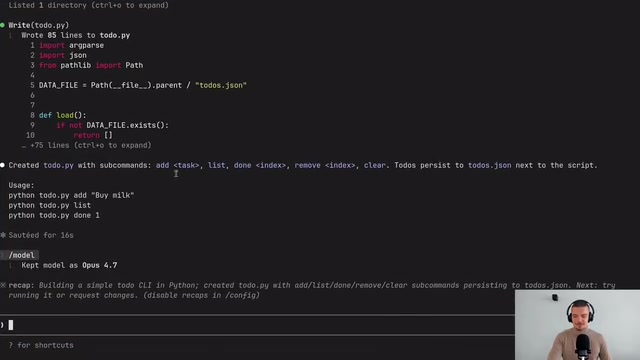
Claude Code excels in initial setup. After logging in through the browser, it immediately guides users to select an interface style (dark/light mode) and offers recommended default settings. Its core philosophy is step-by-step approval—every action requires user confirmation rather than automatically executing all tasks at once.
Step-by-step Approval is one of the core design patterns in AI agent safety. In LLM-driven code execution scenarios, models may chain multiple tool calls—reading files, modifying code, running shell commands, committing Git changes—each of which can produce irreversible side effects. The step-by-step approval mechanism pauses at each "action node" and waits for human confirmation, implementing what's known as a "Human-in-the-loop" control flow. This design aligns closely with the "controllability" principle that Anthropic has repeatedly emphasized in its AI safety research, and is an extension of the Constitutional AI training methodology used in the Claude model family.
This design philosophy is particularly friendly to developers who prioritize code quality and security. You stay involved in every decision, leveraging AI's coding capabilities while maintaining control over your codebase.
Codex & OpenCode: Overly Aggressive Defaults
Codex and OpenCode take the opposite approach—if you don't modify the configuration files, they'll execute all operations directly. While both support customized permission controls through configuration files, users must proactively edit JSON configs to achieve a step-by-step approval workflow.
Terminal Interface Design Rankings
TUI (Terminal User Interface) is an interaction paradigm that sits between pure CLI and graphical GUI. Modern TUI frameworks (such as Ratatui in the Rust ecosystem, Bubble Tea in Go, and Textual in Python) can deliver mouse support, dynamic layouts, color gradients, and other rich visual effects. OpenCode is built with Go's Bubble Tea framework, which explains its leading edge in interface smoothness and aesthetics. For power terminal users (such as backend engineers and DevOps engineers), TUI's responsiveness and keyboard efficiency far exceed web interfaces—this is also the core reason all three tools chose a terminal form factor over IDE plugins.
In terms of TUI design, the ranking is as follows:
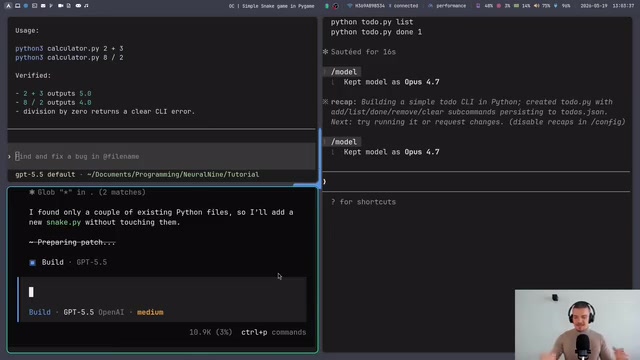
- #1: OpenCode — Beautiful interface with convenient model switching and settings viewing
- #2: Claude Code — Feature-complete but slightly rough in design
- #3: Codex — Most minimalist interface
Model Support & Exclusivity Analysis
Claude Code's Model Exclusivity Strategy
Claude Code's core competitive advantage lies in its model exclusivity. Anthropic does not allow users to combine their Claude subscription with other third-party tools, meaning that to fully utilize subscription benefits, you essentially must invoke the model through Claude Code.
From a business perspective, this closed strategy is essentially a form of "platform lock-in"
Related articles
 Product Reviews
The Programmer's Desk Setup Guide: Building a Workspace That Feels Like Home
Discover how programmers build productive, comfortable workspaces. From multi-monitor setups to ergonomic design, explore the desk philosophy that drives focus and flow.
 Product Reviews
Qoder vs Cursor Real-World Comparison: Which $20/Month AI IDE Is Better?
Hands-on comparison of Qoder vs Cursor AI IDEs: Agent autonomy, human interaction count, and architecture decisions. Qoder needed only 2 interactions vs Cursor's 8.
 Product Reviews
Cursor Cloud Agent Demo: Eliminating Bottlenecks Across the Entire Software Development Lifecycle
Deep analysis of Cursor's Cloud Agent demo showing how cloud VMs, automated test artifacts, and a full-chain control plane systematically eliminate human bottlenecks across the software development lifecycle.