Claude Cowork and Chat Are Merging: A Unified AI Creative Workspace Has Arrived
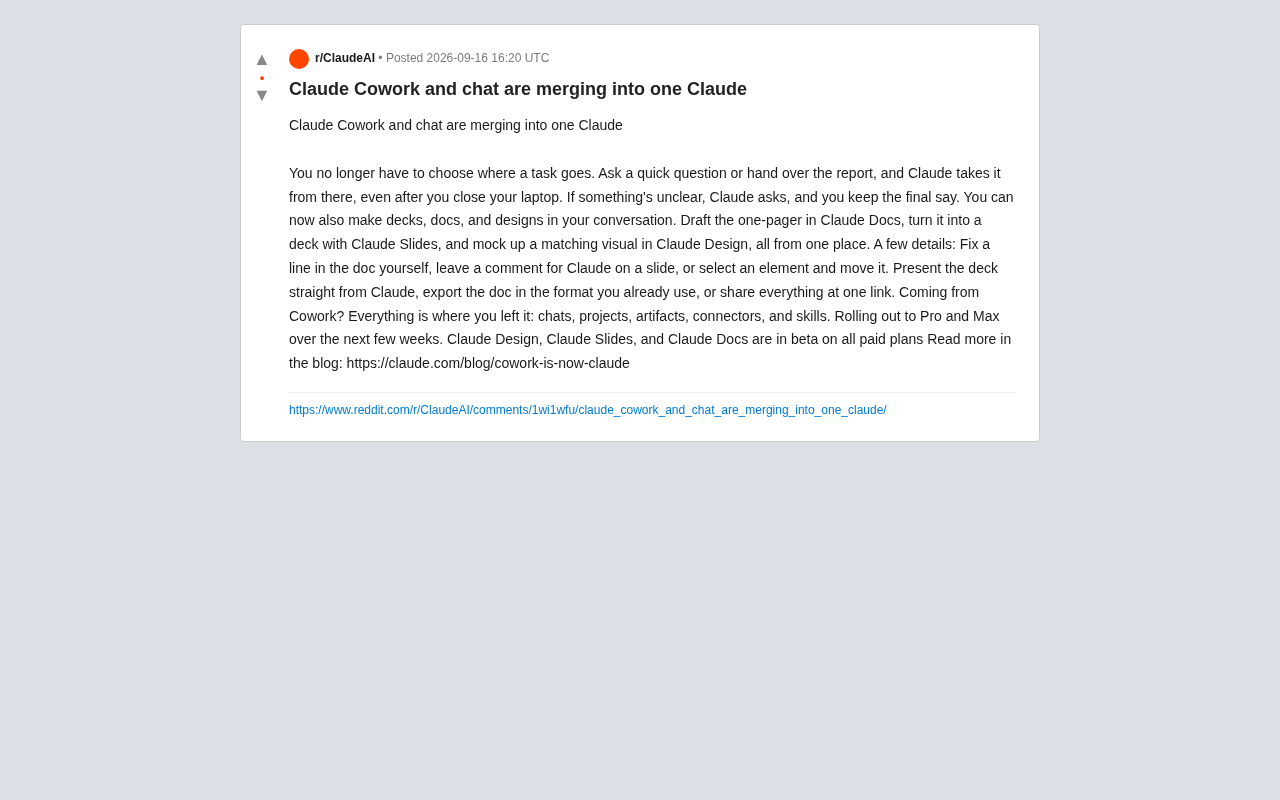
Anthropic unifies Claude Cowork and chat, adding Docs, Slides, and Design tools with async task support.
Anthropic has merged Claude Cowork and regular chat into a single entry point, eliminating the need to choose between products based on task type. Key highlights include asynchronous execution (Claude continues working after you go offline), three new built-in creative modules — Claude Docs, Slides, and Design — forming a complete content pipeline, plus fine-grained human-AI editing and flexible sharing. Existing Cowork users retain all history, projects, artifacts, connectors, and skills. The update rolls out to Pro and Max users over the coming weeks, with the three creative tools available in beta.
Anthropic has announced the merger of Claude Cowork and its regular chat functionality into a single, unified Claude experience. Users no longer need to decide which entry point to use for a given task — whether it's a quick question or a full-length report, Claude can handle it, and will even keep working after you close your laptop. This update marks Claude's transformation from a conversational assistant into a full-fledged productivity platform.
One Entry Point: No More Task Routing
Previously, users had to judge whether a task belonged in Cowork or regular chat — a fragmented experience that has now been completely eliminated. The new unified Claude handles everything from simple Q&A to complex reports.
One standout capability is asynchronous execution — Claude can continue advancing a task even after you go offline. This means you can hand off a time-intensive piece of work, step away, and let Claude keep going. If anything is unclear along the way, Claude will proactively ask for clarification, while the final decision always remains in the user's hands. This "AI clarifies, human decides" collaboration model goes a long way toward addressing the common "going off the rails" problem in long-running automated tasks.
Asynchronous Execution means a task's initiation and completion don't need to happen in the same timeframe. Unlike traditional chat-based AI interactions where you wait at your screen for a response, this model is closer to "send an email and wait for a reply" rather than "a real-time phone call." In AI task automation, asynchronous capability is valuable because it allows the system to handle complex, time-consuming work in the background — such as large-scale data processing or multi-step report generation — while users switch to other things. OpenAI's Operator, Google's Agentic Search, and similar products are all pushing toward comparable async agent capabilities, making this a pivotal technical leap for AI assistants evolving from "instant Q&A" to "task delegation."
Three Creative Tools: Docs, Slides, and Design
The merged Claude introduces three built-in creative modules, enabling end-to-end content production within a single conversation:
Claude Docs
For drafting documents. You can write a one-pager in Docs to serve as the foundation for further creative work.
Claude Slides
Converts documents into presentations with a single action. From a rough draft to a finished slide deck, the entire workflow stays within the same interface — no more switching between tools.
Claude Design
For creating matching visual assets, such as visual mockups to accompany a proposal.
Together, these three modules form a complete creative pipeline: draft in Docs → build into a presentation with Slides → produce matching visuals in Design, all from one place. This integrated approach is conceptually similar to what Notion AI and Canva are pursuing, but Anthropic's differentiation lies in using a powerful conversational AI as the core thread connecting each module.
Artifacts is an important concept Anthropic introduced in Claude — it refers to standalone, structured content units generated during a conversation, such as documents, code files, spreadsheets, or design mockups. Unlike ordinary chat responses, Artifacts exist as independent modules that can be continuously edited, version-managed, and reused across sessions. Claude Docs, Slides, and Design are essentially productized wrappers around Artifacts, elevating them from "incidental outputs within a conversation" to standalone creative tools. Understanding Artifacts helps explain how Anthropic can integrate multiple content formats within a single chat interface, rather than relying on separate applications like traditional software.
Fine-Grained Editing and Sharing
The new version also pays attention to editing details. Users can manually revise a specific line in a document, leave comments for Claude on a slide, or select an element and move it directly. This "human-AI hybrid editing" experience avoids the frustration of pure AI-generated content being difficult to fine-tune.
Sharing and exporting are equally flexible: you can present slides directly from Claude, export documents in formats you already use, or share everything via a single link. These capabilities mean Claude isn't just generating content — it also handles the final mile of content delivery and collaboration.
Smooth Migration: Cowork Users Have Nothing to Worry About
For users coming from Cowork, Anthropic promises everything stays in place: chat history, projects, artifacts, connectors, and skills are all preserved. This seamless migration approach minimizes the friction that typically comes with product consolidations.
Connectors and Skills are two types of extension mechanisms in the Claude ecosystem. Connectors allow Claude to connect to external data sources or services (such as Google Drive, Notion, or internal knowledge bases), enabling it to access a user's own data rather than relying solely on training data. Skills are pre-configured capability packages that allow Claude to execute specific types of tasks in a more customized way. Together, these two mechanisms form the infrastructure that enables Claude's evolution from a general-purpose assistant to an enterprise-grade workflow tool. Preserving both during the Cowork merger means that the integration environments users built for specific work scenarios won't be disrupted by architectural changes — for power users who rely on these features, this is the most valuable part of the migration commitment.
Rollout Timeline and Availability
This update will be gradually rolled out to Pro and Max subscribers over the coming weeks. Claude Design, Claude Slides, and Claude Docs are currently available in beta across all paid plans. This means free users won't have access to the full feature set for now, signaling that Anthropic is positioning these advanced creative capabilities as core value propositions for paid subscriptions.
From an industry perspective, this merger reflects a clear trend in AI assistant products: moving from single-purpose Q&A tools toward "AI-native workspaces" that integrate documents, presentations, and design in one place. As conversational AI matures, building a complete productivity ecosystem around it has become the next competitive frontier. For more details, refer to the Anthropic official blog.
Related articles
Automattic Executives Signed Reciprocal Severance Agreements During Mullenweg's Brief Ouster
Automattic's CFO and General Counsel signed reciprocal severance agreements during Matt Mullenweg's brief ouster, covering one year's salary and accelerated equity vesting, raising corporate governance concerns.
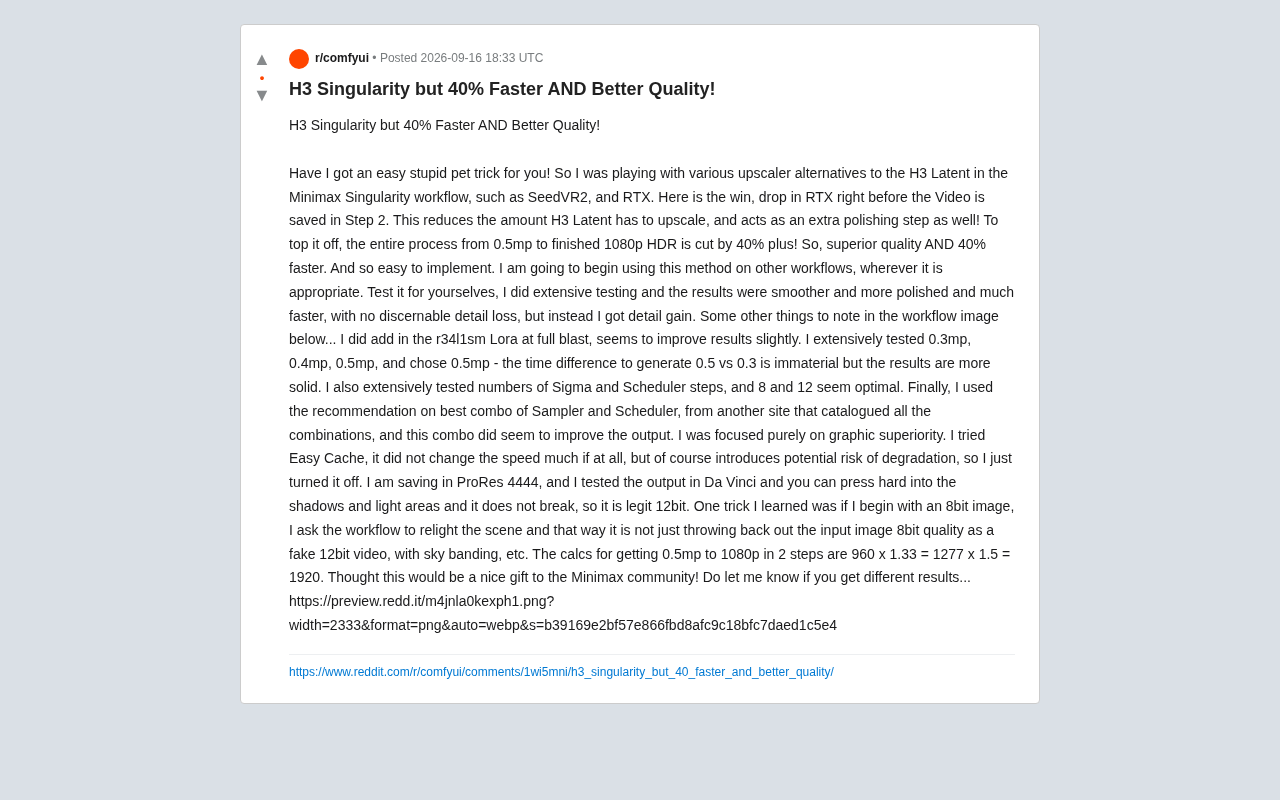
H3 Singularity Optimization: 40% Speed Boost With Better Image Quality
A Reddit user's Minimax Singularity workflow tip: insert an RTX upsampler before H3 Latent for 40%+ speed gains and better quality. Covers parameters, 12-bit output, and more.
Glyph: A Multi-Strategy Agent System for Automated Enterprise Data Catalog Annotation
Glyph is a multi-strategy LLM agent system for enterprise data catalogs that automates column description generation and sensitivity ontology tagging, grounding outputs in pipeline source code to improve accuracy.