Claude Duet Feature Analysis: Context Awareness and Proactive Push
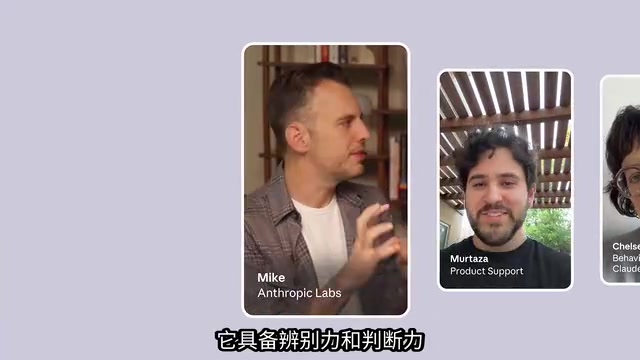
Claude Duet shifts AI from passive Q&A to proactively filtering and pushing information, reshaping collaboration.
Claude's "Duet" feature marks a shift in AI assistants from passive response to proactive service. It has context awareness, judges which information matters to users, and proactively filters and pushes key content from sources like Slack instead of making users search. This reduces cognitive burden, and precise filtering based on role, task, and context avoids indiscriminate pushes. On mobile, Duet turns "open the app and ask" into "information delivered proactively," better fitting the portable device. Overall, it shows AI evolving from a Q&A tool to a proactive collaborator, a trend worth watching despite the experience coming mainly from a single creator.
Claude's recently launched "Duet" feature is changing the way we collaborate with AI. It is no longer limited to passive responses—it has begun to proactively understand your needs, judge when to act, and push truly important information in front of you. Based on a share from Bilibili creator "Claude Fb-68zqcSVs," this article takes a deep dive into the core capabilities and real-world experience of this feature.
Context Awareness: Knowing What Information Matters to You
The most prominent capability of the Duet feature is "context awareness." It can distinguish which information users need and which is redundant. According to the creator, Claude proactively filters out the content users really need to know from Slack and pushes it to them, rather than making users dig through a flood of messages themselves.
This capability is built on Claude's understanding of the user's work context. It doesn't simply grab all messages; instead, it combines context to judge the priority of information. For example, when you're working on a project, Duet prioritizes pushing discussions related to that project while ignoring irrelevant chitchat. This judgment takes AI one step closer from a "tool" to an "assistant."
Slack is an instant messaging platform widely used for enterprise collaboration, organizing team discussions by Channel. It has a high volume of messages and strong real-time characteristics. In Slack, the flood of information easily drowns out what's truly important, and users must set up notification rules or keyword alerts themselves. The Duet feature uses Slack as a typical information source precisely because it fits the "information overload" pain point so well—Claude reads channel context, identifies the user's role and active projects, and ranks messages by semantic importance rather than relying on simple keyword matching, thereby enabling proactive push.
Proactive Action: From Passive Response to Proactive Service
Traditional AI assistants require users to ask explicit questions before giving answers, but the Duet feature gives Claude the willingness to act proactively. In the video, the creator mentions that Claude has discernment and judgment—it knows when to step in proactively, how to guide you through tasks, and how to do things exceptionally well.
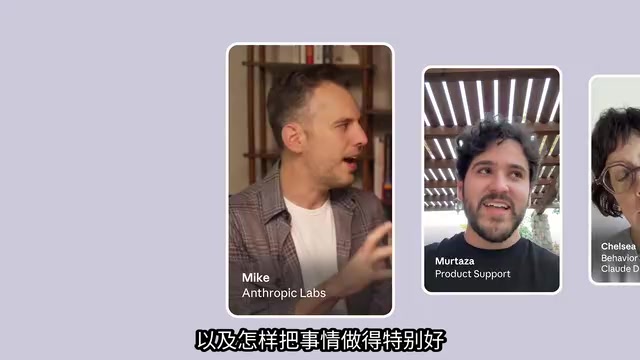
The value of this proactivity lies in reducing the user's cognitive burden. You don't need to constantly think "what should I ask AI," because Claude proactively offers help at the right moment. For example, when an urgent discussion related to you appears in Slack, Claude proactively alerts you rather than waiting for you to discover it yourself. The creator says "once you start using it, you can't stop," indicating that this proactive service truly hits a pain point in daily work.
Proactive AI refers to systems that don't wait for user instructions but instead predict needs based on context and initiate interactions proactively. Unlike the traditional "request-response" model, proactive AI needs three capabilities: environmental awareness (reading multi-source data), intent inference (judging the user's current goal), and timing decisions (when to intervene without disturbing the user). Claude Duet's proactivity is built on judgment—it evaluates event urgency and user relevance, pushing only when the threshold is high enough to avoid frequent interruptions. This is the key balance point for implementing proactive AI.
Information Filtering: The Judgment Logic Behind Precision Push
Duet's push is not indiscriminate bombardment but is built on precise information filtering. The creator emphasizes that Claude can understand which information users need and which they don't. This filtering capability relies on comprehensive judgment of the user's role, current tasks, and communication context.
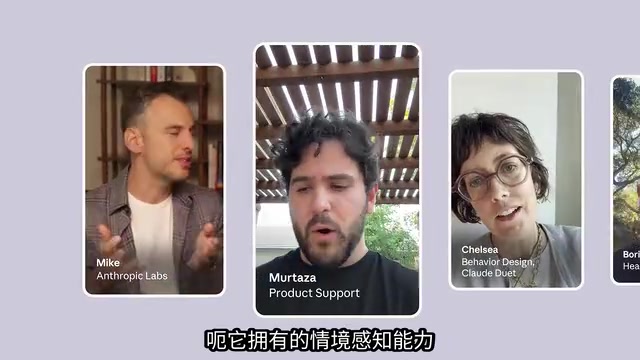
From the actual experience, Claude proactively pushes the content users need to know from Slack. This means you no longer need to frequently switch apps or manually check messages—important information comes to you. For professionals suffering from information overload, this "subtraction" is more valuable than "addition."
Information filtering and priority ranking are the core of a push system. Duet doesn't use traditional rule engines (such as "@mentions take priority") but leverages the semantic understanding of large language models to dynamically score messages based on sentiment, project relevance, sender importance, and conversation history. This LLM-based context-aware filtering can identify implicit needs (such as a discussion that doesn't directly mention you but is strongly related to the module you're responsible for), thereby reducing missed and false pushes.
Mobile Experience: A New Way to Use Claude on Your Phone
The creator specifically mentions that this is really how he uses Claude on his phone today. The Duet feature transforms mobile AI usage from "open the app and ask questions" to "information delivered proactively," which better fits the phone's role as a portable device.
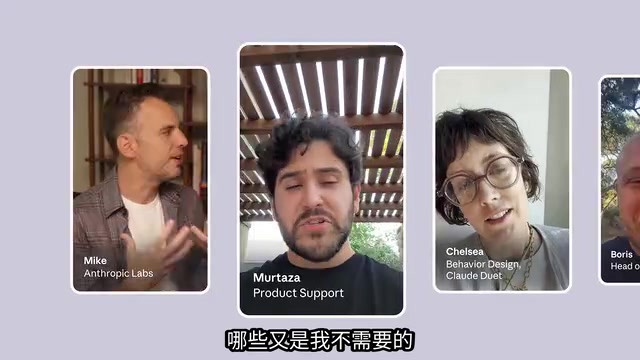
In mobile scenarios, user attention is fragmented, and proactive push is more efficient than passive querying. Through the Duet feature, Claude connects important information sources like Slack with the mobile experience, allowing users to stay on top of work developments on their phones without having to stare at a computer all the time. This cross-app information integration capability is a major highlight of the Duet feature on mobile.
Cross-app information integration refers to AI assistants breaking down app silos and unifying information from different sources—Slack, email, calendars—into a single interface for understanding and pushing. On mobile, this capability is especially critical: phone screens are small and operation costs are high, and users don't want to repeatedly switch apps to find information. Duet proactively delivers important Slack updates to Claude's mobile app, essentially turning the AI assistant into a "unified inbox," enabling users to efficiently obtain work intelligence in fragmented scenarios rather than relying on frequent manual checks.
Conclusion: A New Paradigm for AI Assistants
Claude's Duet feature demonstrates the evolution of AI assistants from "Q&A tools" to "proactive collaborators." Context awareness, proactive action, precise filtering, and mobile integration—these four capabilities together form a work partner that better understands users. Although the current information mainly comes from a single creator's experience sharing, this direction is worth watching—as AI begins to proactively filter information and judge timing for you, the collaborative relationship between humans and AI is being redefined.
One-line Summary
Claude Duet shifts AI from passive Q&A to proactively filtering and pushing information, reshaping collaboration.
Paragraph Summary
Claude's "Duet" feature marks a shift in AI assistants from passive response to proactive service. It has context awareness, can judge which information is important to users, and proactively filters and pushes key content from sources like Slack rather than making users search themselves. This proactivity reduces cognitive burden, so users don't need to constantly think about what to ask AI. Precise information filtering is based on comprehensive judgment of the user's role, tasks, and context, avoiding indiscriminate bombardment. On mobile, Duet transforms "open the app and ask questions" into "information delivered proactively," better fitting the phone's role as a portable device. Overall, the feature demonstrates the evolution of AI from a Q&A tool to a proactive collaborator; although the current experience mainly comes from a single creator's sharing, this trend is worth watching.
Related articles

How Did Da Vinci Prove the Sun Is Hot? A Neglected Chapter in Science History
How did da Vinci use a concave mirror experiment to overturn Aristotle's cold sun theory? This article traces this neglected chapter in science history, revealing the embryo of scientific thinking in the 15th century and da Vinci's cold observations on solar heat and the nature of life.
SharpLogic: Formalizing Bug Detection for LangGraph Routing Graphs with k-CNF
SharpLogic, an open-source project, maps LangGraph-style multi-agent routing and retry graphs to k-CNF, using a Rust kernel to count deadlocks and failing paths (#F counting), offering a Python AgentGuard hook and CLI for pre-release formal gate checks. This article analyzes its principles, its complementary relationship with evals, and the community's concern about modeling costs.
PPO Training of a Franka Robotic Arm for Pick-and-Place: A Reinforcement Learning Starter Project
A reinforcement learning project using PPO to train a Franka Panda robotic arm for pick-and-place in PyBullet, covering tech stack choices, task design challenges, and future text/voice command interaction plans—a good reference for beginners.