Claude Enters the Office Suite: Whiteboards, Sheets, and Data
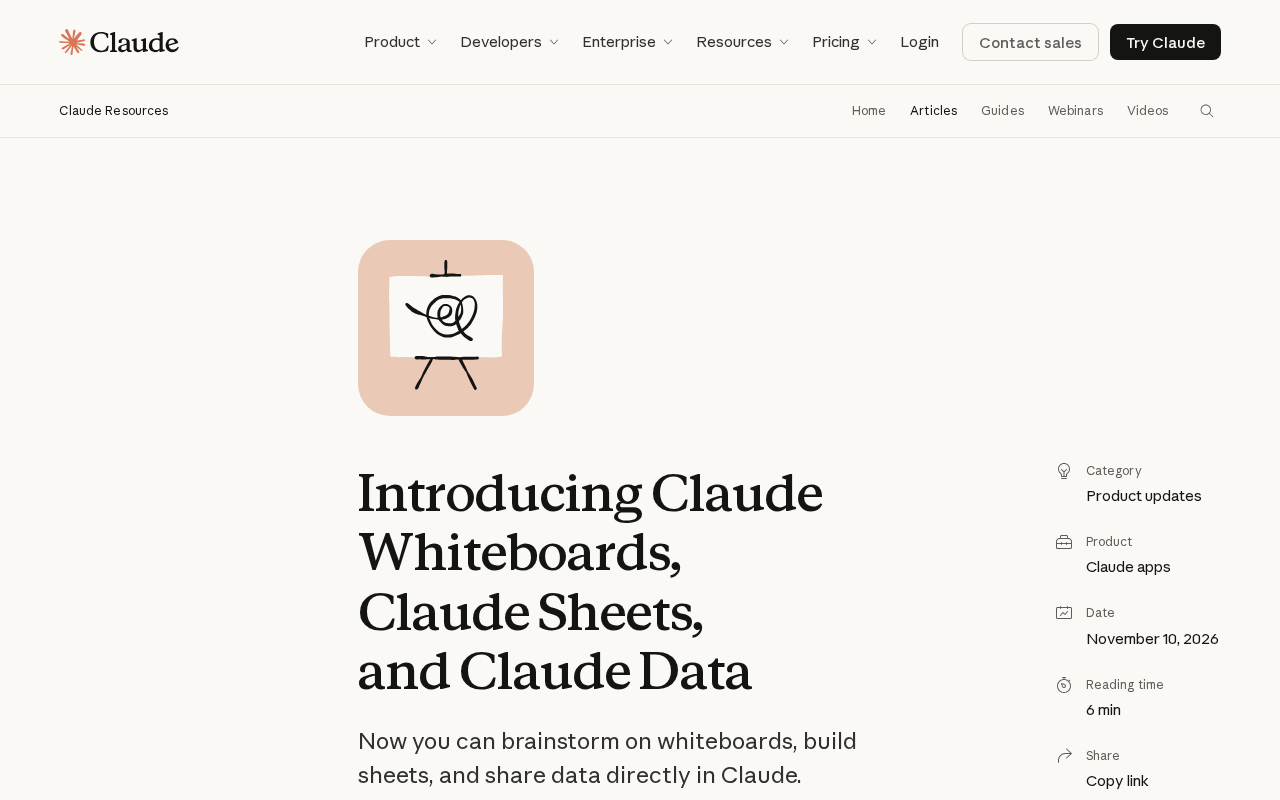
A Hacker News title suggests Claude is extending into office collaboration interfaces like whiteboards, spreadsheets, and data.
The article discusses the Hacker News thread "Claude Whiteboards, Claude Sheets, and Claude Data." The three names correspond to divergent ideation, structured organization, and query analysis, together sketching a complete knowledge-work chain built on shared capabilities of understanding, generating, and converting structures. The product logic marks Claude's shift from a Q&A chat box to a collaborator residing in concrete work interfaces, eliminating the cost of moving context around. The article also raises three open questions: content ownership and permissions in multi-user collaboration, mode switching between unstructured whiteboards and rigorous spreadsheets, and the high accuracy and provenance requirements of data scenarios. Since only the title is public, specifics await official confirmation.
A discussion titled "Claude Whiteboards, Claude Sheets, and Claude Data" has appeared on Hacker News. Judging from the title, Anthropic appears to be extending Claude's capabilities from the chat window into more concrete office scenarios: whiteboards, spreadsheets, and data. The post currently has low engagement and no comments, but the product direction implied by the title alone is worth unpacking—it points not to yet another chatbot feature, but to AI entering the "work surfaces" where people collaborate and process data every day.
Three Names, Three Work Interfaces
Put together, "Whiteboards," "Sheets," and "Data" almost sketch out a complete knowledge-work chain: whiteboards for divergent thinking and ideation, spreadsheets for structured organization, and data for querying and analysis. If Claude covers all three at once, it means its positioning shifts from "answering questions" to "participating in output."
The core value of whiteboard tools lies in unstructured expression—sticky notes, connectors, sketches. The imaginative space for AI in such interfaces is: automatically clustering scattered ideas into themes, converting sketches into structured task lists, or conversely expanding a text description into a visualized relationship diagram. Spreadsheets follow a different logic, demanding strict cells, formulas, and reference relationships; here AI is more like a formula assistant and data cleaner that understands semantics. As for Data, it leans more toward natural-language querying and insight generation.
All three directions share the same underlying capability: understanding structure, generating structure, and converting between structures. That is also why they are discussed under a single title.
Whiteboard products in the collaboration-tool ecosystem are usually called "infinite canvas" tools, with representative forms including Miro, FigJam, and Mural. Their technical characteristic is the absence of fixed layout constraints—elements can be placed and connected arbitrarily—and the data model is closer to a graph (node-edge) than a document tree. This, together with the two-dimensional row-column model of spreadsheets and the linear flow model of documents, constitutes three fundamentally different data structures. It means that for AI to understand whiteboard content, it often needs to first parse at the visual or layout level, then reconstruct semantic relationships—significantly harder than reading plain text.
The Product Logic: From Conversation to Workbench
Looking at these three features together reveals a main thread at the product level for Anthropic: turning Claude from a "you ask, I answer" chat box into a collaborator that can reside within concrete work interfaces. The ceiling of conversational interaction is obvious—users must carry context into the chat box themselves, then carry results back into their work tools. If Claude appears directly in whiteboards, spreadsheets, and data views, that carrying cost disappears.
This path aligns with office software vendors embedding AI into documents, email, and spreadsheets; the difference is that Anthropic is extending from the model side toward the application side. For users, the real difference is not in the feature list but in whether Claude can understand the existing content within these interfaces—a half-drawn flowchart, a spreadsheet with mutually referencing formulas. The quality of this context determines whether the AI output is usable.
"Embedding AI into existing work interfaces" is often summarized in the industry as the copilot model, as opposed to the chat model centered on a dialog box. The key difference lies in how context is acquired: the chat model relies on users manually pasting and describing, while the copilot model has the application layer automatically inject context such as the current document, selection, and spreadsheet range into the prompt. This requires the product to have robust context extraction and trimming capabilities, because spreadsheet or canvas content can easily exceed the model's context window, necessitating summarization and filtering while preserving key structure.
Several Questions Worth Watching
Currently the only public information is the title; the specific form, availability scope, and release timing cannot be determined. But even starting from the naming alone, there are several questions worth thinking about in advance.
Collaboration and permissions. Whiteboards and spreadsheets are inherently multi-user collaboration scenarios. Who owns the content AI generates within them, how it is labeled, and how it fits with existing permission systems—these are all questions that must be answered when the product ships.
The boundary between structured and unstructured. The freedom of whiteboards and the rigor of spreadsheets are almost opposites. For the same model to serve both interfaces, it must switch between "generate freely" and "strictly follow the format." This tests the model's judgment of task intent, not just generation quality.
Accuracy requirements in data scenarios. Once Claude participates in data querying and analysis, the cost of errors is far higher than writing a piece of copy. Such features typically require more explicit provenance mechanisms, letting users see the data sources behind conclusions.
"Provenance" in data query scenarios usually relies on an interpretable mapping between structured queries and natural language—for example, having the model generate SQL or query statements rather than directly giving numbers, then executing them and displaying both the statement and the result. Common industry practices also include: attaching cited row numbers or data slices to results, making aggregation definitions explicit, and requiring human confirmation when confidence is insufficient. The purpose of such mechanisms is to make errors locatable and reviewable, rather than merely improving the accuracy of individual responses.
Summary
This Hacker News post offers limited information, but it marks a clear signal: Claude is penetrating into the core interfaces of office collaboration. If the trio of whiteboards, spreadsheets, and data truly ships, the focus of competition will no longer be model benchmarks, but whether AI can reliably produce usable structured results within real workflows. For readers following the practical adoption of AI, this direction is worth continued tracking.
Note: This article is based on the Hacker News post title and public discussion clues; product details are subject to official announcements.
Related articles
Anthropic Model Benchmarking: Fable 5 vs 5.1 vs 5.2 Comparison
Based on Reddit community comparison material, this analyzes benchmark differences among Anthropic models Fable 5, 5.1, and 5.2, and discusses the practical implications of version iterations for developers and model selection advice.
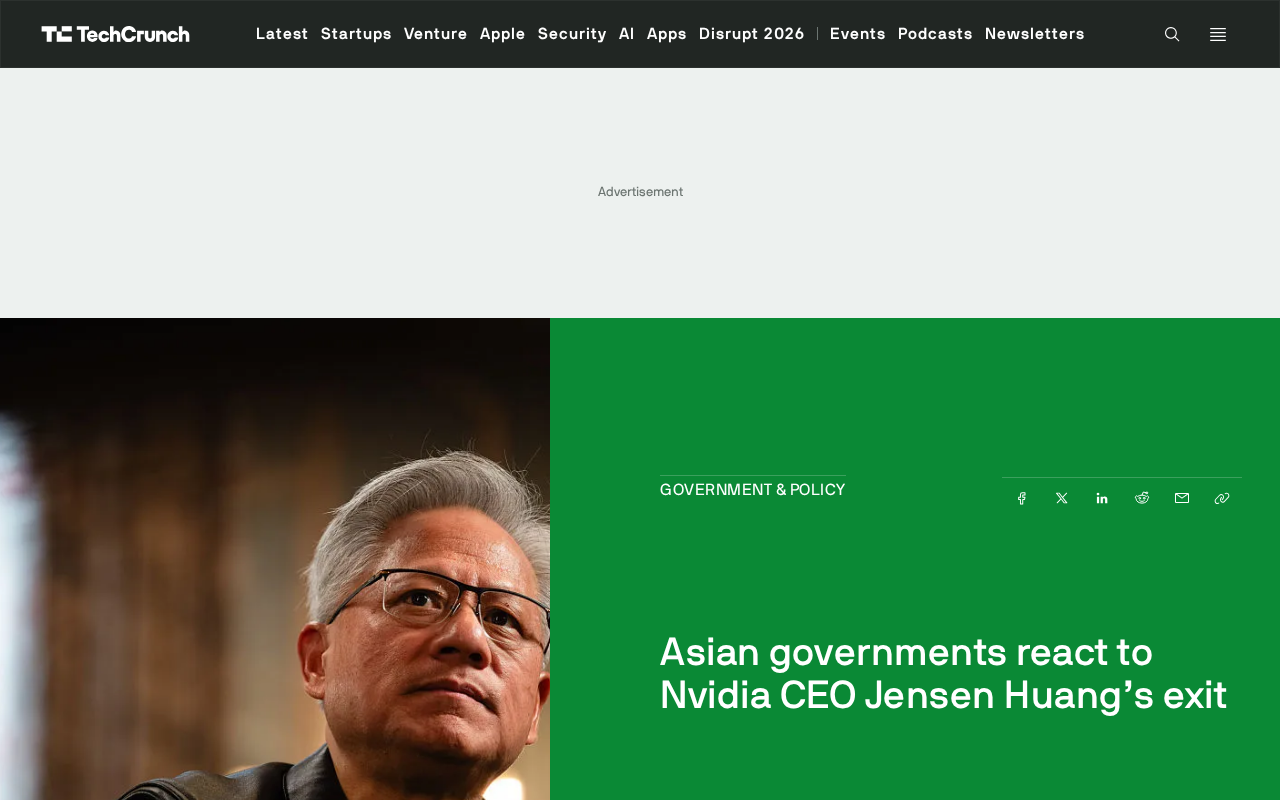
Jensen Huang Steps Down as Nvidia CEO, Asian Governments Scramble to Respond to Chip Supply Shifts
Jensen Huang's departure as Nvidia CEO triggers chain reactions across Asian governments: some confirm chip supply commitments, others monitor local AI project impacts and handle related investigations. This article analyzes supply chain stability, project risks, and compliance uncertainty.
Reddit Player Builds RISK Game Environment and Trains an AI That's Nearly Impossible to Beat
Reddit player builds a RISK training environment and trains an aggressive AI model that's nearly unbeatable. Strong at expansion but weak at defense, the author hits a bottleneck trying human data training, revealing common game AI development challenges.