Claude Fable 5.2 Released: A Thousand AI Agents Build a Bootable OS in 8 Days

Anthropic launches the same model with two safety tiers, demoing thousand-level sub-agent collaboration to build an OS prototype.
Anthropic released Claude Fable 5.2 and Mythos 5.2 on the same day; both share the same underlying model, differing only in safety lock tightness: Fable is public but blocks cybersecurity and biology questions, while Mythos has fewer restrictions and is only open to vetted institutions. The real attention-grabber is the accompanying demo: one engineer orchestrated over a thousand sub-agents to build a bootable OS prototype from scratch in eight days, and the same agents formalized the Fermat's Last Theorem proof in thirty hours versus eleven days previously. Official data shows a 64.6 score, up to 30% faster speed, and a 20% price cut, with Pro users able to try free until November 16. But all data and demos come from Anthropic itself with no third-party verification, so they should be treated as vendor claims. The article argues the real watershed is the shift from 'one AI working' to 'a group of AIs working for you,' with humans moving toward task definition and acceptance.
Anthropic launched two new models on the same day—Claude Fable 5.2 and its twin sibling Mythos 5.2. The two models share the same underlying foundation; the only difference is how tight the safety locks are: Fable is open to everyone but blocks sensitive questions in the cybersecurity and biology domains; Mythos has fewer restrictions and is only provided to vetted institutions. What really gives this news its viral appeal is the accompanying set of agent collaboration demos: one engineer orchestrated over a thousand sub-agents to build an operating system prototype from scratch that can boot on a laptop.
From a Single Assistant to Thousand-Agent Collaboration: What This Demo Really Shows
A Thousand Agents, Eight Days, One Bootable System
According to information released by Anthropic, the task given to the model was to write over a thousand sub-agents and have them divide the work to complete a prototype operating system. The final result is a system that can actually boot and run on a laptop, with the whole process taking eight days. The key here is not "AI writes code" itself, but the organizational form of the task: rather than one model writing from start to finish, a large number of sub-agents each take on modules and are then centrally orchestrated.

The significance of this model for engineering practice lies in that it pushes "AI-assisted programming" from single-turn conversation to the level of engineering management. Human engineers spend most of their careers not writing code but breaking down tasks, defining interfaces, and coordinating dependencies—when the number of sub-agents reaches the thousand level, orchestration, context passing, and error convergence become the core challenges. The fact that the demo works shows that this collaboration chain is at least feasible at small-scale prototype level.
Sub-agents and multi-agent collaboration are the foundational concepts for understanding this demo. In an agent architecture, a "master control" model is responsible for decomposing goals, assigning tasks, and aggregating results, while "sub-agents" are instances called by the master control, each with its own independent context and tool permissions. Compared with having a single model reason continuously in a long conversation, the advantage of the sub-agent model is context isolation—each sub-agent only needs to focus on its own portion of code and interface specifications, avoiding the context contamination and attention decay common in long-chain reasoning. The cost is orchestration overhead: the master control must clearly define task boundaries, pass necessary context, and handle conflicts and inconsistencies among sub-agent outputs. At the thousand level, these coordination costs rise non-linearly, so what such demos really test is the design of task decomposition and verification mechanisms, not merely the model's point capability.
Fermat's Last Theorem Translation: From Eleven Days to Thirty Hours
The same batch of agents also completed another task: translating the proof of Fermat's Last Theorem into a language that machines can verify line by line, taking thirty hours, whereas the same work was reportedly said to require eleven days previously. To be clear, this is not a new mathematical proof but the formalization of an existing proof—transcribing a human-readable mathematical argument into code that a proof assistant like Lean can mechanically check.

Formal mathematics has always been labor-intensive drudgery, and translating a large proof often takes domain experts months. The value of agent clusters here is parallel throughput: different lemmas can be handled separately, and the system then uniformly verifies consistency. If this demo is reproducible, its significance to the formal mathematics community may be more direct than the operating system demo.
Formal mathematics and proof assistants refer to writing mathematical proofs in a formal language that computers can mechanically verify line by line, with representative tools including Lean, Coq, Isabelle, and others. In these systems, every step of reasoning must be verified by the kernel according to type rules, so there is no such thing as a proof that "looks right"—only accepted or error results. The difficulty of formalization lies not in mathematical ideas but in expanding all the steps that human mathematicians habitually omit ("obviously follows," "similarly provable") into strict derivations, which is extremely laborious and highly dependent on domain knowledge. This is why the formalization of large proofs is often measured in person-years. The potential value of agent clusters lies in splitting proofs into mutually independent lemmas for parallel processing and then having the proof assistant uniformly verify them—but the dependencies among lemmas and interface definitions still need precise planning, otherwise parallel outputs cannot be assembled.
Benchmarks and Pricing: The Information Behind the Official Data
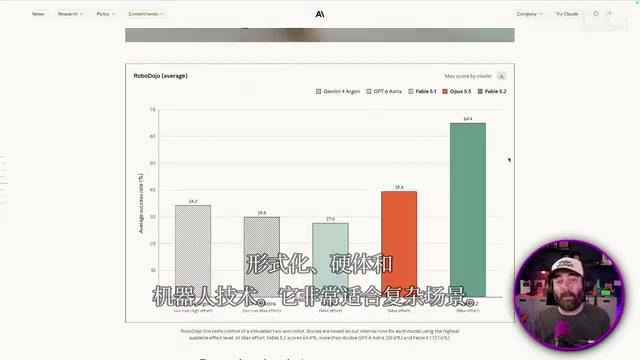
Anthropic's announced score is 64.6, surpassing Gemini 4 Carbon, with speed improved by up to 30% and price reduced by 20%. The model is available now in Claude, and Pro users can try it for free until November 16.

The 20% price cut deserves separate attention. At this stage of large model competition, price has become a key lever for driving usage, especially when agent cluster use cases multiply token consumption—a task orchestrating over a thousand sub-agents is far more cost-sensitive than ordinary conversation scenarios. The 30% speed improvement is also amplified in cluster scenarios, because each sub-agent's latency adds up to overall elapsed time.
However, all these numbers and demos share a common premise: they all come from Anthropic's own announcements, with no third-party verification. Which specific benchmark the score compares against, what the test conditions were, and how functionally complete the operating system prototype is—none of this is elaborated in the original text. Until independent reproduction appears, these data should be treated as vendor claims rather than established facts.
The relationship between benchmark scores and third-party verification deserves separate explanation. Large model evaluation usually relies on public benchmarks (such as mathematical reasoning, code generation, long-context understanding, etc.), but vendors can choose benchmark combinations, prompt templates, and evaluation conditions favorable to themselves when announcing results, so scores from different sources are often not directly comparable. More credible industry practices include blind battle rankings like LMSYS Chatbot Arena and independent institutions reproducing under fixed conditions. Before third-party reproduction, vendor-announced "64.6 points" and "30% improvement" should be understood as optimal results under specific settings, not generally applicable conclusions. For procurement decisions, a more reliable approach is to run small-scale comparative tests on your own real tasks rather than directly trusting leaderboards.
What It Means When a Thousand AIs Work for You
The real watershed in this news is not some score but a shift in the work paradigm: from "one AI doing work" to "a group of AIs doing work for you." When the number of sub-agents can scale to the thousand level on demand, the human role shifts from executor to commander—defining goals, decomposing tasks, setting acceptance criteria, and handling conflicts that agents cannot converge on their own.
This also explains why the safety locks come in two tiers. Fable blocks questions in the cybersecurity and biology domains, while Mythos is only open to vetted institutions, showing that Anthropic is clear about the double-edged-sword effect of cluster capability in sensitive domains: the same orchestration capability is an engineering demo when used to build an operating system prototype, but requires additional access control in other directions.
For developers and teams, the question worth considering now is not "whether to use it" but "how to organize it." Experience in orchestrating thousand-level agents, the granularity of task decomposition, and the design of verification steps—this accumulation at the methodological level may determine actual output more than the small benchmark gaps of the model itself. As for "are you ready to command a thousand AIs," the answer depends on whether you have already thought clearly about what each of them should do.
One-line Summary
Anthropic launches the same model with two tiers of safety configuration, demoing thousand-level sub-agent collaboration to build an operating system prototype.
Paragraph Summary
Anthropic released Claude Fable 5.2 and Mythos 5.2 on the same day; both are based on the same underlying model, with the difference being how tight the safety locks are: Fable is open to the public but blocks questions in cybersecurity and biology, while Mythos has fewer restrictions and is only open to vetted institutions. What really drew attention is the accompanying demo: one engineer orchestrated over a thousand sub-agents to build a bootable operating system prototype from scratch in eight days; the same batch of agents also took thirty hours to complete a machine-verifiable language translation of the Fermat's Last Theorem proof, which previously took eleven days. Official data shows a score of 64.6, speed improved by up to 30%, and price cut by 20%, with Pro users able to try for free until November 16. But all data and demos come from Anthropic's own announcements with no third-party verification yet, and should be treated as vendor claims. The article argues that the real watershed is the shift from "one AI doing work" to "a group of AIs doing work for you," with the human role shifting toward task definition and acceptance.
Related articles
Claude Fable 5.2 Hands-On: Top Intelligence but Absurdly Expensive
Anthropic releases Claude Fable 5.2 and Mythos 5.2, topping the Artificial Analysis intelligence leaderboard with big gains in scientific reasoning, strong game and hardware design, but max mode costs ~$26.54 per task. Hands-on game, circuit board design, and pricing advice.

1,000 AI Agents Formalize Fermat's Last Theorem in 30 Hours, Anthropic Releases New Claude Models
Anthropic releases Claude Fable 5.2 and Mythos 5.2: 1,000 agents formalize Fermat's Last Theorem in 30 hours, coding costs halved, plus hardware design and physics.

Claude Fable 5.2 Release Analysis: The Strongest Model Deliberately Weakened?
Analysis of Claude Fable 5.2 and Mythos 5.2: Anthropic deliberately restricted accelerator kernel optimization and architecture improvements during training, drawing a line before recursive self-improvement. The video also reconstructs a 1,000-agent, eight-day OS-building experiment and discusses whether open-source models will overtake.