Claude Opus 4.7 In-Depth Review: Coding Performance Soars, While the Most Powerful Model 'Mythos' Remains Sealed Away

Anthropic releases Claude Opus 4.7, dominating competitors across coding benchmarks.
Anthropic released Claude Opus 4.7, achieving major improvements on SWE Bench Verified, Cursor Bench, and other coding benchmarks, surpassing GPT 5.4 and Gemini 3.1 Pro. Pure reasoning capabilities are essentially tied across the three, indicating the competitive focus has shifted from reasoning to real-world code execution. User feedback shows significant improvements in planning ability, long-session stability, and error recovery—more "reliable" rather than more "magical."
Anthropic Releases Claude Opus 4.7: Coding Dominance Across the Board, While Their Strongest Model Stays Locked Away
Anthropic just released Claude Opus 4.7, and this isn't just a routine model upgrade—it reveals deeper shifts in the AI competitive landscape. The model massively outperforms its predecessor in coding and agentic workflows, while Anthropic openly admits that this isn't even their most powerful model.
Claude Opus 4.7 Leads All Coding Benchmarks: The Numbers Speak
About SWE Bench: SWE Bench (Software Engineering Benchmark) is a professional coding evaluation framework launched by a Princeton University research team in 2023, specifically designed to measure an AI model's ability to solve real GitHub Issues. Unlike traditional code completion tests, SWE Bench requires models to understand full repository context, locate the root cause of bugs, and generate patches that pass tests. SWE Bench Verified is a curated subset with human-verified task quality; SWE Bench Pro represents higher-difficulty production-grade tasks. These benchmarks are highly regarded in the industry because they simulate real software engineering scenarios rather than isolated algorithm problems, providing a more accurate reflection of a model's value in actual development workflows.
Opus 4.7 achieved significant improvements across multiple core coding benchmarks:
- SWE Bench Pro: From 53.4% to 54.3%
- SWE Bench Verified: From 80.8% to 87.6%
- Cursor Bench: From 58 to 70
- MCP Atlas (large-scale tool calling): From 75.8 to 77.3
- Rakuten SWE Bench: Three times the production task completions of Opus 4.6
About the MCP Protocol and Tool-Calling Ecosystem: MCP (Model Context Protocol) is an open standard protocol introduced by Anthropic in late 2024, designed to unify how AI models interact with external tools and data sources. Think of it as the "USB port" for AI—before MCP, every AI application needed custom integration code for different tools, while MCP provides a universal connection specification. The MCP Atlas benchmark specifically evaluates model performance in large-scale, complex tool-calling scenarios, including multi-step tool chain orchestration, error recovery, and context maintenance. Claude's lead on MCP Atlas is partly due to Anthropic's natural optimization advantage as the protocol's creator, but more importantly reflects their systematic investment in agentic workflow design.
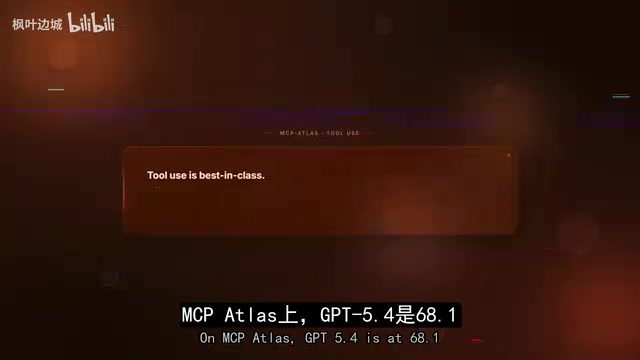
Compared to competitors, GPT 5.4 scores 57.7 on SWE Bench Pro, while Gemini 3.1 Pro scores 54.2. On MCP Atlas, GPT 5.4 scores 68.1 and Gemini 3.1 Pro scores 73.9. Claude is pulling ahead in coding and tool use.
About the GPQA Diamond Reasoning Benchmark: GPQA (Graduate-Level Google-Proof Q&A) Diamond is currently recognized as one of the most rigorous pure reasoning ability tests. Questions are designed by PhD-level experts across high-difficulty subjects including physics, chemistry, and biology, and are specially filtered to ensure answers cannot be obtained through simple web searches. The "Diamond" subset represents the hardest questions in the collection. All three major models have broken through 94% on this benchmark, meaning they are approaching top human expert levels in pure knowledge reasoning, and the marginal returns of continuing to compete on this dimension are diminishing.
However, on pure reasoning tests like GPQA Diamond, the three companies are essentially tied—Opus 4.7 at 94.2, GPT 5.4 Pro at 94.4, and Gemini 3.1 Pro at 94.3. This points to an important trend: pure reasoning ability is no longer the main differentiator; real-world code execution capability is the key distinction. This phenomenon confirms the industry's assessment: the next phase of AI competition will shift from "can it reason" to "can it reliably execute complex tasks."
Real-World Coding Experience: Not More "Magical," But More "Reliable"
Early user feedback is consistent: Opus 4.7's core improvement isn't about jaw-dropping one-off performances, but sustained, stable work capability. Specifically:
- Enhanced planning ability: Thinks through solutions more thoroughly before taking action
- Long-session stability: No longer "drifts off" during complex tasks like 4.6 did
- Cleaner error recovery: Repair paths are clearer when problems arise
- More precise instruction following: More literal understanding of prompts
Opus 4.6 previously had a solid reputation, but frequently exhibited drift, confusion, or even freezing during extended, high-difficulty coding sessions. Version 4.7 is clearly a direct response to these pain points.
However, there's a notable "side effect" worth mentioning here
Related articles
 Product Reviews
The Programmer's Desk Setup Guide: Building a Workspace That Feels Like Home
Discover how programmers build productive, comfortable workspaces. From multi-monitor setups to ergonomic design, explore the desk philosophy that drives focus and flow.
 Product Reviews
Qoder vs Cursor Real-World Comparison: Which $20/Month AI IDE Is Better?
Hands-on comparison of Qoder vs Cursor AI IDEs: Agent autonomy, human interaction count, and architecture decisions. Qoder needed only 2 interactions vs Cursor's 8.
 Product Reviews
Cursor Cloud Agent Demo: Eliminating Bottlenecks Across the Entire Software Development Lifecycle
Deep analysis of Cursor's Cloud Agent demo showing how cloud VMs, automated test artifacts, and a full-chain control plane systematically eliminate human bottlenecks across the software development lifecycle.