Claude Opus 5 Hands-On: 3D Modeling, Game Development, and Native Apps — All Fully Automated

Claude Opus 5 tested: auto-generates 3D models, games, and native apps from simple prompts.
A comprehensive hands-on review of Claude Opus 5 reveals breakthrough capabilities in visual understanding, frontend rendering, and full-stack development. The model transforms 2D floor plans into explorable 3D homes, generates cinema-quality black hole simulations, builds infinite-world sandbox games, and autonomously develops and tests native Android apps — all while maintaining the same pricing as its predecessor.
Opus 5 Launch: A Double Win of Superior Performance and Unchanged Pricing
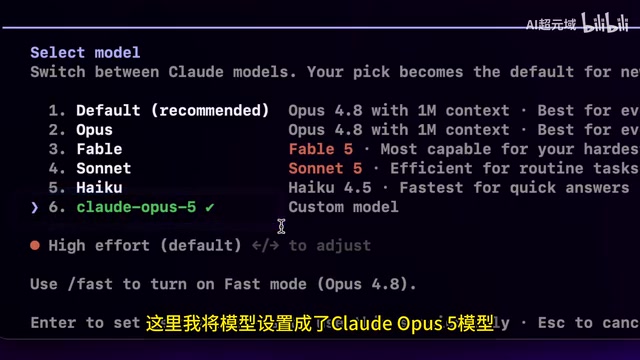
Anthropic has released its brand-new Claude Opus 5 model. According to in-depth testing by a Bilibili content creator, this model has outscored the previously strongest Claude Sonnet model across multiple benchmarks. And here's the crucial point — Opus 5's token pricing is identical to Opus 4.8.
Tokens are the basic billing unit for large language models, roughly understood as the smallest text processing fragments (approximately 4 characters per token in English, and about 1-2 characters per token in Chinese). LLM APIs charge separately for input and output tokens, with flagship models (like the Opus series) typically priced far above mid-tier models. Opus 5 maintaining the same price as Opus 4.8 means Anthropic has chosen a "volume over price" market strategy — attracting more API calls through performance improvements rather than raising prices to cover higher training and inference costs.
This means users can directly replace the previous flagship model with Opus 5 at virtually no additional cost. For developers who rely on large models for coding and content generation, this "performance upgrade, same price" strategy is extremely compelling.
Notably, Opus 5's knowledge cutoff date is May 2026, making it one of the most up-to-date large models currently available. A large language model's knowledge cutoff date refers to the latest point in time covered by its training data — events, technical updates, or framework version changes beyond this date cannot be known by the model without external tool assistance. For developers, this directly determines whether the model understands the latest programming framework versions, API changes, and best practices. Opus 5's May 2026 cutoff means it can directly understand and work with recently released tech stacks without developers needing to provide extensive background information in their prompts. Users can currently access Opus 5 both through the Claude web interface and via Claude Code.
Vision + Coding Double Challenge: Generating an Explorable 3D Home from a Single Floor Plan
The first high-difficulty test in this hands-on review asked Opus 5 to transform a 2D interior floor plan (covering both first and second floors) into an explorable 3D project. The prompt required using 3D Gaussian Splatting (3DGS) technology with support for multiple viewing angles including first-person and bird's-eye perspectives. This test simultaneously challenges the model's visual comprehension and coding implementation abilities.
3D Gaussian Splatting is a novel 3D scene representation and rendering technique proposed by Germany's Max Planck Institute in 2023. Unlike traditional NeRF (Neural Radiance Fields), 3DGS uses large numbers of 3D Gaussian functions (ellipsoids) to represent each point in a scene, with each Gaussian carrying properties including position, covariance matrix, opacity, and spherical harmonics color. During rendering, these Gaussians are "splatted" onto the 2D screen and alpha-blended to produce the final image. Its core advantage is extremely fast rendering (real-time capable) while maintaining high visual quality, making it ideal for interactive 3D scene exploration.
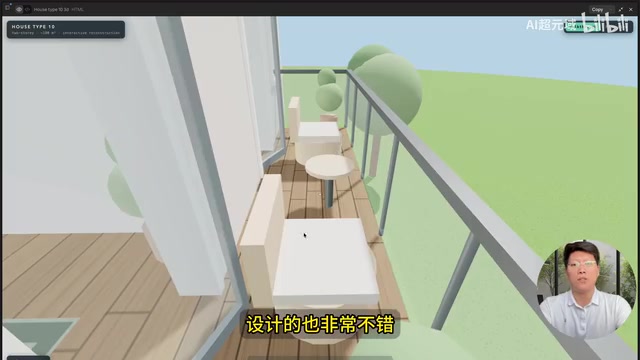
The results were stunning. The generated 3D home supports 360-degree mouse navigation, with both first-person and third-person overhead views. The model not only reconstructed the overall floor plan but also added text annotations to each room (living room, dining room, etc.), allowing users to enter corresponding rooms by double-clicking on doorways.
Even more impressive are the details: the kitchen features a range hood, stovetop, and refrigerator; bathrooms, storage rooms, and bedrooms are all present; flooring, carpets, and lighting effects are all rendered. The second-floor bedroom even includes a glass door connecting to a balcony — the exploration experience is "like playing Minecraft." Reconstructing such a complete, explorable 3D model from a single floor plan genuinely exceeds expectations.
Hardcore Frontend Tests: Black Holes, Spaceships, and SVG Animations
For frontend rendering capabilities, the tester set up a series of extremely challenging tests.
Sci-Fi Level Physics Simulation
The first test asked Opus 5 to generate a simulated black hole. The result closely resembles the black hole from the film Interstellar, clearly presenting the accretion disk with real-time parameter adjustment available on the right side.
A black hole's accretion disk is a high-temperature rotating disk structure formed by matter (primarily gas and dust) captured by the black hole's gravity. Due to the gravitational lensing effect in general relativity, light bends in the black hole's strong gravitational field, allowing observers to simultaneously see the front of the accretion disk and light bent around the "back" of the black hole. The black hole "Gargantua" in Interstellar was precisely rendered based on physicist Kip Thorne's equations. Simulating this effect in frontend code requires implementing ray-tracing algorithms while accounting for geodesic equations under the Schwarzschild metric — an extremely challenging test of both physics understanding and graphics programming capability. Compared to the crude results generated by other models previously, Opus 5's sci-fi aesthetics represent a quantum leap.
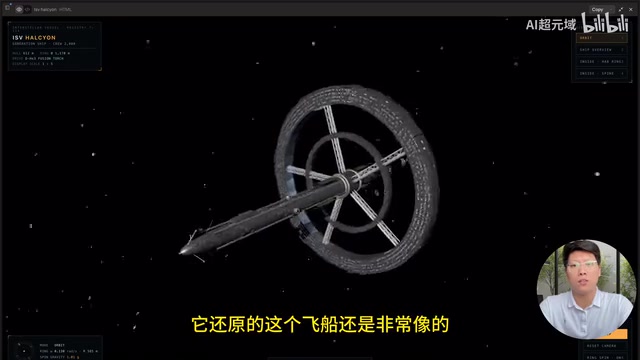
Next was recreating the starship Aurora from the sci-fi novel Aurora. The model generated a massive vessel with dual counter-rotating wheels, with original details faithfully reproduced including flame nozzles, fuel tanks, and magnetic field devices at the bow (used to clear cosmic dust). Users can even enter the ship's interior compartments to see recreated Earth environments — trees, grasslands, and domed skies — with multiple compartments featuring different terrains available for free exploration.
Classic SVG Animation Tests
The tester also reused classic test prompts previously used for models like Kimi K2 and GPT-5:
- Pencil-drawn lightbulb animation: Produces a near-realistic hand-drawn effect, with deliberately imperfect edges on the lightbulb and letters approximating handwritten strokes;
- Three birds racing bicycles on Saturn's rings: Rich in detail, with each bird even numbered;
- Compound bow drawing and arrow release: The arrow deforms at the moment of release, pulleys rotate during the draw — a near-realistic recreation of the physical action;
- F-35 fighter jet wind tunnel simulation: Supports multi-parameter adjustment.
These results demonstrate that Opus 5's frontend rendering capabilities show clear improvement over both its predecessors and competitors.
Claude Code in Action: Fully Automated Game and Native App Development
What truly showcases Opus 5's capabilities are the complex development tasks performed in Claude Code.
Claude Code is Anthropic's command-line programming tool that allows Claude models to execute complete software development workflows directly in the terminal environment — including reading/writing files, executing commands, running tests, and debugging errors. Unlike traditional code completion tools, Claude Code adopts an "Agentic Coding" paradigm: developers provide high-level requirement descriptions, and the AI autonomously plans architecture, writes code, runs debugging, and forms a complete development loop. This represents a paradigm shift in AI-assisted programming from "snippet completion" to "full-process autonomous development."
Jurassic Sandbox Game Development
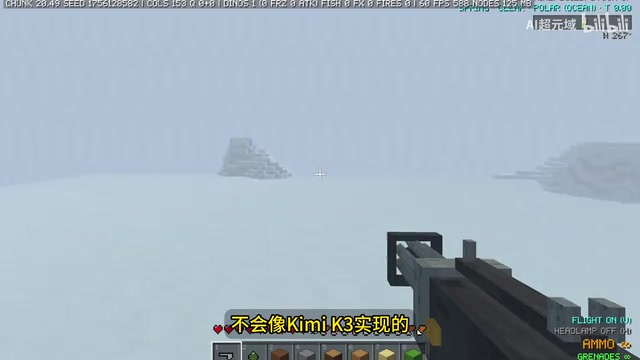
The first task had Opus 5 use a game engine to develop a first-person sandbox game inspired by Minecraft, set in a Jurassic world. The game features dinosaurs and pterodactyls, with players wielding a Gatling gun for hunting and defense, plus the ability to throw grenades.
The entire development took approximately one hour, fully automated by Claude Code. The finished product exceeded expectations: the Gatling gun and dinosaur models closely match the Minecraft aesthetic, with realistic shooting effects, grenade explosions, underwater sharks and fish, and convincing pterodactyl models.
The most critical breakthrough is that the map supports infinite exploration with continuous loading. Infinite map exploration in games typically relies on Procedural Generation technology, with Perlin Noise or Simplex Noise algorithms at its core. These algorithms use player coordinates as seeds to calculate terrain height, biome types, and resource distribution in real-time, allowing maps to extend infinitely in any direction without repeating patterns. Minecraft is the classic application of this technology — it divides the world into 16×16 Chunks, loading only chunks within the player's view range, with distant chunks generated and loaded only as the player approaches. Opus 5's ability to implement this mechanism shows it not only understands the algorithmic principles but can also correctly handle chunk loading/unloading memory management and multi-threaded rendering logic.
As the player flies, the map continuously generates new terrain elements, weather changes over time (rain, snow, day-night cycles), and you can even see the moon and sun. This solves the core pain point of other AI models' generated games being "unable to explore infinitely."
Native Android App Development
Previous tests mostly focused on native iOS development, but this time the tester pivoted to native Android development, having Opus 5 use the same "vocabulary flashcard app" prompt (with the tech stack changed to Android-related technologies).
Impressively, Claude Code automatically launched an emulator during development for testing — automatically swiping, tapping word cards, all without any manual intervention. This demonstrates that agentic coding has evolved from "writing code" to a higher level of automation: "writing code + verifying code" — the AI can not only generate code but also verify functional correctness by simulating user operations, autonomously fixing issues when discovered. The entire development and testing process took only about 26 minutes.
The finished app is fully functional: supporting card flipping, pronunciation, favorites, practice quizzes, achievement badges, progress display, and light/dark theme switching. The overall completion level is already at app-store-ready quality.
Conclusion: Opus 5 Deserves to Be Your New Primary Coding Model
Based on this comprehensive hands-on review, Claude Opus 5 demonstrates powerful capabilities across three dimensions:
- Visual Understanding: Can accurately reconstruct explorable 3D spaces from 2D floor plans;
- Frontend Rendering: Complex scenes including black holes, spaceships, and SVG animations far surpass predecessors and competitors;
- Engineering Development: Whether games or native iOS/Android apps, it achieves an efficient "develop while auto-testing" closed loop.
Combined with token pricing identical to Opus 4.8 and the most recent knowledge cutoff date available, Opus 5 can seamlessly replace the previous flagship model as developers' next-generation primary coding tool. For teams pursuing rapid prototyping and high-quality code generation, this upgrade offers exceptional value for money.
Related articles

Chain of Thought Isn't Just for AI: How Humans Can Use CoT to Improve Thinking Quality
Chain of Thought isn't just a prompt trick for large models. Starting from a Hacker News discussion, this article analyzes why CoT works for human thinking too, breaks down actionable ways to transfer it, and highlights the key differences between human CoT and machine CoT.
Cloudflare Teams Up with OpenAI: Closi…
Cloudflare Teams Up with OpenAI: Closing the Loop from Vulnerability Discovery to Defense with AI
Cloudflare uses OpenAI Daybreak to investigate security vulnerabilities and generate reviewable remediation plans, while developers use Codex to boost coding efficiency and quality.

Orca Multi-Agent Orchestration in Practice: A Guide to Parallel Collaboration with Claude and Codex
Orca is Stable AI's free open-source agent workbench supporting 34 agents like Claude Code and Codex in parallel. Learn its Git worktree isolation, multi-model orchestration, and mobile management.