Claude Opus 5 Real-World Test: 3 Enterprise-Level Full-Stack Projects Completed in One Shot

Claude Opus 5 autonomously completes three complex enterprise full-stack projects with impressive engineering judgment.
This article tests Claude Opus 5's programming capabilities through three enterprise-level full-stack projects: a student management system, a vocabulary learning app, and a logistics management system. Using a no-scaffolding "jungle development" approach, Opus 5 demonstrated strong engineering intuition—proactively adding rich text editors, crawling GitHub for word banks, and implementing complex RPC permission models. While its capabilities approach Sonnet 5 at half the price, users should be cautious about account banning risks.
Opus 5's Positioning: Close to Sonnet 5, but at Half the Price
Anthropic recently released its latest Claude Opus 5 model. Unlike previous flagship models, Opus 5's positioning is quite interesting—its actual capabilities are officially described as approaching Sonnet 5, but at roughly half the price. For developers who rely on large models for code generation, this value proposition is undeniably attractive.
This article ignores all benchmark scores and instead directly tests Opus 5's real-world programming capabilities through three genuine enterprise-level full-stack projects. None of these projects are simple demos—they're complete systems incorporating frontend, backend, caching, middleware, and load balancing. The tests used a "jungle development" approach—no scaffolding tools whatsoever, with Opus 5 taking full autonomous control. "Jungle development" means completely forgoing any existing scaffolding tools (such as Spring Initializr, Create React App, Vue CLI, etc.) and building all project infrastructure from scratch. This means the model must independently decide on project directory structure, dependency management, build configuration, environment variable setup, and all other engineering details—a far more rigorous test of AI's grasp of the complete software engineering process than using templates.
Project 1: Student Management System, Full-Stack Running in One Shot
The first test project was a complete student relationship management system. The tester wrote an extremely detailed prompt covering all functional requirements and acceptance criteria, then handed it to Opus 5 in one go. The model took approximately three to four hours to complete all development.
The final results were quite impressive. The system provides three role-based permissions, and after login, it correctly sends requests to the backend and loads dashboard data. One notable detail: the model showed thoughtful design choices—it grouped common quick actions together, and every operation actually persists to the database. Clicking to view details calls the corresponding API to fetch backend data, and features like course assignment and class assignment all work correctly.
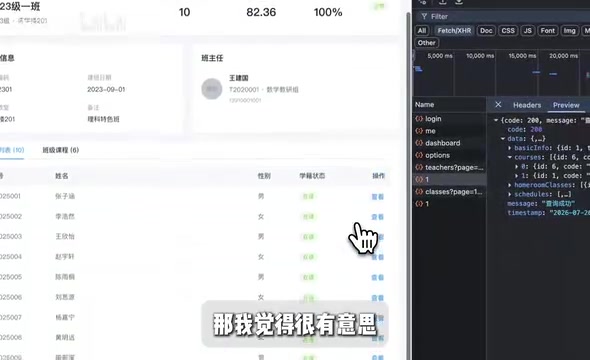
Throughout the entire process, the tester made no manual interventions. Data relational queries worked flawlessly, and the code structure reveals that the backend uses the MyBatis-Plus framework. MyBatis-Plus is an enhancement tool built on top of MyBatis that provides generic CRUD operations, condition constructors, pagination plugins, and other convenience features without altering MyBatis's original architecture, greatly reducing repetitive SQL writing. In Chinese Java backend development, it has become virtually the standard ORM framework for enterprise projects, particularly suited for scenarios requiring rapid backend management system development. Opus 5's autonomous selection of this framework demonstrates its deep understanding of mainstream practices in China's Java technology stack.
Autonomous Requirement Recognition: Proactively Introducing a Rich Text Editor
One particularly interesting detail: the tester's prompt never requested a rich text editor, but when Opus 5 was processing the "announcements" module, it automatically recognized that this scenario might need rich text capabilities and proactively introduced a rich text component, completing self-testing as well. This ability to infer requirements beyond explicit instructions is a key characteristic of high-quality AI coding models. In traditional software development, requirement documents often fail to cover all implicit interaction details, and skilled developers fill in the gaps based on business context—Opus 5 demonstrated exactly this kind of "engineering intuition."
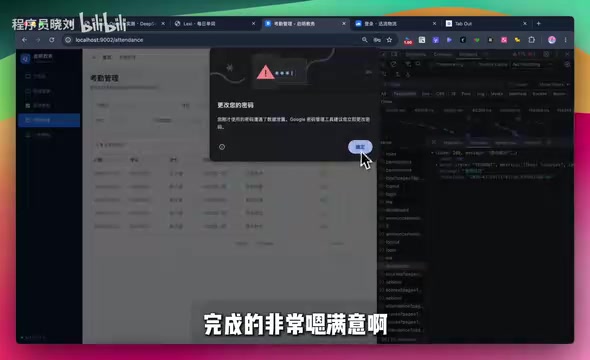
For role permission verification, the teacher role can only see teacher-related content and announcements, while the student role has an even narrower scope. The paginated queries on the left side are very clean, supporting filtering by class and dropdown sorting. The overall completion level is satisfying.
Project 2: Enterprise-Level Vocabulary App, Automatically Crawling Open-Source Word Banks
The second project was an enterprise-grade vocabulary learning application. What makes it qualify as "enterprise-level" is that Opus 5 automatically searches GitHub for all currently available word banks—including IELTS, elementary school, middle school, high school, CET-4, graduate entrance exam, TOEFL, and other vocabulary resources.
Each word loads correctly and supports automatic pronunciation. It can also mark mastery status like commercial vocabulary apps: unfamiliar words prompt review, while mastered words are differentiated. The most commendable aspect is the data acquisition logic—when the tester asked it to "find words," Opus 5 proactively searched GitHub for various open-source word banks and external data sources, automatically collecting and integrating them into a complete vocabulary dataset. This proactive resource integration ability shows that the model's understanding of tasks has transcended the level of pure code translation and entered the realm of "product manager thinking"—it doesn't just write code, it actively seeks optimal data solutions.
Project 3: Logistics Management System, The Most Complex Real-World Challenge
The third case took the longest of all three, with Opus 5 spending approximately six hours to complete. This logistics management system's prompt contained 31 chapters, indicating the project's massive scale, and similarly includes a complete frontend-backend architecture.

Many might question: isn't this just a simple backend management system doing CRUD? But actual testing shows it's far more than that. The system integrates driver logistics network device hardware scheduling, connects to Amap and Baidu Maps, and can display driver vehicle positions, task locations, and task routes in real-time, showing transportation directions and logistics status. All data genuinely persists to the database, cache, and middleware—for example, a specific vehicle accurately displays its current location as "Beijing Headquarters." "Persisting to cache and middleware" means the system not only saves data to the database but also properly uses caching layers like Redis to accelerate frequent queries (such as real-time vehicle positions), and achieves asynchronous communication and decoupling between services through message queues and other middleware—standard architectural practices for enterprise distributed systems.
RPC Permission Model Passes in One Shot
Regarding permission management, if developed manually, a complete RPC permission model often requires substantial time. RPC (Remote Procedure Call) permission model refers to an architectural design that provides fine-grained permission control over cross-service calls in distributed systems. Traditional monolithic applications only need authentication at the gateway layer, but in microservice architectures, internal calls between services also require identity verification and permission checks; otherwise, unauthorized access security risks emerge. A complete RPC permission system typically includes service registration and discovery, token propagation mechanisms, role inheritance chains, and interface-level access control lists (ACLs), with manual implementation often requiring weeks of design, coding, and integration testing. Opus 5 essentially passed this complex permission system test in one shot—system configuration, logistics tracking queries, and other functions all operate correctly.
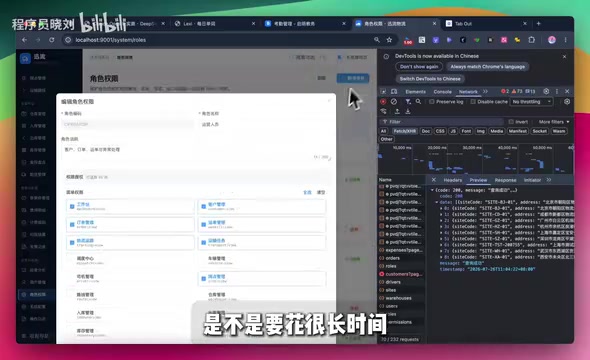
Of course, there were some minor issues—for instance, occasional permission verification flaws in certain areas—but overall they fall within a maintainable range.
Overall Assessment: Capabilities Close to Sonnet 5, but Subscribe with Caution
Through testing these three real-world cases, the conclusion is clear: Opus 5 is an exceptionally capable programming model. The gap between it and Sonnet 5 is not large—in some aspects it even performs better—and at a lower price. All three full-stack projects passed acceptance.
However, the tester offered a notable caveat: subscribing to Opus 5 is not recommended hastily. There are two main reasons:
- Severe account banning issues: Recently, official controls on usage have been quite strict, with a high risk of account suspension—especially in high-frequency, heavy-use scenarios. This may be related to Anthropic's detection mechanisms for API abuse and automation scripts, where large volumes of continuous long-conversation requests can easily trigger risk control systems.
- Viable alternatives exist: If you just want to achieve similar results, you can consider using Codex. Codex is OpenAI's asynchronous programming agent product that runs in a cloud sandbox environment, capable of independently completing code writing, testing, and committing tasks. Unlike Claude Opus 5's synchronous conversational programming approach, Codex uses a task queue mechanism—users submit requirements and can leave to await results. Its reset speed is faster, and completion quality isn't far from Opus 5. For batch development tasks that don't require real-time interaction, Codex offers a more cost-controllable alternative path.
Final Thoughts
Claude Opus 5's performance in real-world full-stack development scenarios is truly impressive—from proactively introducing a rich text editor, to automatically crawling open-source word banks, to passing a complex RPC permission model in one shot, all demonstrating the model's maturity in requirement understanding and engineering implementation. For developers hoping to use AI to complete entire enterprise-level projects, it offers a high-value option. However, when making actual technology selections, account risks and alternative solutions should still be considered comprehensively for rational decision-making.
It's worth noting that these kinds of tests also reflect an important trend in current AI programming tool development: the competitive focus of models is shifting from "can it write code" to "can it do engineering." Pure code generation ability is no longer the differentiating standard—the real gap manifests in depth of business scenario understanding, rationality of technology stack selection, and autonomous decision-making ability when facing ambiguous requirements. Opus 5's performance across these dimensions signals that AI-assisted development is progressing from the "code completion" stage toward the "full-stack engineer" stage.
Related articles

Chain of Thought Isn't Just for AI: How Humans Can Use CoT to Improve Thinking Quality
Chain of Thought isn't just a prompt trick for large models. Starting from a Hacker News discussion, this article analyzes why CoT works for human thinking too, breaks down actionable ways to transfer it, and highlights the key differences between human CoT and machine CoT.
Cloudflare Teams Up with OpenAI: Closi…
Cloudflare Teams Up with OpenAI: Closing the Loop from Vulnerability Discovery to Defense with AI
Cloudflare uses OpenAI Daybreak to investigate security vulnerabilities and generate reviewable remediation plans, while developers use Codex to boost coding efficiency and quality.

Orca Multi-Agent Orchestration in Practice: A Guide to Parallel Collaboration with Claude and Codex
Orca is Stable AI's free open-source agent workbench supporting 34 agents like Claude Code and Codex in parallel. Learn its Git worktree isolation, multi-model orchestration, and mobile management.