Claude Opus 6 Suspected Leak: Multiple Next-Gen Models Under Secret Testing

Dense secret testing signals for next-gen models from Anthropic, OpenAI, and Google, with competition focused on agentic and long context.
The article reviews recent secret testing clues for next-gen models from three leading AI companies. On Anthropic's side, Claude Opus 5.5 requests are largely routed to an undisclosed checkpoint with noticeably improved performance, and it generated a JavaScript frame-by-frame animation with about 27 million tokens, demonstrating the competitiveness of a pure-code path in procedural visuals. OpenAI's GPT-6.1 Sol raised the default context from 272K to 500K tokens, with no extra charge for subscribers. Google saw a comparison of Gemini 4's Argon and Barium-B checkpoints, with the latter performing better. The article also cites Karpathy's estimates, noting that heavy users of frontier models number only about 20 million, and there is a huge information gap in AI capability perception, while reminding that some circulating stories need verification.
Recently, there has been a surge of reports that Anthropic, OpenAI, and Google DeepMind are all "secretly testing" their next-generation models simultaneously. From routing anomalies circulating in the community, to developers spotting new checkpoints in their IDEs, to demos of 3D scenes and procedural animations, these fragments together form a highly informative signal: a race around next-generation flagship models is quietly advancing through testing channels.
New Claude Opus Checkpoint: Is It 5.6 or Opus 6?
According to multiple user reports, when they select Opus 5.5 in Claude Code to make requests, a certain percentage gets routed to a "mysterious Opus Next checkpoint"—community rumors suggest this proportion reaches at least half. These users generally report that output quality is substantially improved compared to the existing Opus 5.5.
The naming has not been confirmed yet, with community speculation landing on Opus 5.6 or even the Opus 6 series. There's another indirect clue: this model appeared in OpenCode's model catalog—typically, such closed-source models briefly surface this way during internal testing before a new version release.
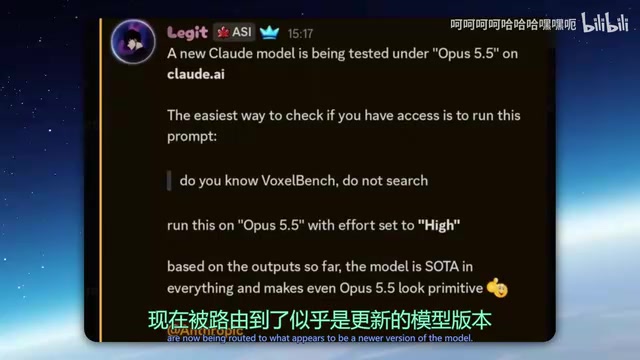
The video offers a rough but interesting detection method: set thinking effort to high in Claude Code, then ask the model whether it knows about "voxelbench," a relatively recent thing, and explicitly request that it not use tool search. If the model can recognize it without internet access, it means its knowledge cutoff is later than Opus 5.5's, and it's very likely the new checkpoint. It must be emphasized that this is only a reference signal, not conclusive evidence.
27M Tokens Procedural Animation Demo
Supporting the "capability leap" judgment is an animation drawn frame by frame in JavaScript depicting a human life. It's said the entire process used only two prompts and about four lines of instructions, ran for two hours, and consumed approximately 27 million tokens at maximum thinking intensity.
What's truly noteworthy isn't how good the animation looks, but its generation path: the Opus series hasn't been trained on video or audio data—the model "renders" visual content purely through code. In terms of physics and subtle visual details, this approach can already compete with some dedicated image and video generation models. For scenarios like interactive visuals and procedural ad creatives, this route may offer cost advantages over traditional generative models.
checkpoint is an intermediate snapshot during machine learning model training: training isn't completed in one pass but iterates parameters repeatedly in batches, saving current weights to files at intervals—these files are checkpoints. Before official release, vendors often deploy checkpoints from different training stages to small-traffic channels for A/B testing; users accessing via API or product interface may be routed to different versions—this is the technical source of the "routing anomalies" and "mysterious checkpoints" mentioned in the article. Consequently, multiple snapshots with different capabilities may exist behind the same model name, and the community commonly uses features like knowledge cutoff, tokenizer fingerprints, and context length to reverse-engineer the specific version.
Procedural generation refers to generating content using algorithms and code rules rather than pre-made assets, commonly seen in game terrain, vegetation, and animations. Unlike diffusion models that directly "paint" pixels, the procedural path has the model output executable JavaScript, which the browser then renders frame by frame. The advantages of this route are interactivity, parameterization, reproducibility, and independence from video training data; the cost is requiring the model to have strong long-range code planning and debugging capabilities. The 27 million tokens consumed in the article indicate that the model performed extensive internal reasoning, trial and error, and code revision during generation—also a侧面 indicator for judging its agentic capabilities.
GPT-6.1 Sol: Default Context Doubles to 500K
OpenAI's "28-day consecutive release" reached day 7, bringing a very tangible update: GPT-6.1 Sol's default context window in Codex and ChatGPT Work increased from 272K tokens to 500K tokens, an increase of about 84%, with the company stating it will continue to expand further.
For long-running coding agents, the significance of this change lies in reducing the frequency of context compression and summarization—the model can more completely remember code, conversations, and project details, which in many cases actually reduces total token consumption. More critically, there's no additional charge for long context when using via subscription, effectively nearly doubling the default quota at no extra cost.
Context window refers to the maximum number of tokens a model can "see" in a single request, including system prompts, conversation history, code files, and tool return results. The larger the window, the more the model can maintain coherence on long tasks, but attention computation costs grow rapidly with length, so vendors typically bill separately for ultra-long contexts. "Reducing the frequency of context compression and summarization" in the article means: when the window is insufficient, the agent framework must compress old content into summaries before feeding it to the model, which loses details and introduces extra token overhead; with the window expanded to 500K, many projects can be retained in full, which is actually more economical.
Karpathy's Observation: We Live in Two AI Worlds
Former Tesla AI Director and OpenAI founding member Andrej Karpathy shared a set of estimates on X that precisely describe the current divided state: about 6 billion people have had almost no exposure to large language models, 1 to 2 billion people use them only superficially, about 20 million people truly use frontier models for complex programming, mathematics, and professional work, and those with access to the internal permissions of the most advanced systems may number only about 5,000—they are using thousands of agents collaboratively to advance large software projects, scientific discoveries, and mathematical problems.
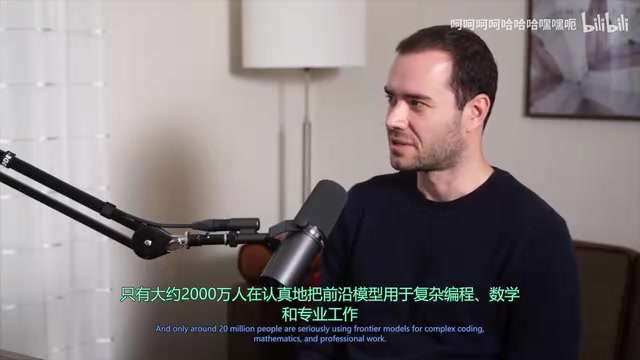
He attributes the gap to three factors: the difficulty of the task, the domains AI excels in (programming and mathematics especially), and whether you can access the strongest models. Someone using ChatGPT to summarize emails and someone compressing weeks of work into hours in a coding agent are experiencing almost two different technologies. Practitioners who immerse themselves in demo videos daily easily forget that this capability remains distant for most people—the so-called AI bubble is, to some extent, a cognitive information gap.
Agentic coding refers to having models complete coding tasks as autonomous agents: it can not only complete code but also read repositories, run tests, iteratively modify based on errors, and maintain goals across multiple rounds of tool calls. Such capabilities depend heavily on long context, tool-calling protocols, and stable instruction following, and are also the core competitive direction of the currently secretly tested models. The recurring "long-running autonomous agent tasks" and "agentic capabilities" in the article precisely refer to the model's ability to work continuously for hours without human intervention, consuming tens of millions of tokens without going off track—fundamentally different from single-turn Q&A experience.
Google's Multi-Pronged Approach: Gemini 4 Series Checkpoint Melee
On Google DeepMind's side, testing traces are more scattered and denser. Some developers noticed that Gemini 3.8 Flash routed through Anti-Gravity suddenly recognized a new concept it previously didn't know at all, while the same model accessed via API and Gemini Chat still didn't recognize it—this typically means the Anti-Gravity channel points to a newer checkpoint.
Regarding Gemini 4, the community is comparing two checkpoints: the earlier Argon and the newer Barium-B. Early comparisons show Barium-B is significantly better than the Argon version, with speculation that it might be the Gemini 4 Carbon update. Currently, candidate names in the Gemini 4 series have emerged including Carbon, Argon, and Flash, and simultaneous release cannot be ruled out.
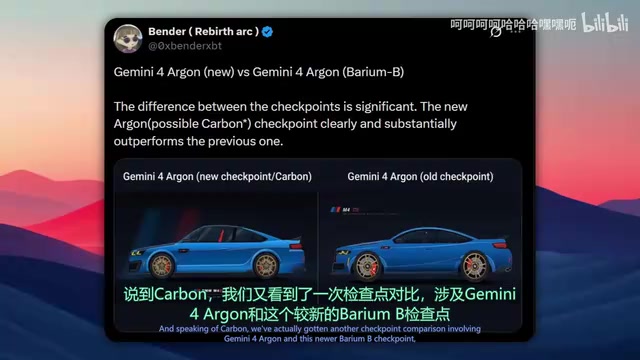
Argon's demo materials include Vizier chess, an island builder, and a microscopic world terrarium, all interactive real-time procedural generation. There are claims that Argon's release was delayed precisely because Google is continuing to bolster its agentic coding capabilities and insert new checkpoints.
Other Secretly Tested Models Worth Noting
- MissingNo on Hermes Agent: A coding and reasoning model open for free for a limited time; the community suspects it is Reflection AI's BEAM 501B A23B through fingerprint comparison of 262K context, 131K max output, 5-level reasoning, and tokenizer, spatial tokens, and tool-calling templates.
- Stealth image model 6-7 on Arena: Output style highly similar to the previous Grok Imagine Image 2.0, believed to possibly be a new generation XEI image model.
- Anthropic internal codenames Arborio and Iggy: Arborio's icon points to Claude Health, possibly bringing the US mobile health experience to the web; Iggy has a sun icon and is marked as preview, speculated to be Anthropic's persistent proactive agent, similar to OpenAI's proactive agent direction.
Two Widely Circulated Stories That Need Verification
Vibe coding game on Steam: A game similar to "Spatula War" written entirely with Opus is reportedly selling well; the video author believes that if such works' revenue breaks the million-dollar mark, it would be a turning point for the gaming industry—but note that the materials do not provide verifiable specific revenue figures, and this remains a circulating claim.
Cyberpunk 2077 running on Windows XP: This once-viral claim was later pointed out to actually be running on Windows 10 with a mod disguising the interface as XP; the claim of recompiling with Opus 5.5 and running at 25 to 30 FPS does not hold. The video author himself admitted he initially believed it. This precisely illustrates that as AI coding demos become more powerful, the boundary between fake and real is blurring, and readers need an extra verification step.
Summary
This round of leaks and secret testing shares several common features: models haven't been officially announced, but indirect evidence such as routing anomalies, model catalog appearances, and checkpoint naming comparisons corroborate each other; demo focus shifts from pure text to procedural 3D scenes, interactive simulations, and long-running autonomous agent tasks; and vendors choosing to repeatedly iterate checkpoints before official release indicates that the focus of this competition has landed on agentic capabilities and long-context engineering. Until official confirmation, everything should still be treated as rumor, but the direction is clear enough.
One-line Summary
Dense signs of secret testing for next-gen models from Anthropic, OpenAI, and Google, with competition focused on agentic and long context.
Related articles

Anthropic's IPO Crisis: Why $16.8B in Revenue Can't Buy a High Valuation
Anthropic posted $16.8B in Q3 revenue with 85% gross margin yet faces a cut to its IPO valuation. A deep dive into halved growth, the token price war, circular financing, and the clash between safety ideals and capital reality.

Anthropic Races Toward the Largest IPO in History: Can a $100 Billion Raise Ignite the AI Investment Boom?
Anthropic may file its prospectus as early as October 23, aiming to raise up to $100 billion at a valuation of up to $2 trillion, potentially the largest IPO ever. Q3 revenue hit $16.8 billion, up nearly 50% quarter over quarter, with adjusted profitability, but slowing growth has led some investors to cut valuation to $1.5 trillion. The IPO is a key test of whether the AI investment boom can continue.

Bessemer Partner on Anthropic IPO: The Public's First Direct Investment in AI Software
Bessemer partner Byron Theta on the Anthropic IPO: why it's called the moment everyone's been waiting for, the $650M four-round investment, the LP liquidity bind, and expectations of a 2027 IPO wave—plus open-source model pricing pressure, existential risk disclosures, and what the founders' 50.1% voting structure means for ordinary investors.