Claude's Constitution Gets the Audiobook Treatment: Authors Share the Philosophy Behind Claude's Values
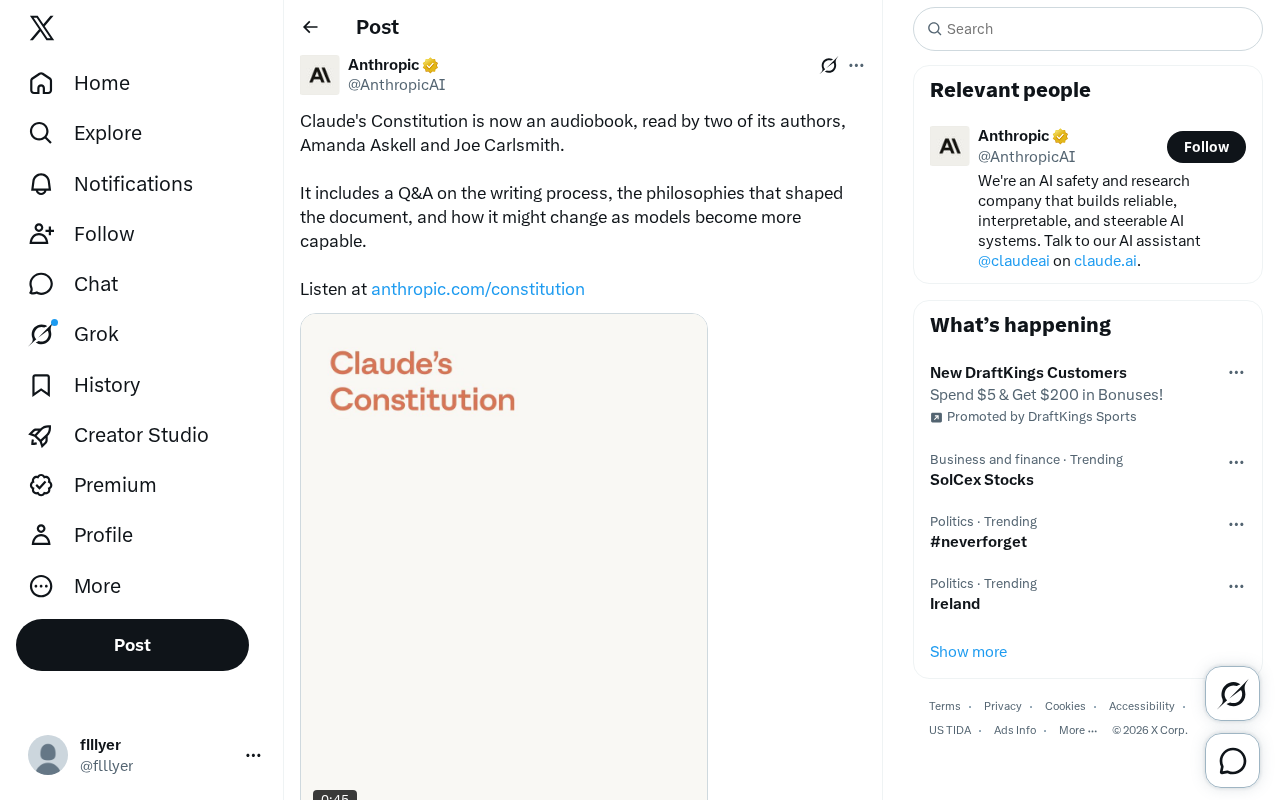
Anthropic releases an audiobook of Claude's Constitution, narrated by its authors to make AI values design more transparent.
Anthropic has turned Claude's core behavioral guidelines — known as "Claude's Constitution" — into an audiobook narrated by its authors, Amanda Askell and Joe Carlsmith, complete with a Q&A on the writing process, underlying philosophy, and how the document may evolve over time. The constitution forms the foundation of Anthropic's Constitutional AI training method, guiding model behavior through explicitly written principles rather than relying solely on human-annotated feedback. The deeper significance of this format shift is that Anthropic is partially opening up what was once an internal values decision-making process, inviting outside scrutiny and discussion of how AI behavioral guidelines are created — a rare move toward transparency among major AI companies at a time when alignment and ethics have no standard answers.
The guiding document behind Anthropic's AI assistant Claude — known as "Claude's Constitution" — now has an audiobook version. The audio is narrated by the document's two authors, Amanda Askell and Joe Carlsmith, offering the public a more direct window into how Claude's values were designed.
What Is "Claude's Constitution"?
"Claude's Constitution" isn't a constitution in any legal sense. Rather, it's the behavioral guidelines and values framework that Anthropic has established for its AI model. It defines the principles Claude should follow when responding to users, handling sensitive topics, and weighing competing values. The concept is closely tied to Anthropic's long-advocated "Constitutional AI" training methodology — the idea of guiding model behavior through a set of explicitly written principles, rather than relying entirely on human-annotated feedback.
Transforming what was originally a technical and philosophical document into an audiobook sends a clear signal: Anthropic wants to move the conversation about AI values design out of closed laboratory discourse and into broader public discussion. Having the document's authors narrate it themselves also lends the content greater authority and credibility.
Constitutional AI is a model training approach proposed by Anthropic in 2022. The core idea is to write out a set of human-readable principles in advance, then have the model use those principles to critique and revise its own outputs during a self-supervised process — reducing the need for large amounts of human-annotated preference data. The process has two steps: first, the model self-critiques and revises harmful responses according to the constitutional principles (supervised learning phase); then reinforcement learning is applied based on those revisions (RLAIF, or Reinforcement Learning from AI Feedback). This stands in contrast to approaches used by OpenAI and others that rely primarily on human preference annotations (RLHF). The advantage of Constitutional AI is that its principles can be reviewed and debated by outside parties, making the process more transparent. A potential limitation is that the wording and selection of those principles still depend on the value judgments of whoever wrote them — ensuring that this process is representative and fair remains an ongoing topic of academic discussion.
What Does the Audiobook Include?
According to information released by Anthropic, the audiobook isn't simply a reading of the constitutional text. It also includes a Q&A session about the writing process, covering three core topics:
- The writing process: How the two authors drafted and refined the document, and what tradeoffs and deliberations went into it.
- The philosophical ideas that shaped the document: Which philosophical concepts influenced the framework's content. It's worth noting that Joe Carlsmith has a background in philosophy and has long focused on AI safety and ethics — which suggests the Q&A portion may carry a distinctly analytical flavor.
- How the document may evolve: As model capabilities continue to grow, how might this constitution need to change? This point is especially significant — it acknowledges that AI values frameworks are not set in stone, but must be continuously iterated as technology advances.
Why This Matters
AI alignment and values design are among the most closely watched and contested areas in large model development today. Whose values should a model follow? How should it navigate conflicts between competing principles? Who writes and scrutinizes these rules? None of these questions have standard answers.
By publishing the constitutional text and then having its authors explain it in audiobook form, Anthropic is effectively making part of this decision-making process transparent. Compared to the many vendors who treat their model's "safety guardrails" as a commercial black box, this approach leans toward treating values design as something that can be publicly examined, discussed, and even criticized.
The Q&A's mention of the document "evolving as model capabilities improve" also points to a long-term question: as AI grows more powerful, will the principles humans set still be sufficient? Will existing frameworks need to be updated to address new capabilities and risks? This document puts that question squarely on the table.
AI Alignment refers to the research and engineering field focused on ensuring that AI systems' goals and behaviors remain consistent with human intentions. The core challenge is this: as model capabilities grow, how do you ensure that a model still adheres to intended principles in contexts outside its training distribution — rather than finding "shortcuts" that satisfy surface-level metrics while violating the underlying intent? Alignment also involves the challenge of value pluralism — different cultures and groups have fundamentally different definitions of "correct behavior," and no single value framework can universally apply. That's why questions of who sets the rules, whether those rules are transparent, and whether they can be externally audited have become central to AI governance discussions. Anthropic's decision to partially open up its rule-making process is a direct response to criticism and expectations on exactly this front.
Takeaway
The shift from technical document to audiobook reflects Anthropic's thoughtfulness about communicating AI governance to the public. For readers interested in AI safety, alignment, and ethics, hearing the two authors discuss the philosophical considerations and tradeoffs behind the design may offer more insight into the origins of Claude's values than reading the text alone ever could. Interested readers can listen to the full audio through the link released on Anthropic's official channels.
Related articles
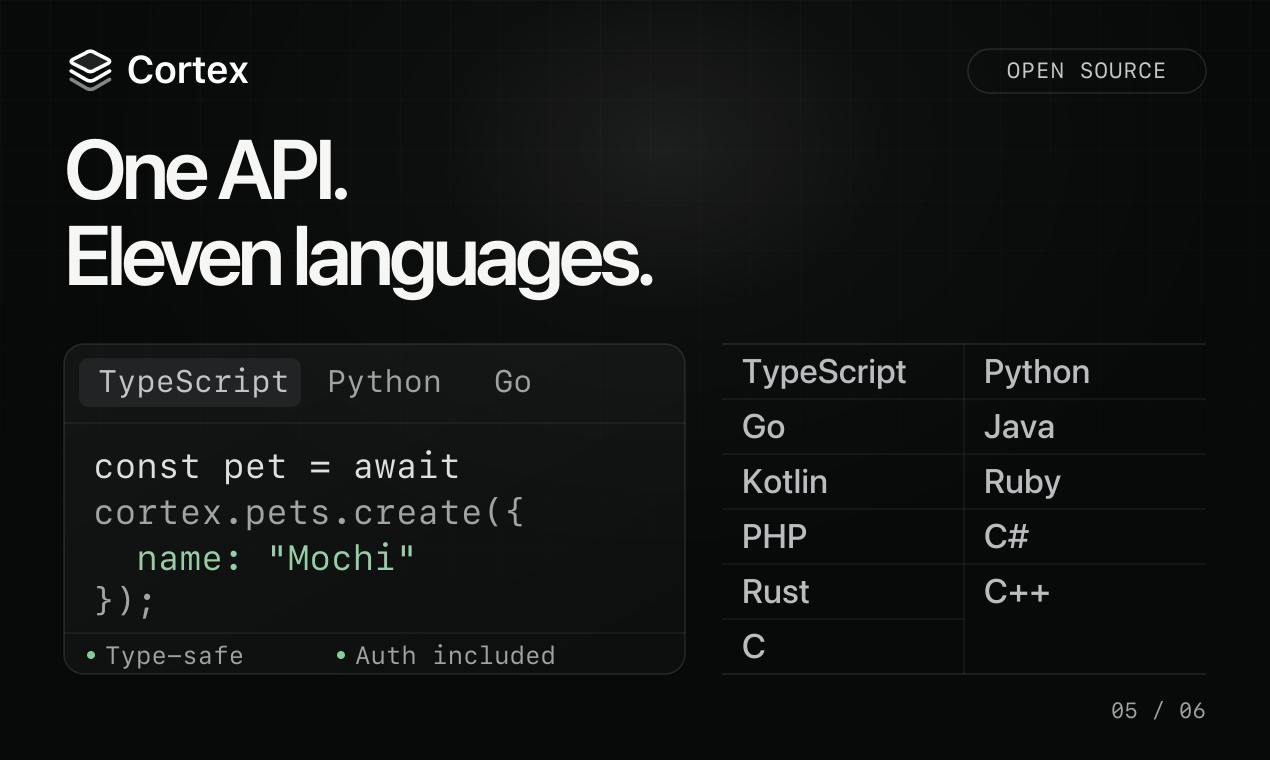
Cortex: Convert API Specs into Docs, SDKs, and MCP Servers in One Click
Cortex is an open-source tool that converts OpenAPI, GraphQL, gRPC and more into interactive docs, typed SDKs in 11 languages, and MCP servers for AI agents.

ABrush: An AI Studio Built for Digital Artists
ABrush is an AI studio for digital artists, ranked #4 on Product Hunt. It embeds leading AI models into existing workflows to remove repetitive tasks, speed up iteration, and keep artists in control.
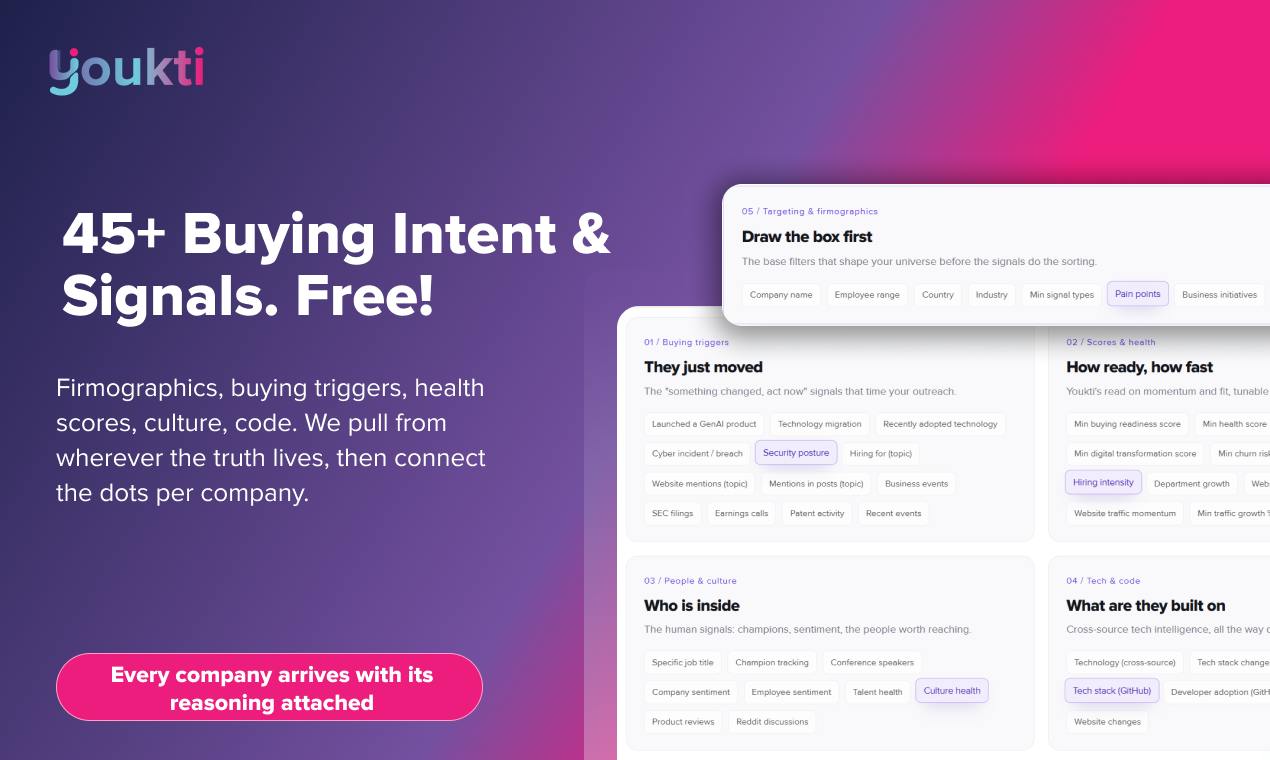
Youkti: An AI That Remembers Every Deal and Tells Your Sales Team What to Do Next
Youkti is an AI sales assistant that hit #2 on Product Hunt. It remembers every account, conversation, and deal — then tells your team exactly what to do next. Contact data, buying signals, and intent data are all free.