Claude Ship: Ship Code as Fast as You Can Write It
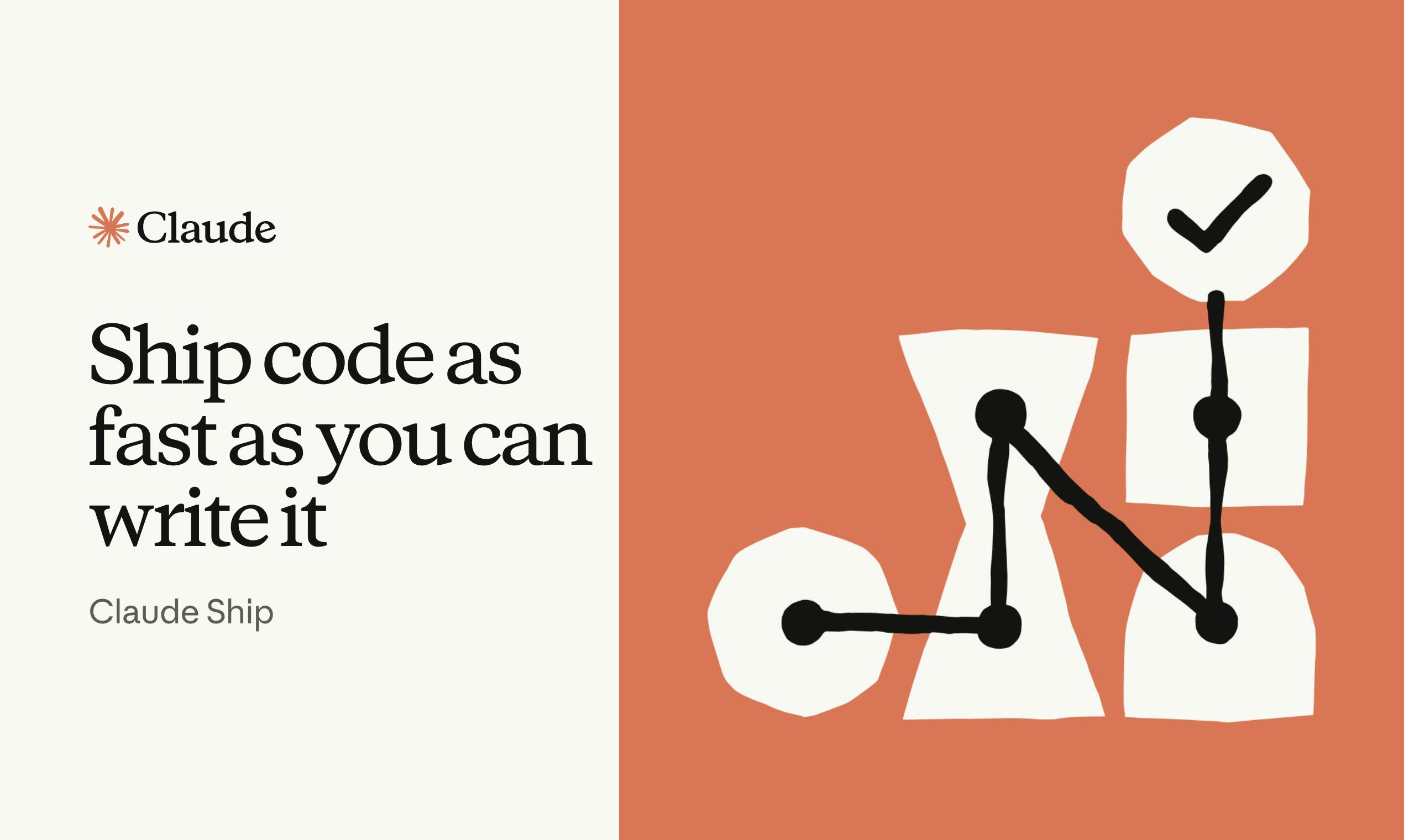
Claude Ship uses AI agents to handle PR review, fixes, and approvals, matching shipping speed to coding speed.
Claude Ship is a GitHub tool by Addy Osmani for Claude Team and Enterprise users that automates the PR flow from open to mergeable. Code Review posts verified findings, PR Steward (beta) fixes CI failures and conflicts but never merges, and Claude Approvals (beta) approves routine changes per a team policy file. Developers just run /ship in Claude Code. Its value depends on well-written policies and clear approval boundaries.
Claude Ship arrived on Product Hunt with a simple tagline: Ship code as fast as you can write it. Built by Addy Osmani for Claude Team and Enterprise users on GitHub, the tool aims to hand off all the tedious work between creating a PR and getting it mergeable to an AI agent.
The black hole between "code written" and "ready to merge"
Every developer knows the flow: write the feature locally, push the branch, open a PR, then wait for CI to finish, wait for a colleague to review, resolve conflicts, and revise based on feedback. None of these steps produce new value in themselves, yet they consume a huge amount of time. Claude Ship targets exactly this gray zone—it doesn't touch the code you write, but takes over the process after code is committed.
According to the official description, Claude Ship's core capabilities are to review, fix, and approve pull requests, with the goal of moving every PR from "opened" to "ready to merge." That means it covers the most draining stages of the PR lifecycle, rather than doing a single code check.
PR (Pull Request) is a collaboration mechanism on code hosting platforms like GitHub: after pushing a feature branch to a remote repository, a developer opens a merge request asking for the branch's changes to be merged into the mainline. A PR's lifecycle typically includes: creation, automated CI (continuous integration) builds and tests, code review, revisions based on feedback, resolving conflicts with the target branch, and finally approval and merge by someone with the appropriate permissions. CI is a key stage—it automatically runs tests and static checks on every push and blocks merging on failure; "merge conflicts" occur when multiple people modify adjacent regions of the same file at once, requiring manual intervention. These stages don't directly produce features, but they are necessary gates for code quality—and they're exactly what Claude Ship tries to automate.
Three components, three levels of engagement
Claude Ship isn't a single feature but a toolchain of three layers, each intervening in PRs to a different degree.
Code Review: reports only, doesn't modify
Code Review posts verified findings on every PR. "Verified findings" is the key phrase here—it emphasizes that review results are validated, rather than generic style suggestions. For teams, this means the PR discussion gains a tireless reviewer that screens obvious problems first.
PR Steward (beta): fixes but never merges
PR Steward is the more action-oriented piece. It fixes failing CI, resolves conflicts, and handles review feedback, but with a clear boundary: it never merges. That design choice is worth noting—the tool can modify code and move the process forward, but the final merge decision stays with humans. Time spent on failing CI and merge conflicts is often the most tedious part of the PR flow, so handing it to an automated agent makes intuitive sense.
Claude Approvals (beta): approves by policy
Claude Approvals targets the approval stage. It approves routine changes according to the team's policy file and asks humans about everything else. This effectively gives teams a configurable automation boundary: which changes are "routine" enough to auto-approve, and which must be decided by a person, is defined by the policy file. For high-frequency small changes, this can significantly reduce approval wait times.
Claude Team and Enterprise plans are the Claude subscription tiers Anthropic offers to organizational customers, providing higher usage quotas, centralized billing, an admin console, a commitment that data isn't used for training, and enterprise security features like SSO compared with individual plans. Claude Code is Anthropic's command-line coding agent, which can read and write codebases and execute commands in the terminal. Claude Ship is built on both, so its capabilities are naturally limited to organizations that have already purchased the enterprise tier, and it depends on GitHub as the code hosting and PR platform—individual Pro users and platforms like GitLab are not yet covered.
A policy file is the configuration in Claude Ship that defines auto-approval rules, typically stored in the repository as a declarative file. Teams can specify which types of changes (for example, minor dependency upgrades, documentation edits, added tests, or commits below a line-change threshold) count as "routine changes" eligible for auto-approval, and which paths or sensitive modules must be reviewed by humans. It essentially codifies the team's review standards, making automated behavior auditable and versionable. The looser the policy, the more time automation saves—but the greater the risk of mistakenly approving something; the stricter it is, the closer you get to a purely manual process.
One command strings the whole flow together
Claude Ship's interaction is compressed into a single action: run /ship in Claude Code to push code, open a PR, and hand off what follows. This design embeds the tool into the developer's existing workflow instead of requiring you to switch to another platform. From a product standpoint, it continues Claude Code's positioning as the development entry point, turning PR management into an extension action in the command line.
Who it's for, and what to watch out for
Claude Ship is explicitly limited to GitHub and aimed at Claude Team and Enterprise plans. That positioning means it targets teams with collaboration scale and process standards, not individual developers. The existence of a team policy file also shows it assumes users already have some approval rules in place—the tool automates on top of those rules rather than defining them for you.
It's worth being clear-eyed: Code Review and PR Steward both involve write operations on PRs, and Claude Approvals directly touches pre-merge approval authority. Even though the tool promises it "never merges," teams still need to clearly define the boundaries of what the policy file lets through before enabling it—how permissive automated approval is directly determines whether it saves you time or creates risk.
Summary
Claude Ship moves the AI agent's point of intervention from "writing code" to "delivering code," a position closer to engineering reality. The speed of writing code has long ceased to be the bottleneck—the PR process is. Whether it can deliver on its promise of shipping as fast as you write depends on whether teams are willing to write good policy files and draw clear approval boundaries.
One-line Summary
Claude Ship uses AI agents to handle PR review, fixes, and approvals, bringing shipping speed up to par with coding speed.
Paragraph Summary
Claude Ship is a tool built by Addy Osmani for Claude Team and Enterprise users on GitHub, with the tagline "ship code as fast as you can write it." It doesn't get involved in writing code, but takes over the PR flow from creation to mergeable, split across three components: Code Review only posts verified review findings; PR Steward (beta) fixes failing CI, resolves conflicts, and handles review feedback but never merges; Claude Approvals (beta) approves routine changes based on the team's policy file and leaves the rest to humans. Developers simply run /ship in Claude Code to push code, open a PR, and hand off what follows. The article notes that its value depends on whether teams can write good policy files and draw clear boundaries for automated approvals.
Related articles
GPT-6 Designs Proteins, Claude Creations Become Apps with One Click, DeepMind Releases New Benchmark
OpenAI says GPT-6 can design protein 3D structures, Anthropic lets Claude creations install as desktop apps, DeepMind's HIP benchmark tests stability on simple questions, Google Workspace opens agent MCP interfaces.

OpenAI Weekly Roundup: GPT-6.2 Rolls Out to ChatGPT, GPT-6 Designs Proteins
OpenAI's week: GPT-6.2 rolls out to ChatGPT, GPT-6 claims independent protein design, agent research share surges, perplexity proposed as a shared metric, and internal safety concerns surface.

Is the Crypto Industry About to "Turn Blue"? The Truth Behind Tech and Politics' Shifting Allegiances
Vergecast discusses whether the crypto industry will shift from the right to the Democrats, revealing the pragmatic nature of tech's politics and the costs of a crypto pivot.