Claude Sonnet 4.5 Comes to Cursor: The New Coding Champion with 73.4% on CursorBench
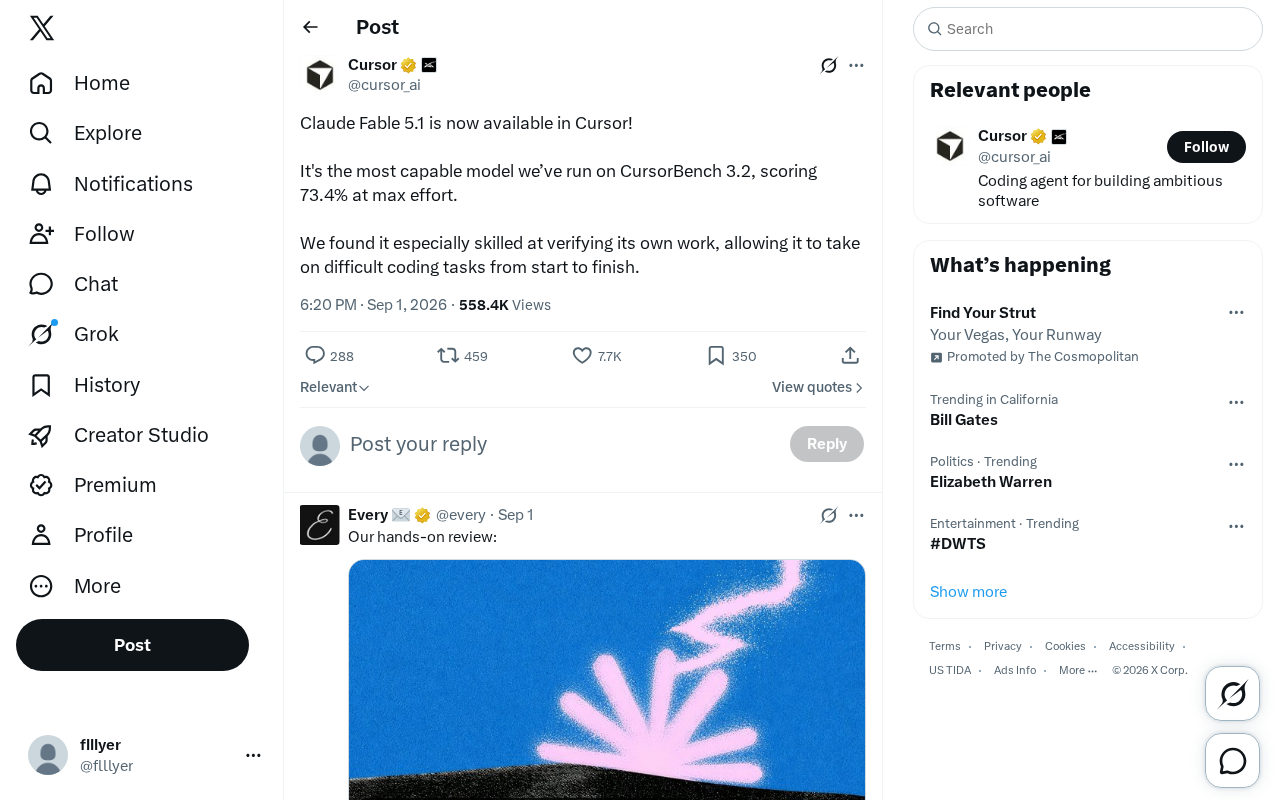
Claude Sonnet 4.5 hits Cursor with a record 73.4% on CursorBench, powered by standout self-verification.
Cursor has integrated Claude Sonnet 4.5, which scored 73.4% on CursorBench 3.2 in max effort mode — the strongest result for any model on the platform. Unlike academic benchmarks such as HumanEval, CursorBench reflects real IDE workflows. Sonnet 4.5's key strength is self-verification: the ability to review, catch, and fix its own code errors, marking a step from code completion assistant toward autonomous coding agent. While promising for larger-grain tasks, human oversight remains essential.
Cursor has officially announced the integration of Claude Sonnet 4.5 into its coding environment, setting a new record on its internal benchmark CursorBench 3.2 — achieving 73.4% in max effort mode, making it the most capable model Cursor has ever run.
What Does 73.4% on CursorBench 3.2 Actually Mean?
CursorBench is the Cursor team's internal benchmark suite for measuring a model's overall capability in real-world coding scenarios. Unlike many academic code evaluations (such as HumanEval), this type of internal benchmark more closely mirrors actual development workflows inside an IDE — involving cross-file comprehension, context tracking, and coherent execution of multi-step tasks.
The 73.4% score needs to be interpreted in the context of how difficult the benchmark actually is. CursorBench 3.2 is an iteratively evolving evaluation suite that typically introduces harder tasks as model capabilities improve, so scores across different versions aren't directly comparable. That said, Cursor explicitly positions Sonnet 4.5 as the "strongest" model to date, indicating it has meaningfully outpaced previously integrated models.
The "max effort" qualifier is worth paying attention to. It implies the score was achieved with the model fully utilizing its reasoning compute budget — potentially including longer chains of thought or multiple rounds of self-verification. This reflects the model's capability ceiling, and actual performance in everyday use will depend on how compute is configured.
HumanEval is a classic code generation benchmark released by OpenAI, consisting of 164 Python programming problems evaluated via a "pass@k" metric measuring the probability of a model generating a correct function. Because its structure is relatively fixed and context is limited, top models can now easily exceed 90%, so its discriminative power is declining. In contrast, internal benchmarks like CursorBench deliberately introduce challenges such as multi-file dependencies, ambiguous requirements, and incremental edits — far better reflections of real engineering effectiveness. This is why 73.4% on CursorBench 3.2 carries far more weight than the same score on HumanEval.
Why "Self-Verification" Is the Key Breakthrough
Cursor's announcement specifically highlights that Sonnet 4.5 "excels at verifying its own work," enabling it to handle difficult coding tasks end-to-end. This point is more interesting than the score alone.
In automated programming, the biggest pain point for models isn't usually "failing to write code" — it's "failing to know whether the code is correct after writing it." Traditional models tend to confidently produce code that looks plausible but contains logical flaws, lacking any critical examination of their own output. A model with self-verification capability can proactively review its generated code, identify issues, and iteratively correct them — significantly reducing the need for human intervention.
For the goal of "completing difficult coding tasks from start to finish," self-verification is one of the core capabilities that distinguishes a "code completion assistant" from an "autonomous programming agent." Only when a model can find its own bugs, verify test results, and determine whether a task is truly complete is it qualified to take on complex engineering work requiring multi-step, long-chain reasoning.
Self-verification capability is typically implemented technically through mechanisms like "self-reflection" or "Process Reward Models (PRM)." The former has the model re-examine and critique its own output after generating an answer; the latter provides reward signals for intermediate reasoning steps during training, teaching the model to evaluate correctness at each reasoning node rather than only receiving feedback based on the final output. In agentic coding scenarios, this capability is especially critical: the model needs to iterate through running tests, reading error messages, and modifying code, requiring accurate judgment at every step. Models lacking self-verification often fall into a "confidently wrong" loop — even with high initial generation accuracy, they struggle to reliably complete multi-step end-to-end tasks.
Real-World Impact on Developer Workflows
From a user perspective, a model that's better at self-checking means less rework. Developers can hand off larger, coarser-grained tasks to it — such as implementing a complete feature module — without having to break everything down into small prompts fed to the model one at a time.
That said, practical expectations should remain grounded. A benchmark score of 73.4% still means roughly one in four tasks doesn't meet the bar, and that score was achieved under max compute conditions. In everyday development, code review, test coverage, and human oversight remain indispensable. The model's self-verification reduces error rates, but it doesn't eliminate accountability.
For the Cursor ecosystem, integrating more powerful models is a key move in continuously reinforcing its positioning as the "AI-first editor." As coding model capabilities iterate rapidly, whoever can integrate the strongest models first — and optimize context management and compute scheduling effectively — will build a meaningful advantage in developer experience.
Summary
The arrival of Claude Sonnet 4.5 in Cursor reflects a broader evolution in coding LLMs: from "can write code" to "can independently complete tasks and self-audit the results." The 73.4% score on CursorBench 3.2 and its standout self-verification capability are concrete evidence of this trend. For developers, this is an upgrade worth trying — though the actual benefits should still be assessed against your own specific workflow.
Related articles

Letting AI Build AI Tools: A 7-Day, 31-Commit Bootstrapping Post-Mortem
An engineer ran a fully autonomous AI-builds-AI pipeline for 7 days, 31 commits, with a 1-in-6 success rate. This post-mortem covers 5 failure types, 11 structural rules, and how every mistake became a permanent immunity gate.
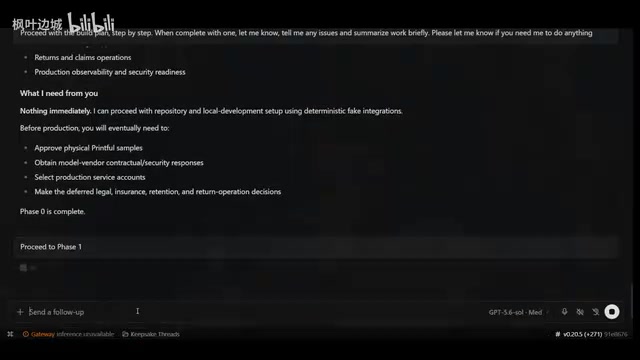
Building an AI-Powered E-Commerce Business from Scratch: A Real-World Account of Multi-Agent Architecture for Print-on-Demand
A blogger builds a print-on-demand e-commerce company from scratch using AI agents — documenting specialized Agent profiles, GPT-5.6 vs Claude Fable multi-model orchestration, and reusable skill accumulation.

AI Agent Earns $10K in One Week: 3 Key Upgrades Explained
A blogger shares how he earned $10K in a week with an AI Agent — not by adding more skills, but through verification, approval gates, and subagents to raise trust and enable true automation.