Claude Tag API Released: Manage Claude in Slack Channels with Code

Claude Tag API beta lets enterprise admins manage Claude in Slack per channel through code.
The beta version of the Claude Tag API is aimed at Enterprise administrators and allows them to enable Claude per Slack channel through code, set instruction templates, choose model versions, define guest policies, and mount Access bundles. The article notes that this marks a shift in Claude management in Slack from one-off manual configuration to versionable, batch-executable, infrastructure-level operations. Per-channel control resolves the contradiction between the AI assistant's openness scope and data exposure risks, and code-based configuration is superior to manual operations in consistency, batch changes, and auditability. However, during beta, rate limits, rollback mechanisms, and integration with Slack's existing permission model still need attention, and the API's positioning is mainly aimed at large organizations rather than small and medium-sized teams.
From Manual Configuration to Code-Driven: How Claude Is Managed in Slack Has Changed
In the past, Enterprise Slack administrators configuring Claude for each channel often had to repeatedly open the settings panel and adjust parameters one by one. The beta version of the Claude Tag API is changing that—it allows administrators to enable Claude per channel through code, set instruction templates, choose model versions, define guest policies, and mount Access bundles. This means that Claude's presence in collaboration tools is shifting from "one-off manual configuration" to "versionable, batch-executable, infrastructure-level operations."
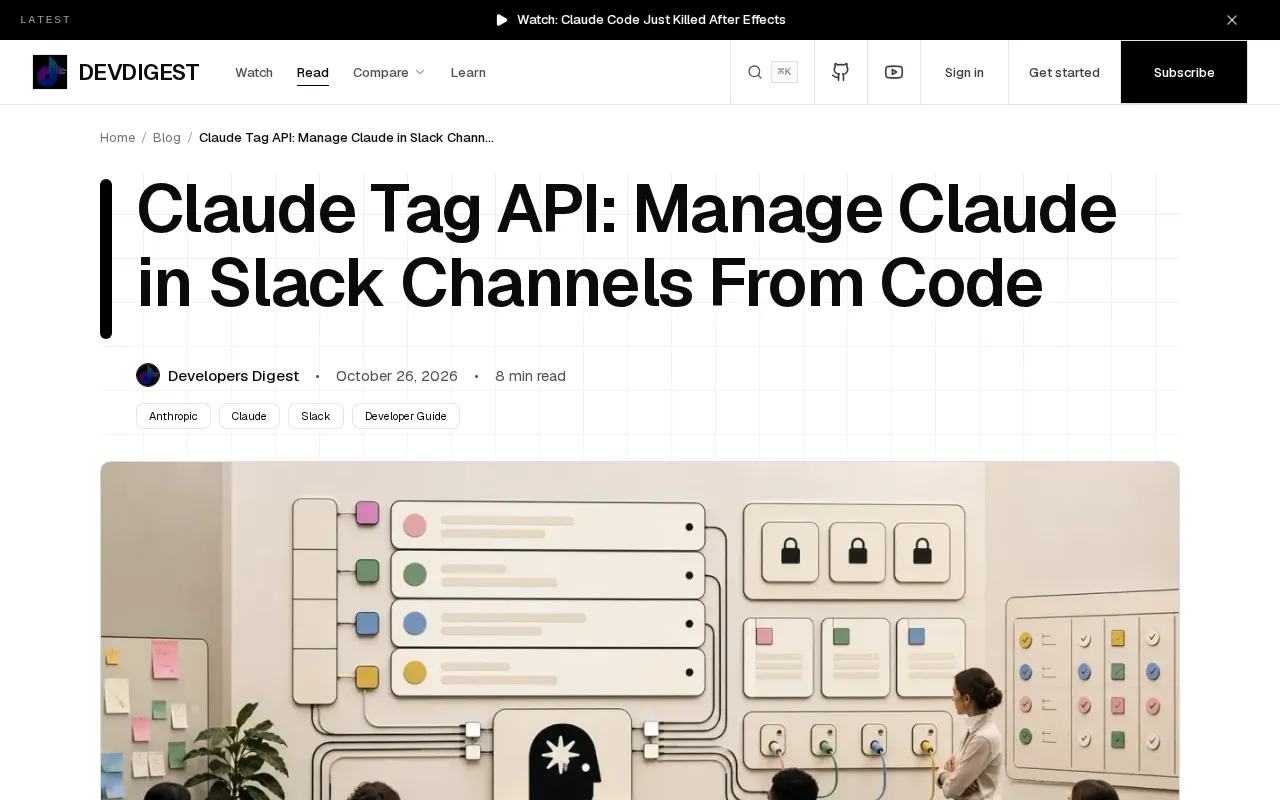
Access bundles are a common concept in enterprise permission management, usually referring to a set of predefined access permissions that can be bound as a whole to users, roles, or resources without granting permissions item by item. In the Slack context, Access bundles may include permissions such as channel access, data read scope, and external collaboration permissions. Mounting a bundle to a channel means that Claude's availability in that channel is consistent with the channel's existing permission boundaries, avoiding situations where the AI assistant bypasses channel permission restrictions to access sensitive content. This design approach is similar to IAM policy binding in cloud platforms; the core value lies in permission reuse and centralized governance rather than redefining everything from scratch for each configuration.
What Exactly Can the Claude Tag API Manage?
According to the official description, this API is aimed at Enterprise administrators, with core capabilities centered on granular channel-level control. Administrators no longer need to manually operate each item in the Slack interface; instead, they can complete the following configurations through code:
- Enable Claude per channel: Decide which Slack channels can use Claude, rather than applying a one-size-fits-all global setting.
- Set instructions: Preset behavioral instructions for Claude in different channels, so that the same Claude can present different response styles and boundaries across different team scenarios.
- Choose model: Specify the model version used per channel, matching different capabilities and costs to different workloads.
- Guest policy: Control the permission boundaries for external guests or non-members interacting with Claude in a channel.
- Mount Access bundles: Bind permission bundles to channels so that access control remains consistent with Claude's availability.
Together, these capabilities effectively turn Claude's "existence" in Slack into a programmable object. For large organizations with multiple teams and channels, this granularity is key—different channels vary greatly in data sensitivity, collaboration patterns, and compliance requirements, and a unified configuration can hardly satisfy all scenarios at once.
Why This Matters for Enterprise Administrators
AI assistants in Slack usually face a contradiction: opening too many channels brings data exposure risks, while opening too few makes the tool practically useless. The Claude Tag API's per-channel control is designed precisely to address this contradiction.
From a management efficiency perspective, the advantage of code-based configuration lies in repeatability and auditability. When an organization needs to apply the same policy to dozens or even hundreds of channels, manual clicking is not only slow but also prone to omissions or configuration drift. The API approach allows administrators to manage Claude's deployment status like other infrastructure.
From a governance perspective, the binding relationships among instructions, models, guest policies, and Access bundles are explicitly defined in code, which provides a foundation for subsequent permission reviews and change tracking. Although the specific auditing capabilities at the beta stage have not yet been fully developed, the direction is clear: incorporate the configuration of AI assistants into the enterprise's existing permission and compliance frameworks.
Configuration drift refers to the phenomenon in which a system gradually deviates from its initial configured state during actual operation, commonly seen in manual operations scenarios. In Slack, sporadic adjustments made by different administrators to various channels at different times can cause an originally unified Claude policy to develop issues such as inconsistent instructions, mixed model versions, and missed guest policies. Code-based configuration can mitigate this problem because configuration files or scripts can serve as a single source of truth, work with version control tools to track each change, and be reapplied when needed to converge to the target state. This is also an extension of the infrastructure as code (IaC) philosophy into collaboration tool management.
Comparison with Manual Configuration: Where Are the Differences?
Manually configuring Claude in the Slack admin backend is essentially an interface-driven operation, suitable for a small number of channels and one-time setup. The Claude Tag API abstracts the same operations into API calls, making it suitable for scaled scenarios.
One direct difference is "consistency." Manual configuration depends on the operator's memory and carefulness, making it easy for issues such as inconsistent instructions and mixed model versions to arise across channels. API calls can ensure that the same policy is precisely applied to the target set of channels. Another difference is "response speed." When an organization adjusts the scope of Claude usage, the API can complete batch changes in a short time, whereas the manual approach requires handling channels one by one.
As a side note, a beta version usually means the API capabilities are still evolving. Administrators should pay attention to the update cadence of official documentation when adopting it, and manage versions well for key configurations.
Beta version in the software release process usually refers to a preview stage in which features are basically usable but interfaces and behavior may still change. For enterprise administrators, beta means two things: first, they can verify in advance whether the API meets their governance needs; second, they cannot treat it as a stable production dependency. Specific risks include changes to API fields, tighter rate limits, and even some capabilities being redesigned in the official version. Therefore, when adopting it during beta, it is recommended to bring key configurations under version management, retain a manual rollback path, and follow the update cadence of the official changelog.
Who Should Pay Attention to This API
The most direct audience is Enterprise administrators and IT operations teams, especially organizations that have already made Slack their primary collaboration platform and also need to meet compliance requirements. For teams managing multiple workspaces or a large number of channels, the value of code-based configuration grows as the number of channels increases.
Another group worth paying attention to is security and compliance teams. The code-based binding of guest policies and Access bundles means that the AI assistant's access control can align with the enterprise's existing permission system rather than existing in isolation within Slack settings.
For ordinary users, this API will not directly change the user experience, but it determines which channels Claude is available in and how it responds. Management's configuration decisions will indirectly affect the collaboration efficiency of frontline teams.
The Boundaries of Code-Based Management and What Remains to Be Seen
The Claude Tag API is currently in beta, and officially disclosed information focuses on "what it can do" rather than "what the limitations are." Based on common patterns in enterprise deployment, several questions are worth confirming before formal adoption: the API's rate limits and quotas, the rollback mechanism for configuration changes, and how the permission model connects with Slack's existing management APIs. These details may change during beta and may also become priorities in future versions.
Moving AI assistant management from interfaces to code is essentially an "infrastructuralization" approach. It assumes that administrators are willing to handle collaboration tool configuration in an engineering-oriented way rather than relying on the graphical interface provided by the platform. This assumption usually holds in large organizations, but may not be a priority need for small and medium-sized teams. The positioning of the Claude Tag API clearly points to the former.
One-line Summary
Claude Tag API beta lets enterprise administrators manage Claude in Slack per channel through code.
Paragraph Summary
The beta version of the Claude Tag API is aimed at Enterprise administrators and allows them to enable Claude per Slack channel through code, set instruction templates, choose model versions, define guest policies, and mount Access bundles. The article notes that this marks a shift in Claude management in Slack from one-off manual configuration to versionable, batch-executable, infrastructure-level operations. Per-channel control resolves the contradiction between the AI assistant's openness scope and data exposure risks, and code-based configuration is superior to manual operations in consistency, batch changes, and auditability. However, during beta, rate limits, rollback mechanisms, and integration with Slack's existing permission model still need attention, and the API's positioning is mainly aimed at large organizations rather than small and medium-sized teams.
Related articles

How Did Da Vinci Prove the Sun Is Hot? A Neglected Chapter in Science History
How did da Vinci use a concave mirror experiment to overturn Aristotle's cold sun theory? This article traces this neglected chapter in science history, revealing the embryo of scientific thinking in the 15th century and da Vinci's cold observations on solar heat and the nature of life.
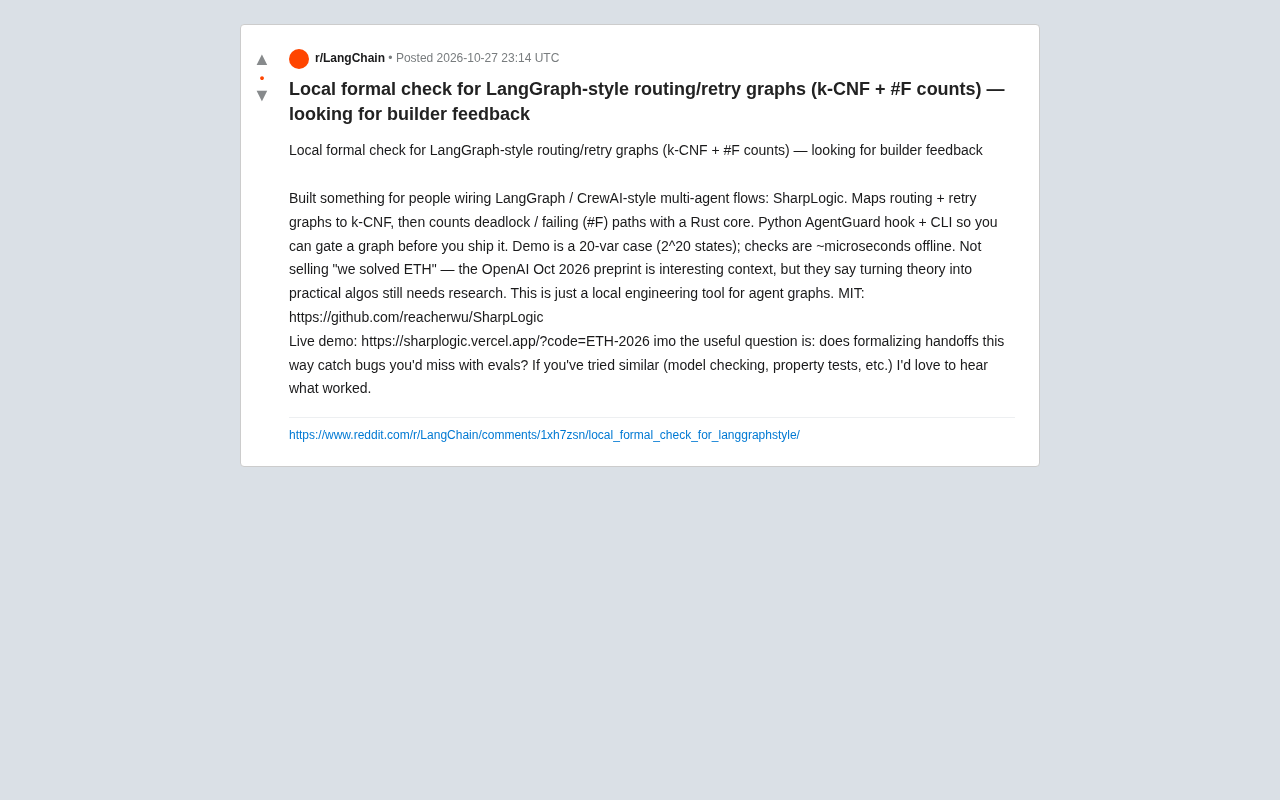
SharpLogic: Formalizing Bug Detection for LangGraph Routing Graphs with k-CNF
SharpLogic, an open-source project, maps LangGraph-style multi-agent routing and retry graphs to k-CNF, using a Rust kernel to count deadlocks and failing paths (#F counting), offering a Python AgentGuard hook and CLI for pre-release formal gate checks. This article analyzes its principles, its complementary relationship with evals, and the community's concern about modeling costs.
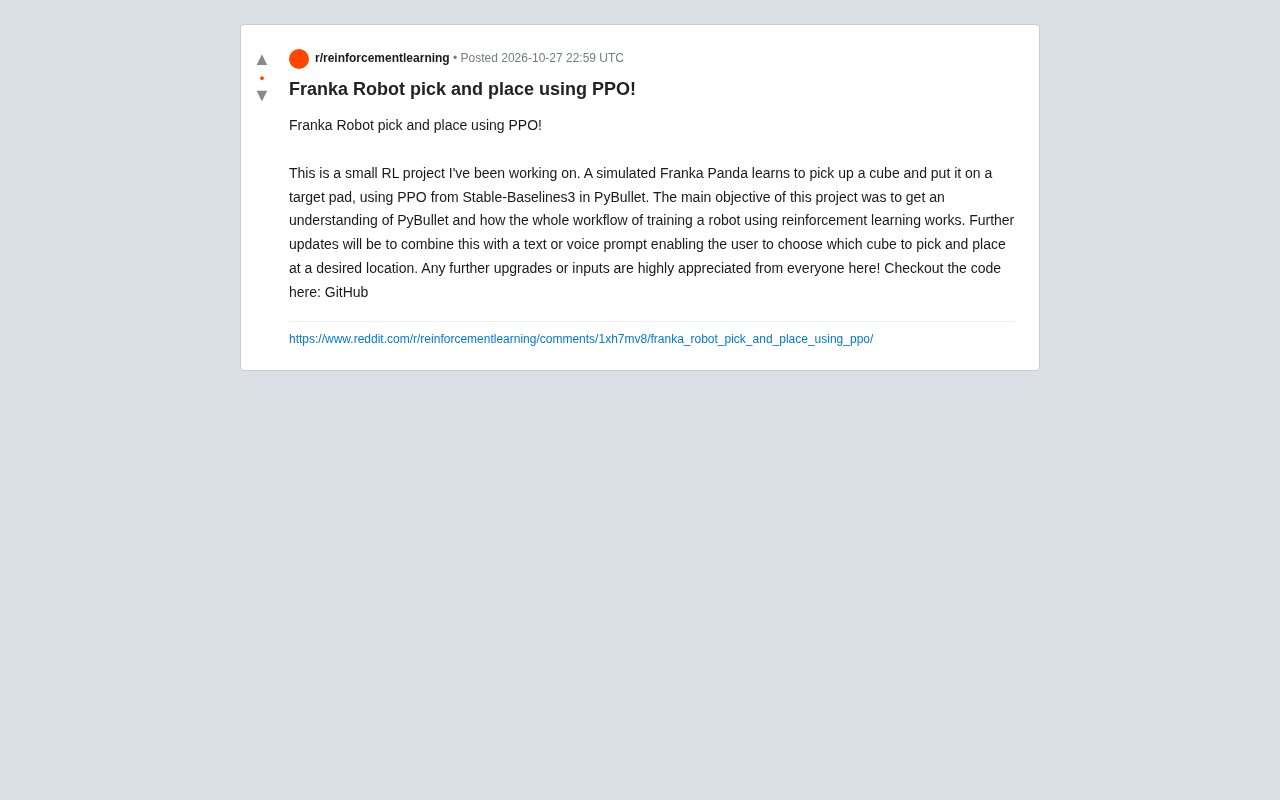
PPO Training of a Franka Robotic Arm for Pick-and-Place: A Reinforcement Learning Starter Project
A reinforcement learning project using PPO to train a Franka Panda robotic arm for pick-and-place in PyBullet, covering tech stack choices, task design challenges, and future text/voice command interaction plans—a good reference for beginners.