Claude Tag: Delegate Tasks by @Mentioning AI in Slack — A New Way for Teams to Collaborate

Claude Tag lets you @mention Claude in Slack to delegate tasks asynchronously, like assigning work to a teammate.
Anthropic's Claude Tag integrates Claude directly into Slack as a team member you can @mention to delegate tasks asynchronously. With granular channel and tool permission controls, teams can hand off structured work to Claude and return to check results — shifting AI from a passive tool to an active collaborator embedded in everyday workflows.
Anthropic Launches Claude Tag: Making AI a @-able Team Member
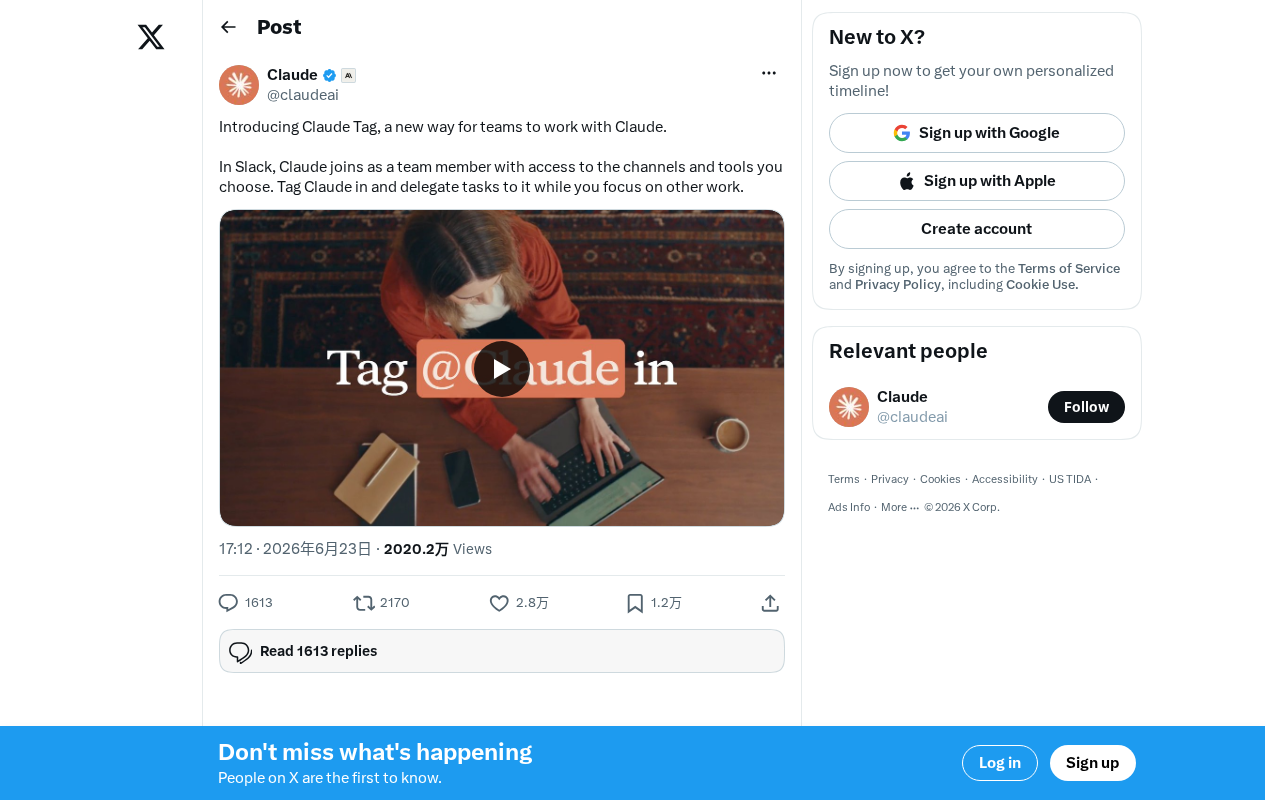
Anthropic recently announced Claude Tag, a feature that lets teams collaborate with Claude in a more natural way. The core concept is straightforward: within a Slack workspace, Claude is no longer an external tool you need to open a separate chat window to use — instead, it joins the channels you choose as a genuine member of your team, just like a real colleague.
Slack, as an enterprise collaboration platform, offers an open API ecosystem that provides fertile ground for AI integration. Slack's Bot framework allows third-party apps to join workspaces as "members," listening to message events via the Events API and sending replies via the Web API. Claude Tag is built on this infrastructure — technically, Claude exists as a Slack Bot, but Anthropic has deliberately downplayed that "robot" framing in the product design, emphasizing the "team member" metaphor instead. That naming strategy is itself part of the product's differentiation.
In the official description, you can "@Claude when you need it, delegate tasks to it, and stay focused on your other work." This highlights Claude Tag's core value proposition: asynchronous delegation. You don't have to sit in a conversation waiting for a response — you hand off the work like you would with a colleague, then come back to check the results.
From "Tool" to "Teammate": A Shift in AI Product Design Thinking
This update reflects an important trend in AI product design: moving from passive invocation to active collaboration. Most AI assistants in the past operated on a "human initiates, AI responds" model — users had to actively open an app, type a prompt, and wait for an answer. That model works well for deep, focused conversations, but it creates noticeable friction in everyday team collaboration.
By embedding Claude Tag into Slack — the central hub of team communication — AI invocation gets moved to a natural checkpoint within existing workflows. When you're in the middle of discussing a project, a single @ is all it takes to hand off tasks like summarizing meeting notes, drafting documents, retrieving information, or analyzing data, without ever leaving your current context.
Granular Control Over Channels and Tools
The official announcement specifically highlights "the channels and tools you choose." This signals that Claude Tag was designed with permission boundaries and data access control in mind from the start. Team administrators can precisely control which channels Claude can access and which tools it can use, rather than granting blanket access to the entire workspace.
Enterprise AI products typically follow the Principle of Least Privilege — the AI can only access the minimum dataset necessary to complete a task. This is especially critical in industries with strict compliance requirements, such as finance, healthcare, and legal services. Claude Tag's channel-level permission controls bring this principle to life at the granularity of a Slack workspace. Organizations also need to consider data residency and SOC 2 compliance — Anthropic has achieved SOC 2 Type II certification, which provides important credibility for its entry into the enterprise market.
This kind of fine-grained access control is essential for enterprise adoption. Teams want the productivity gains that AI brings, but they also need to ensure sensitive information isn't inadvertently exposed. Controllable access scope is a prerequisite for AI to genuinely take root in enterprise collaboration.
Asynchronous Delegation: Redefining the Rhythm of Human-AI Collaboration
The most noteworthy design choice in Claude Tag is its emphasis on "delegation." Traditional human-AI conversation is synchronous — you ask, it answers, you follow up, it answers again, requiring sustained attention throughout. Claude Tag introduces a model that more closely resembles how real teams divide work:
- @Claude in a channel and describe the task
- Claude reads the context and starts processing
- You turn to other work
- Claude posts the result in the channel when done
This asynchronous model requires overcoming several technical challenges: first, context window management — Claude needs to extract relevant context from channel history rather than processing the full message stream; second, task state tracking — the system must maintain task state while Claude is working and notify users appropriately upon completion; third, concurrent processing capacity — in enterprise scenarios, multiple channels may trigger tasks simultaneously. It's worth noting that the Claude 3 model family supports a context window of up to 200,000 tokens, which provides a solid technical foundation for deeply understanding channel conversation history.
The value of this asynchronous model is that it transforms AI from "a conversational partner demanding your attention" into "an executor sharing your workload." For knowledge workers, this could mean real time savings — offloading structured, repetitive, or information-intensive tasks to AI, while humans focus on the core work that requires judgment and creativity.
Differentiated Positioning in a Competitive Landscape
Integrating AI into Slack isn't something Anthropic invented. Microsoft Copilot is deeply embedded in the Teams and Office ecosystem, and Slack itself has long offered summarization and search capabilities. But Claude Tag's differentiation lies in positioning Claude as a team member with channel-context awareness, rather than a simple Q&A bot.
The enterprise AI collaboration market is undergoing rapid consolidation. Microsoft Copilot holds a first-mover advantage through deep ties to the Office 365 ecosystem, while Google Workspace Duet AI is pushing hard through Gmail and Docs. Salesforce's Einstein AI — deeply integrated with Slack's native features — is a direct competitor to Claude Tag. Notably, competition among these products has shifted from raw model capabilities to depth of workflow integration — whoever embeds most naturally into users' existing work habits will win higher daily engagement and retention. Anthropic's choice to prioritize Slack as an integration target reflects a clear-eyed recognition of its high penetration among tech companies and startups.
Anthropic has been moving aggressively in the enterprise market recently, and Claude's strengths in long-document processing, code comprehension, and complex reasoning have earned recognition from many developer teams. Delivering those capabilities to the front lines of team collaboration with a low-friction, "just @-mention it" interface is a strategically meaningful step toward real-world adoption.
Key Details Worth Watching
Based on information available so far, several important questions about Claude Tag remain to be seen:
Depth of context: How much message history can Claude read? How well does it understand ongoing discussions in a channel? This directly determines the quality of output from delegated tasks.
Breadth of tool integrations: The announcement mentions Claude can access "tools you choose," but which specific third-party integrations are supported, and whether it can call external APIs or databases, will define the upper limit of its practical value.
Pricing and usage quotas: As an enterprise feature, its pricing model and quota structure will directly influence teams' willingness to adopt it.
Conclusion
Claude Tag represents an evolutionary direction for AI collaboration products: making AI not a specialized "add-on" you have to visit separately, but a seamlessly integrated part of existing workflows. When @Claude feels as natural as @-ing a colleague, AI's role in a team quietly shifts from "tool" to "teammate."
Whether that shift sticks ultimately depends on whether Claude can genuinely understand a team's working context and consistently deliver reliable results. If it can, "delegating tasks to AI" will stop being a tagline and become a real daily habit for many teams.
Key Takeaways
Related articles
Alibaba Launches Happy Shrimp: AI-Powered One-Click Complete Song Generation
Alibaba launches Happy Shrimp, an AI music generation tool that creates complete songs with lyrics, melody, arrangement, and vocals from natural language descriptions. In-depth analysis of its core features, differentiation from competitors like Suno, and industry impact.
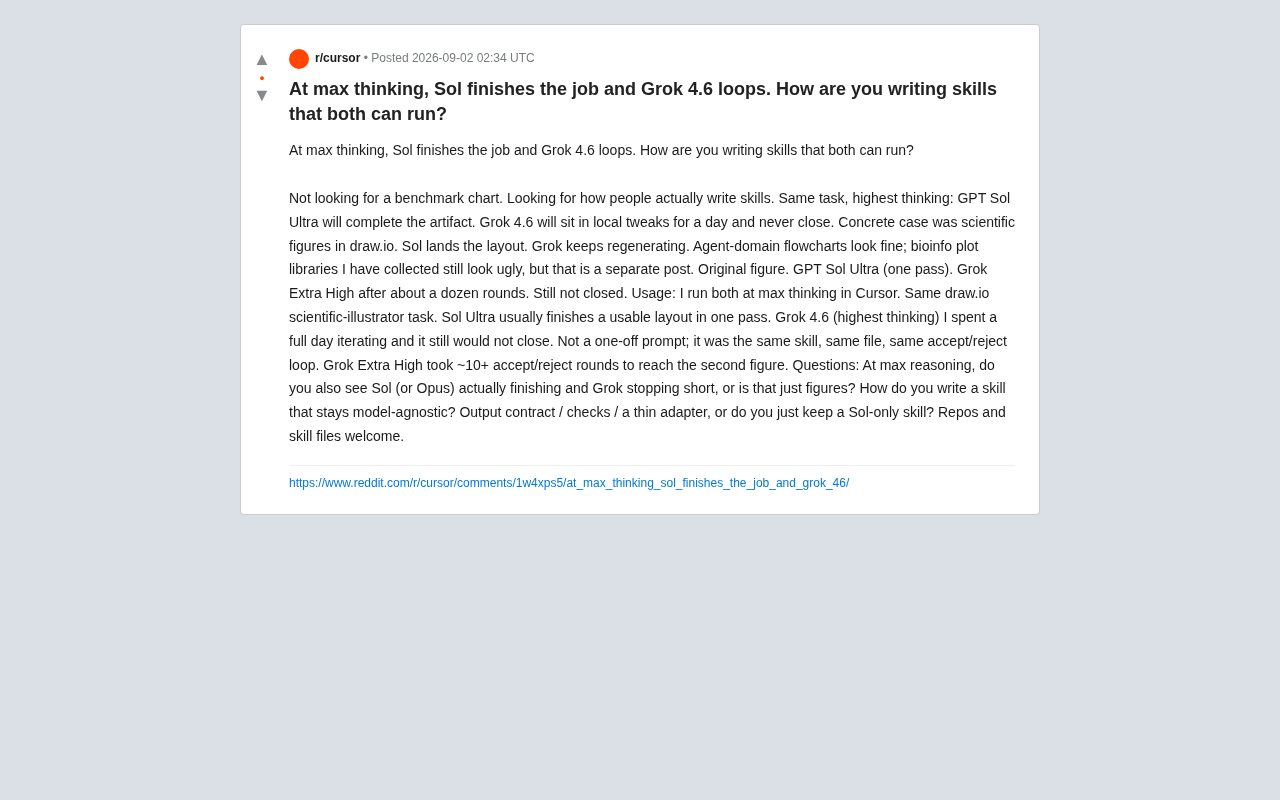
GPT Sol Ultra vs Grok 4.6: Real-World Task Completion Benchmark in Reasoning Mode
Developer benchmark reveals GPT Sol Ultra completes draw.io scientific diagrams in one iteration while Grok 4.6 fails to converge despite maximum reasoning mode, exposing that reasoning depth ≠ task delivery capability.
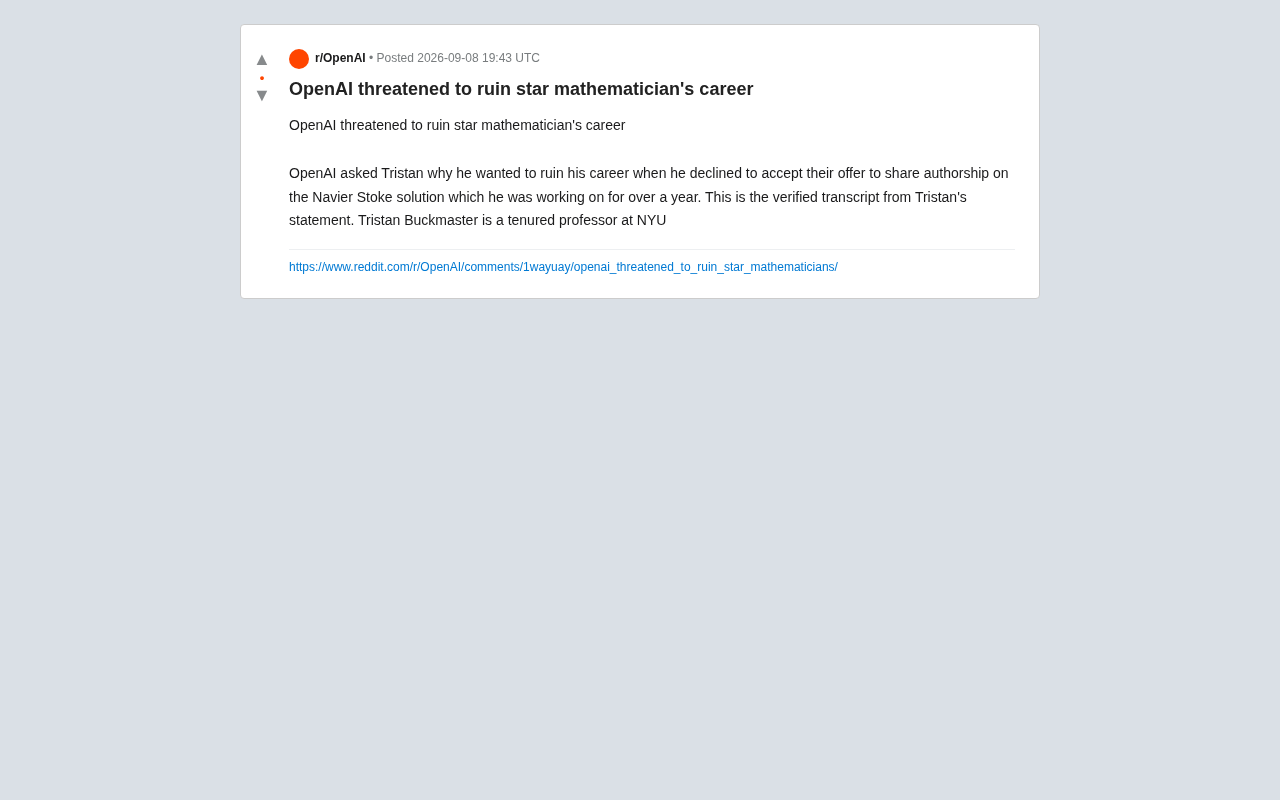
OpenAI Authorship Dispute: The Battle Over Academic Boundaries in the AI Era
OpenAI disputes authorship with mathematician Tristan Buckmaster over Navier-Stokes research, raising ethical questions about AI involvement in science.