ClaudeMem: An AI Agent Memory Layer That Lets Claude, ChatGPT, and Grok Share Memories

ClaudeMem gives multiple AI agents a local-first shared memory layer, eliminating manual context handoff.
The article introduces ClaudeMem, a tool addressing the core pain point of multi-agent users—each AI model "forgets" what the others did, and switching tools means manually shuttling context. In the demo, after the creator completes "community sweep" code work in ClaudeCode, ChatGPT reads the results through ClaudeMem and generates an infographic. ClaudeMem is workflow agnostic, installs with one npx command, supports T3 Code, DeepSeek, GrokBot, and uses a local-first architecture with Docker self-hosting.
The Pain Point of Cross-Agent Collaboration: Every AI Has "Amnesia"
You make progress on a project in Claude, then switch to ChatGPT and it knows nothing about your progress. Next week you use GrokBot, and it's equally clueless about what the first two agents did. This sense of fragmentation is a daily experience for almost every multi-agent user.
A YouTube channel introduced a solution called ClaudeMem: it maintains a shared memory for all agents, so that one agent's work output can be directly read and continued by another. You can start a project in one model, switch to another to continue, then a third and a fourth—and they all "know" about each other through ClaudeMem. The video is presented by AI automation company Zapier, with ClaudeMem's creator personally demonstrating the workflow.
Demo: From Claude's Code Work to a ChatGPT Infographic
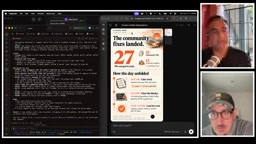
The demo scenario is very concrete. The creator ran a "community sweep" skill in ClaudeCode that automatically finds mergeable PRs, confirms changes meet requirements, writes documentation, and follows up with relevant people. The problem was that the ending portion of Claude's output lacked context, making it hard for a human to immediately understand what happened.
So he turned to ChatGPT and asked it to generate a mobile-friendly infographic based on Claude's work, with the instruction to have ClaudeMem fetch "the latest community sweep results." The generated infographic clearly presented the key data: 25 community PRs landed, 13 contributors, 2 maintainer fixes; inventory at 11:47, build failure at 12:13 due to a PostHog dependency, with subsequent work continuing. ChatGPT didn't know what Claude had done, but through ClaudeMem it got all the source material.
The value of this example isn't the infographic itself, but the new collaboration paradigm it demonstrates: agents no longer need humans to shuttle context between them.
PR (Pull Request) is a core mechanism in code collaboration platforms (such as GitHub): developers don't modify the main branch directly, but instead complete changes on their own branch and then submit a "merge request," which maintainers review, discuss, and test before merging into the main branch. What the "community sweep" skill in this article does—"find mergeable PRs, confirm changes meet requirements"—is essentially automating the most time-consuming part of open-source projects: identifying which contributions are ready to merge and which still need documentation or feedback. For readers unfamiliar with open-source workflows, understanding the tedium of PR review is key to appreciating how much maintainer time this automation saves.
Workflow Agnostic: A Memory Layer That Doesn't Change Your Existing Habits
The design philosophy the creator repeatedly emphasizes is "workflow agnostic"—ClaudeMem is a background observer. You don't need to learn new ways of operating to use it; it simply makes your current way of working better.
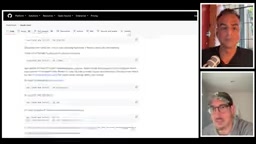
This trade-off has practical considerations. The creator's point was roughly: if a tool requires you to specifically learn it, that's a gamble—will it actually help you, or will it keep you from getting home for dinner tonight? Making memory into silently running background infrastructure, rather than yet another product requiring a learning investment, is what distinguishes ClaudeMem from most agent tools.
Installation and Multi-Agent Onboarding
The installation process is compressed into a single command: npx claudemem install. After running it, the tool asks which agents you use—just check the boxes to complete the connection.
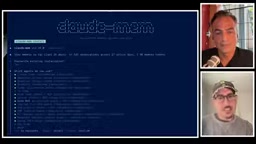
Currently supported integrations include T3 Code, DeepSeekAd, GrokBot, and others, with GrokBot being a more recent addition. You can also configure it via grok-mem.ai or simply tell the agent "install ClaudeMem." This "let the agent install itself" path aligns with its silently-in-the-background product positioning.
Security and Deployment: Local-First, Cloud Optional
Handing all agent memory to a third-party cloud service is the sharp question raised in the demo. The creator's answer is layered: the paid cloud version has security guarantees; at the same time, ClaudeMem has been local-first from the very beginning—that's precisely why it was originally built. Users can run their own Docker instance for stronger isolation, and the open-source server can also be self-deployed to a remote environment.
For development teams, this design means control over memory data can stay in their own hands rather than being forcibly hosted elsewhere.
Local-first is a software architecture philosophy: the authoritative copy of data resides on the user's own device or self-hosted server, with cloud sync being an optional enhancement rather than a prerequisite for operation. Compared to "cloud-first," local-first excels in privacy, latency, and offline availability, at the cost of users bearing some deployment and maintenance responsibility. Docker, meanwhile, is a tool that packages applications and their dependencies into standardized containers, reproducing the same runtime environment on any machine with a single command—hence it's often used to implement "data stays in your own hands" self-hosted deployments. The self-built Docker instance mentioned in the article is a concrete implementation of this approach.
Real-World Usage: Pick the Model per Task, Handoff Done by the Memory Layer
The creator described his actual workflow: building a work state tracker in ClaudeCode while handling a large amount of work remotely through ChatGPT's work tab—research happening on one side, results taken to the other for refinement. The core logic is "pick the most suitable model for each task," with all coordination between them handled by ClaudeMem.
What this eliminates is the manual handoff cost—no more noting in your notes "did I do this in ChatGPT or Claude." Ideas from months ago can directly enter current work; you just need to ask.
Next Step: From Shared Memory to a Single Orchestrator
The advanced question raised in the demo is: will agents hand off tasks to each other automatically, such as Claude handing a design project to ChatGPT, which then hands it back to Claude for coding upon completion?
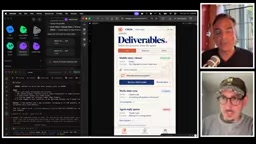
The creator's answer points in a different direction: he envisions a single orchestrator Bot similar to GrokBot, serving as the unified entry point for user conversations and enabling higher-level control. ClaudeMem's own positioning is clearly defined as "a universal memory adapter for all agents." This positioning determines that it doesn't try to become the scheduling center, but rather the prerequisite for scheduling to happen at all—without shared memory, any orchestration is just empty talk.
For people using multiple AI coding and chat tools simultaneously, ClaudeMem solves a fundamental but long-neglected layer: not stronger models, but memory continuity between models.
The orchestrator pattern is a common architecture in multi-agent systems: a master agent breaks down tasks, dispatches them to specialized sub-agents, and aggregates results, with users conversing only with this unified entry point. It differs from "peer-to-peer handoff" (agents directly transferring tasks to each other) as two different coordination approaches. The orchestrator's advantage lies in global visibility and controllability, but the prerequisite is that all participants can access the same state and context—which precisely explains why the creator considers a shared memory layer a prerequisite for orchestration rather than an add-on that can be bolted on later.
One-line Summary
ClaudeMem provides a local-first shared memory layer for multiple AI agents, eliminating the cost of manually handing off context.
Paragraph Summary
The article introduces a tool called ClaudeMem, which addresses the core pain point of multi-agent users—each AI model "forgets" what the others did, and switching tools means manually shuttling context. In the demo, after the creator completes "community sweep" code work in ClaudeCode, ChatGPT reads the results through ClaudeMem and generates an infographic, demonstrating a collaboration method between agents that requires no manual relay. ClaudeMem adheres to being workflow agnostic, running as a background observer without changing users' existing habits; installation requires just one npx command and supports integrations like T3 Code, DeepSeek, and GrokBot. On security, it adopts a local-first architecture, supporting self-built Docker and open-source server deployment. The creator positions it as "a universal memory adapter for all agents" and envisions a future where a single orchestrator Bot achieves higher-level coordination.
Related articles

Is the Agent Harness Dead? Cursor's Early Engineer Breaks Down the Real Architecture of AI Coding Agents
Cursor early engineer Jediah breaks down the real architecture of the agent harness: why "the harness is dead" is only half right, how the data flywheel lets the harness obsolete itself, and how Grokbot, software factories, and primitive design open new frontiers for agents.
Python Visitor Pattern and Better Alternatives Explained
A deep dive into Python's visitor pattern and four alternatives: method pattern, pattern matching, dictionary mapping, and functools.singledispatch. Choose the best decoupling design by change frequency.

357 Days of Deep Experience: Why Omarchy Made Me Stop Distro-Hopping
A 357-day deep dive into Omarchy: 59-second install, out-of-the-box audio and GPU support, the Quattro QuickShell rewrite migration pains, and why Arch users should try it.