ClickFix Attack Alert: Your Computer Can Be Hacked Without Downloading a Single File

August attack roundup: ClickFix fake CAPTCHA, server ransomware, and supply chain infiltration top the threat list.
August's threat landscape shows a clear escalation in tactics. ClickFix exploits fake human verification pages to trick users into pasting malicious commands into the Windows Run dialog — no file download required, neatly bypassing traditional security training. The Sorry ransomware targets public-facing servers with double extortion: encrypting files while exfiltrating data. Meanwhile, a compromised Pokémon logistics provider led to user data leaks, and a critical NASA ground control software vulnerability could allow arbitrary spacecraft commands — reflecting a broader shift toward supply chain and critical infrastructure targets. Data from Rising shows 3.26 million viruses intercepted in August, with roughly 70% being trojans.
Cyberattack techniques are evolving at a rapid pace. A recent roundup of August attack methods reveals that threat actors are no longer relying on traditional lure-and-download tactics. Instead, they're finding new entry points through fake human verification pages, supply chain infiltration, and ransomware targeting public-facing servers. These shifts demand a higher level of security awareness from both everyday users and enterprises.
ClickFix: The Trap Behind Fake Human Verification
The most alarming technique highlighted in this month's roundup is an attack method called ClickFix — and what makes it particularly dangerous is that victims never need to download anything to get compromised.
The attack flow is deliberately deceptive: scammers create a convincing fake "human verification" page and instruct users to paste a command into the Windows Run dialog box and press Enter. Once executed, a trojan silently installs itself on the system.

The core of this technique exploits people's natural trust in "CAPTCHA" and "human verification" prompts. Traditional security training hammers home the message "don't download and run unknown files" — but ClickFix neatly sidesteps that defense entirely. It tricks users into thinking they're completing a harmless verification step, while in reality they're feeding a malicious command directly into the operating system. For everyday users, any "verification" step that asks you to paste a command into the Run dialog should be treated as a serious red flag.
The Windows Run dialog (shortcut: Win+R) is a built-in command execution interface — anything entered and confirmed runs directly with the current user's permissions. ClickFix typically writes a PowerShell or mshta command to the clipboard in the background; by the time the user clicks the "verify" button, the clipboard contents have already been swapped. The user then opens the Run dialog, pastes, and hits Enter — the whole process takes under ten seconds. Because no browser "download file" prompt appears and the command type may not trigger a UAC pop-up, traditional file-scanning antivirus software often can't intercept it in time. This "fileless" or "in-memory execution" attack style has become increasingly common in advanced threats; ClickFix simply wraps the same technique in a social engineering script aimed at ordinary users.
Sorry Ransomware: Targeting Public-Facing Servers
Beyond social engineering attacks aimed at individuals, server-side threats remain equally serious. A ransomware strain called Sorry specifically targets servers exposed to the public internet.
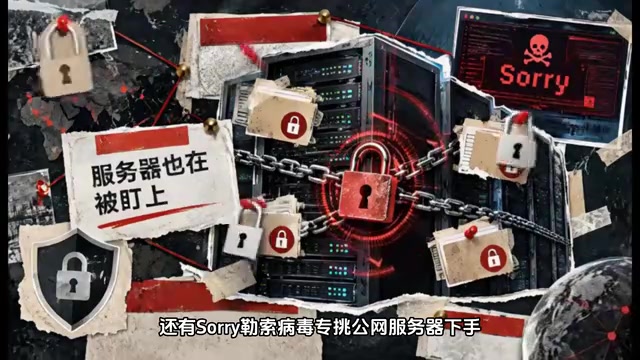
This ransomware applies a double-pressure approach: it encrypts files on the server to disrupt normal operations, while simultaneously exfiltrating data and threatening to leak it publicly unless a ransom is paid. This means that even if an organization has backups and can restore the encrypted files, they still face the risk of a data breach — dramatically amplifying the ransom pressure.
Public-facing servers are prime targets precisely because they're directly exposed to the internet. Weak passwords, unpatched vulnerabilities, or misconfigurations make them easy prey for automated scanning tools. For operations teams, tightening the public attack surface, applying patches promptly, and strengthening access controls are the fundamental defenses against this type of ransomware.
The "double extortion" model for ransomware attacks on servers has become standard practice: attackers quietly exfiltrate files to their own servers before triggering local encryption. Even if the victim restores data from backups, they still face the threat of sensitive information being auctioned on the dark web or published outright. Some groups have evolved a "triple extortion" model, additionally pressuring the victim's customers or partners. Automated scanning tools (malicious variants modeled on tools like Shodan and Masscan) can identify globally exposed hosts on specific ports within minutes. Once a weak password or known CVE is found, attack scripts can automate the entire process from intrusion to encryption, dramatically reducing the attacker's labor costs.
Supply Chain Failures and a High-Risk NASA Vulnerability
This month's roundup also highlights two high-impact incidents that reflect a broader trend of attacks pushing further upstream into more critical nodes.
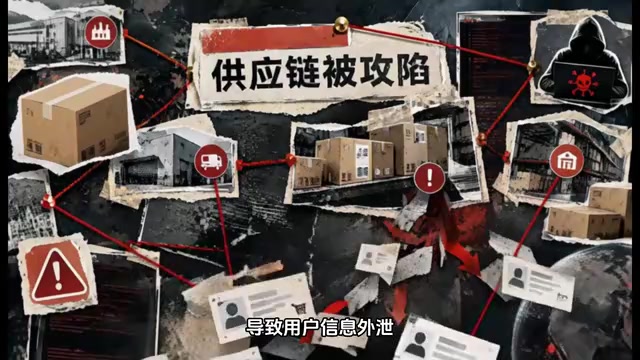
The first involves a supply chain attack: a logistics service provider associated with Pokémon was compromised, directly resulting in user data being leaked. What makes supply chain attacks so dangerous is that the end-user or brand may have strong defenses in place — but attackers can still cause massive data breaches by exploiting a weaker third-party vendor in the chain. This is a reminder that an organization's security perimeter extends to every partner and outsourced service provider it works with.
The second incident involves a high-severity vulnerability discovered in NASA ground control software. According to the roundup, if exploited, this flaw would allow an attacker to send arbitrary commands to spacecraft. Vulnerabilities of this nature — affecting critical infrastructure and aerospace systems — carry consequences far beyond an ordinary data breach, underscoring the critical importance of rigorous security auditing for core systems.
A supply chain attack is one where the attacker doesn't target the end organization directly, but instead infiltrates an upstream software vendor, hardware manufacturer, or third-party service provider — then uses legitimate distribution channels to deliver malicious code or backdoors to a large number of endpoints. The 2020 SolarWinds incident is the defining example: attackers embedded a backdoor into an official update package for IT monitoring software, compromising thousands of organizations including multiple U.S. federal agencies. Logistics, payment, and customer service outsourcing providers are popular pivot points because they typically need access to a brand's core data but often have comparatively limited security investment. When assessing their security posture, organizations must subject all third parties with data access to the same rigorous security scrutiny they apply internally.
Trojans Still Dominate New Malware
Despite the constant evolution of attack techniques, the underlying data tells a consistent story: trojans remain the dominant form of malware.

According to Rising's August statistics, a total of 3.26 million viruses were intercepted that month, with approximately 70% classified as trojans. This figure makes clear that regardless of how delivery mechanisms evolve — whether fake CAPTCHA pages or phishing sites — the payload attackers ultimately deploy is still, overwhelmingly, a trojan. Trojans handle persistence, credential theft, and remote control; they are the critical "foothold" component at the end of every attack chain.
How to Build a Stronger Defense
Taken together, this August roundup reveals that cyberattacks are evolving along two major trajectories. First, social engineering is becoming increasingly creative, using "seemingly harmless" actions to bypass users' natural defenses. Second, attack targets are shifting upward — from individual endpoints toward higher-value nodes like servers, supply chains, and critical infrastructure.
For everyday users, the most practical defense is healthy skepticism: never follow any "verification" step that asks you to run an unfamiliar command in the Run dialog or command line. For enterprises and operations teams, reducing public attack surface exposure, patching vulnerabilities promptly, and auditing supply chain security are essential coursework in defending against ransomware and infiltration. Attackers are constantly searching for new entry points — defenders must continuously update their knowledge to hold the line.
Related articles

Chain of Thought Isn't Just for AI: How Humans Can Use CoT to Improve Thinking Quality
Chain of Thought isn't just a prompt trick for large models. Starting from a Hacker News discussion, this article analyzes why CoT works for human thinking too, breaks down actionable ways to transfer it, and highlights the key differences between human CoT and machine CoT.
Cloudflare Teams Up with OpenAI: Closi…
Cloudflare Teams Up with OpenAI: Closing the Loop from Vulnerability Discovery to Defense with AI
Cloudflare uses OpenAI Daybreak to investigate security vulnerabilities and generate reviewable remediation plans, while developers use Codex to boost coding efficiency and quality.

Orca Multi-Agent Orchestration in Practice: A Guide to Parallel Collaboration with Claude and Codex
Orca is Stable AI's free open-source agent workbench supporting 34 agents like Claude Code and Codex in parallel. Learn its Git worktree isolation, multi-model orchestration, and mobile management.