CloudNC Raises $20M to Automate CNC Programming with AI
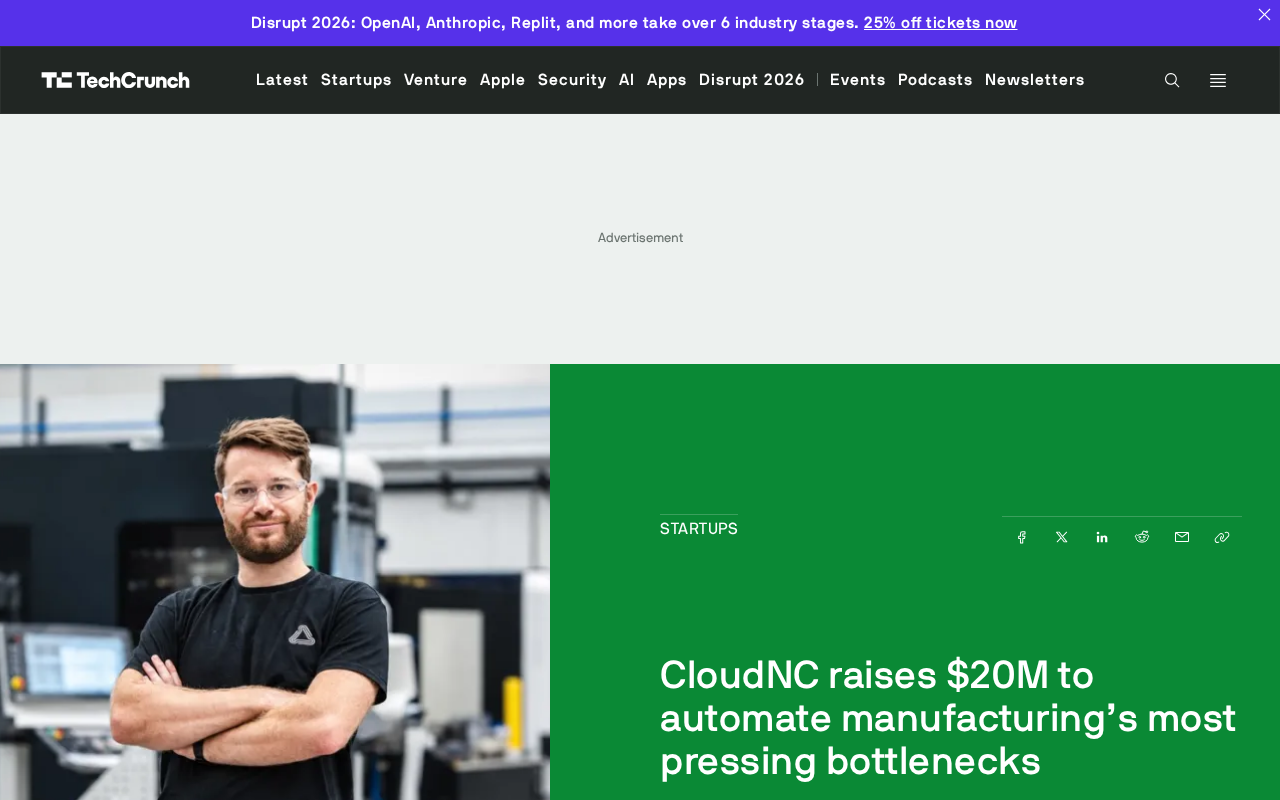
CloudNC raises $20M to automate CNC programming with AI, addressing manufacturing's skilled worker crisis.
UK-based CloudNC closed a $20M Series B extension, bringing total funding to $128M. The company uses AI to automate CNC programming—a traditionally manual, expert-dependent process that creates major manufacturing bottlenecks. As global manufacturing faces severe skilled worker shortages, CloudNC's solution reduces reliance on experienced programmers while accelerating production. The funding signals investor confidence in smart manufacturing and positions CloudNC to scale from product validation to market expansion.
CloudNC Closes $20M Series B Extension
British manufacturing software startup CloudNC announced this week the completion of a $20 million Series B extension round. With this funding, the company's total capital raised reaches $128 million.
What is a Series B Extension? A Series B extension (B+ round or Series B extension) refers to supplementary funding raised after completing a Series B round but before launching a Series C. This financing strategy typically occurs when a company's growth exceeds expectations and requires additional capital to accelerate expansion, or when favorable market conditions present an opportunity to extend the current valuation window. Compared to moving directly to Series C, a B extension allows companies to secure growth capital without significant equity dilution while building stronger performance metrics for the next larger funding round.
This funding size is substantial for a manufacturing software company, reflecting capital markets' continued confidence in smart manufacturing and industrial automation, and demonstrating traditional manufacturing's strong appetite for innovative software tools amid digital transformation.
What This Funding Signals for the Industry
Against the backdrop of global supply chain restructuring and manufacturing reshoring, improving production efficiency and reducing dependence on skilled workers has become manufacturers' most pressing challenge. CloudNC's successful Series B extension indicates that investors recognize its solutions address core manufacturing pain points.
Series B extensions are typically used to accelerate validated growth paths rather than explore new directions. This suggests CloudNC's product and business model have achieved market validation, with the company at a critical inflection point from product validation to scaled expansion.
Solving Manufacturing's Most Stubborn Bottleneck
CloudNC's core mission is to automate manufacturing's most urgent bottleneck. In traditional CNC (Computer Numerical Control) machining, the programming process has long relied on experienced engineers working manually. This process is not only time-consuming and costly but also heavily dependent on individual expertise, making it difficult to scale.
CNC Technology Fundamentals: CNC (Computer Numerical Control) is one of modern manufacturing's core technologies. It uses pre-programmed computer instructions to control machine tool movement trajectories, speeds, and cutting depths, achieving precision machining of materials like metals and plastics. A single CNC machine can perform milling, drilling, turning, and other operations with micron-level precision. However, to make a CNC machine produce parts according to design drawings, the 3D model must first be converted into G-code instructions the machine can understand—a process called CAM programming.
The Value of CNC Programming Automation
CAM (Computer-Aided Manufacturing) programming is the critical link between design and actual machining. Planning machining paths for a complex part can take experienced engineers hours or even days. As manufacturing universally faces skilled worker shortages, this bottleneck becomes increasingly acute.
The Deeper Crisis of Skilled Worker Shortage: Global manufacturing faces a severe shortage of technical workers. According to the Manufacturing Institute, by 2030, 2.1 million manufacturing jobs in the U.S. could go unfilled due to lack of qualified talent. Skilled CNC programmers typically require 5-10 years of practical experience, mastering cross-disciplinary knowledge including materials science, tooling, and machining processes. The long training cycle combined with retiring older-generation workers creates an obvious talent gap. This structural problem makes manufacturers urgently need technology solutions that can lower skill barriers and preserve and transfer expert knowledge.
CloudNC uses software and automation technology to turn the traditionally human-dependent programming process over to algorithms. This not only dramatically shortens production preparation time but also reduces reliance on highly skilled workers, enabling more companies to efficiently machine complex parts.
The Technical Evolution of CAM Software: CAM (Computer-Aided Manufacturing) software bridges CAD design and actual production. Early CAM software mainly provided basic tool path generation, requiring engineers to manually set numerous parameters. As technology advanced, modern CAM systems began integrating simulation validation, collision detection, and other features, but core path planning remained highly dependent on human decision-making. The breakthrough of next-generation solutions like CloudNC lies in introducing AI algorithms that can automatically analyze part features, select optimal machining strategies, generate efficient tool paths, and even predict potential machining problems. This leap from 'assistance' to 'automation' represents manufacturing software's transformation from tool to intelligent decision-making system.
Market Outlook for Smart Manufacturing Software
Deep Integration of Manufacturing and AI
Manufacturing is considered an industry with relatively lagging digitalization. Compared to internet, finance, and other sectors, factory floor software tools are often outdated and fragmented, with data difficult to integrate. In recent years, as AI technology matures, more startups are bringing machine learning and automation algorithms into manufacturing scenarios.
CloudNC exemplifies this trend. It uses modern software engineering and intelligent algorithms to reshape traditional manufacturing workflows. The cumulative $128 million in funding provides ample resources for R&D investment and market expansion.
Challenges and Opportunities Coexist
Despite promising prospects, deploying manufacturing software is no easy feat. Factory environments are complex, with vastly different equipment, processes, and standards across companies, requiring software products to be highly adaptable and stable. Additionally, manufacturing customers are typically cautious in adopting new technologies, with long sales cycles.
The Unique Complexity of Manufacturing Digitalization: Manufacturing's digital transformation is far more complex than consumer internet or enterprise SaaS sectors. Factory environments contain numerous 'brownfield systems'—decades-old legacy equipment and heterogeneous software lacking standard interfaces. A typical manufacturing enterprise might use ERP, MES, PLM, and other systems from different vendors spanning different eras, creating severe data silos. Moreover, manufacturing demands extremely high system stability and security; any software failure can halt production lines, causing enormous losses. New technology adoption must undergo rigorous validation, with long procurement decision chains involving production, engineering, IT, purchasing, and other departments.
For CloudNC, translating technical advantages into scalable commercial success is the key test ahead. This funding secures a longer validation and iteration window, allowing the company to refine its product across more customer scenarios, establish industry-standard use cases, and ultimately develop a replicable business model.
Summary
CloudNC's $20 million raise epitomizes the smart manufacturing sector's continued heating up. As AI and automation technologies increasingly permeate traditional industry, software companies genuinely solving shop floor pain points are attracting growing capital interest.
For manufacturing, the shift from relying on human expertise to intelligent automation is a long but irreversible journey. Whether CloudNC can successfully break through on this path merits continued attention.
Note: This article is based on CloudNC's public positioning and industry analysis. Actual product performance is subject to official information.
Related articles
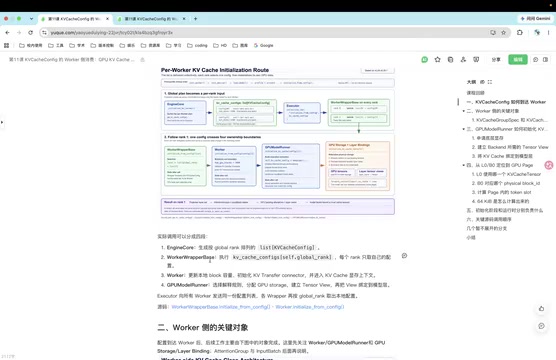
Deep Dive into vLLM Worker-Side GPU KV Cache Initialization
Deep dive into vLLM's Worker-side KV Cache GPU memory allocation, covering the full pipeline from KVCacheConfig generation to physical memory binding via ModelRunner.
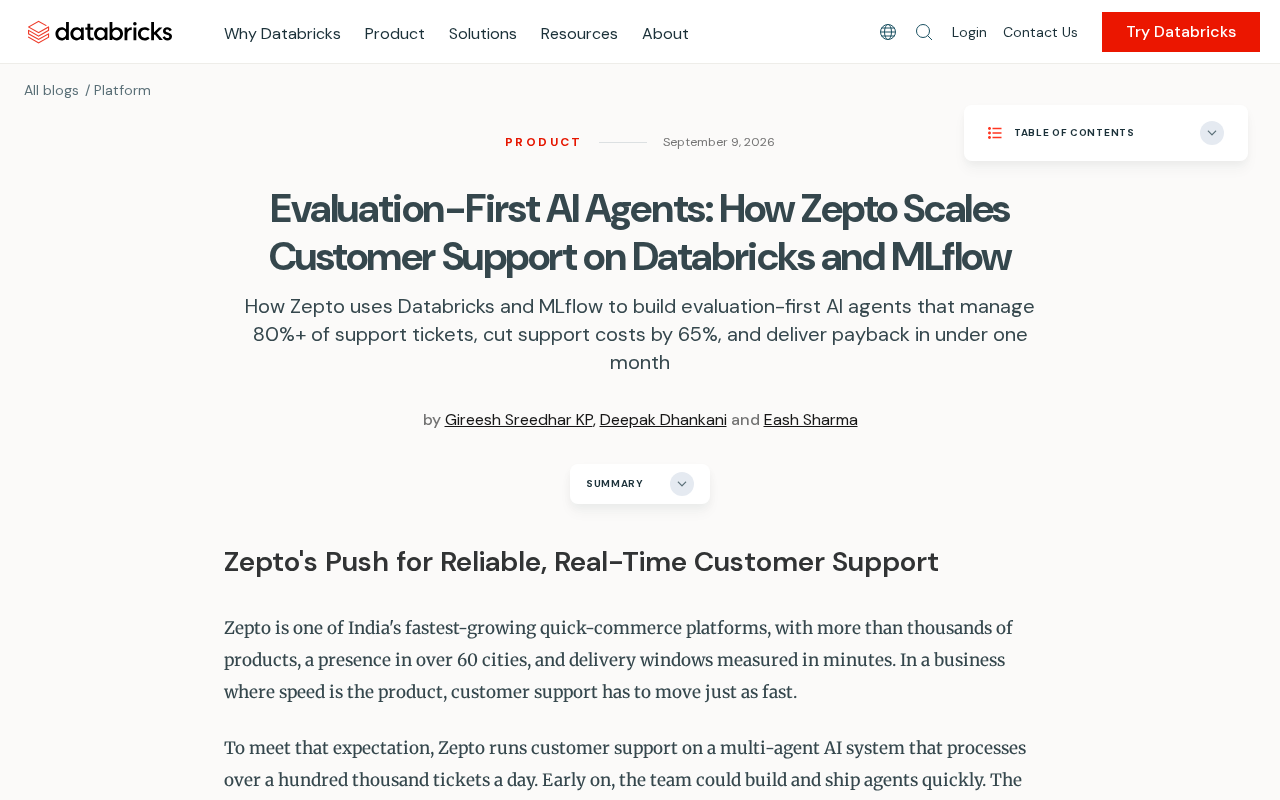
Zepto Builds AI Customer Service with MLflow: An Evaluation-Driven Practice Guide
Deep dive into how Zepto built an evaluation-driven AI customer service system using MLflow and Databricks, achieving 60% faster responses and 40% less manual handling. From technical architecture to practical insights.

Iran Captures U.S. Underwater Drone in Strait of Hormuz: A Comprehensive Analysis
Iran announces capture of U.S. Navy underwater drone in Strait of Hormuz. In-depth analysis of the incident, strategic value of UUVs, U.S.-Iran geopolitical competition, and implications for global energy security and military dynamics.