Code Review Graph: Using Intelligent Code Graphs to Deliver Precise Context for AI
Code Review Graph: Using Intelligent C…
A local-first code intelligence graph that gives AI tools precise, minimal context for large codebases.
Code Review Graph is an open-source Python project that builds a persistent, graph-structured map of your codebase, enabling AI coding tools like Claude and Cursor to retrieve only the most relevant code context. With MCP and CLI support, it targets token waste and attention dilution in large monorepos, offering a local-first, privacy-friendly solution to a core AI programming bottleneck.
The "Context Dilemma" in AI Programming Tools
As AI coding tools like Claude, Cursor, and GitHub Copilot have become mainstream, a hidden bottleneck has quietly emerged: context management. When AI faces a large codebase with hundreds of thousands of lines of code, it has no way of knowing which files are truly relevant. It often ends up reading large amounts of irrelevant code — burning through token budgets, slowing down responses, and degrading answer quality due to information noise.
Understanding this dilemma requires a grasp of how large language models process information at a fundamental level. The basic unit of information processing is the Token. Roughly 1.5 Chinese characters correspond to 1 Token, while about 4 English characters map to 1 Token. The context windows of mainstream models have grown from GPT-3's early 4K tokens to Claude 3's 200K and GPT-4o's 128K. Despite this expansion, token consumption directly translates to API costs — GPT-4o, for instance, costs around $5 per million input tokens, making the cumulative cost of thousands of daily code queries non-trivial for enterprises. More critically, there is the phenomenon of "attention dilution": research shows that when context is too long, models pay significantly less attention to middle sections — what academics call the "Lost in the Middle" problem. This means stuffing in irrelevant code not only wastes money but actively degrades response quality.
The open-source project tirth8205/code-review-graph, which has rapidly gained traction on GitHub, was built precisely to address this pain point. Written in Python, it has accumulated 19,590 stars and 2,099 forks, with as many as 57 new stars in a single day — a clear signal of strong developer interest. Its core value proposition is: build a persistent "intelligent map" of your codebase so AI tools only read what truly matters.
Core Concept: A Local-First Code Intelligence Graph
What Is a "Code Intelligence Graph"?
The key phrase in the project's description is Local-first code intelligence graph, which reflects two important design principles.
Local-first: Unlike code analysis solutions that rely on cloud services, Code Review Graph emphasizes building and maintaining its index locally. This means better privacy, lower latency, and no need to upload proprietary code to third-party servers — a critical consideration for teams working with sensitive codebases.
Persistent map: Rather than scanning code from scratch on every query, it pre-builds a graph capturing code structure, dependency relationships, and call chains, then persists that graph. When an AI needs to understand a piece of code, it can use this map to quickly locate relevant nodes instead of blindly reading everything.
How the Graph Reduces Context Size
A codebase is fundamentally a highly interconnected network: functions call functions, modules depend on modules, classes inherit from classes. Traditional approaches either dump entire files or directories into the AI's context, or rely on simple keyword search — the former is wasteful, the latter misses critical relationships.
Code Review Graph parses code into a graph structure (nodes represent entities like functions, classes, and files; edges represent relationships like calls, dependencies, and references), allowing AI tools to "follow the thread" — starting from an entry point and precisely pulling in only the truly relevant context by traversing the graph's edges.
This approach has deep roots in program analysis: Call Graphs, Control Flow Graphs (CFGs), and Data Flow Graphs (DFGs) are foundational tools in static analysis. Modern implementations typically use graph databases (like Neo4j) or in-memory graph engines to store these relationships. For example, node A (function foo) pointing via a directed edge to node B (function bar) means foo calls bar. When an AI needs to understand the impact of modifying bar, it simply traverses incoming edges to find all callers — no full codebase scan needed. The time complexity of this graph traversal scales only with the number of nodes in the local subgraph, far outperforming the linear scan of full-text search. The project claims benchmark-verified context reduction in code review and large-repository workflows, backed by quantitative data.
Two Integration Modes: MCP and CLI
MCP Integration: Plugging into the AI Toolchain Ecosystem
The project explicitly supports MCP (Model Context Protocol) — an open protocol introduced by Anthropic that the industry is increasingly adopting to standardize interactions between AI models and external data sources and tools.
MCP was officially open-sourced in November 2024, designed to be the "USB standard" of the AI application world. Before MCP, integrating each AI tool with external data sources required custom development, producing mountains of repetitive "glue code." MCP defines a unified Client-Server architecture: AI clients (such as Claude Desktop, Cursor) act as MCP Clients, while external tools or data sources act as MCP Servers, communicating via a standardized JSON-RPC protocol. An MCP Server can expose three types of capabilities: Resources (data like file contents), Tools (callable functions like search), and Prompts (prompt templates). Following its release, companies including Microsoft, Block, and Replit quickly added support, making MCP the de facto early standard for AI tool interoperability.
By implementing the MCP interface, Code Review Graph can act as a "context provider" that seamlessly integrates with MCP-compatible AI clients (such as Claude Desktop). This is a smart design choice: rather than becoming yet another isolated tool, it builds on top of an open ecosystem and becomes a component in the AI toolchain. Developers simply configure it in an MCP-compatible environment, and the AI automatically gains a "precise view" of the codebase.
CLI: Built for Automation
Beyond MCP, the project also provides a CLI (command-line interface). For developers who prefer working in the terminal, writing automation scripts, or integrating tools into CI/CD pipelines, the CLI offers flexible invocation. For example, it can be called within a code review pipeline to generate a minimal context set for changes, ready for consumption by a downstream AI review tool.
The dual-channel design of "MCP + CLI" serves both graphical AI client users and command-line/automation users, significantly broadening the tool's applicability.
Why This Project Deserves Attention
Targeting a Real Efficiency Bottleneck in AI Coding
AI-assisted programming has moved past the question of "can it work" and into "how well does it work." One of the key factors limiting the experience is context relevance and efficiency. Tokens have a cost, and overly long contexts are not only expensive — they dilute the model's attention. Code Review Graph's "precision supply" approach directly targets this efficiency bottleneck.
Open Source Strategy and Ecosystem Compatibility
The project uses an open-source model and actively embraces MCP as an emerging standard, making it easier for the community to adopt and extend. Nearly twenty thousand stars are, to some extent, a reflection of developers' widespread demand for local, controllable, and efficient code context solutions.
Engineering Value for Large Monorepos
For small and medium projects, having AI read the entire codebase may still be manageable. But for enterprise-scale monorepos, full ingestion is nearly impossible. A monorepo is an engineering practice of storing multiple projects, services, and libraries in a single repository — tech giants like Google, Meta, and Microsoft all use this strategy. Google's internal monorepo reportedly contains over 2 billion lines of code. While monorepos offer benefits like unified dependency management and atomic cross-project commits, they also create serious toolchain challenges: when a developer modifies a utility function, the AI may need to understand the impact on dozens of downstream modules, yet cannot fit tens of thousands of files into its context. Incremental build tools designed specifically for monorepos (like Bazel, Nx, and Turborepo) have become standard in that space, and the precise context-trimming capability offered by Code Review Graph fills exactly the AI tooling gap that's been missing in this ecosystem.
An Honest Assessment: Promising but With Limitations
To be fair, the repository description alone cannot verify the specifics of its "benchmark tests," the range of programming languages supported (the project itself is written in Python, but whether it can parse multi-language codebases requires hands-on testing), or the actual overhead of building the graph. Readers will need to validate these through real-world use.
Additionally, graph accuracy is highly dependent on code parsing quality, and static analysis has inherent limitations with dynamic languages. In Python, for example, dynamic attribute access like getattr(obj, method_name)(), decorators modifying function behavior, __getattr__ magic methods, and metaclass-based programming in frameworks like Django ORM all produce implicit call relationships that static analysis cannot trace. Research suggests that in large Python projects, the edge coverage rate of static call graphs is typically only 60–80%. By contrast, statically analyzable languages like Java, Go, and Rust can achieve graph accuracy approaching 95% or higher. For heavily runtime-dependent dynamic codebases, the static graph may have incomplete coverage — this type of solution generally performs better on strongly typed, well-structured codebases.
Nonetheless, the direction that Code Review Graph represents — using structured graphs to supply AI with precise context — is almost certainly an important trend in the evolution of AI programming tools. As model capabilities converge, whoever can more intelligently feed the most relevant information to the model will win on real-world productivity.
Conclusion
Code Review Graph is a focused, well-positioned open-source project. Rather than trying to replace AI models, it focuses on being a smart "context gatekeeper" — local-first, persistent, graph-structured, and ecosystem-friendly. For developers and teams struggling with context issues in large codebases, this is undoubtedly a direction worth exploring. As the MCP ecosystem matures, tools focused on precise context delivery may well become indispensable infrastructure in the future AI programming workflow.
Key Takeaways
Related articles

Alibaba Launches Happy Shrimp: AI-Powered One-Click Complete Song Generation
Alibaba launches Happy Shrimp, an AI music generation tool that creates complete songs with lyrics, melody, arrangement, and vocals from natural language descriptions. In-depth analysis of its core features, differentiation from competitors like Suno, and industry impact.
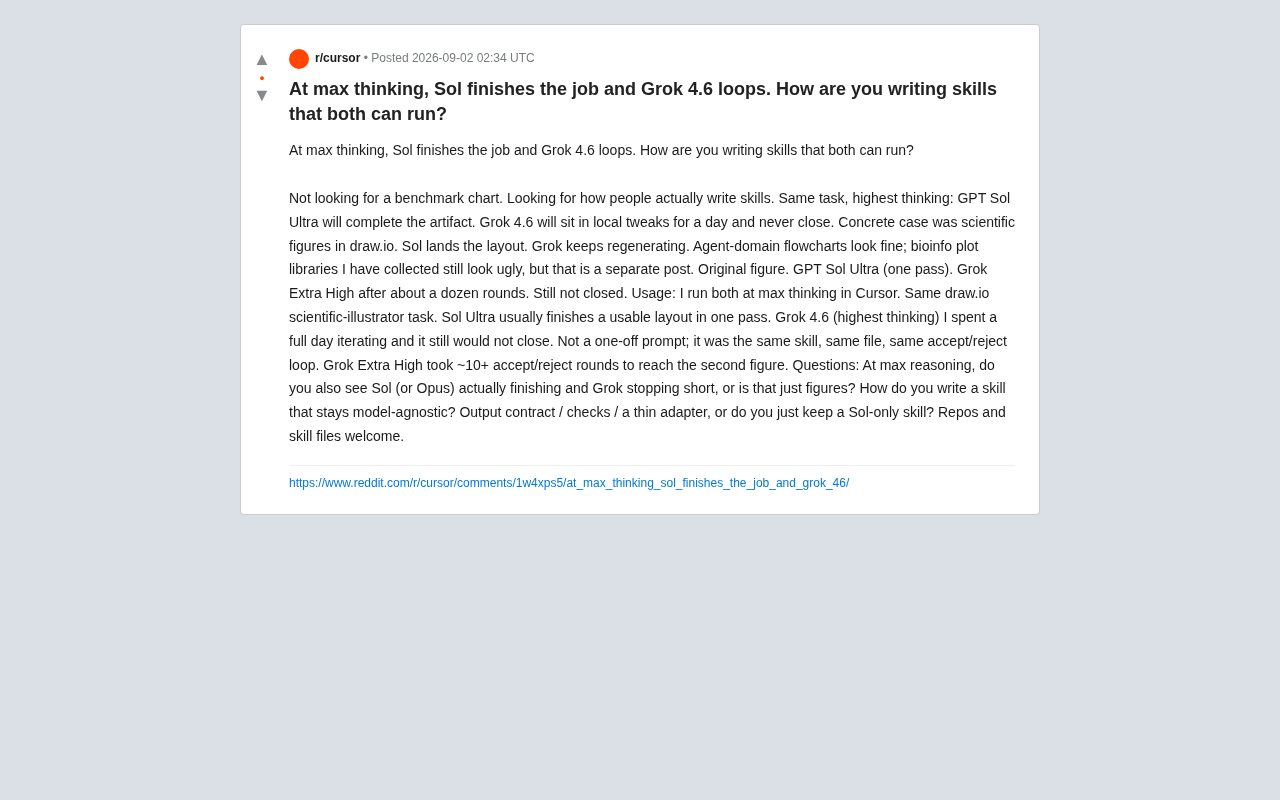
GPT Sol Ultra vs Grok 4.6: Real-World Task Completion Benchmark in Reasoning Mode
Developer benchmark reveals GPT Sol Ultra completes draw.io scientific diagrams in one iteration while Grok 4.6 fails to converge despite maximum reasoning mode, exposing that reasoning depth ≠ task delivery capability.
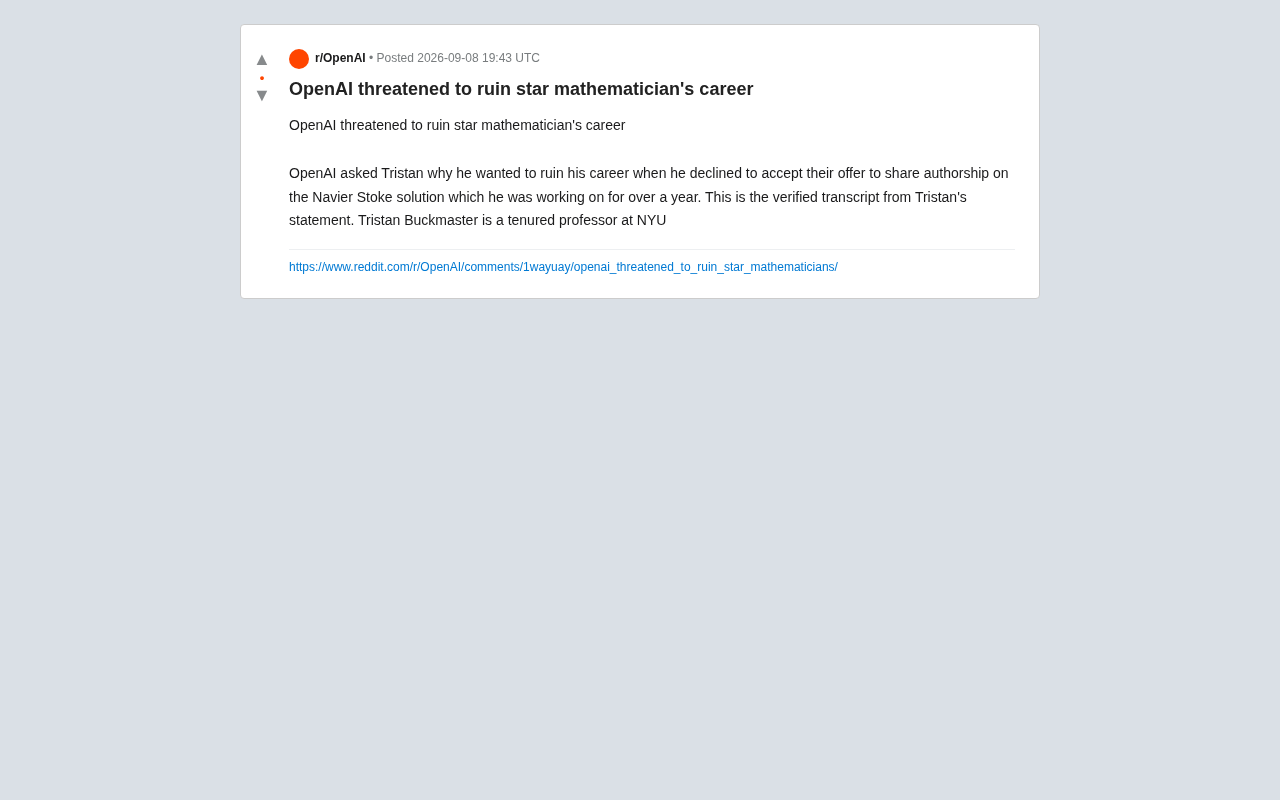
OpenAI Authorship Dispute: The Battle Over Academic Boundaries in the AI Era
OpenAI disputes authorship with mathematician Tristan Buckmaster over Navier-Stokes research, raising ethical questions about AI involvement in science.