Codex + AI Scraper: Build a Topic Capture Tool That Auto-Grabs AI Hotspots 24/7

A Bilibili creator uses Codex plus an AI scraping platform to build a tool that auto-grabs AI hotspots and pushes a daily topic shortlist.
The article introduces an "AI Hotspot Capture Tool" solution shared by a Bilibili creator, using Codex for framework building, filtering, and organizing, and the AI scraping platform "Liang Data" for stable collection of public video data from Bilibili's AI section. The build has three steps: define requirements and page framework with Codex, generate a scraper on the platform to collect titles, durations, and original links, and integrate the scraper ID into Codex via API to generate a daily topic shortlist. The solution includes Soft Healing, where AI analyzes failure causes and suggests fixes when websites are redesigned. The author believes this division of labor lowers the barrier to building a data pipeline, suitable for content creators and researchers, but notes the need to consider collection compliance and platform fees.
Why Do You Need an AI Hotspot Capture Tool?
Content creators in the tech space face information overload every day: Bilibili, GitHub, industry media… AI news keeps pouring in from everywhere. Manual filtering is not only time-consuming but also prone to missing genuinely valuable insights. A Bilibili creator shared a "AI Hotspot Capture Tool" built with Codex paired with an AI scraping platform that automatically grabs video titles, publish times, view counts, and original links 24/7, filters out 90% of clickbait garbage, and pushes a topic shortlist every day at 8 AM.

The core idea of this system is clear: Codex handles building the framework, filtering, and organizing, while the collection part is delegated to a dedicated AI scraping platform. This lowers the development barrier and solves the challenges of continuous crawler operation and maintenance.
Three Steps to Build: From Framework to Data Integration
Step 1: Define Requirements and Framework with Codex
Open Codex and directly tell it you want to collect AI content from different sources, retaining the title, source, publish time, and popularity metrics for each entry, then filter and generate a topic shortlist that links back to the original articles. Codex will first set up the page and data format, but for the shortlist to update continuously, you still need a stable real data source—which is exactly what the next step addresses.
Codex is an AI coding assistant launched by OpenAI that can generate code, scaffold projects, and complete debugging based on natural language descriptions. Unlike general-purpose conversational models, Codex excels at understanding development intent and producing runnable code structures. In this solution, it plays the role of "chief architect": first defining the page layout, data fields, and filtering logic clearly, then reserving interfaces for subsequent integration of real data. This natural-language-driven development approach allows content creators without scraping experience to quickly build a usable prototype.
Step 2: Collect Video Data with an AI Scraping Platform
Go to the "Liang Data" platform (Blood Data Squipper Studio), create a new web scraper, fill in the link to the AI section page you want to collect, and add collection requirements: scrape public videos, retain titles, durations, and original links.
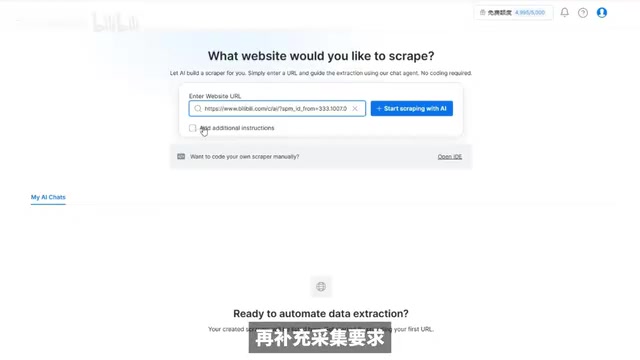
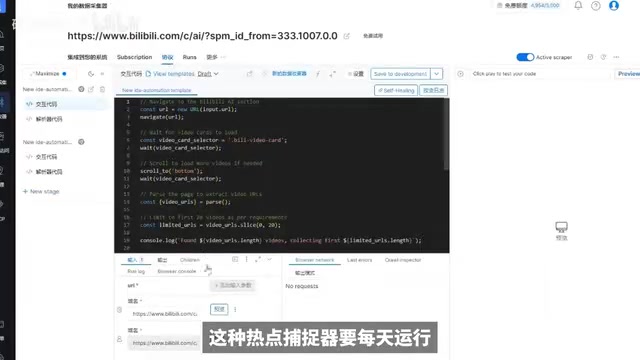
After clicking generate, the platform will first present a field table. Check that the fields and types are correct, then click "Apply" to let the AI generate the scraper. Once the scraper is generated, run a collection round and verify the actual number of items scraped and any failures on the Runs page. According to the creator, the platform displays both the interaction code and the parser code, and the code belongs to the user—so you can directly modify it later to add fields or adjust logic.
A web scraper typically consists of two parts: interaction code and a parser. The interaction code simulates browser behavior, initiates requests, and handles pagination and waiting, while the parser extracts target fields (such as title, duration, link) from the returned HTML or JSON according to rules. Traditional scrapers require developers to hand-write both parts and handle anti-scraping, proxies, and captchas themselves. AI scraping platforms automatically generate these two code segments based on the field table filled in by the user and allow users to view and modify the source code, thereby lowering the barrier while preserving maintainability.
Step 3: Integrate with Codex and Generate the Shortlist
Once the scraper runs successfully, initialize via API to get the scraper ID, copy it and send it to Codex, and have it call this scraper to integrate the collection results into the hotspot capture tool. After the data is returned, Codex can unify fields, filter, and generate the topic shortlist. Each topic retains the original video link for easy click-back viewing.
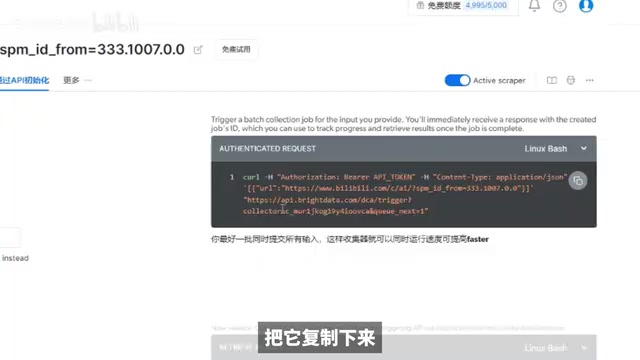
Finally, return to the Runs page of Liang Data, download the raw JSON or CSV, and compare titles, times, and view counts against the generated shortlist to confirm they match one-to-one.
Continuous Operation and Maintenance: AI Self-Healing Is Key
The hotspot capture tool needs to run daily, and the biggest fear is website redesigns causing scraping to fail. This solution has a built-in "Soft Healing" feature: when page structure changes occur, the AI analyzes the cause of failure and provides modification suggestions; after confirmation, re-run to verify whether data has been restored. The creator says this means daily maintenance no longer requires troubleshooting from scratch every time.
Crawler failure due to website redesigns is a common problem in data collection. When the page structure changes, the previously relied-upon CSS selectors or XPath paths may no longer find the target elements, causing scraping results to become empty or misaligned. The traditional approach requires manually comparing page source code item by item, locating the failed selectors, and modifying them by hand. Soft Healing's approach is to have AI compare the old and new page structures, infer the cause of failure, and provide correction suggestions; after user confirmation, re-run to verify—compressing the "troubleshoot—fix—verify" loop into a single conversation.
Who Is This Solution For?
For content creators, operations staff, or researchers who need to track AI developments, this combination lowers the barrier to building a data pipeline yourself. Writing your own scraper requires handling proxies, captchas, and website redesigns, whereas with an AI scraping platform, these underlying issues are encapsulated—users only need to describe their requirements.
However, note that when collecting public video data, you should comply with platform rules and relevant laws and regulations, and use it only for personal learning or research. Additionally, the creator did not mention whether the platform charges fees; it is advisable to find out clearly before actual use.
Overall, the Codex + AI scraper approach offers a lightweight automated topic selection solution—separating "building the shortlist" and "getting the data" and assigning each to the tool best suited for it. This may be a viable direction for content workflows in the AI era.
One-line Summary
A Bilibili creator built a tool using Codex plus an AI scraping platform that automatically captures AI hotspots and pushes a daily topic shortlist.
Paragraph Summary
The article introduces an "AI Hotspot Capture Tool" solution shared by a Bilibili creator, using Codex for framework building, filtering, and organizing, and the AI scraping platform "Liang Data" for stable collection of public video data from Bilibili's AI section. The build has three steps: first define requirements and page framework with Codex, then generate a scraper on the platform to collect titles, durations, and original links and get it running, and finally integrate the scraper ID into Codex via API to generate a daily topic shortlist. The solution includes a Soft Healing feature where AI analyzes failure causes and provides fix suggestions when websites are redesigned. The author believes this division of labor—separating "building the shortlist" from "getting the data"—lowers the barrier to building a data pipeline yourself, making it suitable for content creators and researchers, but notes the need to pay attention to collection compliance and whether the platform charges fees.
Related articles

Chain of Thought Isn't Just for AI: How Humans Can Use CoT to Improve Thinking Quality
Chain of Thought isn't just a prompt trick for large models. Starting from a Hacker News discussion, this article analyzes why CoT works for human thinking too, breaks down actionable ways to transfer it, and highlights the key differences between human CoT and machine CoT.
Cloudflare Teams Up with OpenAI: Closi…
Cloudflare Teams Up with OpenAI: Closing the Loop from Vulnerability Discovery to Defense with AI
Cloudflare uses OpenAI Daybreak to investigate security vulnerabilities and generate reviewable remediation plans, while developers use Codex to boost coding efficiency and quality.

Orca Multi-Agent Orchestration in Practice: A Guide to Parallel Collaboration with Claude and Codex
Orca is Stable AI's free open-source agent workbench supporting 34 agents like Claude Code and Codex in parallel. Learn its Git worktree isolation, multi-model orchestration, and mobile management.